Artwork
La joie de vivre
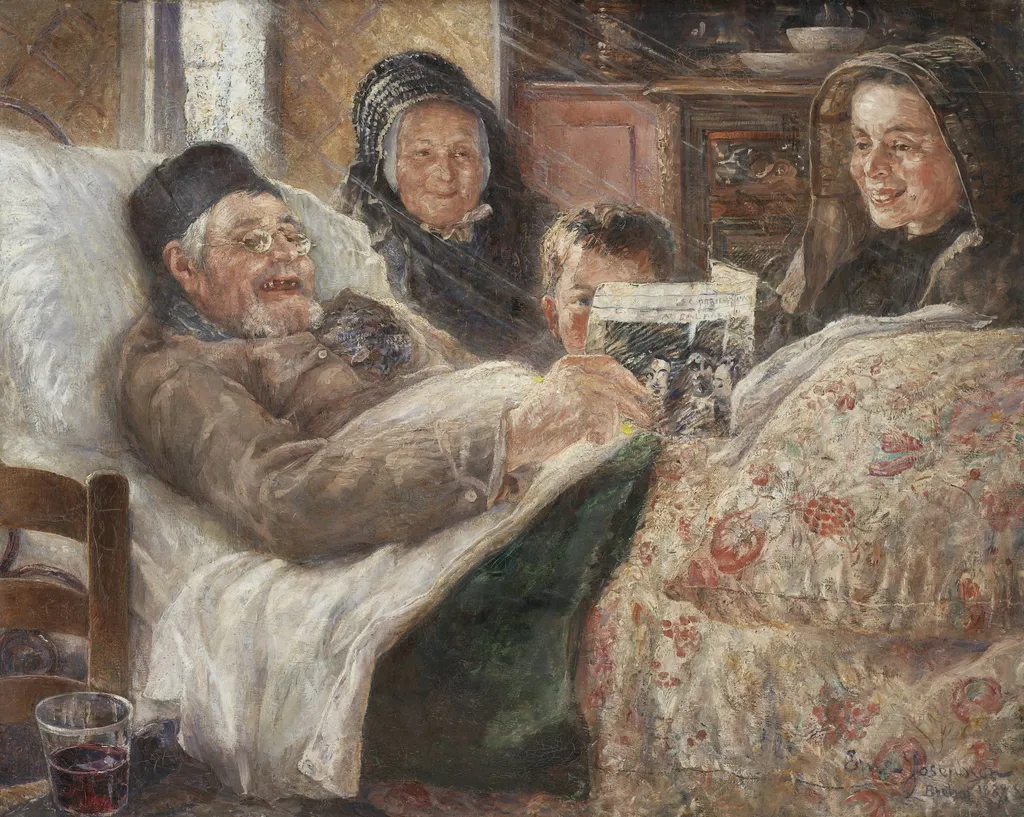
La joie de vivre is a photography by the Impressionist artist Unknown. It dates from 1887 and is held in the collection of the Statens Museum for Kunst.
About this work
Overview
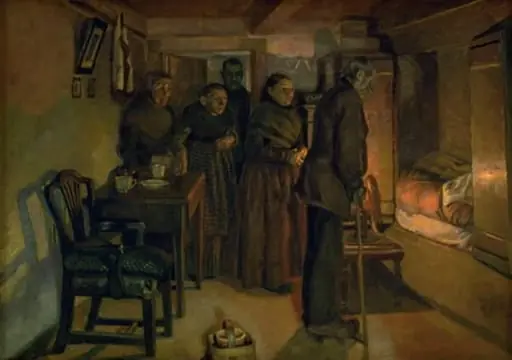
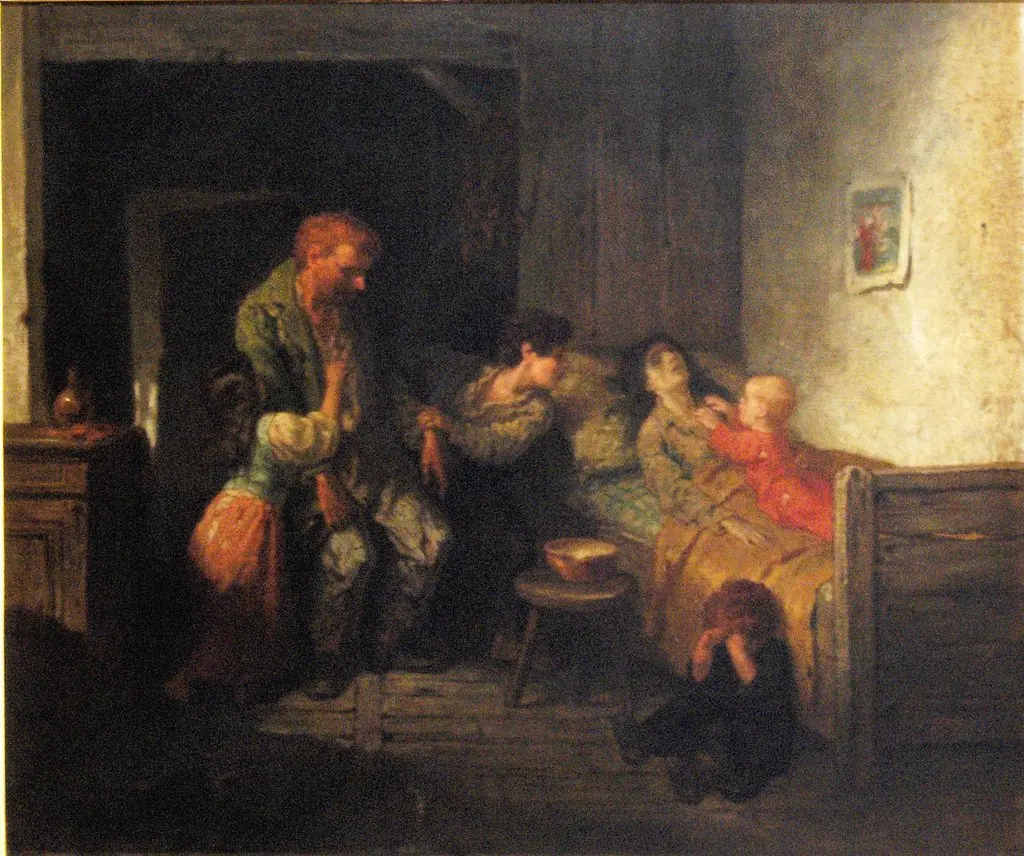
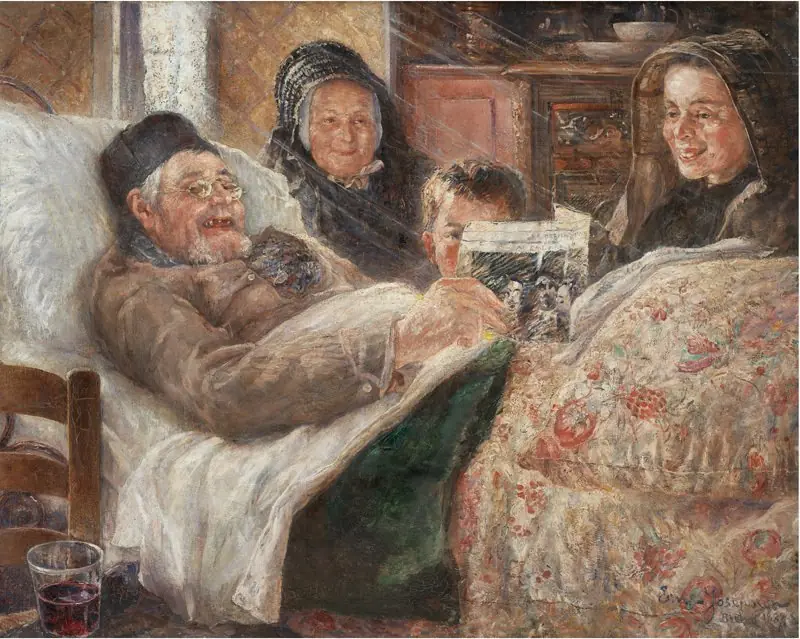
The scene depicts four individuals gathered on a couch, engaged in conversation and laughter.
Painted in 1887, La joie de vivre captures a quiet moment of domestic warmth. The scene depicts four individuals gathered on a couch, engaged in conversation and laughter. Rendered in oil, the work emphasizes ordinary life rather than grand narrative. It is currently held in the collection of the Museum of Ethnography, where it is presented as an example of intimate, everyday observation in late 19th-century art.
Subject & Meaning
The painting portrays a private, unposed interaction among family members or close companions. A man with glasses smiles broadly, a woman wears a headscarf, and another holds a child, while a glass of dark liquid rests on a nearby table. These details suggest a moment of shared comfort and routine affection. The absence of theatricality underscores a focus on the dignity and quiet joy found in daily life.
Technique & Style
Brushwork is loose and responsive, capturing movement and light with immediacy. The palette favors warm, earthy tones—ochres, browns, and muted reds—that enhance the sense of intimacy. Soft, diffused lighting falls naturally across the figures and furnishings, avoiding harsh contrasts. The technique reflects an interest in transient moments, aligning with broader trends in late 19th-century observational painting.
History & Provenance
The painting was completed in 1887 by an artist whose identity remains unverified in public records. It entered the Museum of Ethnography’s collection in the early 20th century, likely through private donation or acquisition. Its attribution and origin have not been the subject of scholarly controversy, and it has been consistently displayed as a representative work of domestic genre painting from the period.
Context
Created during a time when urban life was rapidly changing, the work reflects a growing interest in the private sphere as a subject worthy of artistic attention. While not formally part of the Impressionist movement, its emphasis on light, informal composition, and ordinary subjects echoes similar concerns among artists seeking to depict modern life beyond formal portraiture or historical themes.
Legacy
La joie de vivre remains a quiet example of how everyday scenes were elevated through attentive observation. It contributes to broader discussions about the representation of domestic life in art, particularly in non-academic or regional contexts. Though not widely reproduced, it continues to be studied for its subtle emotional resonance and technical restraint.
Artist & collection

 Domestic Scene
 Giacomo and Cardinal Marco, investing Andrea, Abbot of San Zeno, with his Benefice
 The Nymph of Fontainebleau
 Portrait of a Woman
 Madonna and Child with Saints in the Enclosed Garden
 Venus and Minerva
 Family Group of Four on Sofa
 Wall painting from Room H of the Villa of P. Fannius Synistor at Boscoreale