Artwork
Znachor (Witch Doctor)
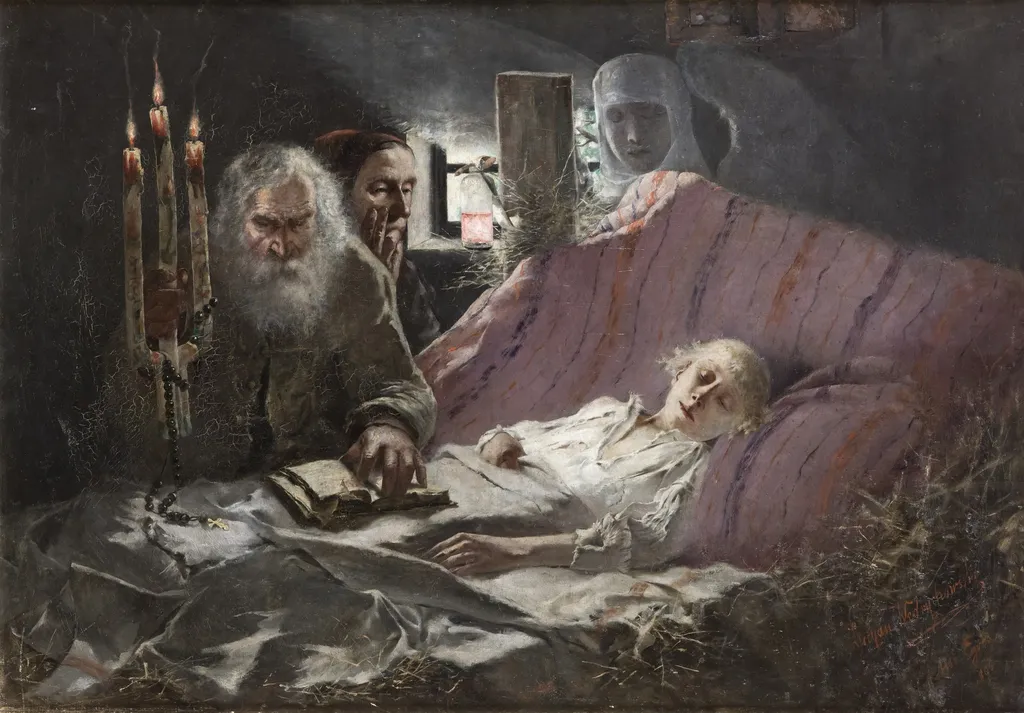
Znachor (Witch Doctor) is an oil painting by the Post-Impressionist artist Lucjan Wędrychowski. It dates from 1898 and is held in the collection of the National Museum in Kraków.
About this work
Overview
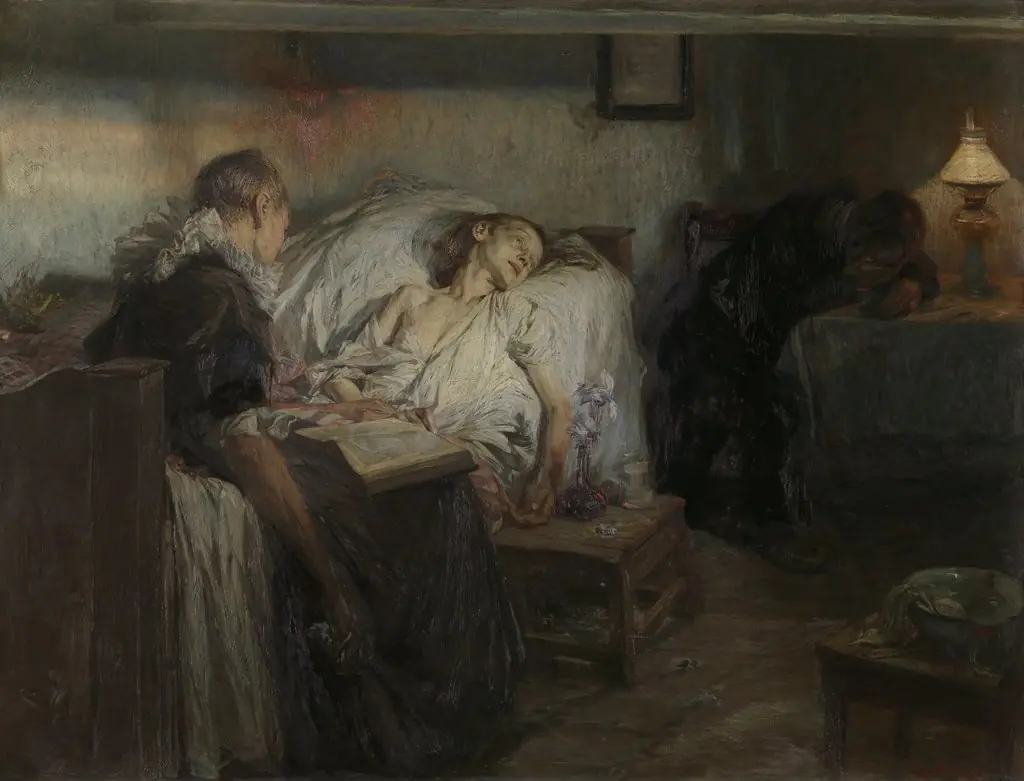
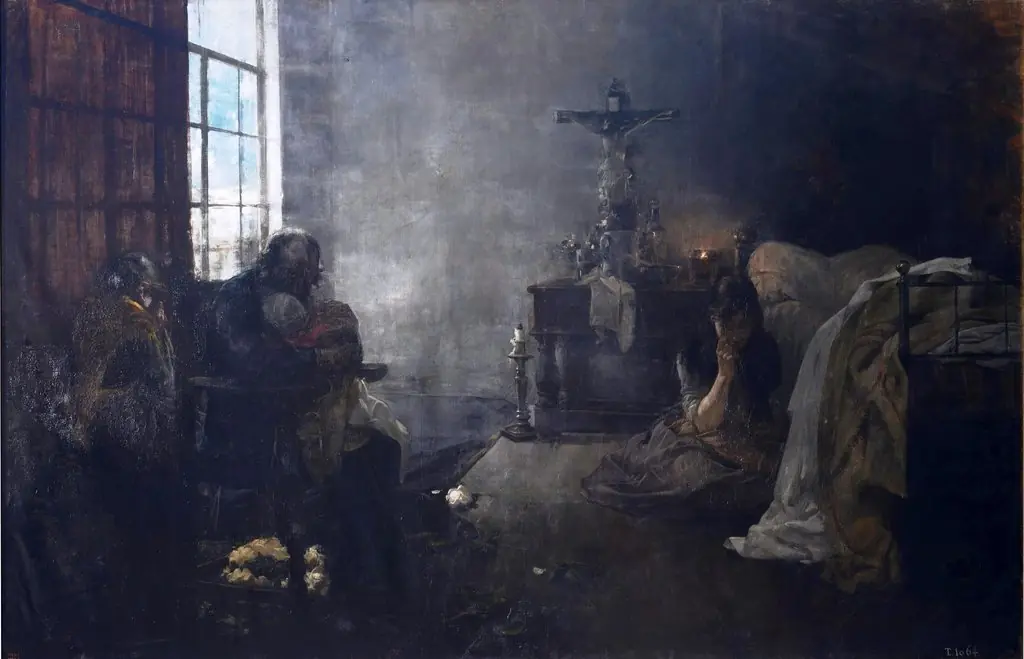
Painted in 1898 by Lucjan Wędrychowski, Znachor is an oil-on-canvas work currently housed in the National Museum in Kraków. It depicts a solitary figure in a dim interior, engaged in a ritual act surrounded by symbolic objects. The composition emphasizes stillness and atmosphere over narrative action, inviting contemplation of folk belief and domestic spirituality in late 19th-century Poland.
Subject & Meaning
The scene captures a moment of quiet authority, where medicine, faith, and superstition intersect in rural Polish life.
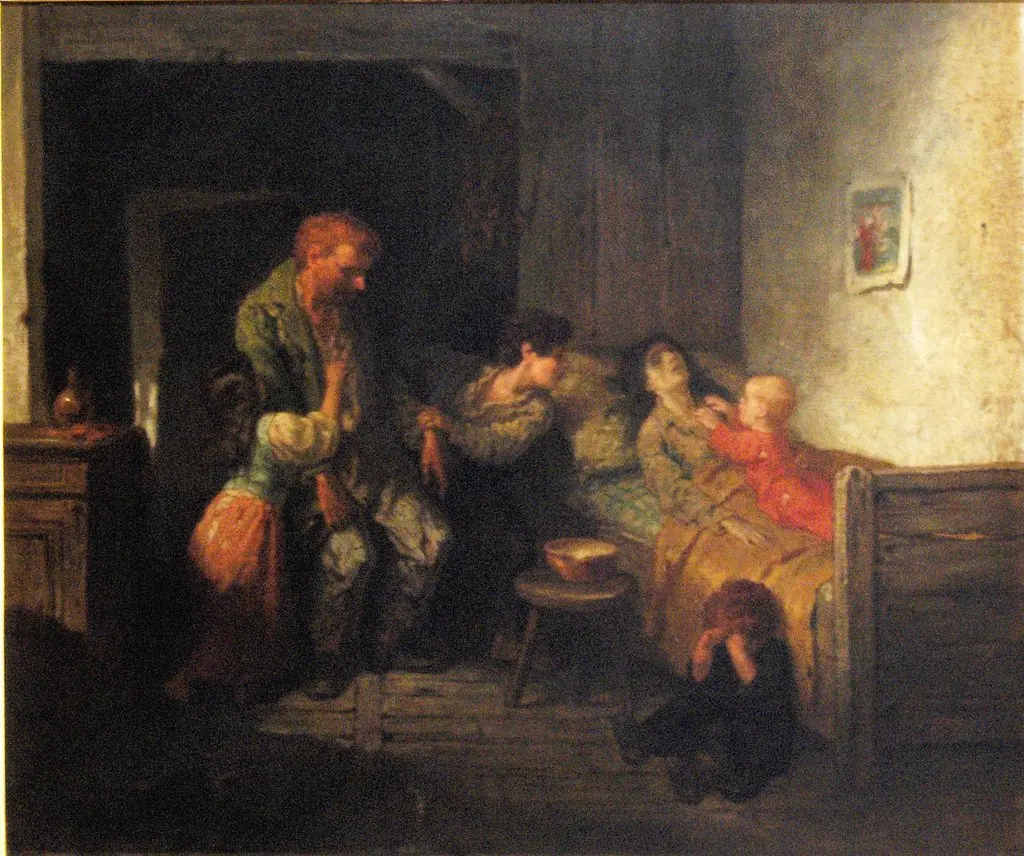
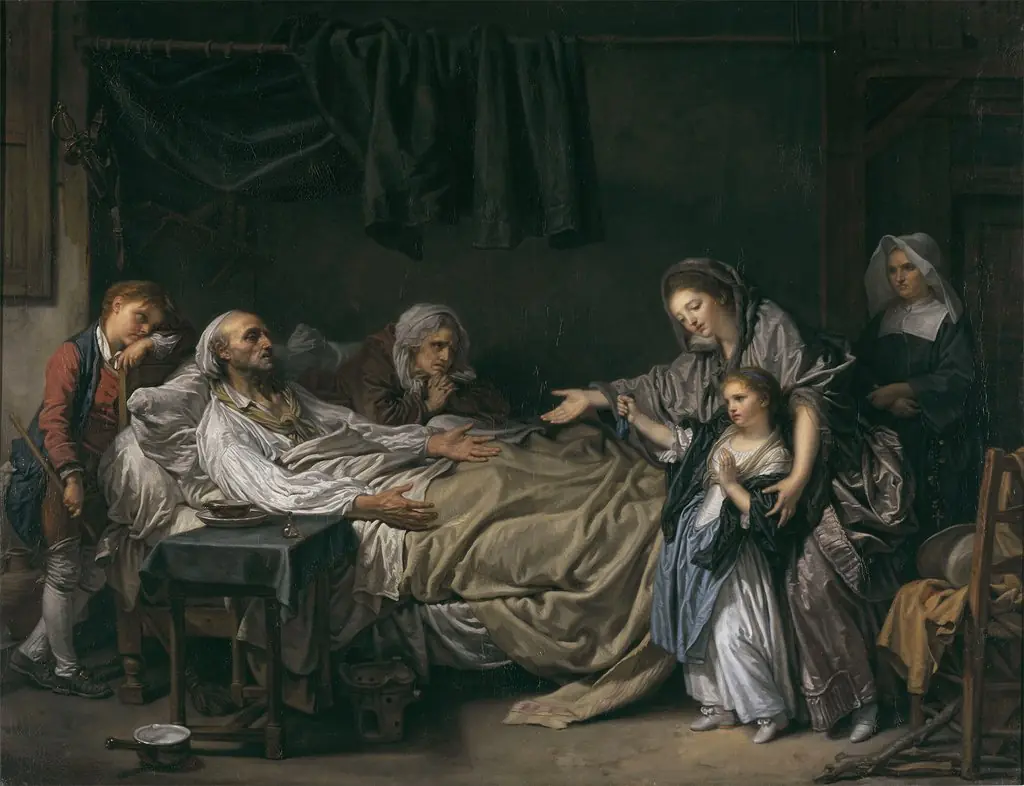
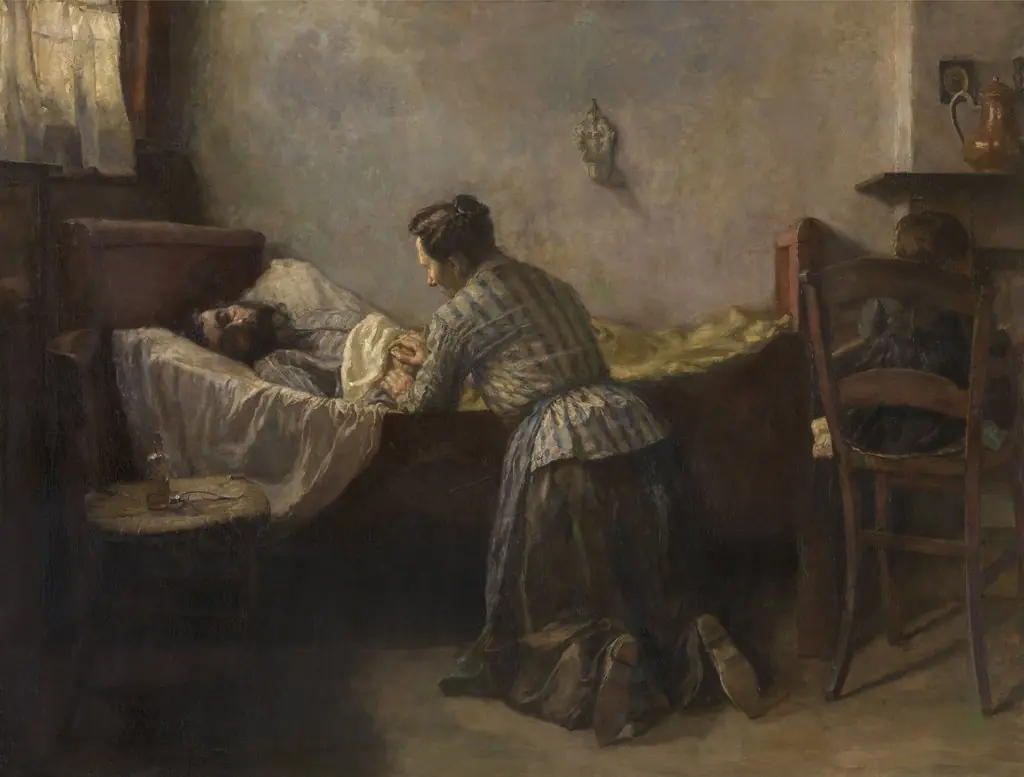
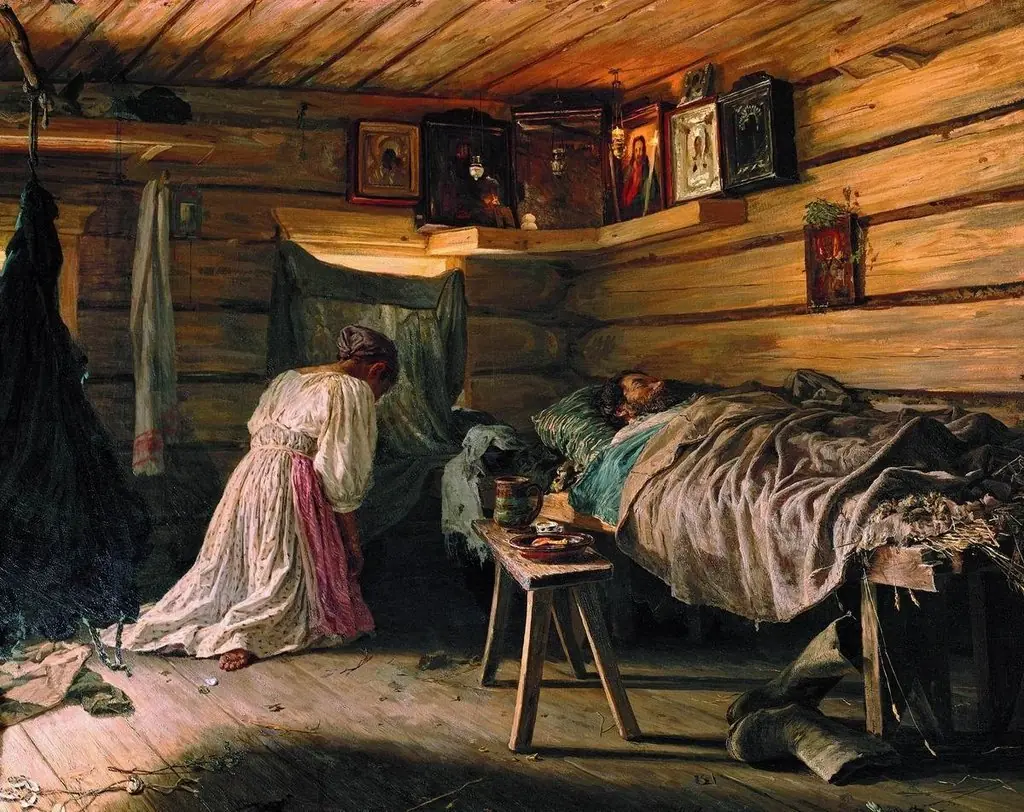
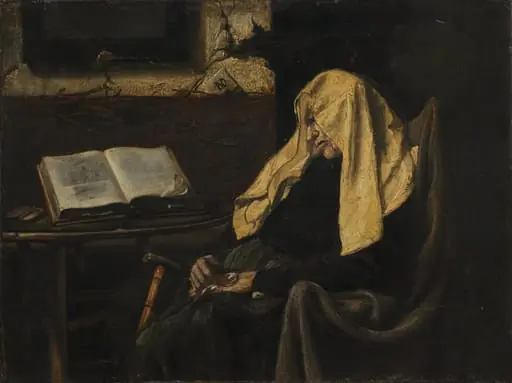
The painting portrays a traditional healer, or znachor, performing a healing rite for a reclining woman. His white beard and open book suggest knowledge passed through oral or textual tradition, while the lit candles and rosary imply a blending of folk practice with Catholic elements. The scene captures a moment of quiet authority, where medicine, faith, and superstition intersect in rural Polish life.
Technique & Style
Wędrychowski employs a restrained palette dominated by deep browns, blacks, and muted golds to enhance the somber mood. Light is carefully directed toward the book and the woman’s form, creating strong contrasts that define the space without revealing it fully. Brushwork is precise yet unobtrusive, favoring texture and tone over dramatic gesture, reinforcing the painting’s introspective quality.
History & Provenance
Completed in 1898, the painting entered the collection of the National Museum in Kraków shortly after its creation. It remained relatively obscure outside Poland until the late 20th century, when renewed interest in regional realism brought attention to Wędrychowski’s depictions of rural customs. Its provenance is well-documented, with no evidence of public exhibition prior to its acquisition by the museum.
Context
In late 19th-century Poland, folk healers like the znachor were common in rural communities where access to formal medicine was limited. While urban intellectuals often dismissed such practices as backward, artists like Wędrychowski portrayed them with dignity, reflecting a broader cultural interest in preserving national identity through depictions of traditional life amid Austro-Hungarian rule.
Legacy
Znachor remains one of Wędrychowski’s most recognized works, frequently cited in studies of Polish realism and ethnographic art. Though not widely reproduced internationally, it continues to inform discussions on the intersection of religion, medicine, and visual culture in Eastern Europe. The painting’s quiet intensity has influenced later artists exploring similar themes of ritual and solitude.
Own this work as a print
Artist & collection