Artwork
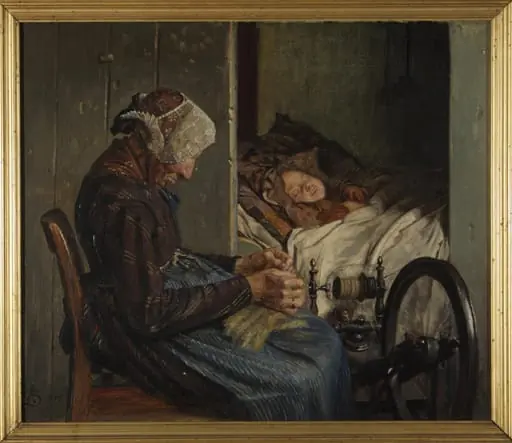
Bedstemoder med sit barnebarn
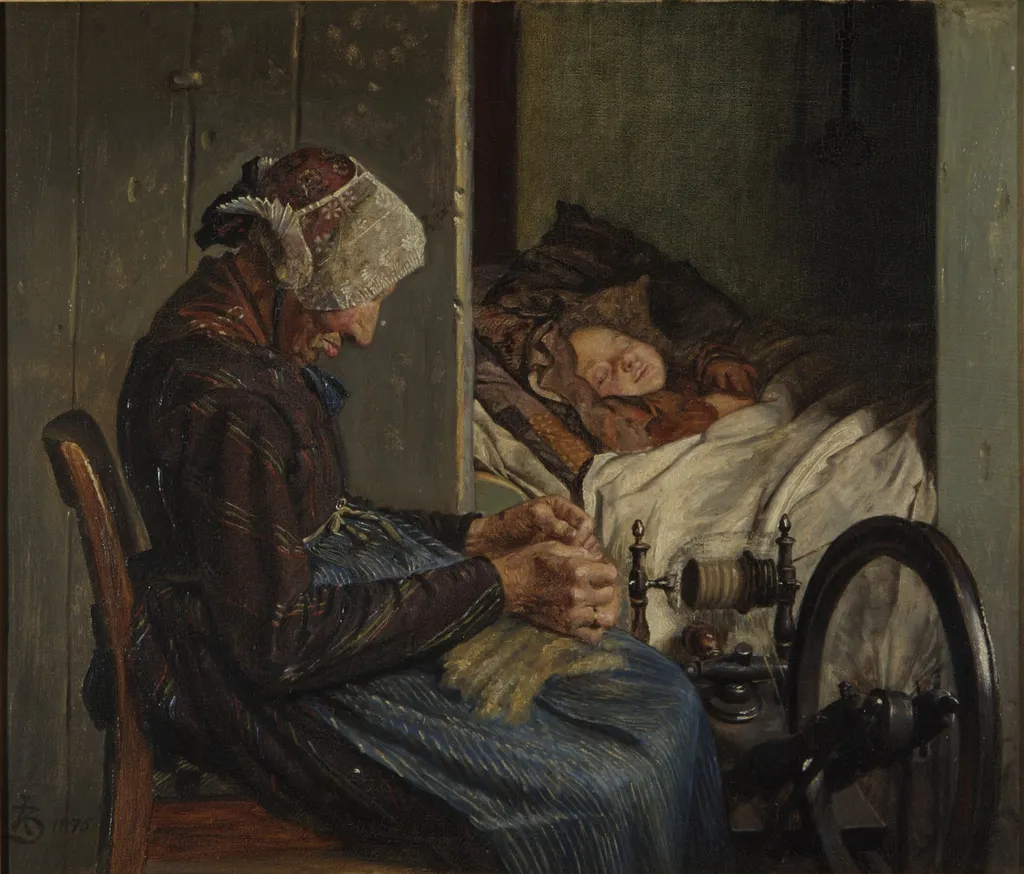
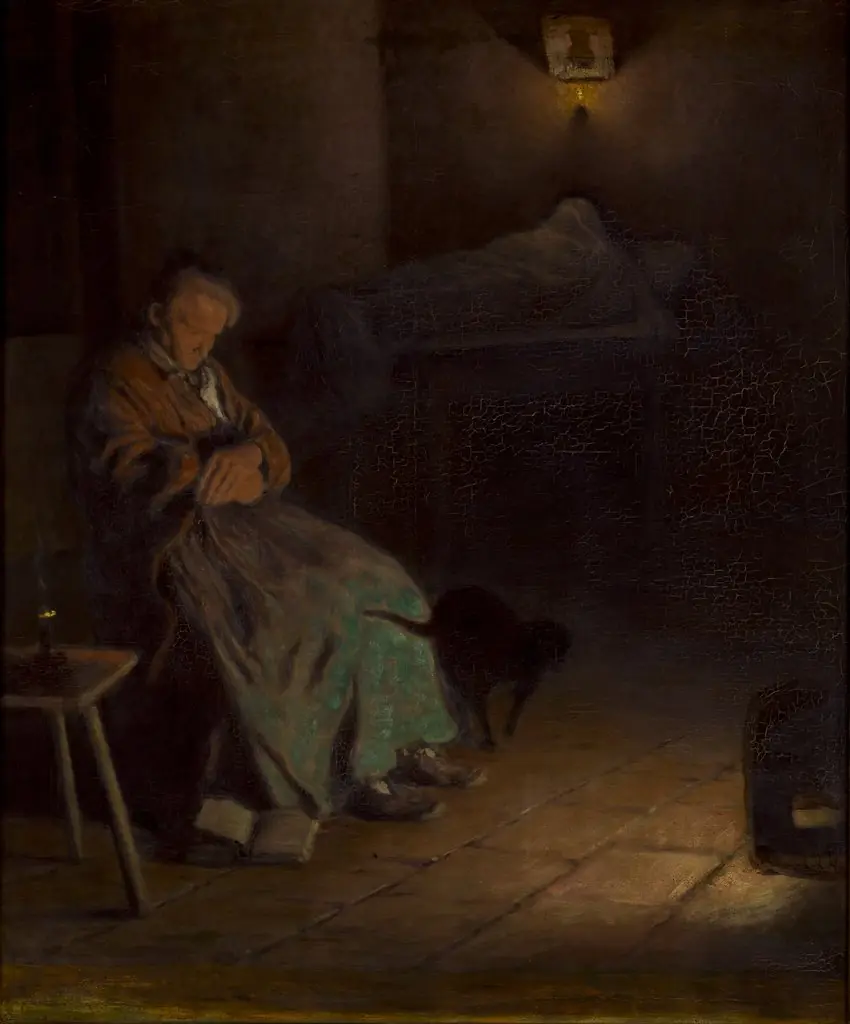
Bedstemoder med sit barnebarn is an oil painting by Kristian Zahrtmann. It dates from 1875 and is held in the collection of the Statens Museum for Kunst.
About this work
Overview
The painting is part of the permanent collection at Statens Museum for Kunst in Copenhagen, where it stands as an example of late 19th-century Danish realism.
Painted in 1875 by Danish artist Kristian Zahrtmann, this oil-on-canvas work portrays an intimate domestic moment between an elderly woman and her sleeping grandchild. It reflects Zahrtmann’s shift from academic conventions toward a more grounded, observational style. The painting is part of the permanent collection at Statens Museum for Kunst in Copenhagen, where it stands as an example of late 19th-century Danish realism.
Subject & Meaning
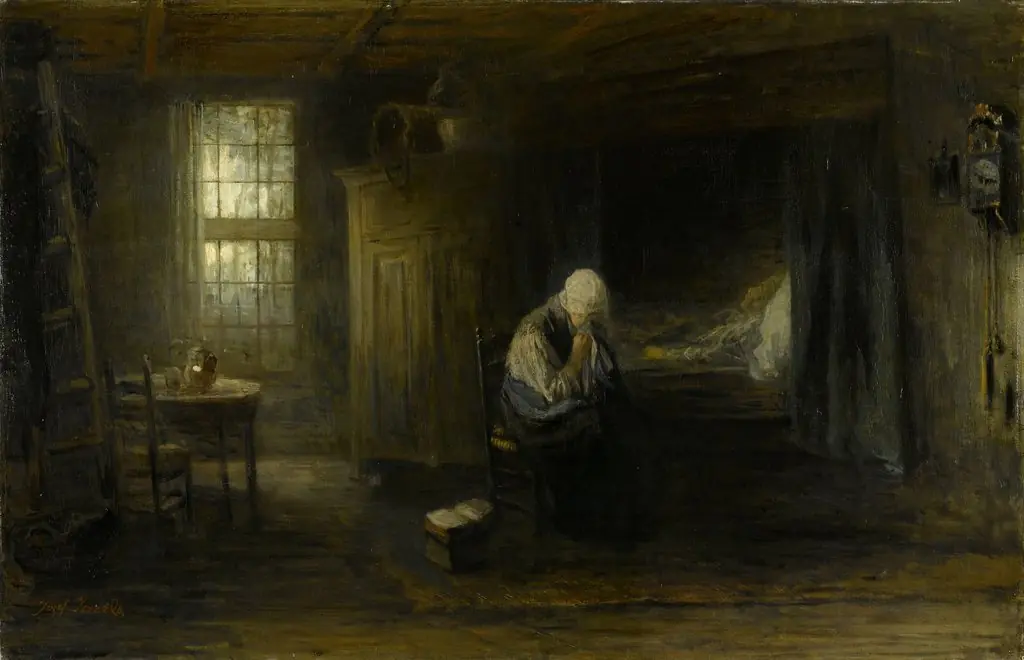
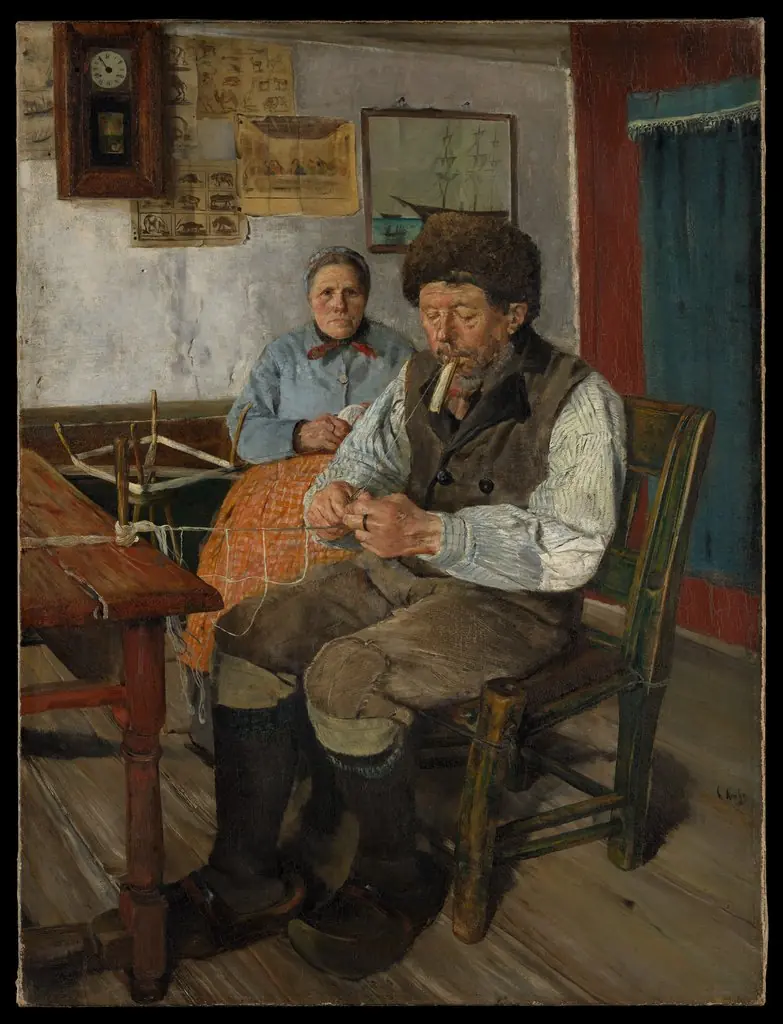
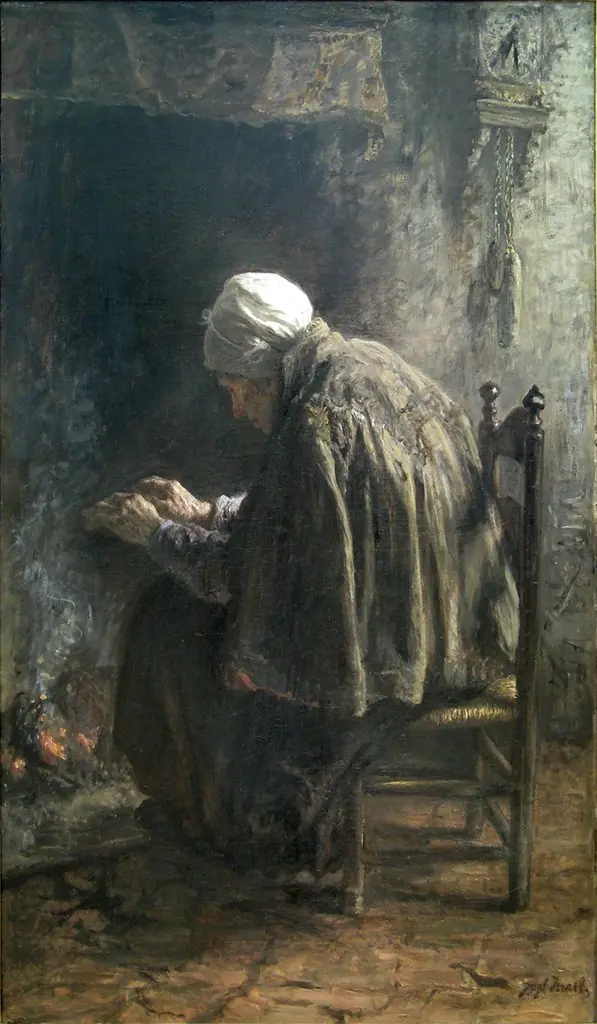
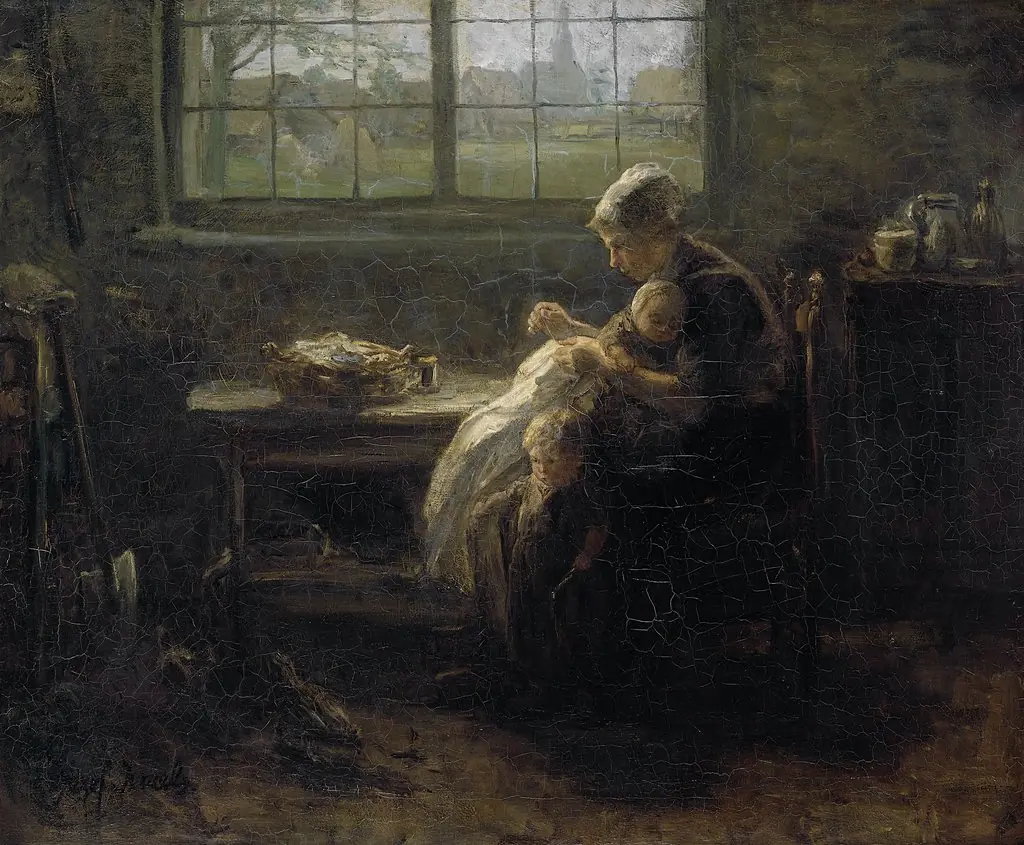
The scene captures a quiet, unguarded interlude of care: an older woman sews by dim light while her grandchild rests nearby. No narrative drama is present—instead, the focus lies in the tenderness of routine labor and generational proximity. The act of sewing suggests continuity, duty, and the quiet endurance of domestic life, rendered without sentimentality or idealization.
Technique & Style
Zahrtmann employs a restrained palette of earth tones and soft contrasts to evoke warmth within a dim interior. Light falls subtly across the woman’s hands and the child’s blanket, using chiaroscuro to model form without theatricality. Brushwork is deliberate yet unobtrusive, emphasizing texture in fabric and wood. The composition is tightly framed, drawing attention to the physical closeness of the two figures.
History & Provenance
Created during Zahrtmann’s formative years as a realist, the painting entered the collection of Statens Museum for Kunst shortly after its completion. It remained largely within Danish institutional hands, with no record of public exhibition beyond national collections. Its preservation reflects its significance as an early example of Zahrtmann’s move away from historical subjects toward intimate, everyday scenes.
Context
In the 1870s, Danish art was transitioning from the romanticized ideals of the Golden Age toward a more direct engagement with ordinary life. Zahrtmann, alongside contemporaries like P.S. Krøyer, embraced naturalism, focusing on working-class interiors and female labor. This painting aligns with broader European trends in realism, yet retains a distinctly Nordic restraint in tone and composition.
Legacy
Though not widely reproduced, the painting contributes to understanding Zahrtmann’s evolution as an artist and the development of Danish realism. It stands as a quiet testament to the dignity of domestic labor and the unspoken bonds between generations. Its presence in a national collection affirms its role as a representative work of its time, valued for its sincerity rather than its spectacle.
Own this work as a print
Artist & collection
Artist
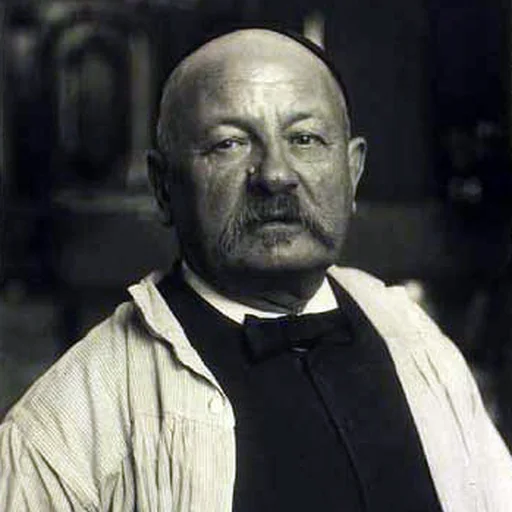
Peder Henrik Kristian Zahrtmann, known as Kristian Zahrtmann, (31 March 1843 – 22 June 1917) was a Danish painter.