Artwork
Scene outside a Dutch Farm
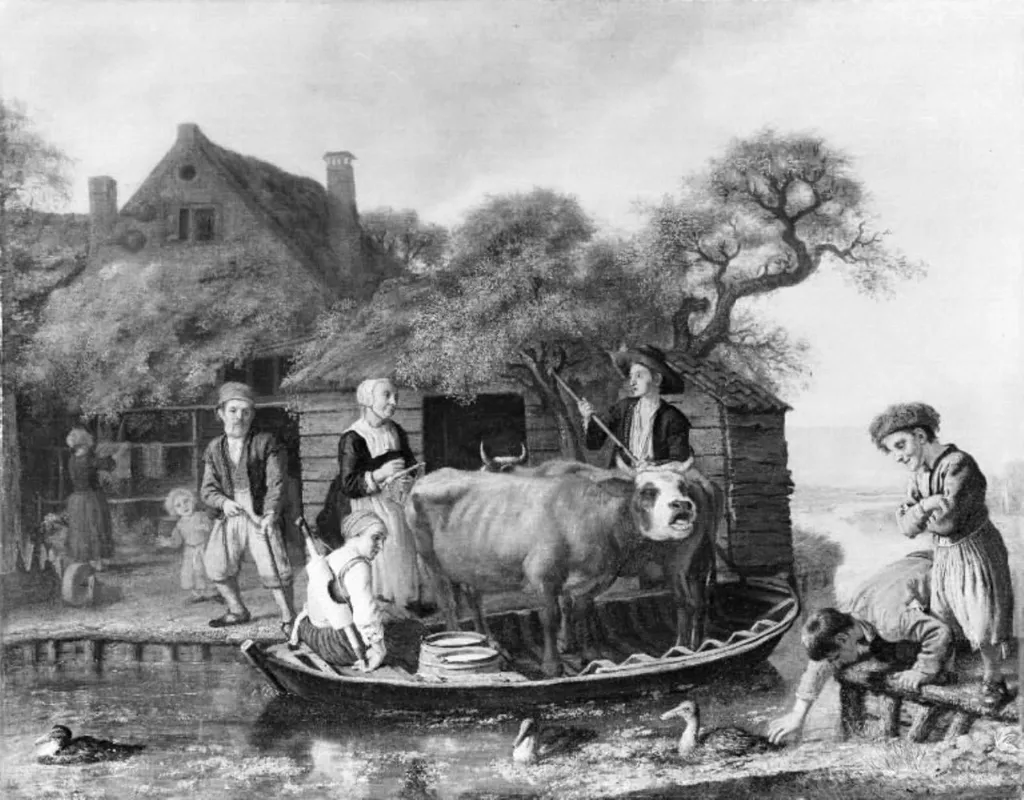
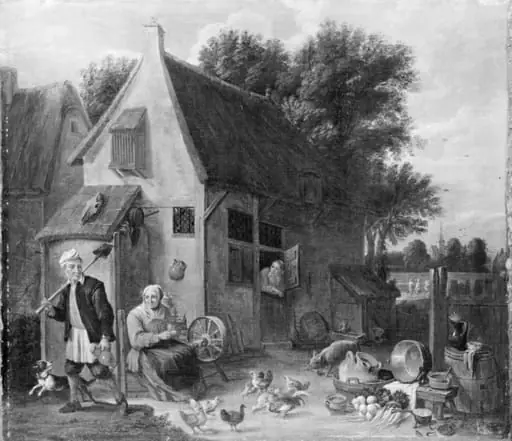
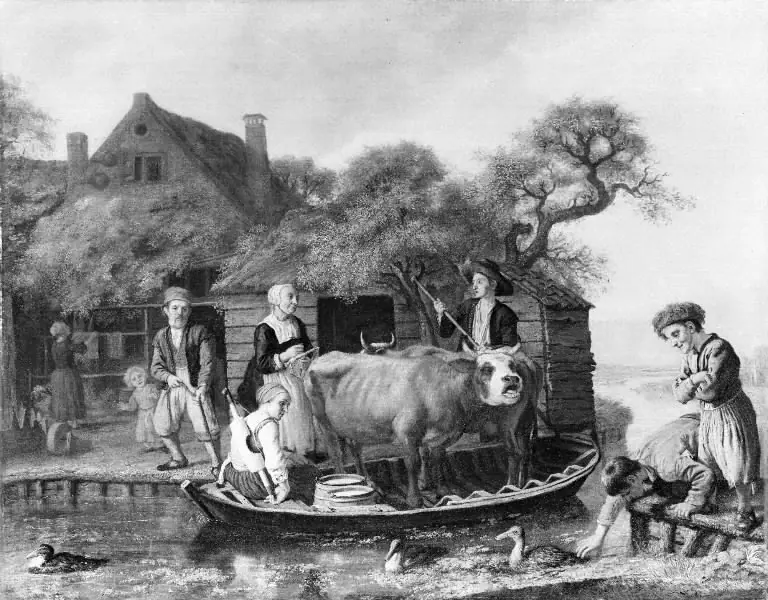
Scene outside a Dutch Farm is a photography by the Baroque artist Unknown. It dates from 1650 and is held in the collection of the Statens Museum for Kunst. This black-and-white image, dated around 1650, depicts a quiet rural moment outside a modest Dutch farmhouse.
About this work
Overview
This black-and-white image, dated around 1650, depicts a quiet rural moment outside a modest Dutch farmhouse. Created by an artist identified as 2043_person, the scene captures daily life with minimal embellishment. The work is part of the Museum of Ethnography’s collection, where it is preserved as a record of domestic and agricultural routines in 17th-century Netherlands.
Subject & Meaning
The arrangement implies coexistence between humans and animals, reflecting the integrated nature of rural labor and domestic life in early modern Dutch society.
The composition centers on a pig resting in a wooden trough, surrounded by a woman and several children. Additional figures—a man holding a stick, another leaning against the house, and a boy petting a dog—suggest a tranquil, unstructured interlude. The arrangement implies coexistence between humans and animals, reflecting the integrated nature of rural labor and domestic life in early modern Dutch society.
Technique & Style
Rendered in monochrome, the image relies on subtle tonal contrasts to define form and space. Soft, diffused lighting avoids dramatic shadows, reinforcing the ordinary, untheatrical quality of the scene. The figures are rendered with restrained detail, emphasizing their roles within the environment rather than individual identity, aligning with observational traditions in Dutch genre imagery.
History & Provenance
The work entered the Museum of Ethnography’s holdings at an unspecified date, likely as part of a broader collection documenting rural European life. Its attribution to 2043_person remains provisional, with no known documentation of its creation or early ownership. The image’s preservation suggests it was valued for its ethnographic clarity rather than artistic prestige.
Context
Produced during the Dutch Golden Age, the scene aligns with a broader cultural interest in depicting everyday rural existence. Unlike Baroque works that emphasized drama and movement, this image reflects a quieter, more documentary impulse—common among regional artists who recorded the rhythms of village life without idealization or narrative flourish.
Legacy
The image endures as a quiet testament to the material conditions of 17th-century Dutch peasant life. It contributes to historical understanding of human-animal relationships and domestic architecture, offering a non-romanticized view of rural labor. Its significance lies in its unembellished observation, preserved for study rather than display.
Artist & collection

 Domestic Scene
 Giacomo and Cardinal Marco, investing Andrea, Abbot of San Zeno, with his Benefice
 The Nymph of Fontainebleau
 Portrait of a Woman
 Madonna and Child with Saints in the Enclosed Garden
 Venus and Minerva
 Family Group of Four on Sofa
 Wall painting from Room H of the Villa of P. Fannius Synistor at Boscoreale
 Milking Scene
 Milking Scene
 Bänkelsänger vor der Dorfschenke
 Flemish Peasant Family
 Shepherdess with Cattle
 Landscape with Three Cows and Shepherds
 Drinking Company outside a Tavern
 Landscape
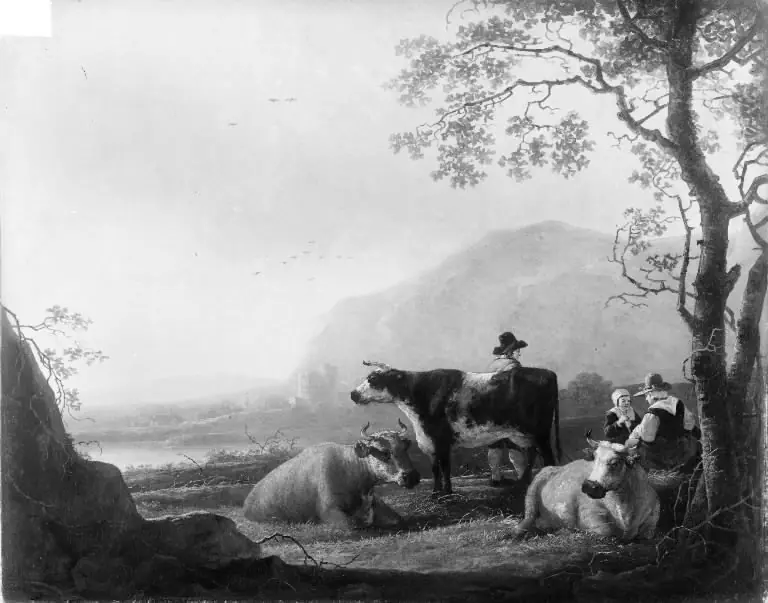 Landscape with Three Cows and Shepherds
 Landscape with shepherds and cattle at a ford
 Pige der sælger gæs
 Scene outside a Dutch Farm