Artwork
Allegory of Painting under the House of Habsburg
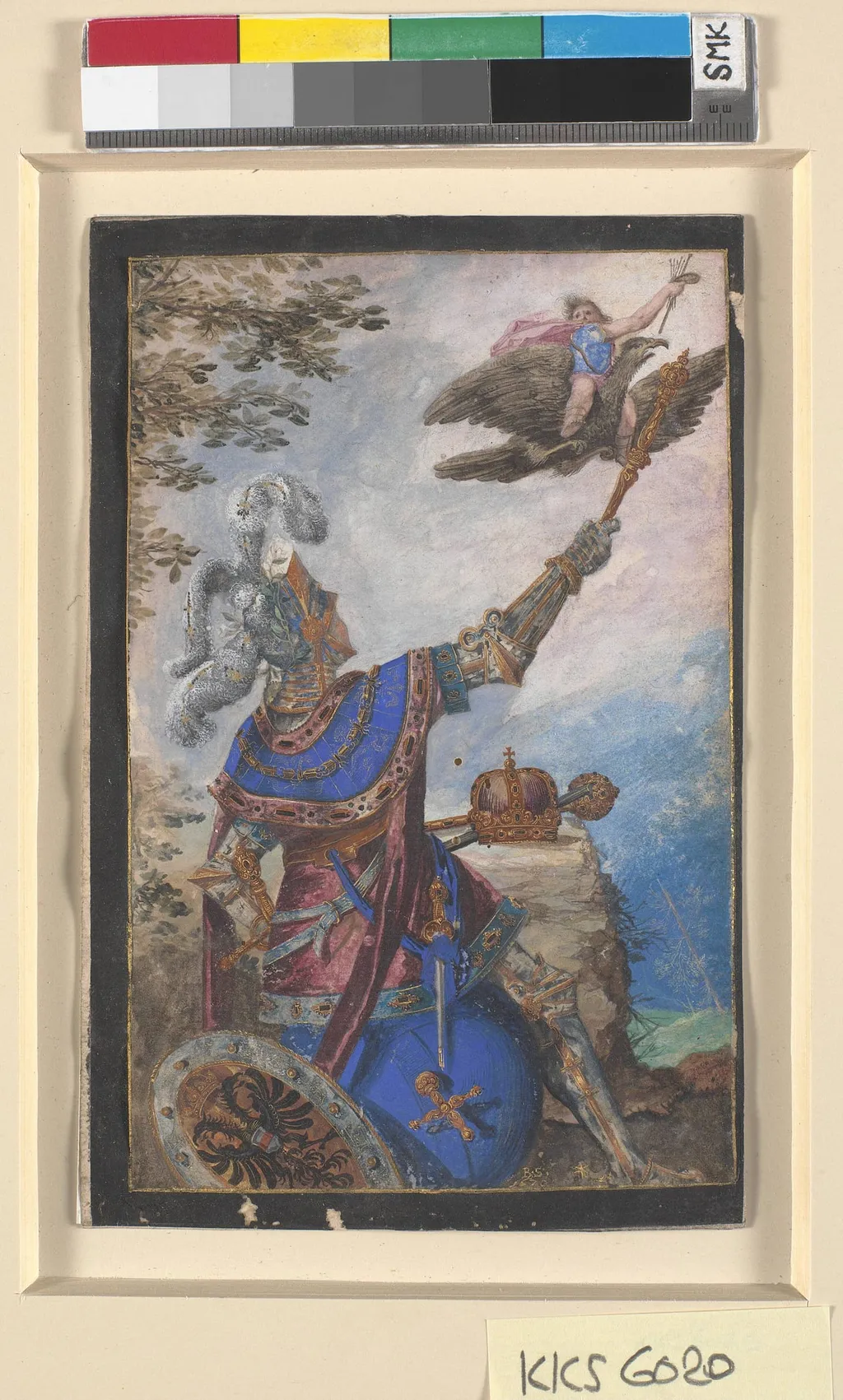
Allegory of Painting under the House of Habsburg is an unspecified painting by the Baroque artist Unknown. It dates from 1620 and is held in the collection of the Statens Museum for Kunst. This allegorical painting, dated to around 1620, depicts a symbolic fusion of martial and artistic ideals under Habsburg rule.
About this work
Overview
This allegorical painting, dated to around 1620, depicts a symbolic fusion of martial and artistic ideals under Habsburg rule.
This allegorical painting, dated to around 1620, depicts a symbolic fusion of martial and artistic ideals under Habsburg rule. It features a fully armored knight standing atop a cloud, flanked by a celestial figure bearing a painter’s brush. The work resides in the Museum of Ethnography, where it is preserved as a visual expression of early 17th-century courtly ideology, blending chivalric imagery with the elevated status of the arts.
Subject & Meaning
The knight represents the Habsburg dynasty’s martial authority, while the winged figure symbolizes the divine or intellectual force of painting. Their juxtaposition suggests that artistic creation is guided by, and subordinate to, imperial power. The cloud beneath the knight implies a heavenly sanction of Habsburg rule, positioning art not as independent expression but as a tool of political and cultural legitimacy.
Technique & Style
The painting employs rich, saturated hues—gold, crimson, and azure—though pigments have dulled over time. The armor is rendered with meticulous detail, suggesting metallic weight and texture, while the celestial figure is rendered with softer contours, contrasting earthly solidity with ethereal motion. The composition leans into Baroque dynamism, using elevated figures and dramatic spatial hierarchy to convey hierarchy and divine favor.
History & Provenance
Created in the early 1620s, the work likely originated in a Habsburg court context, possibly commissioned to celebrate the union of military strength and cultural patronage. It entered the Museum of Ethnography’s collection in the late 19th or early 20th century, likely as part of a broader acquisition of Central European allegorical works. Its journey from courtly decoration to ethnographic artifact reflects shifting perceptions of its cultural function.
Context
In the decades following the Thirty Years’ War, Habsburg rulers emphasized art as a means of reinforcing legitimacy and spiritual authority. This painting aligns with broader trends in Central European courts, where allegory served to merge religious, military, and artistic themes. The presence of a painterly figure in the heavens reflects contemporary beliefs in art as a divinely inspired endeavor, sanctioned by imperial power.
Legacy
Though not widely exhibited outside specialized collections, the painting remains a tangible example of how political regimes used visual allegory to assert cultural dominance. Its preservation in an ethnographic museum underscores its role as a historical document rather than a purely aesthetic object, offering insight into the ideological frameworks that shaped early modern European visual culture.
Artist & collection

 Domestic Scene
 Giacomo and Cardinal Marco, investing Andrea, Abbot of San Zeno, with his Benefice
 The Nymph of Fontainebleau
 Portrait of a Woman
 Madonna and Child with Saints in the Enclosed Garden
 Venus and Minerva
 Family Group of Four on Sofa
 Wall painting from Room H of the Villa of P. Fannius Synistor at Boscoreale
 Design for an illusionistic panel in the Great Hall at Blenheim Palace
 Arms of Karl Philip von Greiffenklau, Prince-Bishop of Wurzburg
 Saint Florian
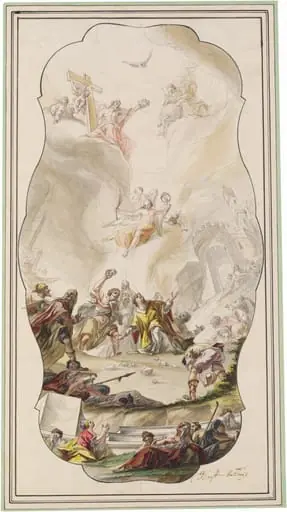 The Stoning of Saint Stephen
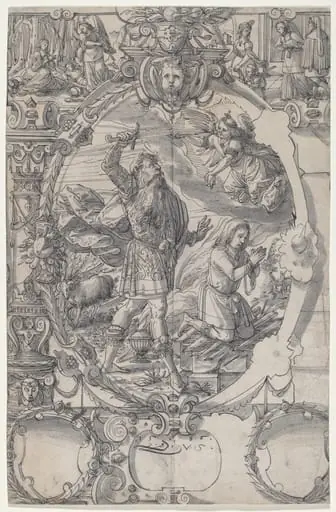 The Sacrifice of Abraham
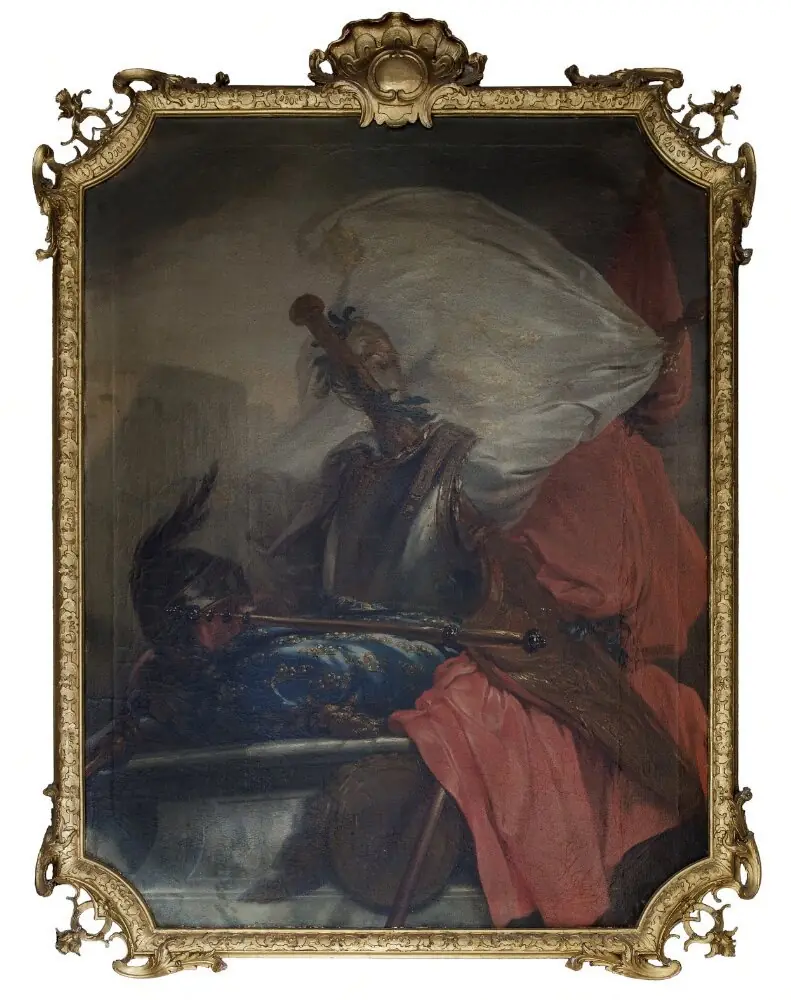 Tatila Civium
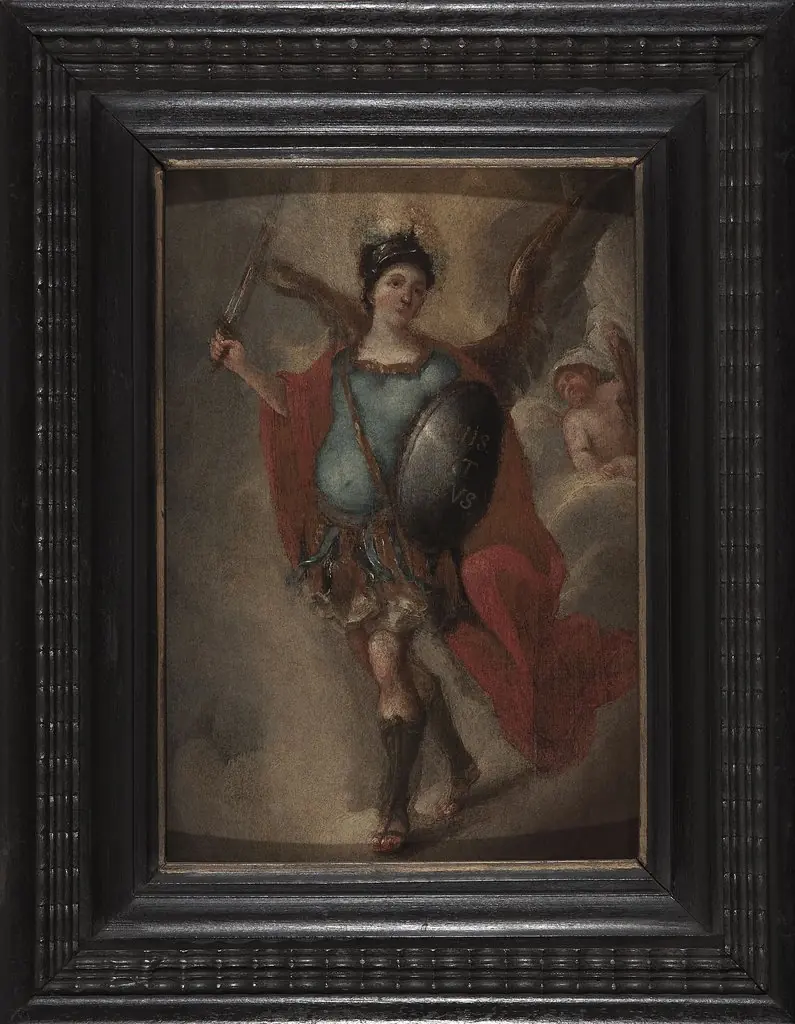 Saint Michael Archangel
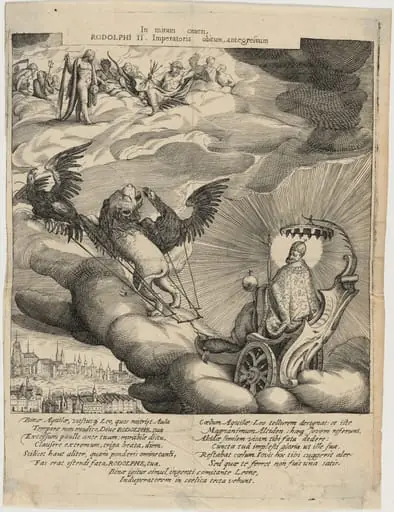 Rudolph II in Chariot Drawn by Lion and Eagle
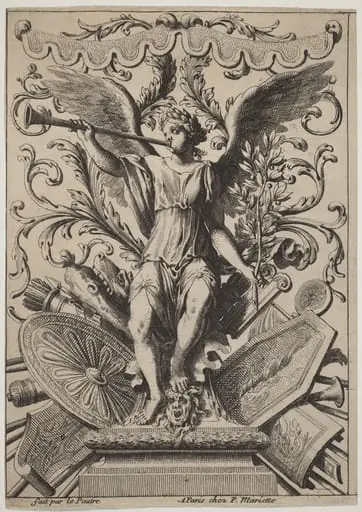 Fame on a Trophy of Arms
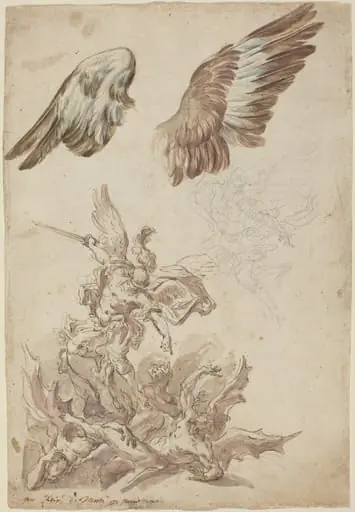 Studies for Saint Michael Defeating the Rebel Angels
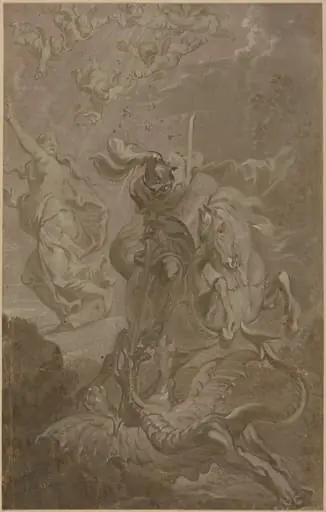 Saint George and the Dragon
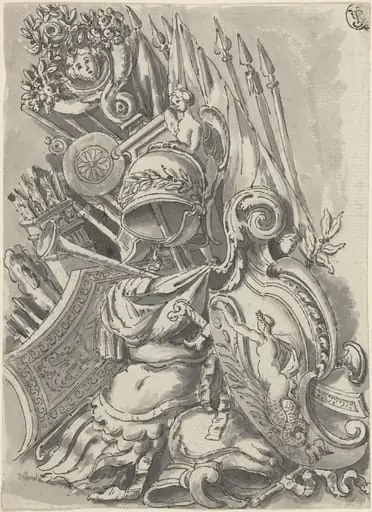 A Trophy of Arms