Artwork
Saint Florian
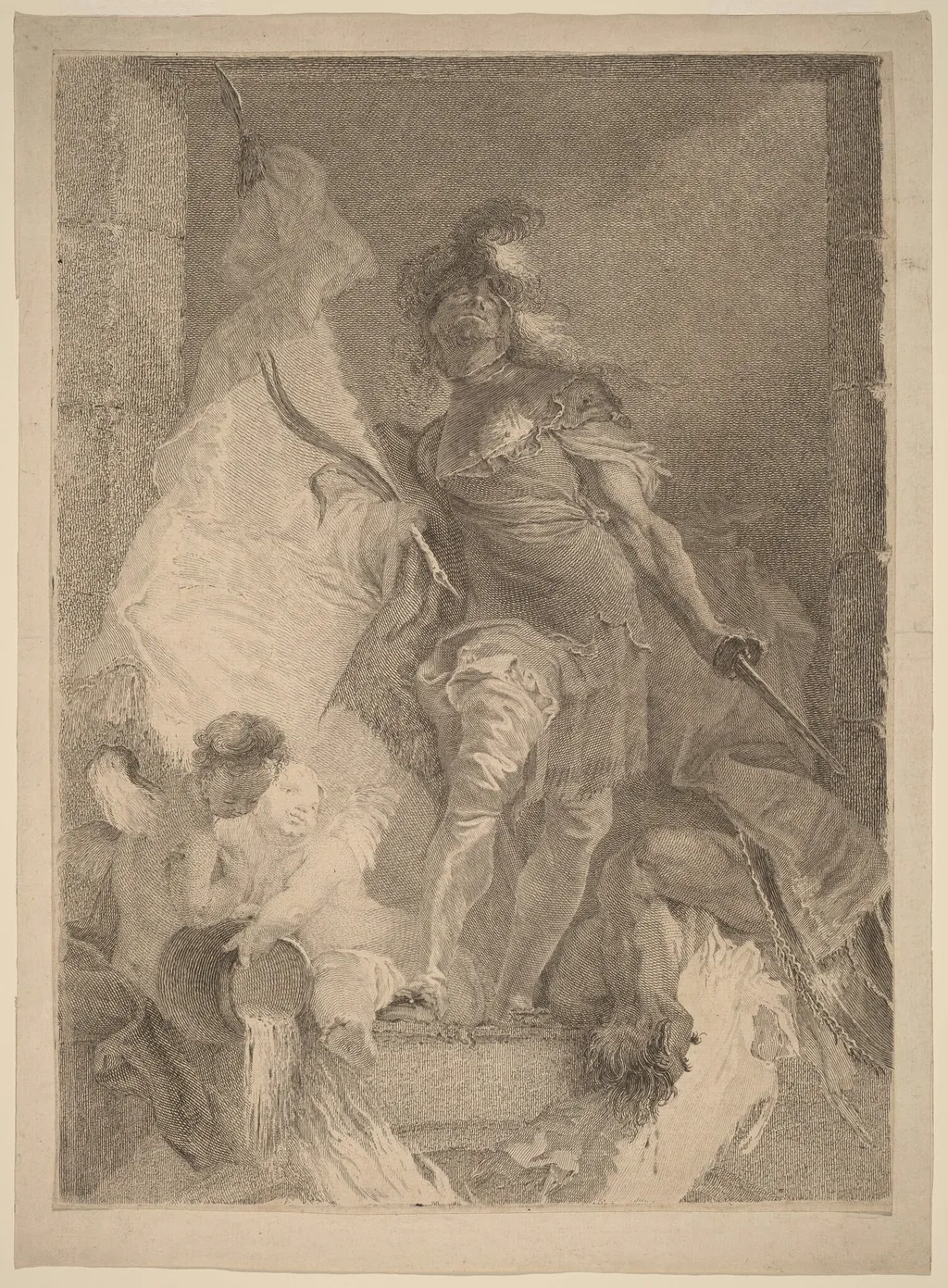
Saint Florian is an ink print by the Baroque artist Johann Beheim. It dates from 1765 and is held in the collection of the National Gallery of Art.
About this work
Overview
Saint Florian is an 18th‑century religious print executed by Johann Beheim around 1765. The work is an etching combined with engraving, produced on laid paper and later affixed to an album page. It presents the titular saint in a composed, solemn pose, reflecting the devotional purpose of the image.
Subject & Meaning
The composition depicts Saint Florian, a martyr venerated for his role as a protector against fire. He is rendered in period attire, his expression grave, underscoring the saint’s steadfast faith and the intercessory function such images served in private and communal devotion.
Technique & Style
Beheim employed both etching and engraving, allowing him to vary line weight and texture across the surface. The fine, controlled incisions produce intricate detailing of clothing and facial features, while deeper engraved lines accentuate shadows, illustrating the technical versatility characteristic of mid‑century German printmaking.
History & Provenance
Created circa 1765, the print was later mounted on an album sheet, a common practice for collectors assembling devotional compilations. Its survival in this format suggests it was valued as part of a personal or institutional assemblage rather than as a standalone work.
Context
During the mid‑1700s, religious prints circulated widely across Central Europe, serving both liturgical and didactic roles. Saint Florian’s popularity, especially in regions prone to fire hazards, made his image a frequent subject for artists like Beheim, who catered to the devotional market.
Artist & collection


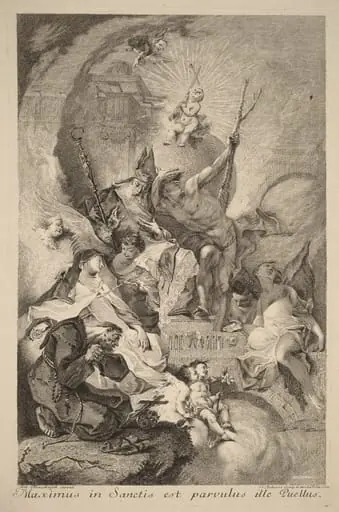 Four Saints
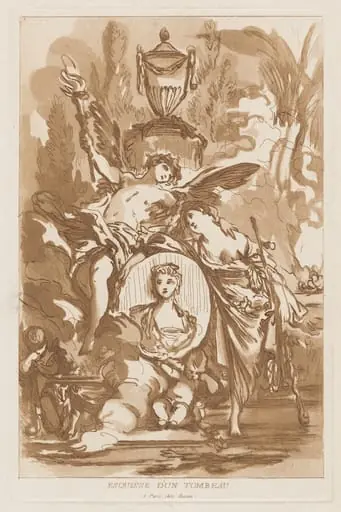 Esquisse d’un tombeau (Sketch for a Tomb)
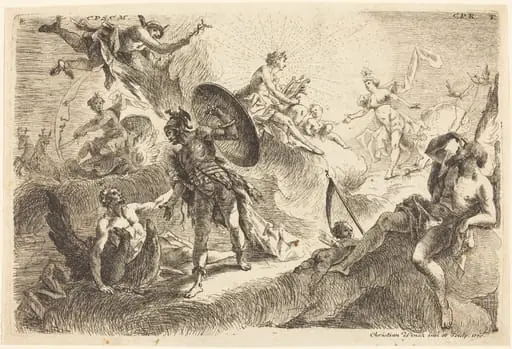 The Seven Planets
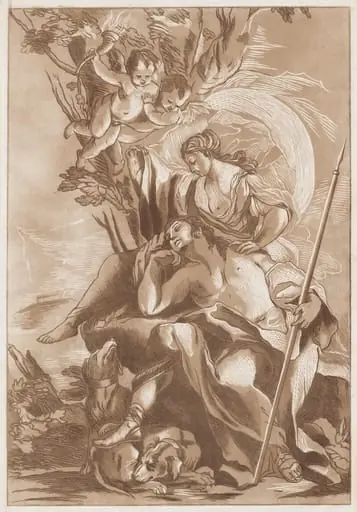 Diana and Endymion
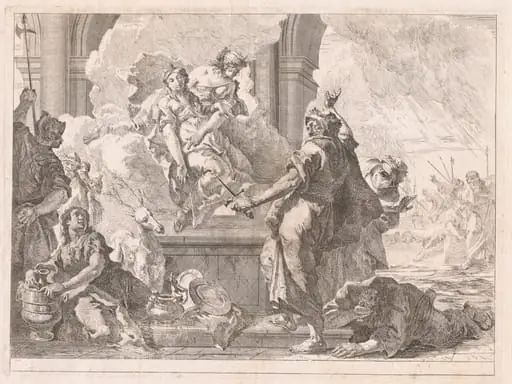 The Sacrifice of Iphigenia
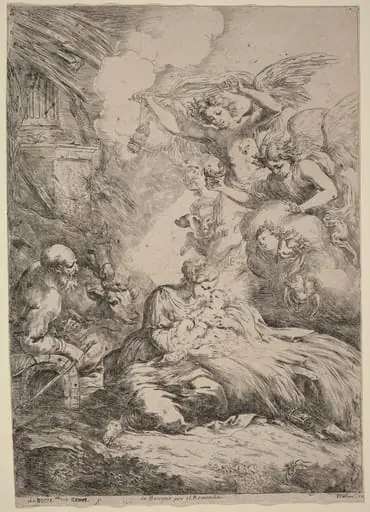 The Holy Family Adored by Angels (The Large Nativity)
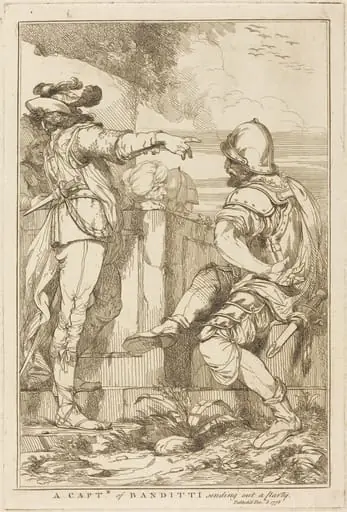 A Captn of Banditti Sending Out a Party
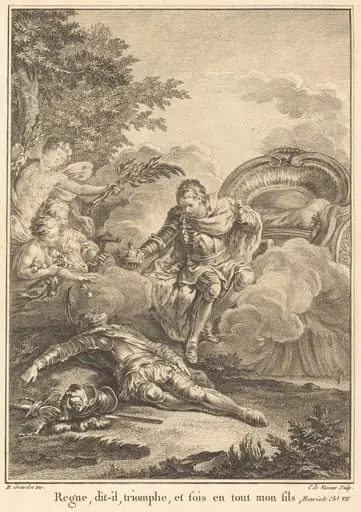 Regne, dit-il, triomphe, et sois en tout mon fils
![The Martyrdom of Saints Peter and Paul [recto], by Antonio da Trento](https://artifactworldgallery.com/img/antonio-da-trento--the-martyrdom-of-saints-peter-and-paul-recto--a51e90060085a207-w320.webp) The Martyrdom of Saints Peter and Paul [recto]
The Martyrdom of Saints Peter and Paul [recto]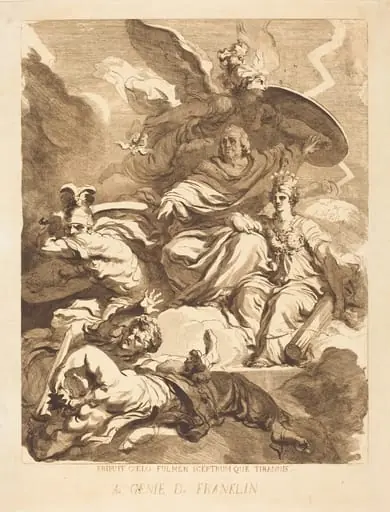 The Genius of Franklin (Au Génie de Franklin)
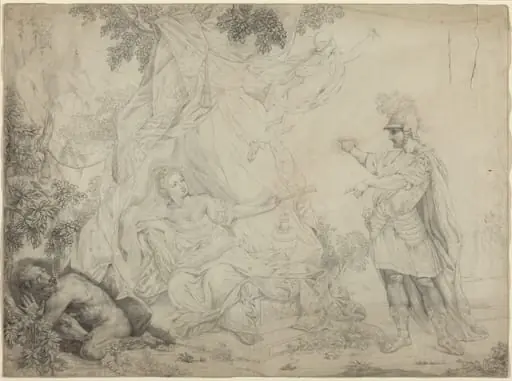 Circe and Ulysses
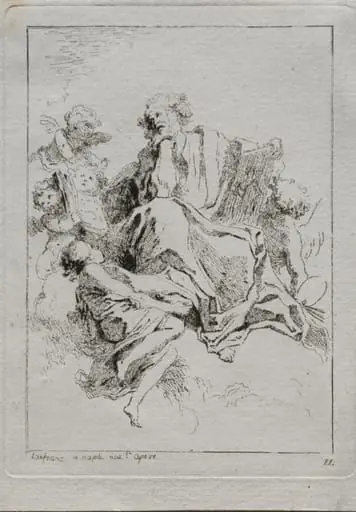 Saint Luke