Artwork
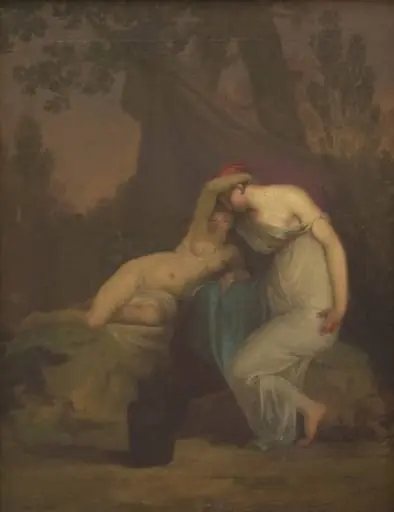
Røverbandens husholderske trøster den unge pige ved at fortælle myten om Amor og Psyche. Motiv fra Apulejus: Det gyldne æsel
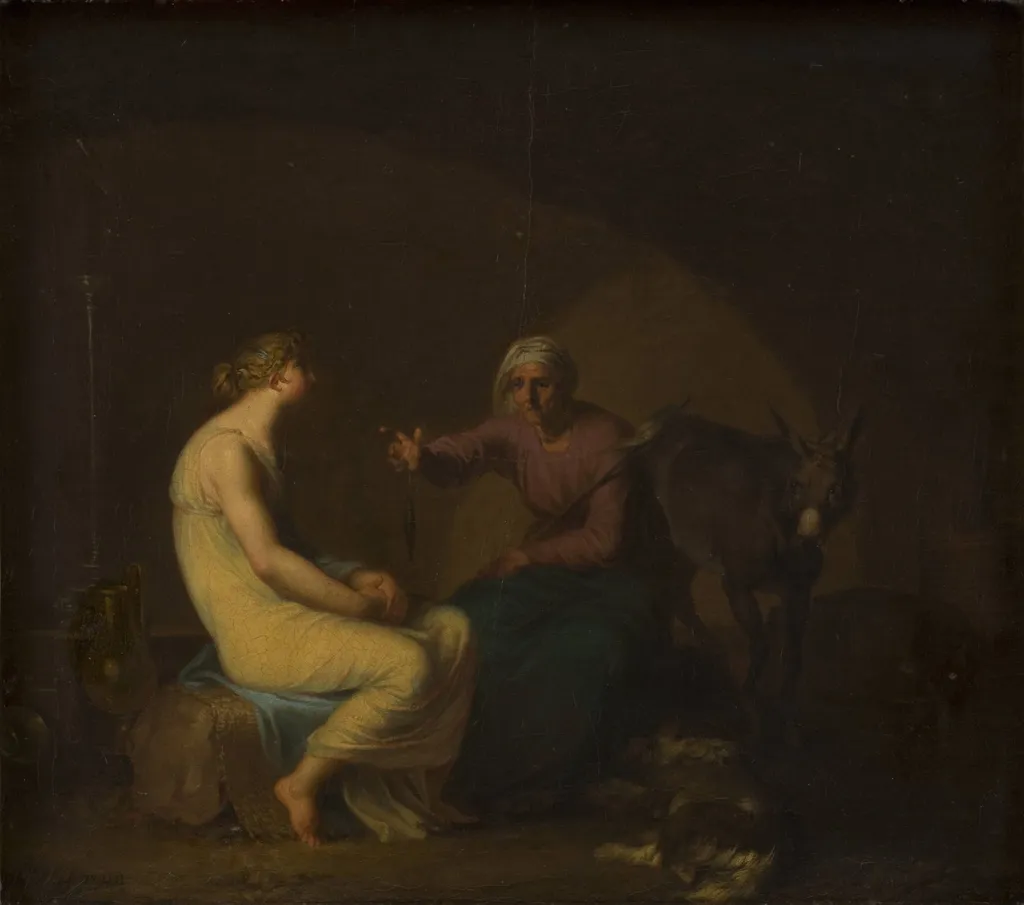
Røverbandens husholderske trøster den unge pige ved at fortælle myten om Amor og Psyche. Motiv fra Apulejus: Det gyldne æsel is a photography by the Romanticist artist Unknown. It dates from 1808 and is held in the collection of the Statens Museum for Kunst. Created in 1808 by the artist identified as 241_person, this oil painting is part of the collection of the Museum of Ethnography.
About this work
Overview
Created in 1808 by the artist identified as 241_person, this oil painting is part of the collection of the Museum of Ethnography. It portrays a domestic scene in which a housekeeper consoles a young girl by recounting the myth of Cupid and Psyche, a narrative drawn from Apuleius’s novel The Golden Ass.
Subject & Meaning
The composition shows two women seated near a rock; the elder, dressed in a white gown, gestures with her right hand as she narrates the ancient love story. The younger figure, clad in a pink top and green skirt with a white headscarf, listens attentively. The work suggests the soothing power of storytelling within a modest household setting.
Technique & Style
Employing chiaroscuro, the painter contrasts a dimly lit background with a subtle light source from the right, giving the figures a three‑dimensional presence. The handling of light and shadow, together with the emotive pose of the subjects, aligns the piece with Romantic sensibilities that prioritize feeling and imagination.
History & Provenance
The painting entered the Museum of Ethnography’s holdings after its creation in the early nineteenth century, though the exact acquisition path is not recorded in the available data. It remains attributed to the artist catalogued as 241_person.
Context
The narrative choice reflects a broader early‑1800s interest in classical mythology and literary sources, particularly the resurgence of Apuleius’s The Golden Ass in European art and literature. The domestic interior underscores the period’s fascination with everyday scenes infused with moral or educational content.
Artist & collection

 Domestic Scene
 Giacomo and Cardinal Marco, investing Andrea, Abbot of San Zeno, with his Benefice
 The Nymph of Fontainebleau
 Portrait of a Woman
 Madonna and Child with Saints in the Enclosed Garden
 Venus and Minerva
 Family Group of Four on Sofa
 Wall painting from Room H of the Villa of P. Fannius Synistor at Boscoreale
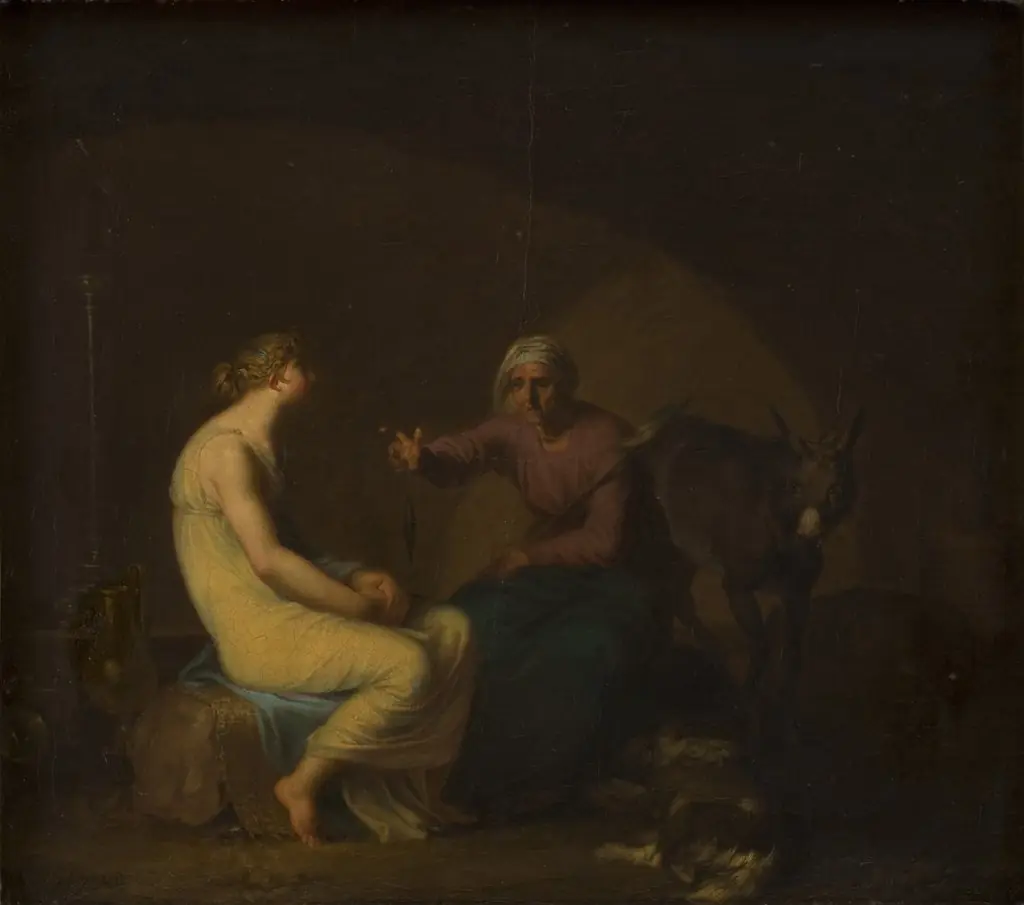 The robber's housekeeper comforts the young girl by telling the myth of Amor and Psyche. Motif from Apulejus, The Golden Donkey
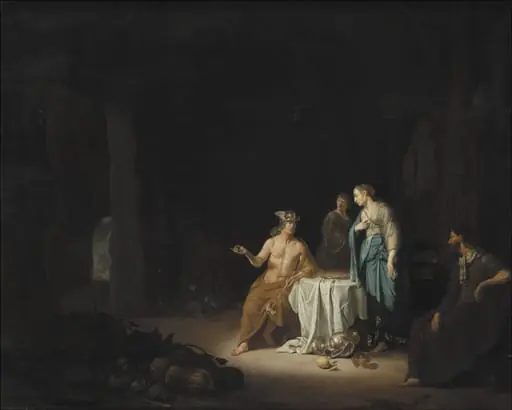 Paulus the Apostle defending himself at the Trial in Caesarea
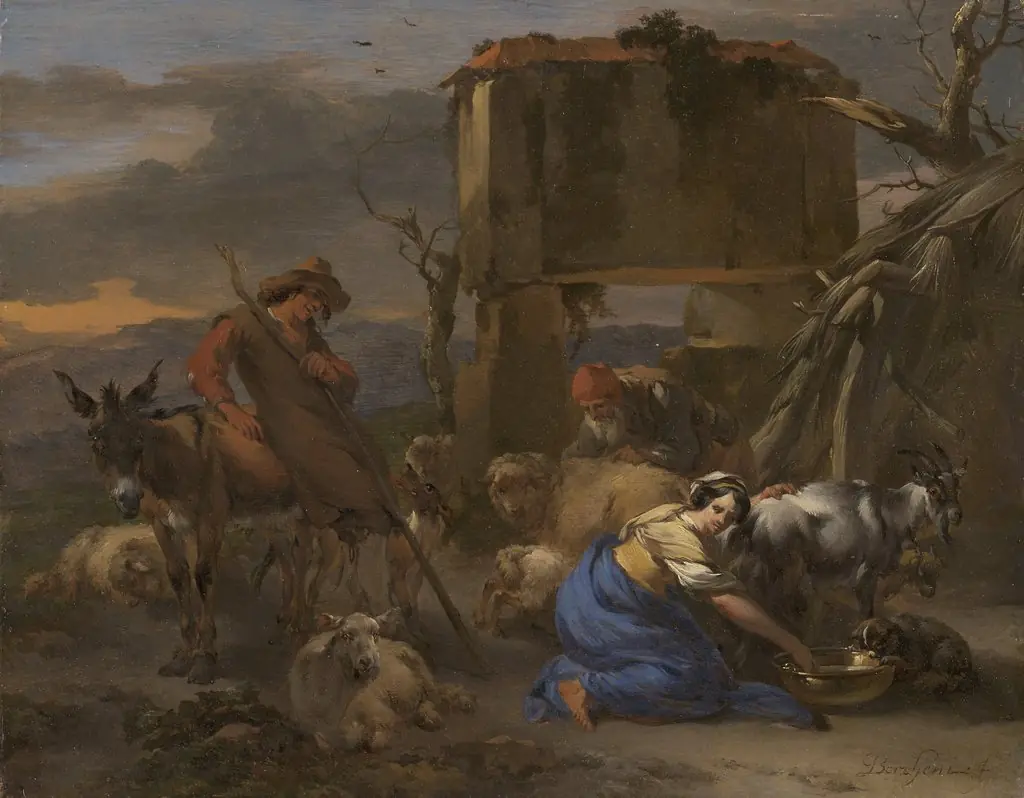 Pastoral Scene with a Shepherdess Milking a Goat
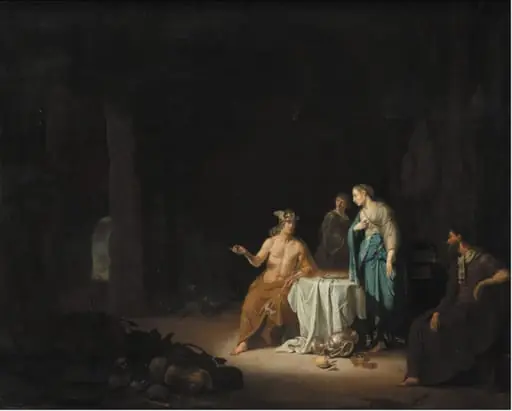 Mercury and Proserpina
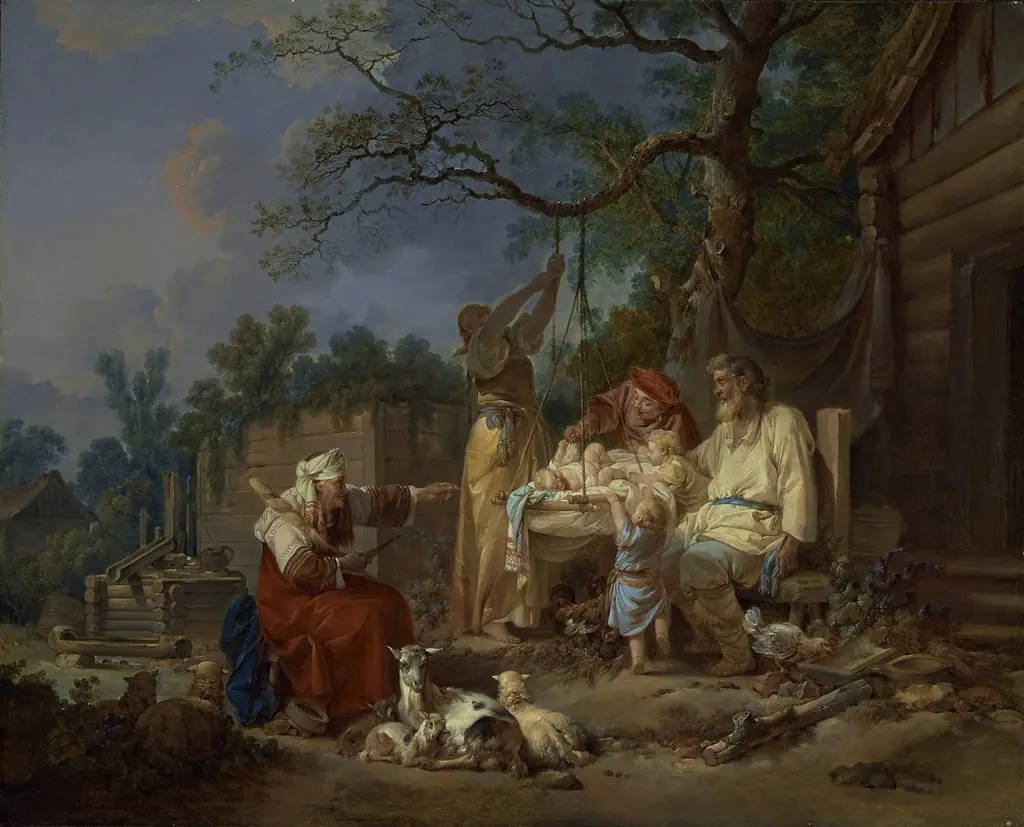 The Russian Cradle
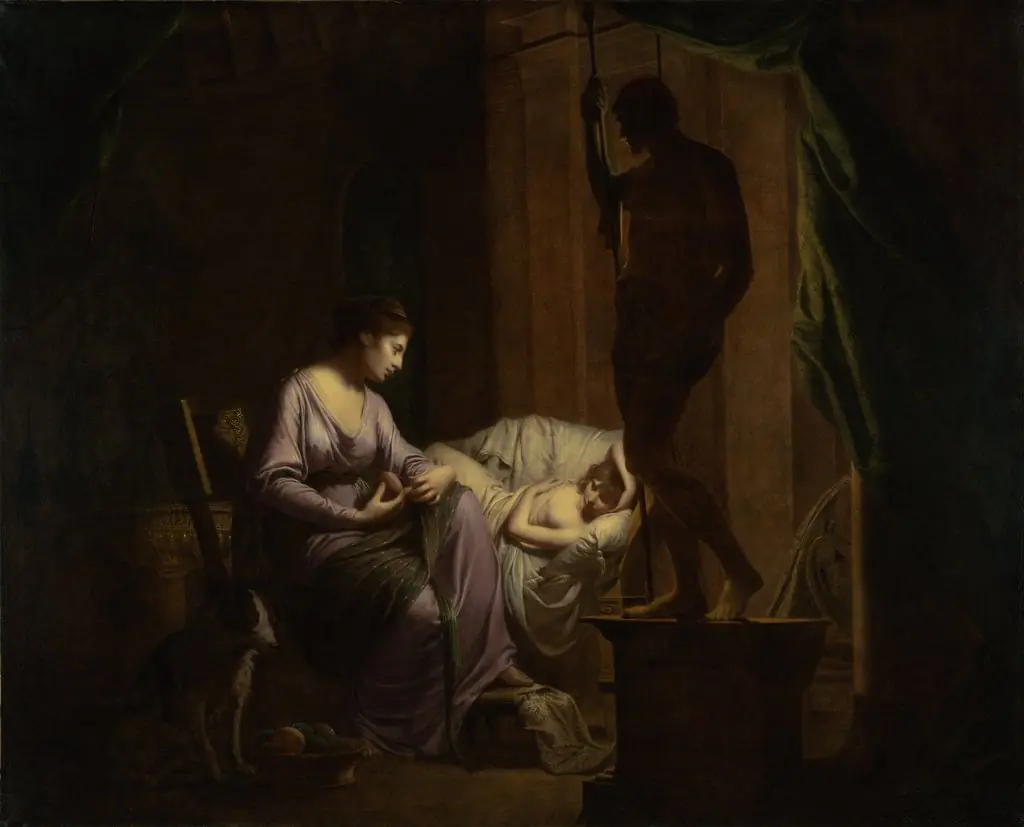 Penelope Unraveling Her Web
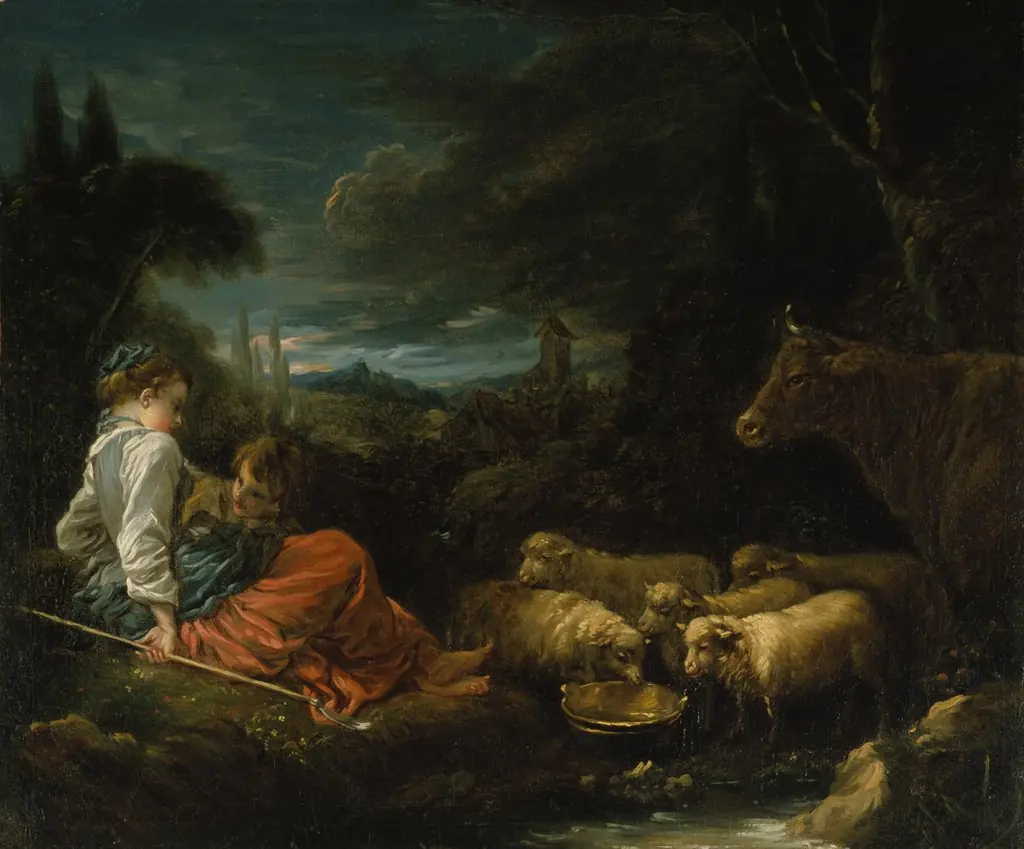 Pastoral
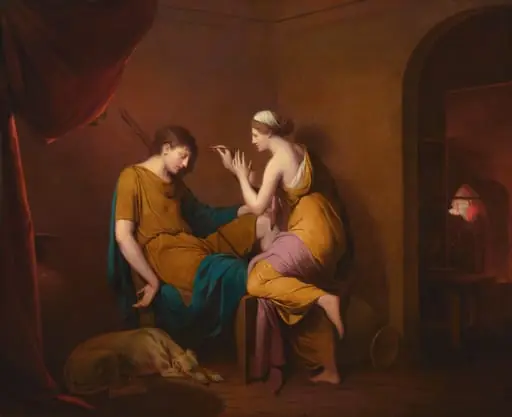 The Corinthian Maid
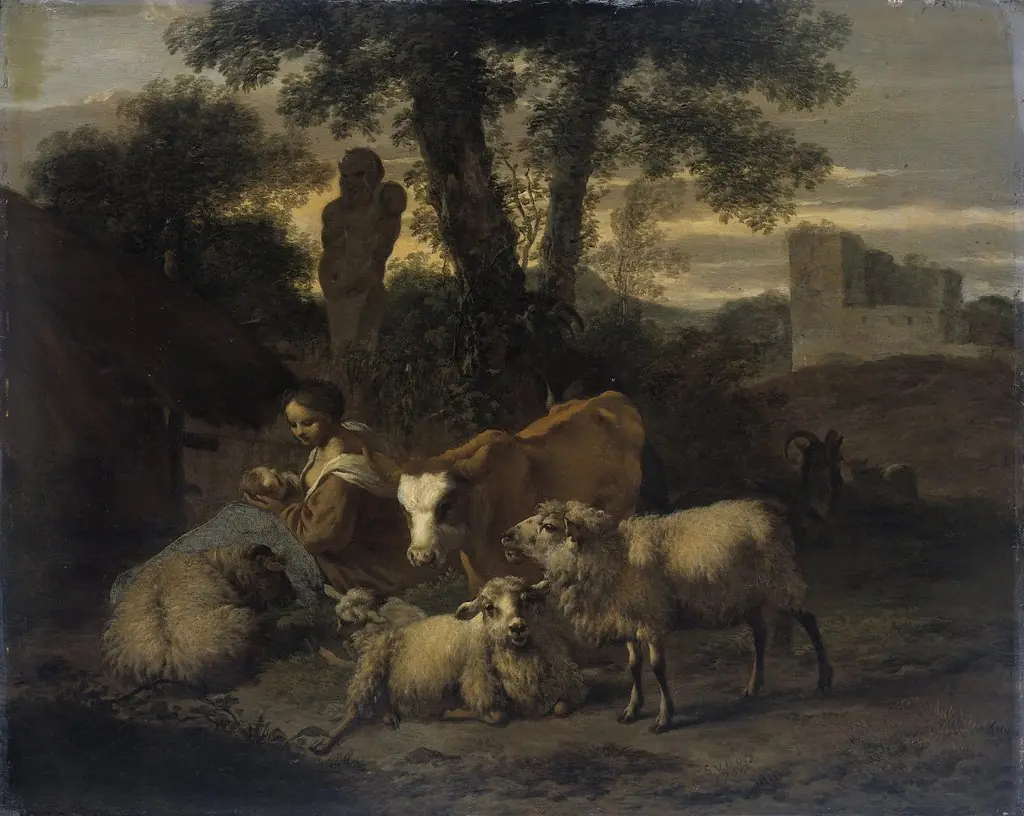 Italian landscape with sheperdess and flocks
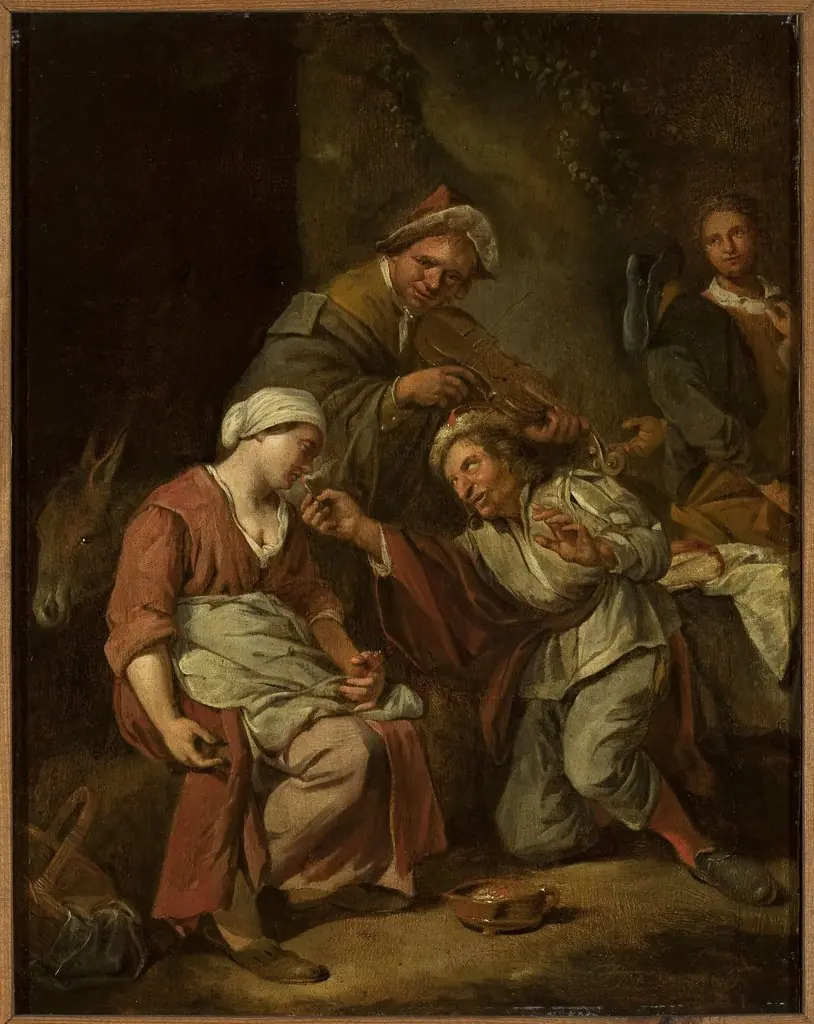 Five senses
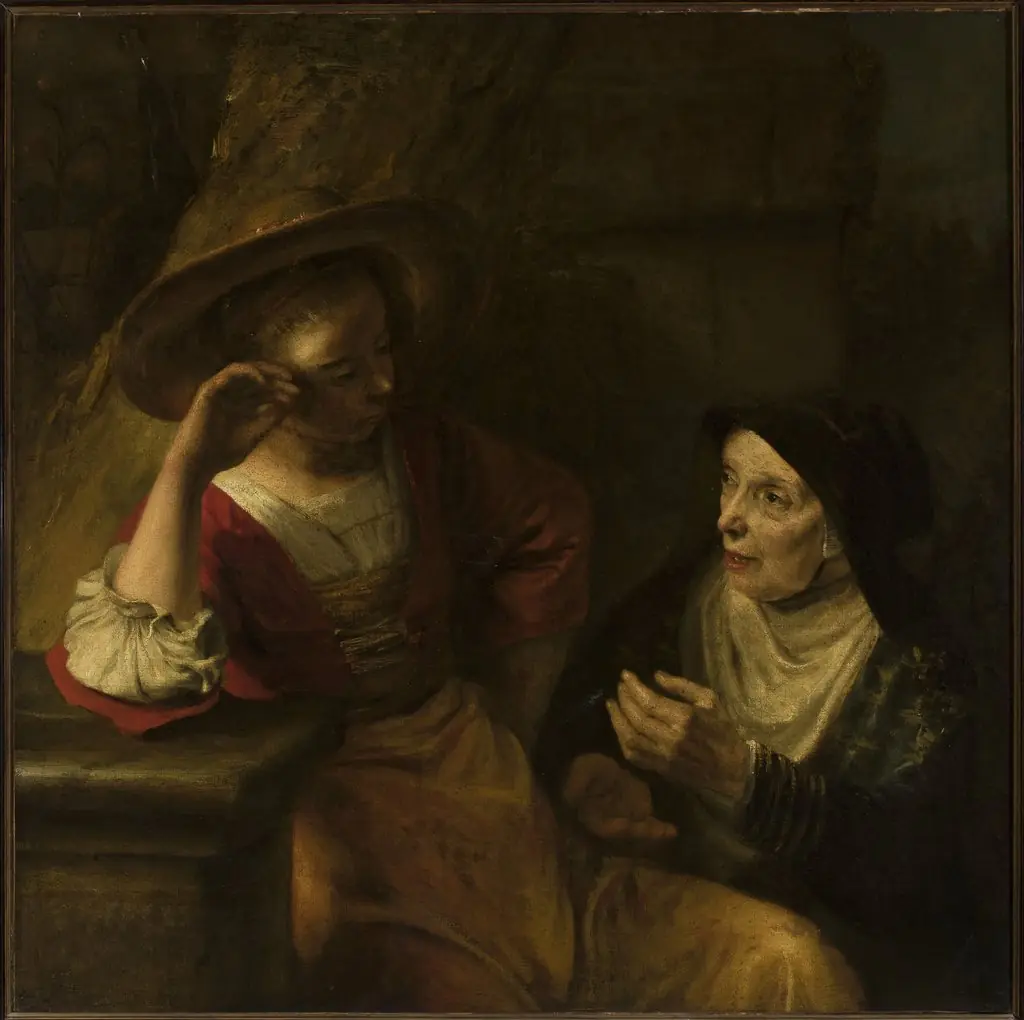 Vertumnus and Pomona
 The Greek Poet Sappho and the Girl from Mytilene