Artwork
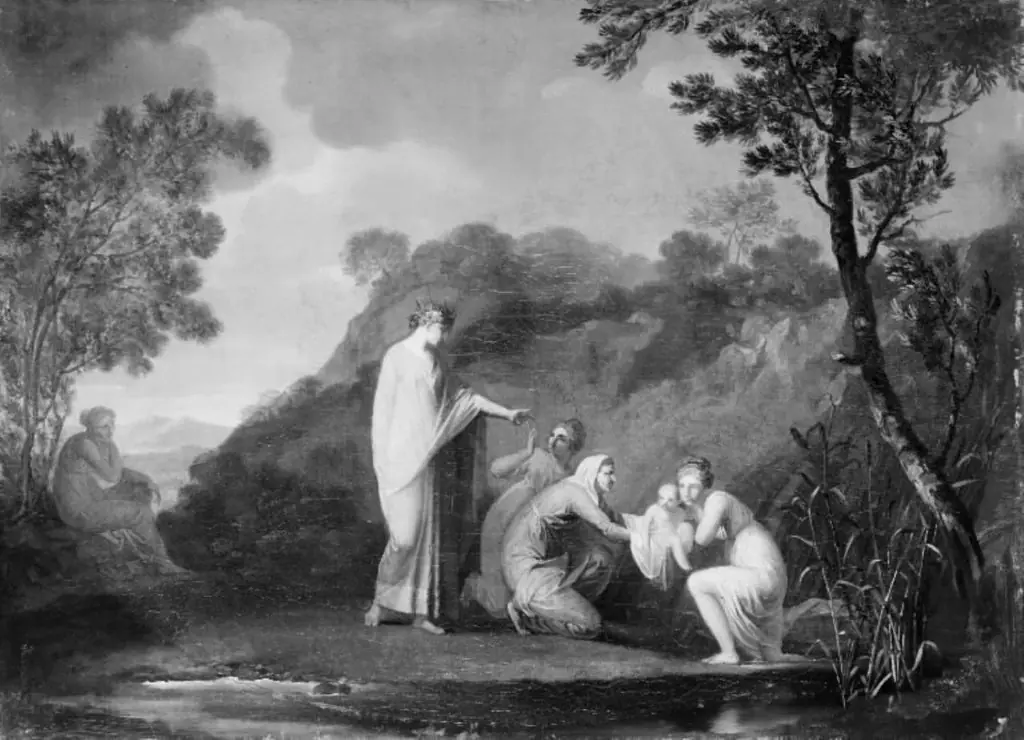
The Finding of the Infant Moses
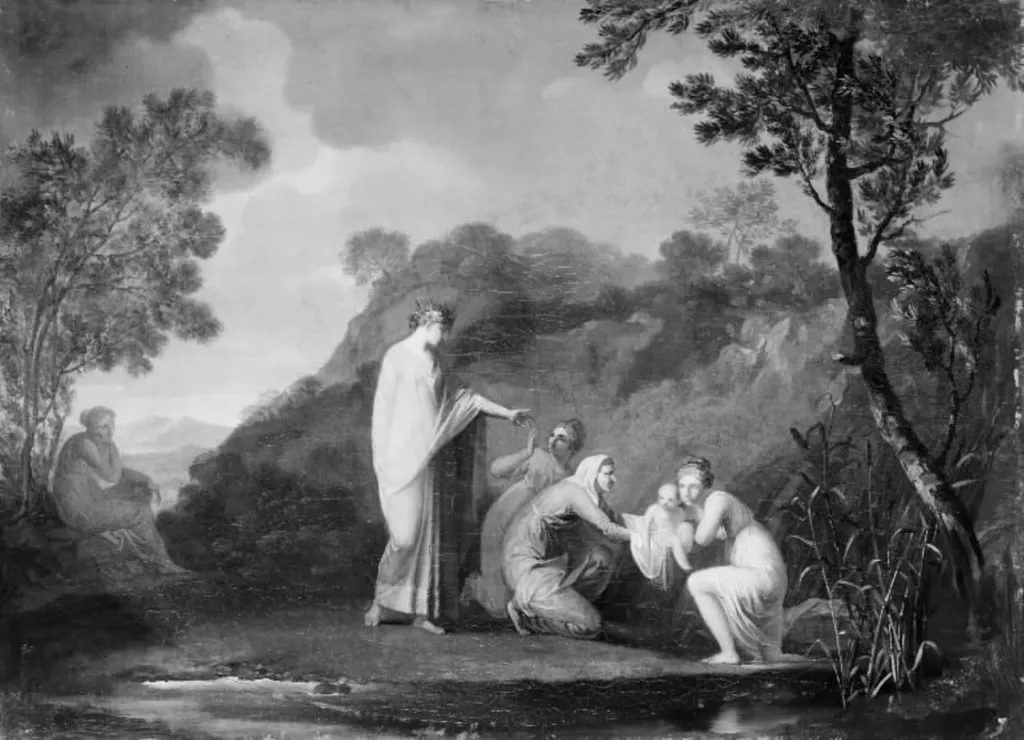
The Finding of the Infant Moses is a photography by the Romanticist artist Unknown. It dates from 1790 and is held in the collection of the Statens Museum for Kunst.
About this work
Overview
The Finding of the Infant Moses, painted in 1790 by the artist catalogued as 241_person, is part of the collection at the Museum of Ethnography. The composition presents a tranquil riverside scene rendered in subdued tones of gray and brown, where a small group of figures is arranged against a backdrop of trees and gentle hills.
Subject & Meaning
At the centre, a kneeling woman cradles an infant, evoking the biblical episode of Moses’ rescue from the Nile. A standing male figure, dressed in a robe, watches attentively, suggesting guardianship. The quiet interaction and the serene landscape together convey a sense of protective care and divine providence without overt dramatization.
Technique & Style
The work employs a restrained palette, emphasizing muted earth colors that soften the forms and lend the scene a contemplative atmosphere. Brushwork is delicate, allowing the figures to emerge subtly from the surrounding foliage. The overall aesthetic aligns with early Romantic tendencies toward emotional restraint and naturalistic detail.
History & Provenance
Created at the close of the 18th century, the painting entered the Museum of Ethnography’s holdings at an unspecified later date. Its attribution to 241_person remains based on museum records, and the piece has been documented in the institution’s catalogues as an example of the period’s religious genre painting.
Context
The image reflects the broader European interest in biblical narratives during the late Enlightenment, when artists often combined devotional subjects with an emerging appreciation for landscape. Though modest in scale, the composition mirrors contemporary preferences for intimate, morally instructive scenes set within natural environments.
Artist & collection

 Domestic Scene
 Giacomo and Cardinal Marco, investing Andrea, Abbot of San Zeno, with his Benefice
 The Nymph of Fontainebleau
 Portrait of a Woman
 Madonna and Child with Saints in the Enclosed Garden
 Venus and Minerva
 Family Group of Four on Sofa
 Wall painting from Room H of the Villa of P. Fannius Synistor at Boscoreale
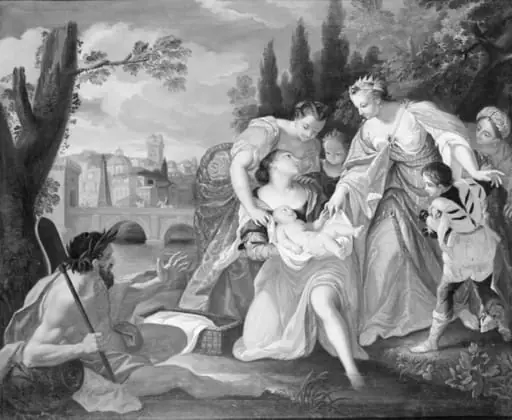 Moses findes i Nilen af Faraos datter
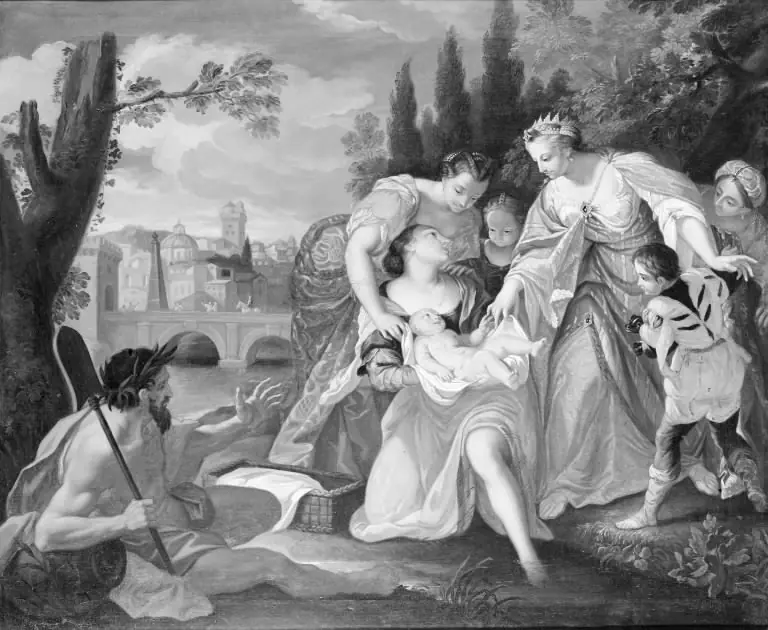 Moses findes i Nilen af Faraos datter
 Diana med sit følge i et landskab
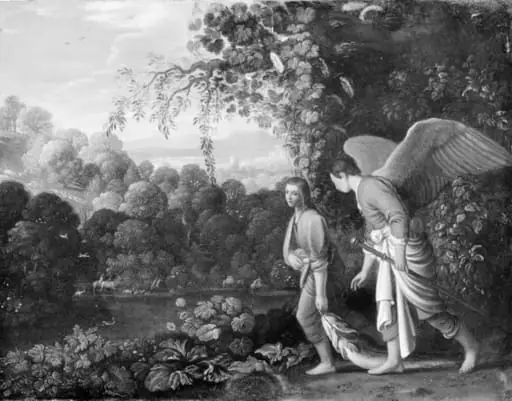 Tobias and the Angel
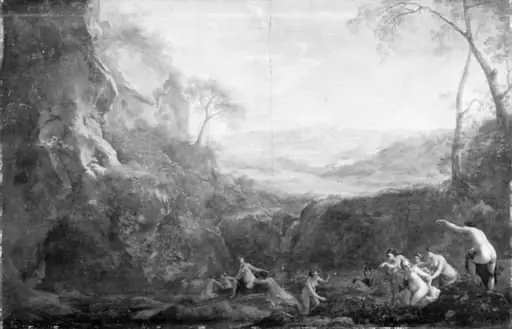 Landscape with Diana and Nymphs
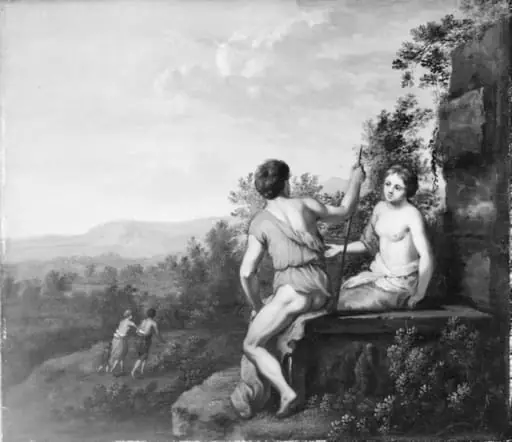 Landscape with Shepherd and Shepherdess
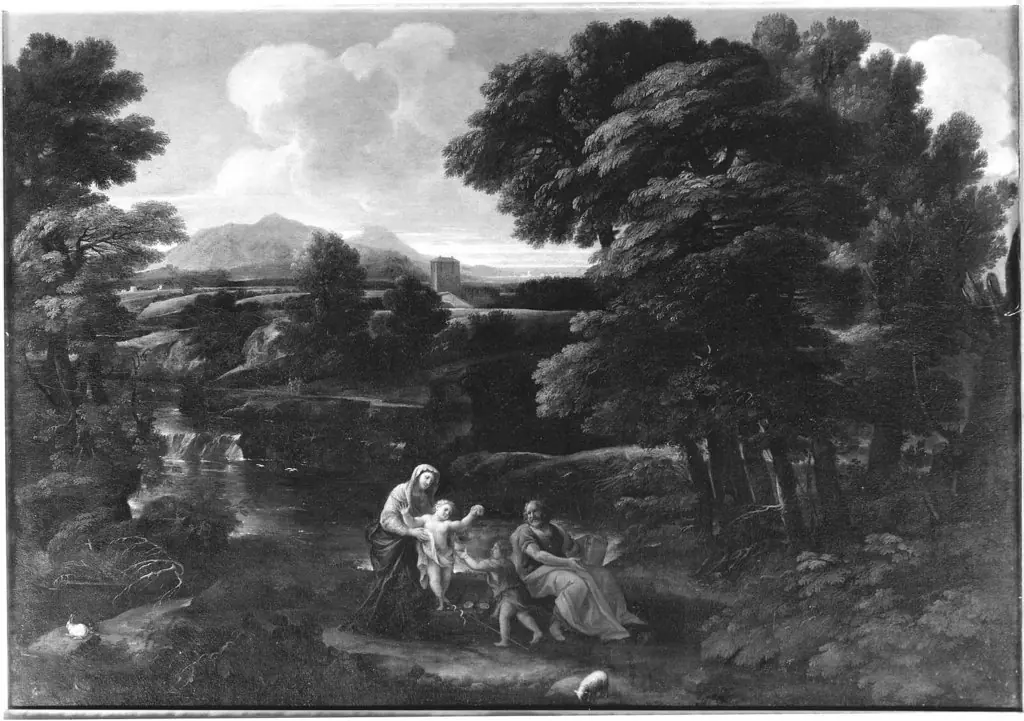 Landscape with the Holy Family and the Infant Saint John the Baptist
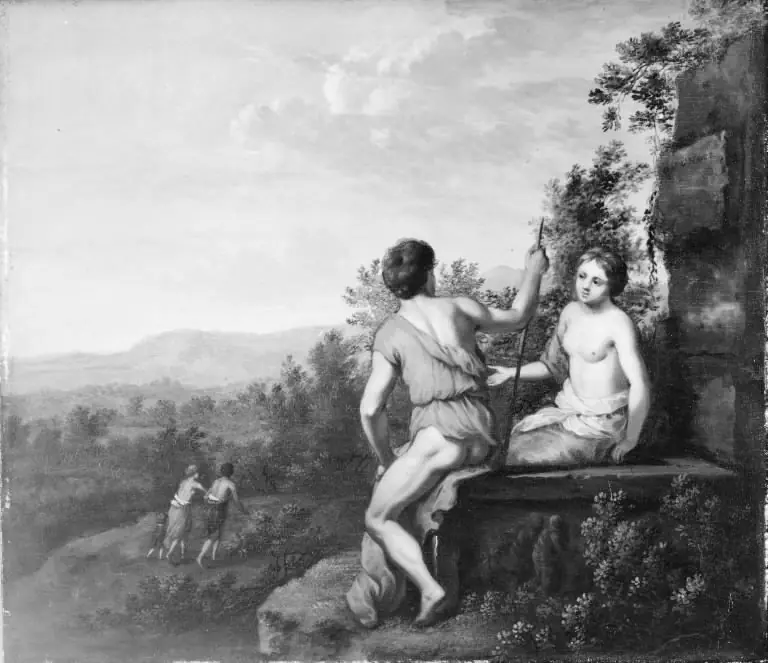 Landscape with Shepherd and Shepherdess
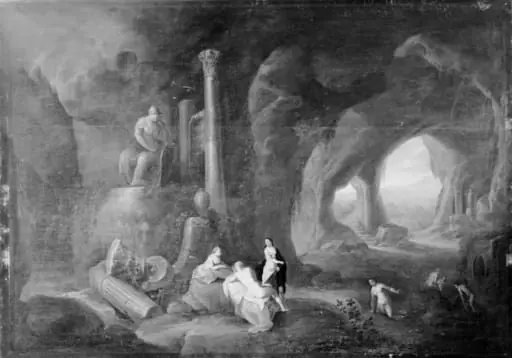 Seven Nymphs in a Grotto
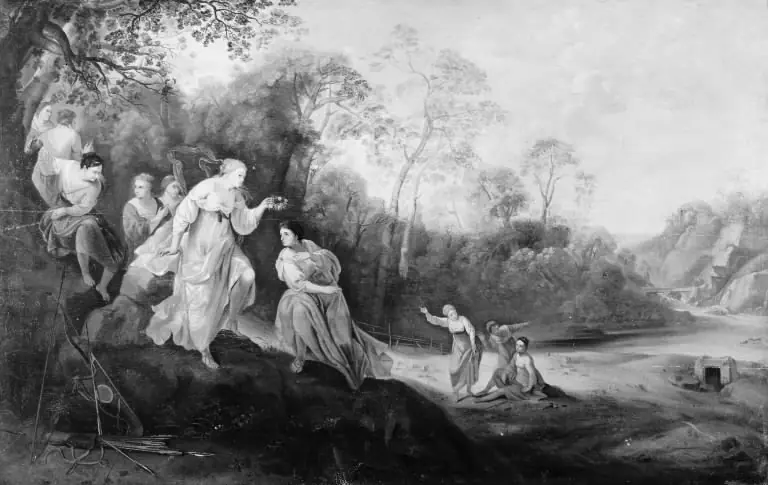 Diana med sit følge i et landskab
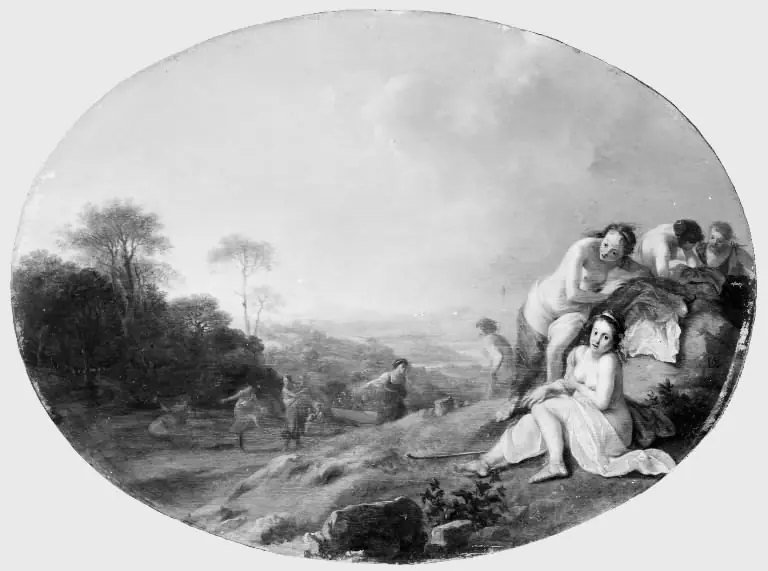 Nymphs in a Landscape
 The Finding of the Infant Moses