Artwork
Landscape with the Holy Family and the Infant Saint John the Baptist
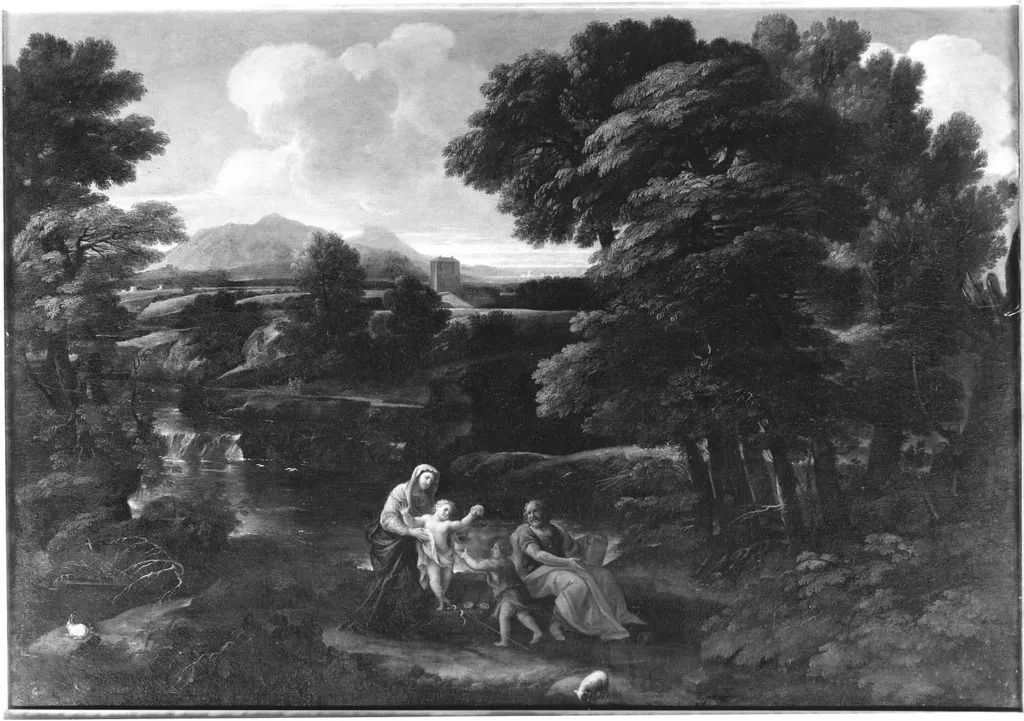
Landscape with the Holy Family and the Infant Saint John the Baptist is an unspecified painting by Giovanni Francesco Grimaldi. It dates from 1653 and is held in the collection of the Museum of Fine Arts Boston.
About this work
Overview
Grimaldi, active as both artist and architect, cultivated a refined style favored by elite patrons.
Painted around 1653 by Giovanni Francesco Grimaldi, this work merges sacred narrative with natural scenery, characteristic of mid-17th century Roman landscape painting. Grimaldi, active as both artist and architect, cultivated a refined style favored by elite patrons. The composition integrates biblical figures into an expansive, atmospheric environment, reflecting the period’s preference for harmonious, contemplative settings that elevate religious themes through landscape.
Subject & Meaning
The Holy Family—Mary, Joseph, and the infant Jesus—is depicted alongside the young John the Baptist, a common devotional pairing symbolizing divine connection and prophecy. Mary cradles Jesus while a companion, likely Elizabeth, holds John, who reaches toward the Christ child. The quiet interaction suggests spiritual recognition, while the pastoral setting reinforces themes of innocence and divine presence in nature, aligning with Counter-Reformation ideals of accessible holiness.
Technique & Style
Grimaldi employs subtle gradations of light and shadow to model forms and suggest spatial depth, a technique rooted in chiaroscuro. The landscape is rendered with careful attention to atmospheric perspective: foreground figures are sharply defined, while distant hills and architecture soften into hazy blues and greens. Delicate brushwork captures foliage, water reflections, and cloud texture, creating a serene, immersive environment that balances detail with lyrical cohesion.
History & Provenance
The painting entered the Museum of Fine Arts, Boston’s collection as part of its broader acquisition of Italian Baroque works. While specific early ownership records are limited, its style and subject align with commissions from Roman aristocratic circles, where landscape painting with religious themes was increasingly popular. Its preservation and display in Boston reflect its enduring value as an example of Roman classical landscape tradition.
Context
In mid-17th century Rome, landscape painting evolved from mere backdrop to a respected genre, influenced by artists like Claude Lorrain and Nicolas Poussin. Grimaldi’s work fits within this movement, blending idealized nature with biblical narrative to satisfy patrons seeking both spiritual resonance and aesthetic refinement. The inclusion of John the Baptist alongside the Holy Family reflects devotional practices emphasizing familial sanctity and prophetic continuity.
Legacy
Grimaldi’s painting exemplifies the quiet sophistication of Roman landscape art, where religious subjects are embedded within naturalistic settings rather than dominating them. Though less widely known than contemporaries, his approach influenced later generations of landscape painters who sought to harmonize the sacred and the scenic. The work remains a representative example of how Baroque Italy transformed devotional imagery into contemplative visual poetry.
Artist & collection
Artist
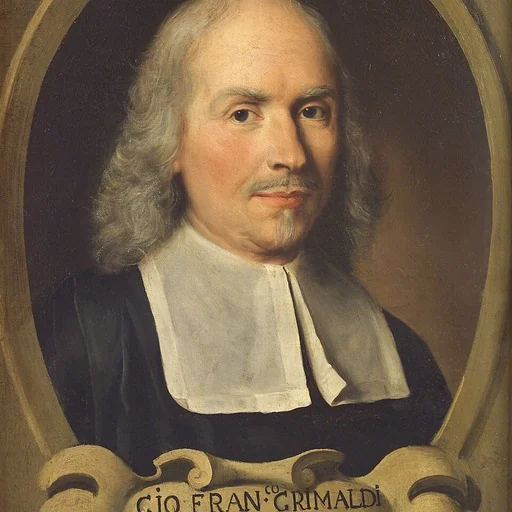
Giovanni Francesco Grimaldi (1606 – 28 November 1680) was an Italian painter, draughtsman, printmaker and architect. He was an accomplished fresco painter of classical landscapes which were popular with leading Roman families.

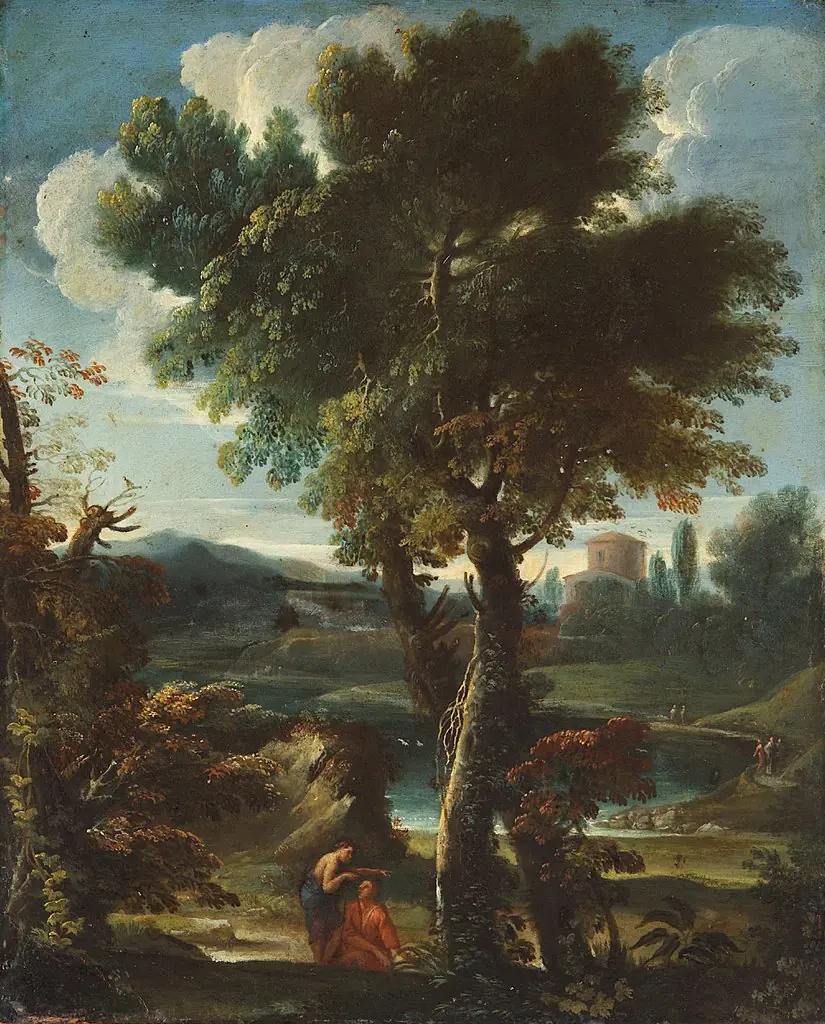
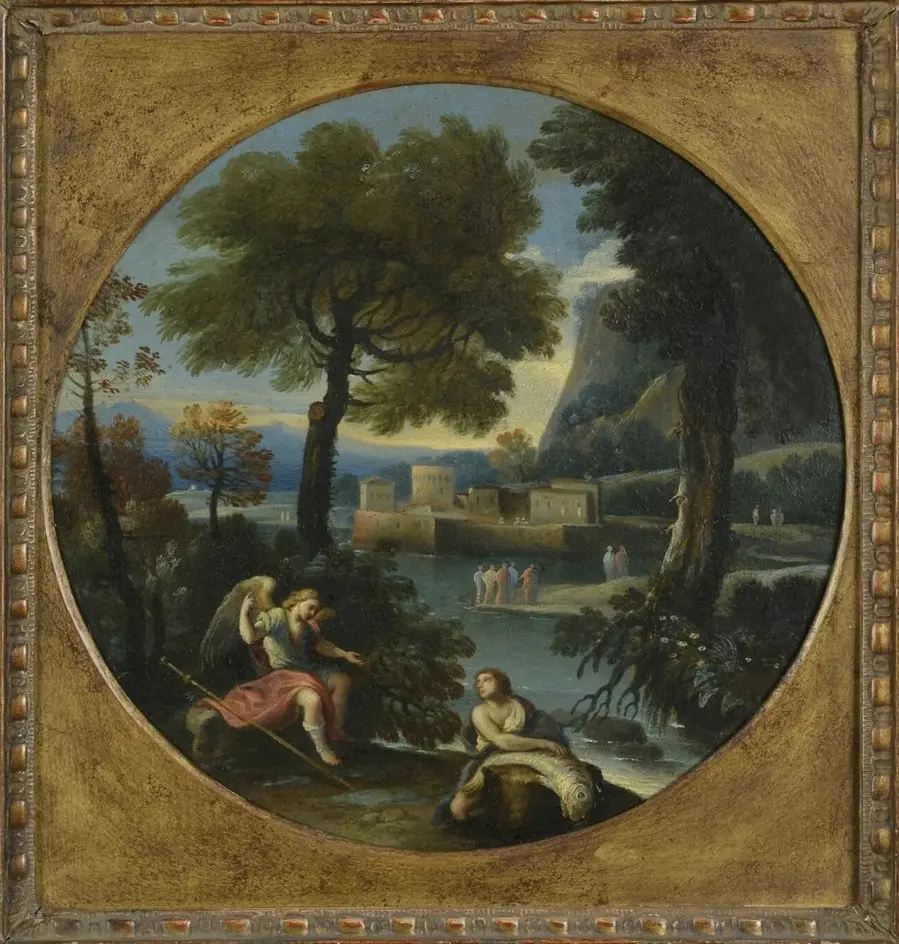
 Arcadian Landscape
 Italienische Ideallandschaft
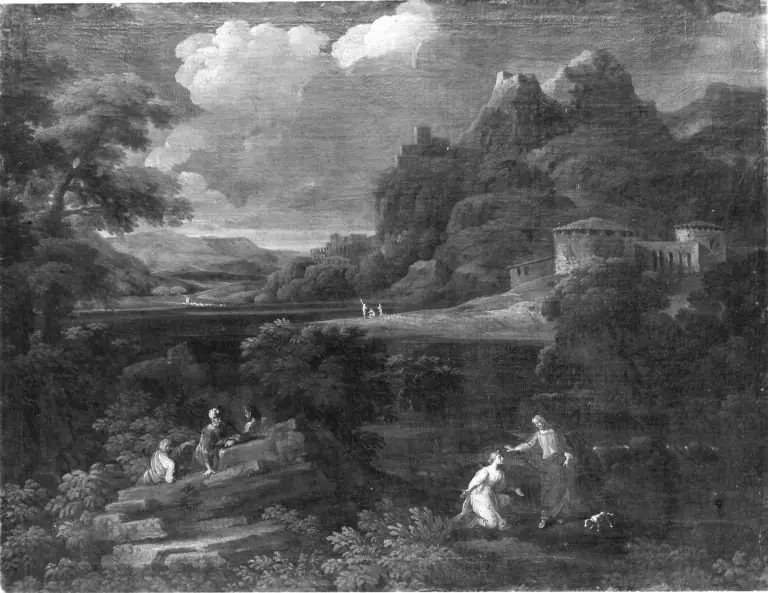 Landschaft mit Christus und Maria Magdalena (Noli me tangere) (Umkreis)
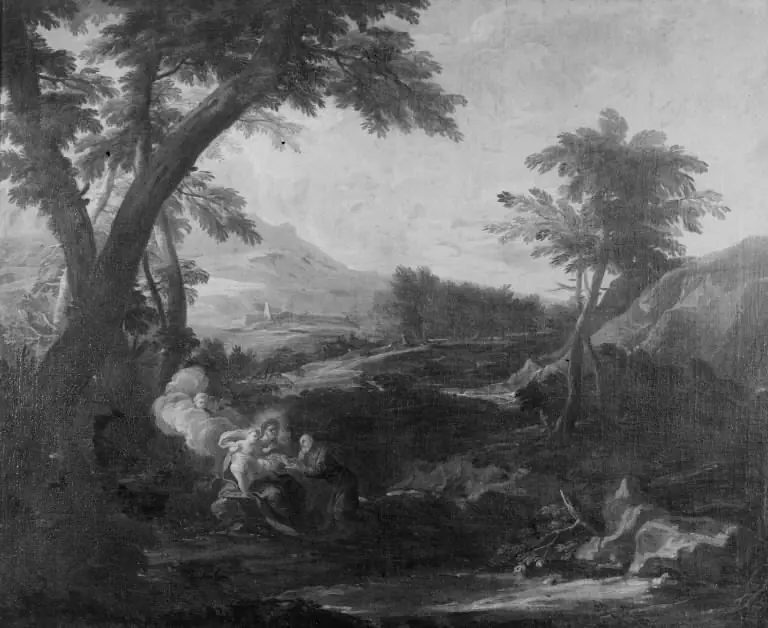 The Rest on the Flight into Egypt
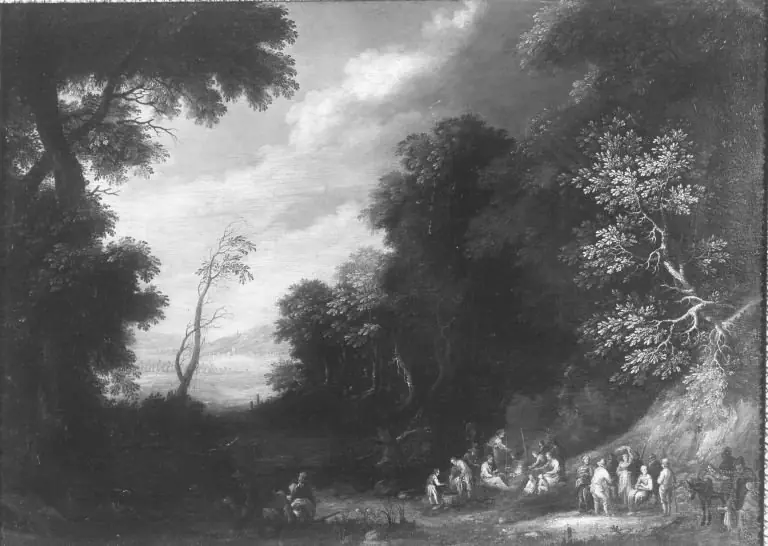 Rast am Waldrand
 Landschaft mit Tobias und Engel
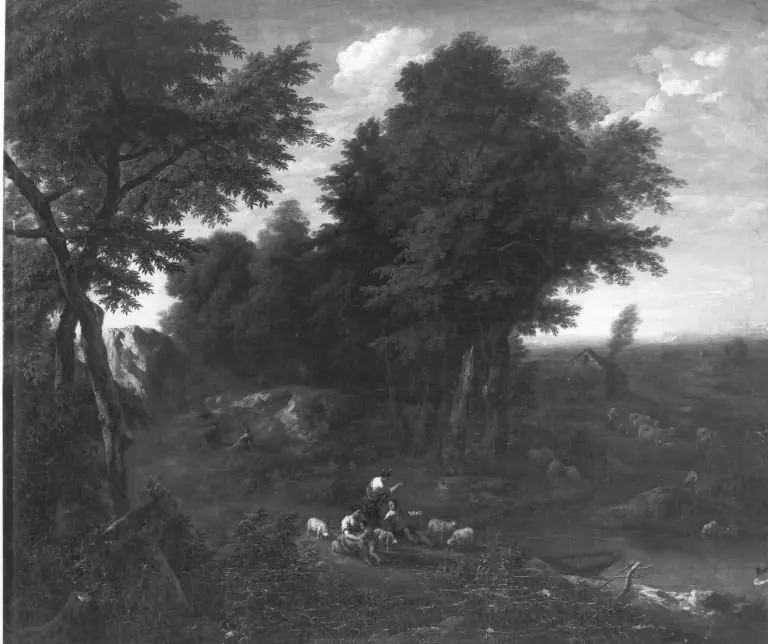 Waldlandschaft
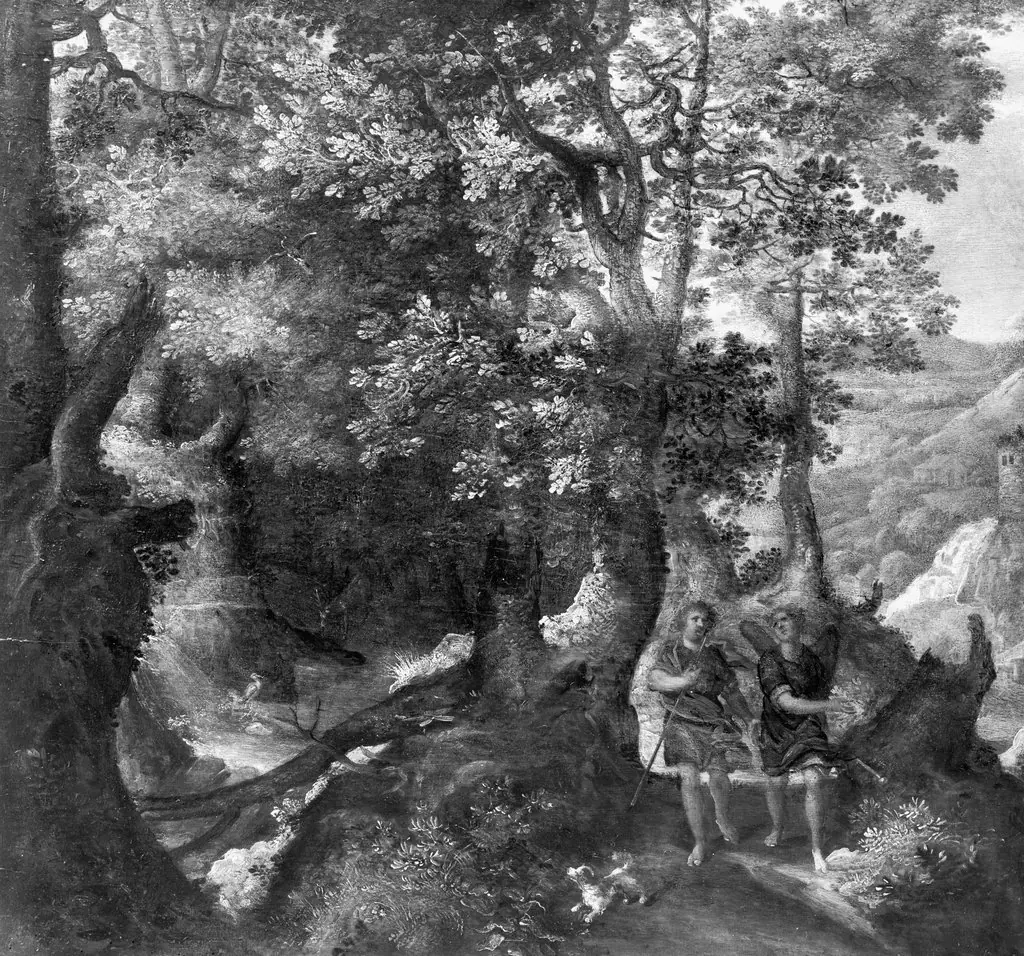 Wooded landscape with Tobias and the angel
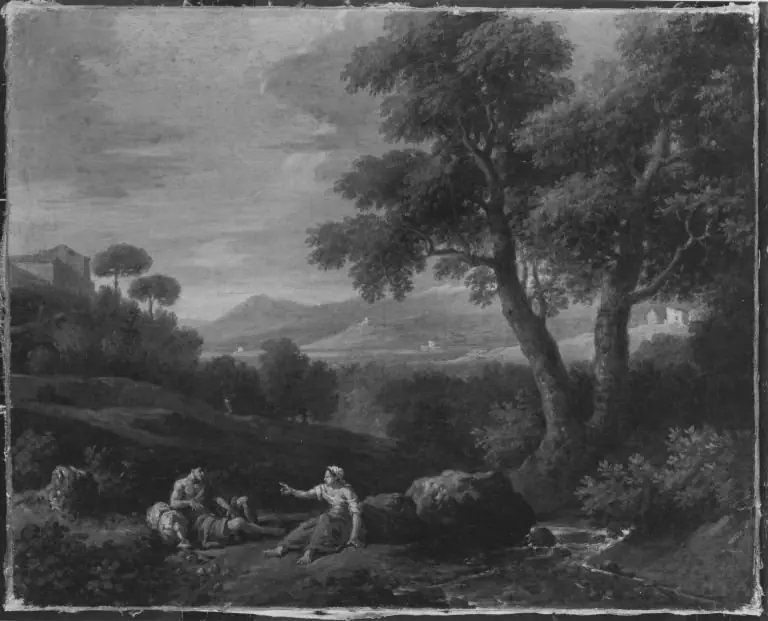 Italienische Landschaft
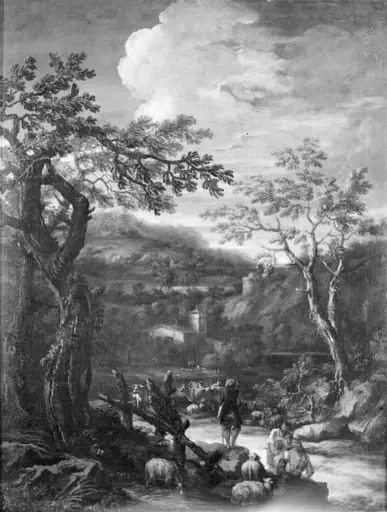 Road with People and Animals
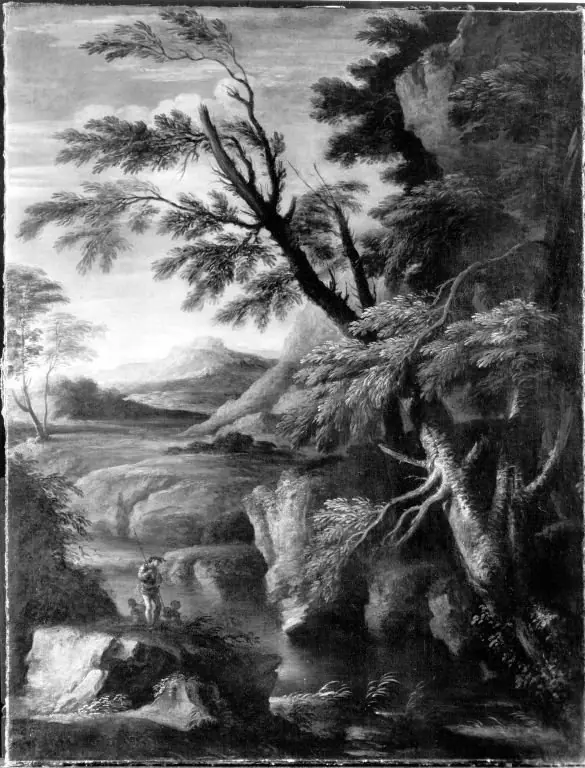 Landschaft mit Kriegern
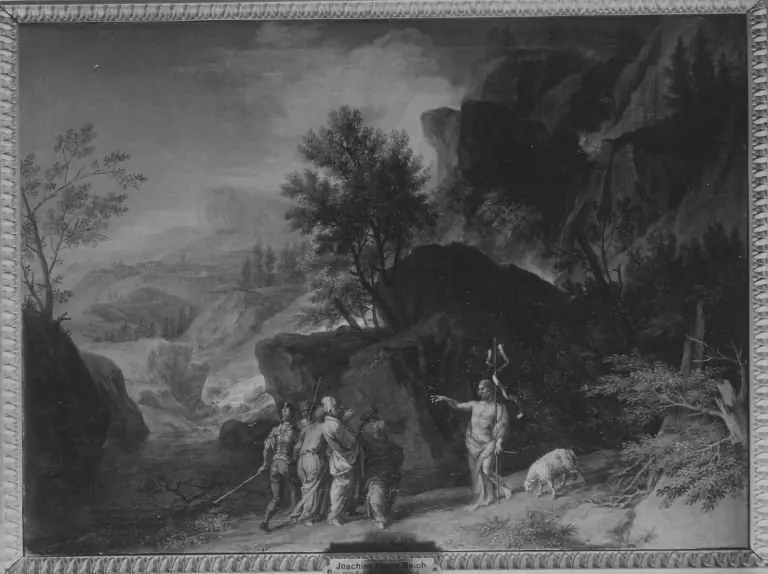 Fierce mountainous landscape with Saint John the Baptist preaching