Artwork
The Slave Davus and the Maid Mysis. From Terence´s Andria.
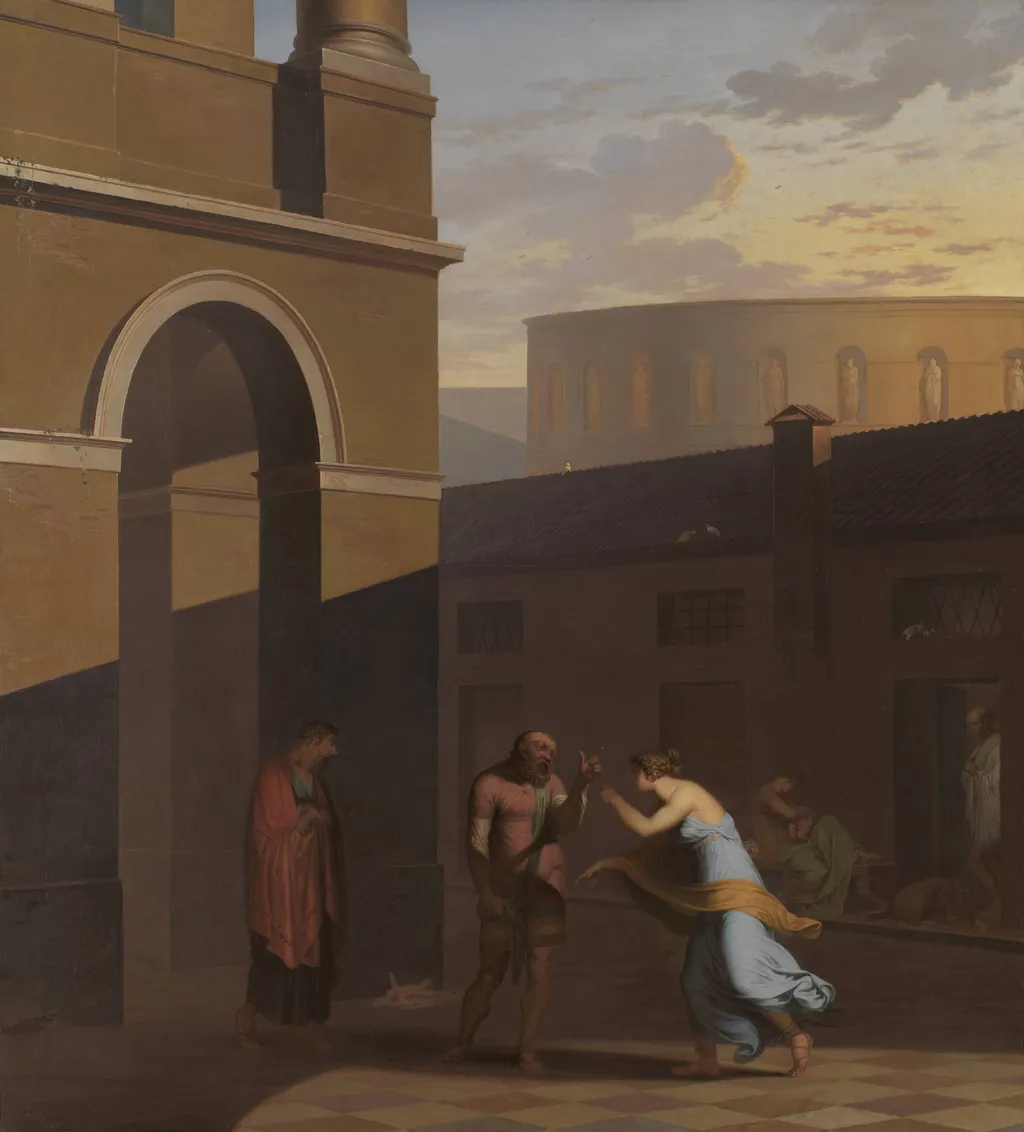
The Slave Davus and the Maid Mysis. From Terence´s Andria. is a photography by the Romanticist artist Unknown. It dates from 1804 and is held in the collection of the Statens Museum for Kunst. Created in 1804 by the artist known as 241_person, this image illustrates a scene from Terence’s comedy *Andria*.
About this work
Overview
Created in 1804 by the artist known as 241_person, this image illustrates a scene from Terence’s comedy *Andria*. The composition is preserved in the collection of the Museum of Ethnography. It captures a moment of physical conflict within an architectural setting, rendered in a palette of warm golds, deep shadows, and contrasting colors.
Subject & Meaning
The central action depicts a muscular figure in a greenish drape seizing a woman clad in blue, who is being pulled backward. Two additional characters observe: one leaning against a darkened archway in a red robe, the other kneeling in green. The tableau reflects the comic tension of the play, where a slave and a maid become entangled in a humorous dispute.
Technique & Style
The artist employs chiaroscuro to separate forms, using a bright orange sky and luminous walls to illuminate the foreground while receding structures fade into shadow. Strong contrasts between the figures’ garments—green, blue, and red—enhance the sense of movement and emotional intensity. The brushwork suggests a careful modeling of flesh and fabric against the architectural backdrop.
History & Provenance
The work entered the Museum of Ethnography’s holdings after its creation in the early nineteenth century, though specific acquisition details remain undocumented. Its attribution to 241_person, a relatively obscure figure, is based on archival records linking the artist to a series of theatrical illustrations produced around 1804.
Context
Terence’s *Andria* was a popular source for visual interpretations in the late 1700s and early 1800s, when stage scenes were frequently rendered for decorative prints and collections. This image reflects that tradition, translating a comedic theatrical moment into a static composition that emphasizes drama through light, color, and spatial arrangement.
Artist & collection

 Domestic Scene
 Giacomo and Cardinal Marco, investing Andrea, Abbot of San Zeno, with his Benefice
 The Nymph of Fontainebleau
 Portrait of a Woman
 Madonna and Child with Saints in the Enclosed Garden
 Venus and Minerva
 Family Group of Four on Sofa
 Wall painting from Room H of the Villa of P. Fannius Synistor at Boscoreale
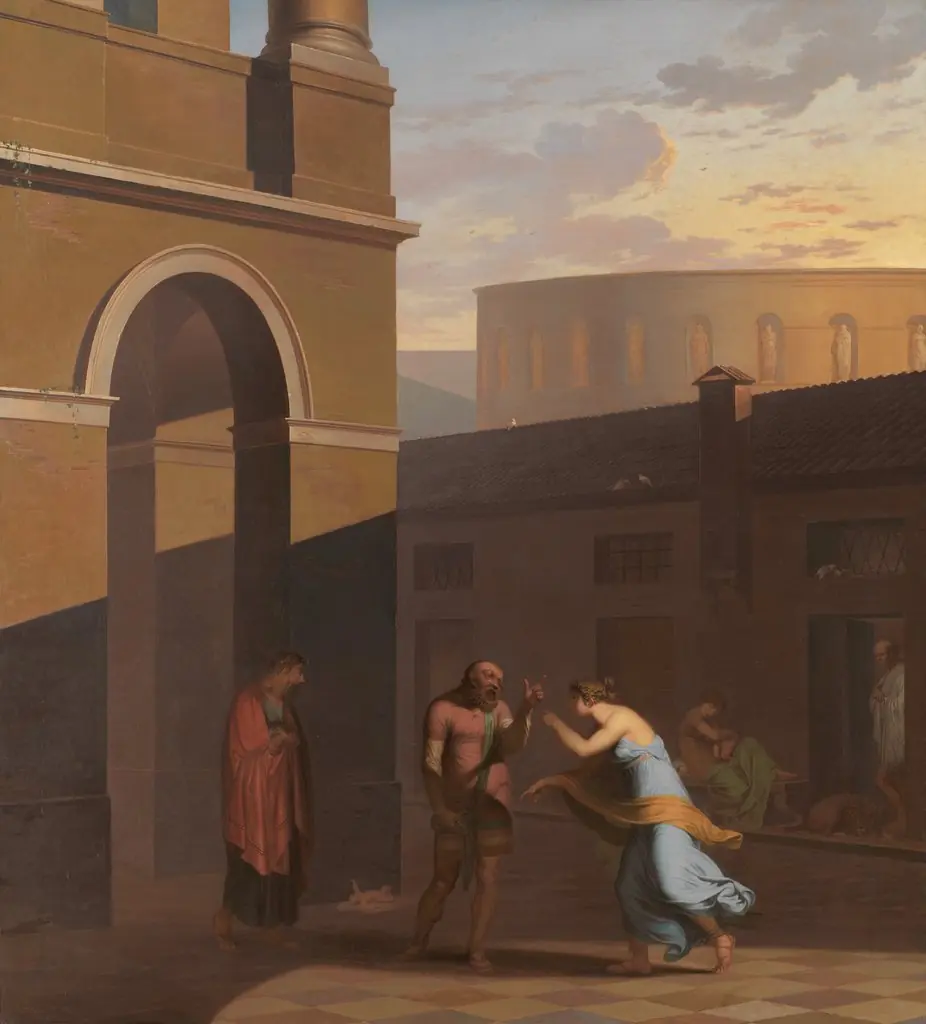 The Slave Davus and the Maid Mysis. From Terence´s Andria.
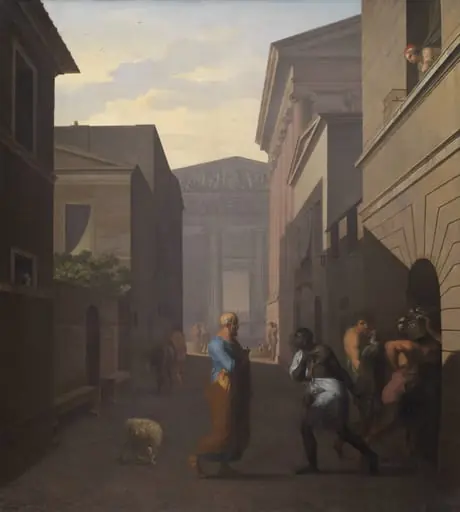 Simo and his former slave Sosia. From Terence´s Andria.
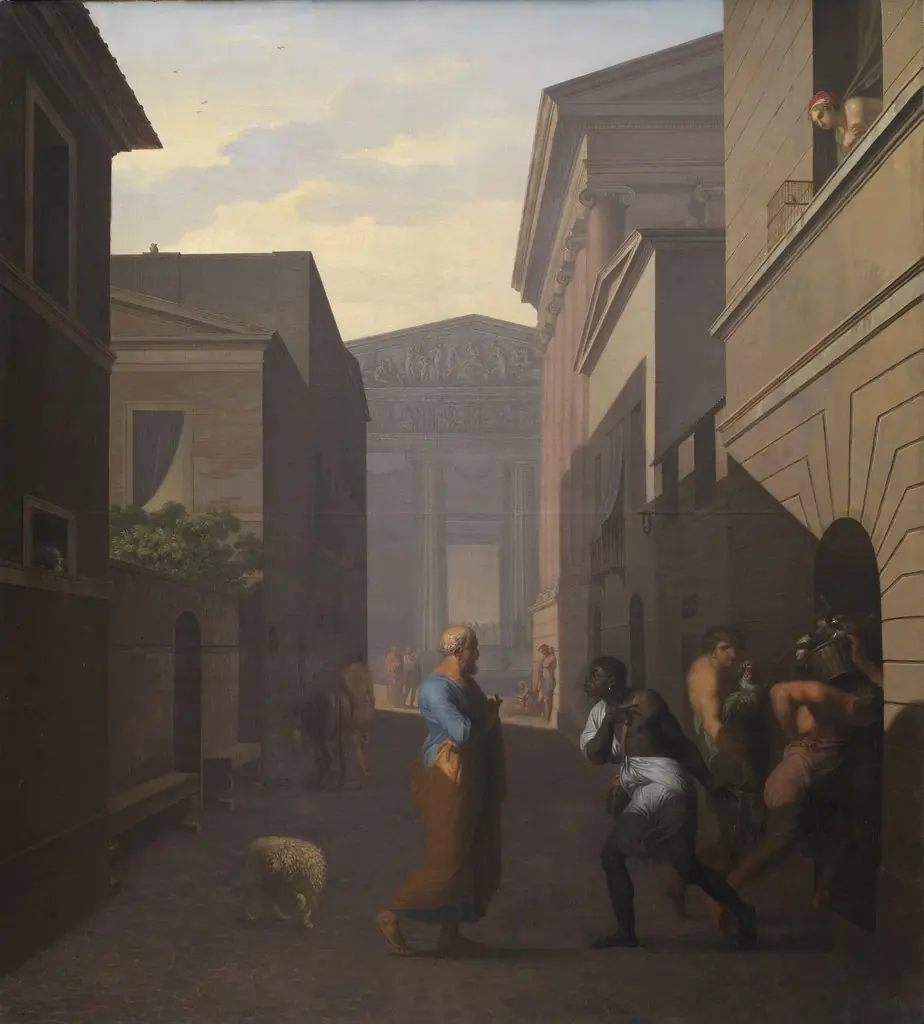 Simo and his former slave Sosia. From Terence´s Andria.
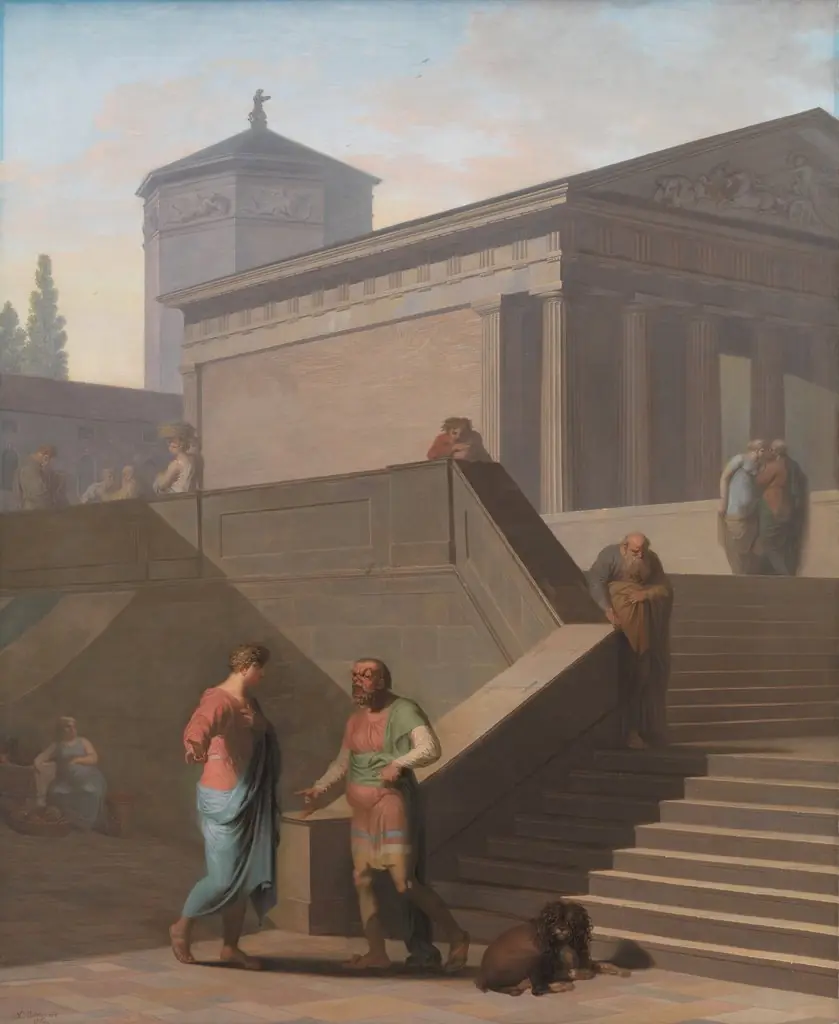 Pamphilius and his sevant Davus. From Terence´s Andria
 Pamphilius and his sevant Davus. From Terence´s Andria
 The Midwife Taking Leave of the girl from Andros. From Terence´s Andria
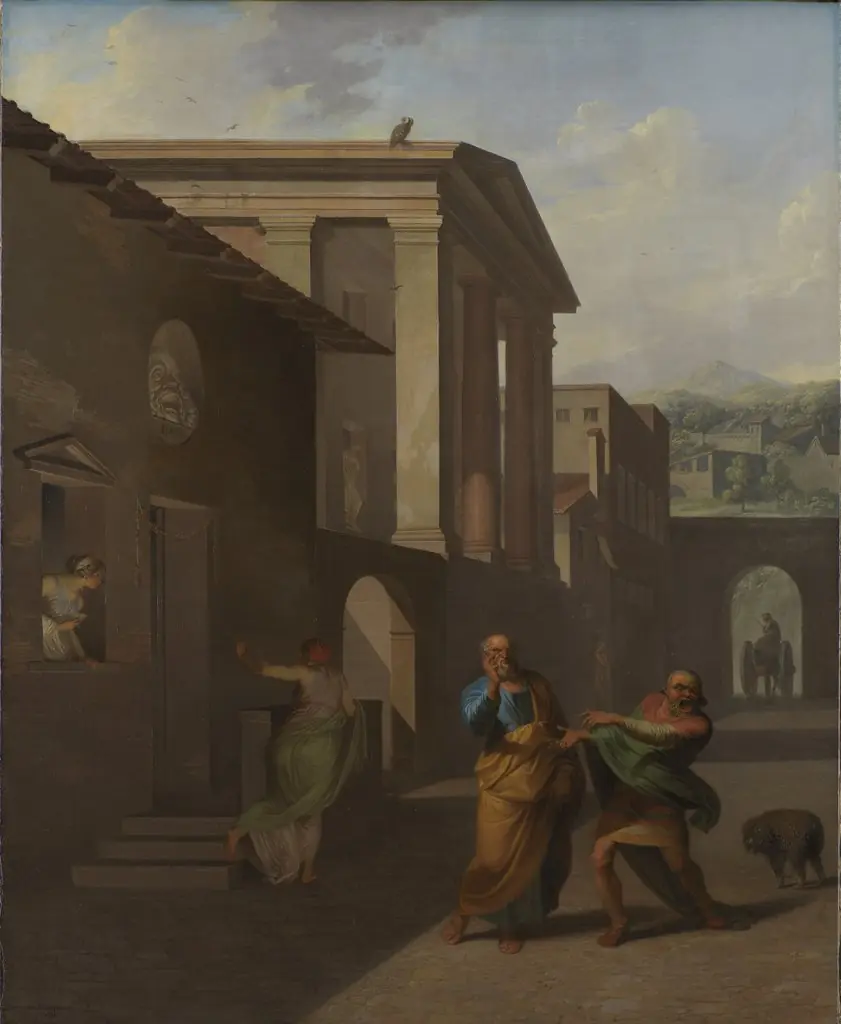 The Midwife Taking Leave of the girl from Andros. From Terence´s Andria