Artwork
Landscape
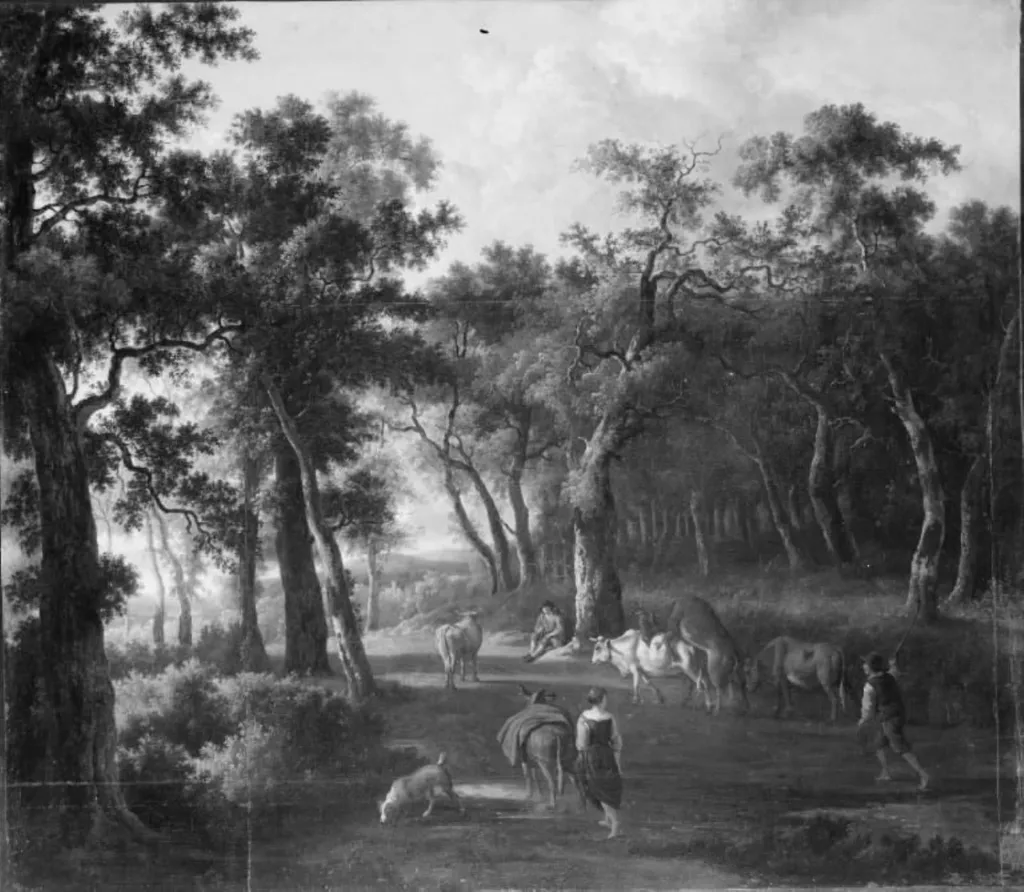
Landscape is an unspecified painting by Unknown. It dates from 1750 and is held in the collection of the Statens Museum for Kunst.
About this work
Overview
The work is part of the collection at the Museum of Ethnography, where it is preserved as an example of 18th-century observational painting.
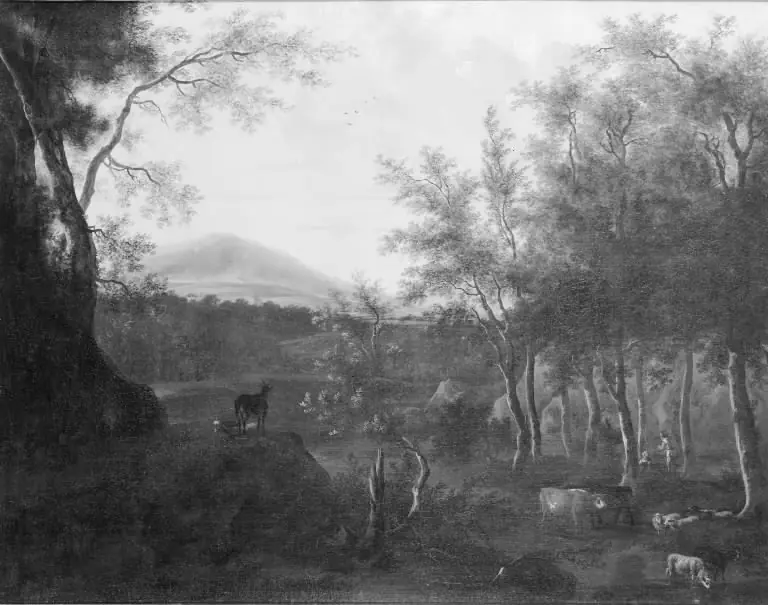
This landscape painting, dated around 1750, depicts a secluded forest path bathed in fading light. Executed in a naturalistic style, it captures a tranquil moment within an expansive woodland. The work is part of the collection at the Museum of Ethnography, where it is preserved as an example of 18th-century observational painting. Its quiet composition invites contemplation rather than narrative drama.
Subject & Meaning
A narrow trail winds through dense trees, leading the eye toward a distant clearing where deer graze undisturbed. Two figures, one accompanied by a dog, approach the animals from the foreground. The scale of the figures relative to the forest suggests human presence as minor and transient within nature’s enduring order. The scene evokes stillness, not conflict, implying harmony between observation and the wild.
Technique & Style
The artist employs chiaroscuro to model form and suggest depth, using sharp contrasts between shadowed undergrowth and patches of diffused light along the path. Brushwork is subtle, avoiding detail in favor of atmospheric effect. The trees frame the composition like vertical pillars, directing focus toward the distant deer and the soft transition from daylight to twilight, enhancing the sense of spatial recession.
History & Provenance
The painting’s origin is tied to a private collection in northern Europe, though its early ownership remains undocumented. It entered the Museum of Ethnography in the late 19th century, likely as part of a broader acquisition of regional landscape studies. Its attribution to the artist known as 2600_person is based on stylistic analysis and archival references, though no signed versions are known.
Context
Created during a period when landscape painting was gaining scholarly attention beyond religious or mythological themes, this work reflects a growing interest in nature as a subject worthy of quiet study. Unlike grand pastoral scenes, it avoids idealization, instead presenting an intimate, unembellished view of the forest — aligning with emerging empirical approaches to observing the natural world.
Legacy
Though not widely exhibited, the painting has influenced later studies of light and spatial composition in regional art traditions. Its restrained palette and emphasis on mood over action contributed to a quieter branch of landscape representation, distinct from dramatic Romantic visions. It remains a reference for understanding how 18th-century artists conveyed presence through absence — silence made visible.
Artist & collection

 Domestic Scene
 Giacomo and Cardinal Marco, investing Andrea, Abbot of San Zeno, with his Benefice
 The Nymph of Fontainebleau
 Portrait of a Woman
 Madonna and Child with Saints in the Enclosed Garden
 Venus and Minerva
 Family Group of Four on Sofa
 Wall painting from Room H of the Villa of P. Fannius Synistor at Boscoreale
 Landscape
 Landscape
 Waldlandschaft
 Wooded Landscape
 Wooded Landscape
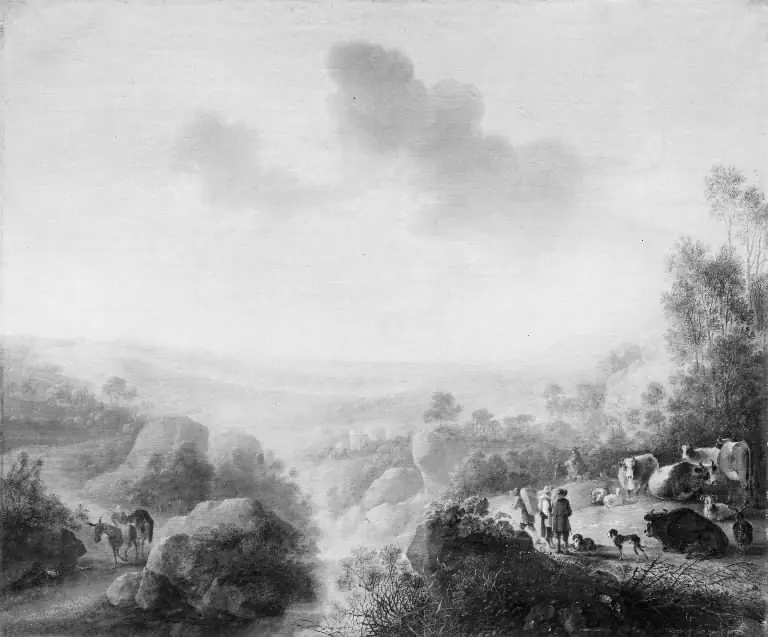 Landscape with Cattle by a Brook
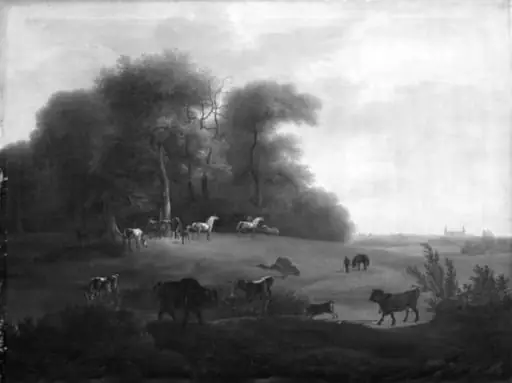 Keld Skov ved Frederiksborg med en del af det kongelige stutteri. I forgrunden schweizer- og tyrolerkvæg
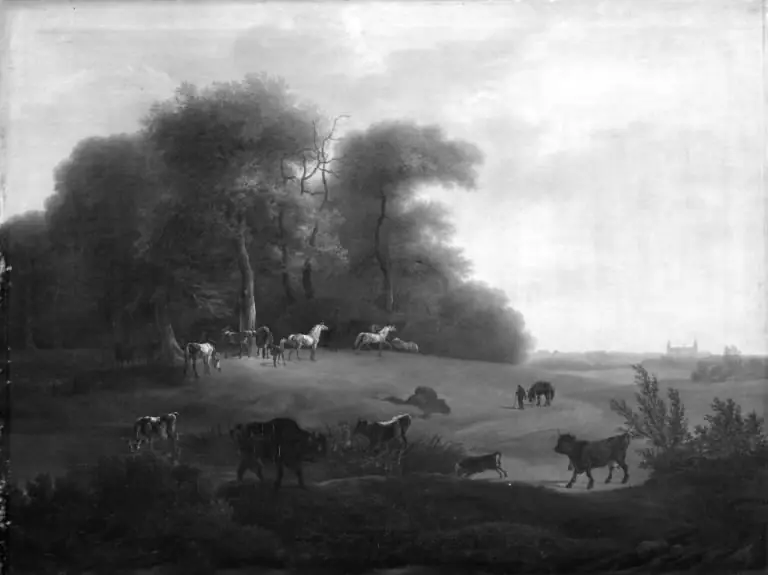 Keld Skov ved Frederiksborg med en del af det kongelige stutteri. I forgrunden schweizer- og tyrolerkvæg
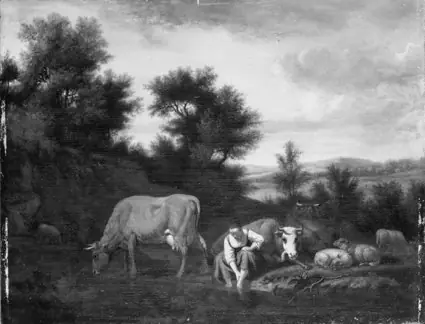 Shepherdess with Cattle
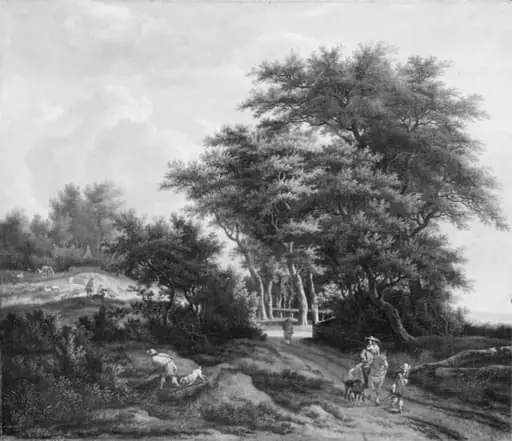 The Road to the Fenced-in Area