Artwork
Diana with her Nymphs
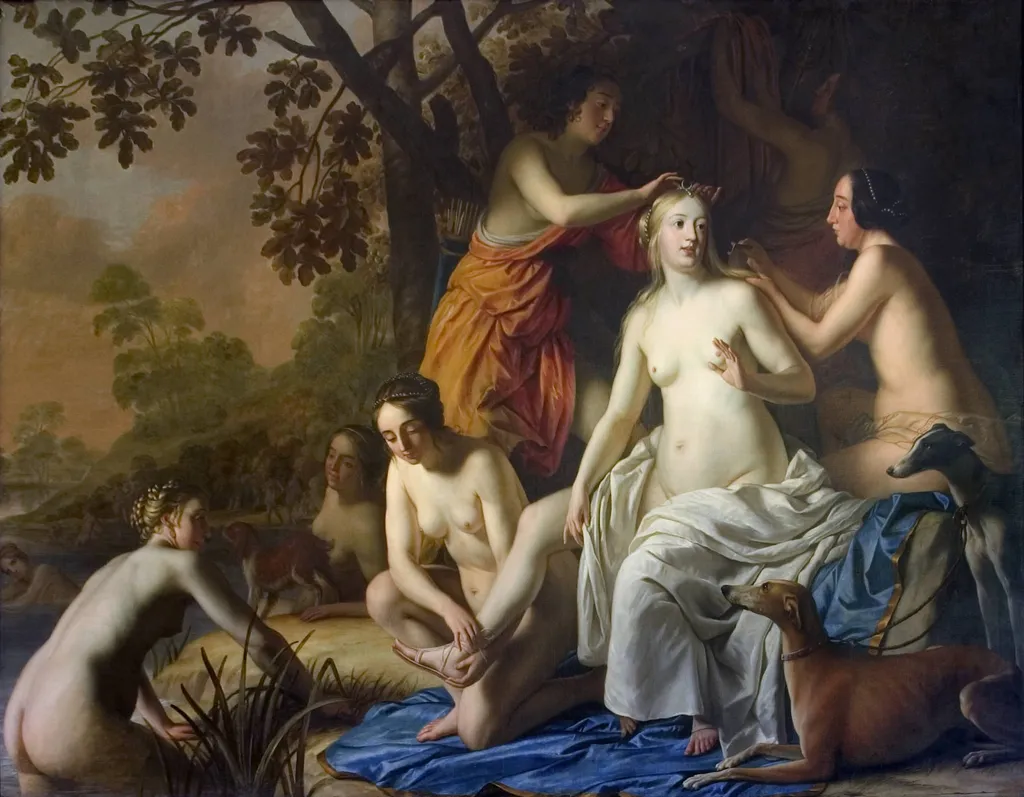
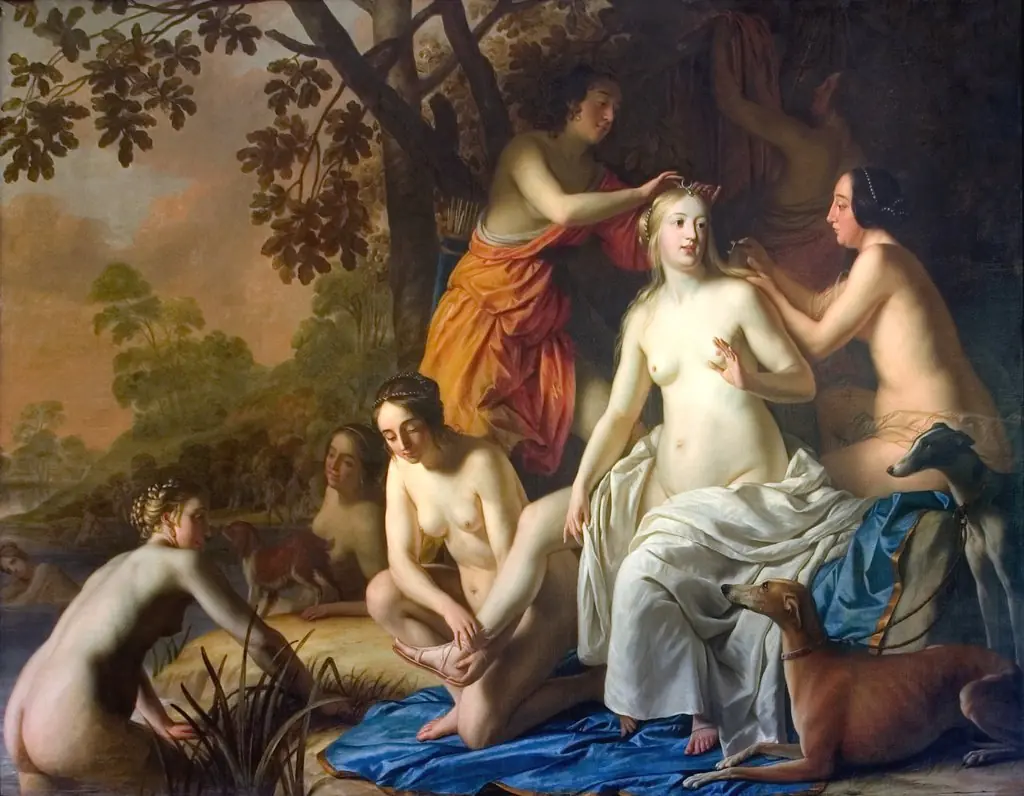
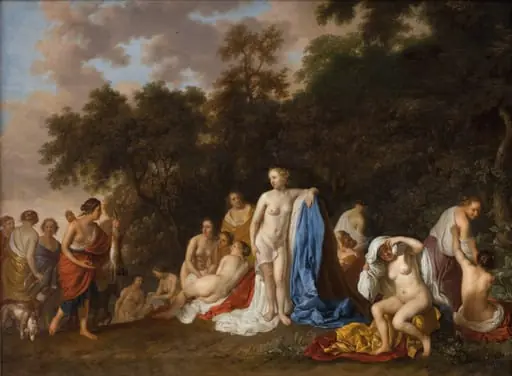
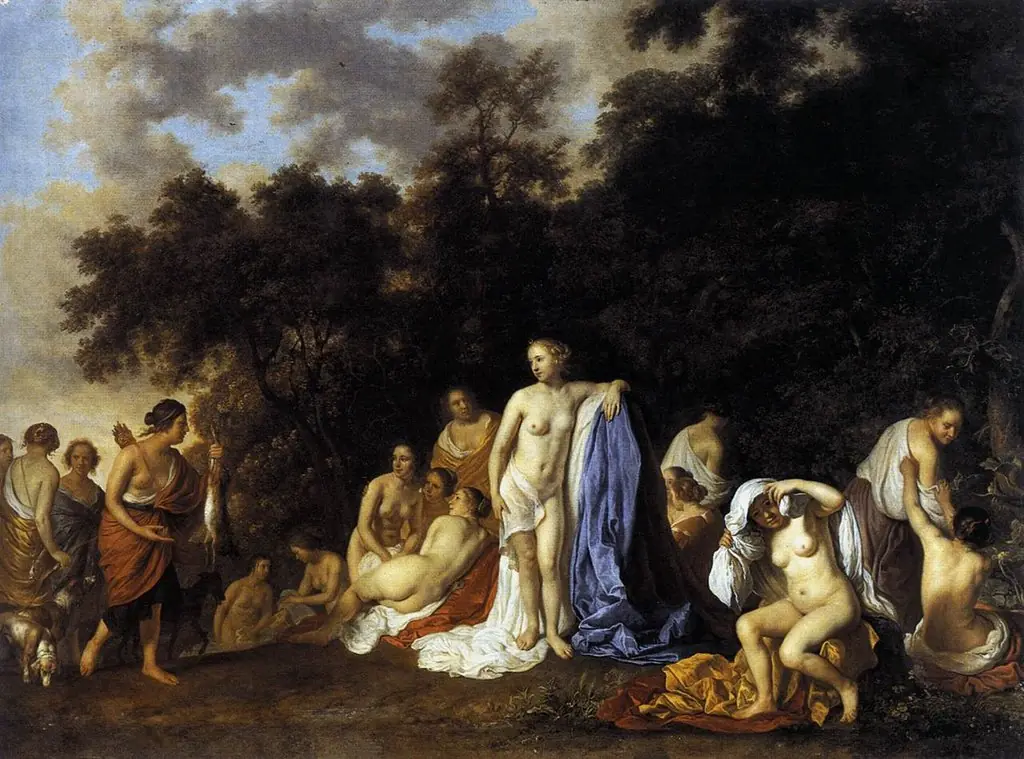
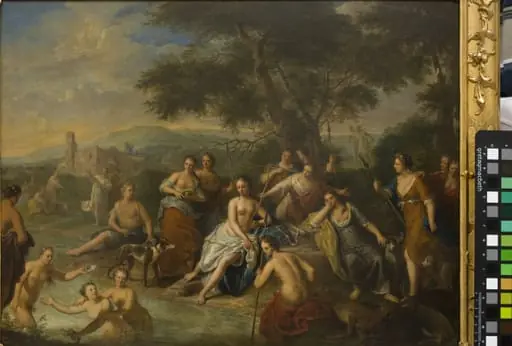
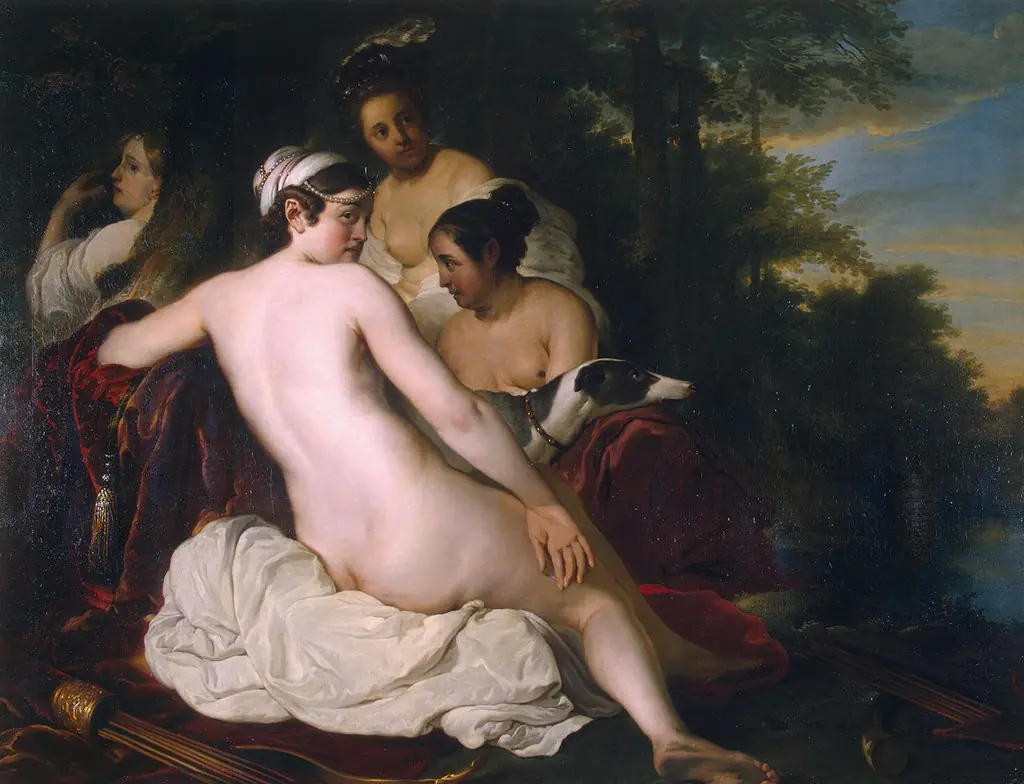
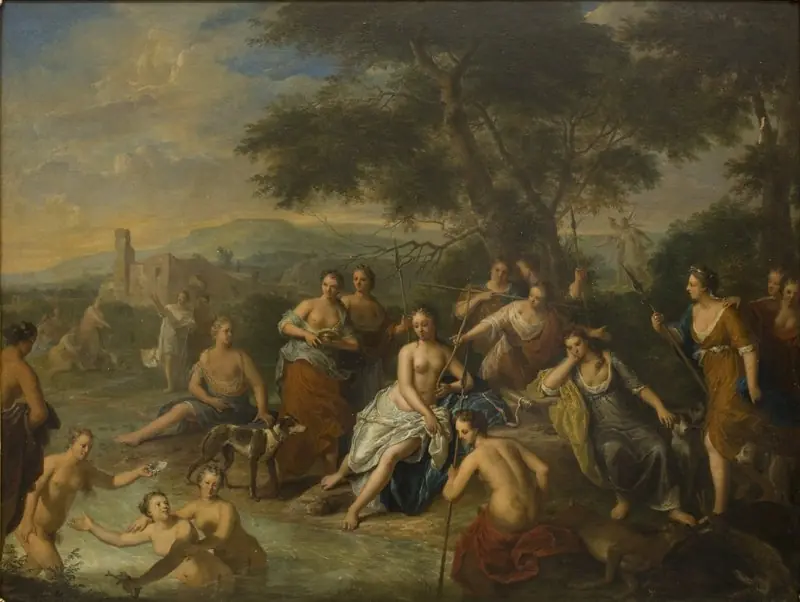
Diana with her Nymphs is a photography by the Baroque artist Unknown. It dates from 1650 and is held in the collection of the Statens Museum for Kunst. Painted around 1650, this work depicts the Roman goddess Diana surrounded by her attendants in a secluded woodland.
About this work
Overview
Painted around 1650, this work depicts the Roman goddess Diana surrounded by her attendants in a secluded woodland. Executed in the Baroque style, it captures a quiet moment of domestic intimacy rather than grand mythological drama. The painting resides in the Museum of Ethnography, where it is cataloged as part of a broader collection of European figurative works from the 17th century.
Subject & Meaning
The scene references Diana, goddess of the hunt and the moon, often portrayed with her nymphs in private, natural settings.
The scene references Diana, goddess of the hunt and the moon, often portrayed with her nymphs in private, natural settings. Here, the figures engage in gentle, everyday acts—hair brushing, reclining—emphasizing camaraderie over divine power. The nudity reflects classical ideals of purity and nature, while the absence of hunting gear or weapons shifts focus from myth to human connection within a sacred landscape.
Technique & Style
The artist employs soft chiaroscuro to model forms against a dim, wooded backdrop, characteristic of Baroque naturalism. Brushwork is fluid, with delicate attention to skin tones and fabric drapery. The composition is informal and intimate, avoiding theatricality; light falls gently across the central figures, enhancing the tactile quality of touch and texture without dramatic contrast.
History & Provenance
The painting’s early ownership is undocumented, but it entered the Museum of Ethnography’s collection in the late 19th century, likely acquired through private donations or estate sales. Its attribution to 2619_person remains unverified by scholarly consensus, and the work is often grouped with lesser-known regional Baroque painters of the period due to stylistic similarities.
Context
In mid-17th-century Europe, mythological scenes featuring nude women were common in aristocratic collections, often serving as allegories for virtue or natural harmony. This painting aligns with a trend of private, contemplative depictions of myth, contrasting with public, heroic narratives. Its setting in a wooded grove reflects contemporary interest in pastoral ideals and the natural world as a space of retreat.
Legacy
Though not widely exhibited or studied, the painting contributes to understanding how mythological themes were domesticated in Baroque art. Its quiet intimacy offers a counterpoint to more dramatic renditions of Diana, illustrating how artists of the period explored personal relationships within classical frameworks. It remains a quiet example of how myth could be rendered as human experience.
Artist & collection

 Domestic Scene
 Giacomo and Cardinal Marco, investing Andrea, Abbot of San Zeno, with his Benefice
 The Nymph of Fontainebleau
 Portrait of a Woman
 Madonna and Child with Saints in the Enclosed Garden
 Venus and Minerva
 Family Group of Four on Sofa
 Wall painting from Room H of the Villa of P. Fannius Synistor at Boscoreale