Artwork
Diana and her Nymphs
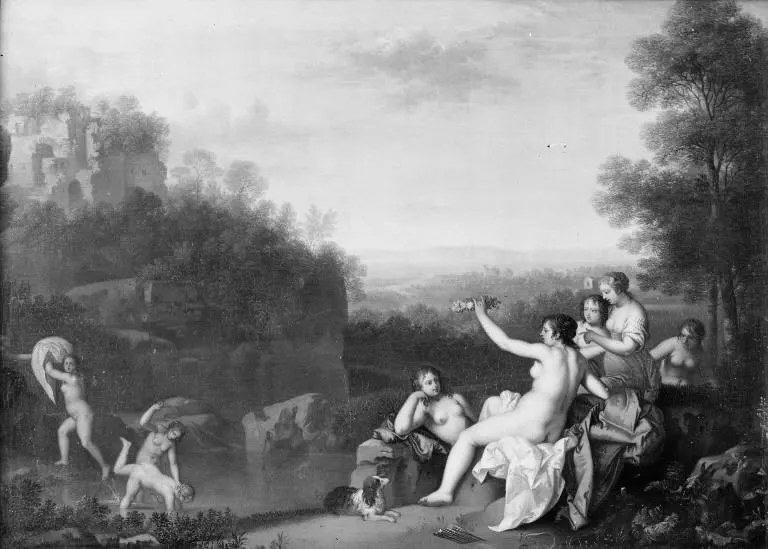
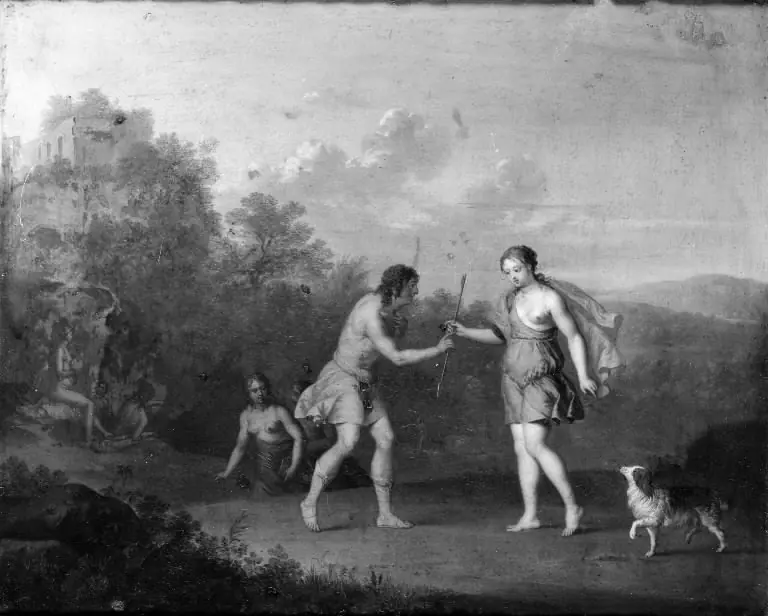
Diana and her Nymphs is an unspecified painting by the Dutch Golden Age artist Daniel Vertangen. It dates from 1647 and is held in the collection of the Statens Museum for Kunst.
About this work
Overview
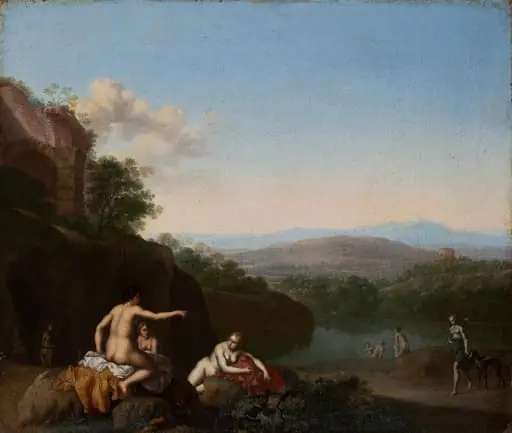
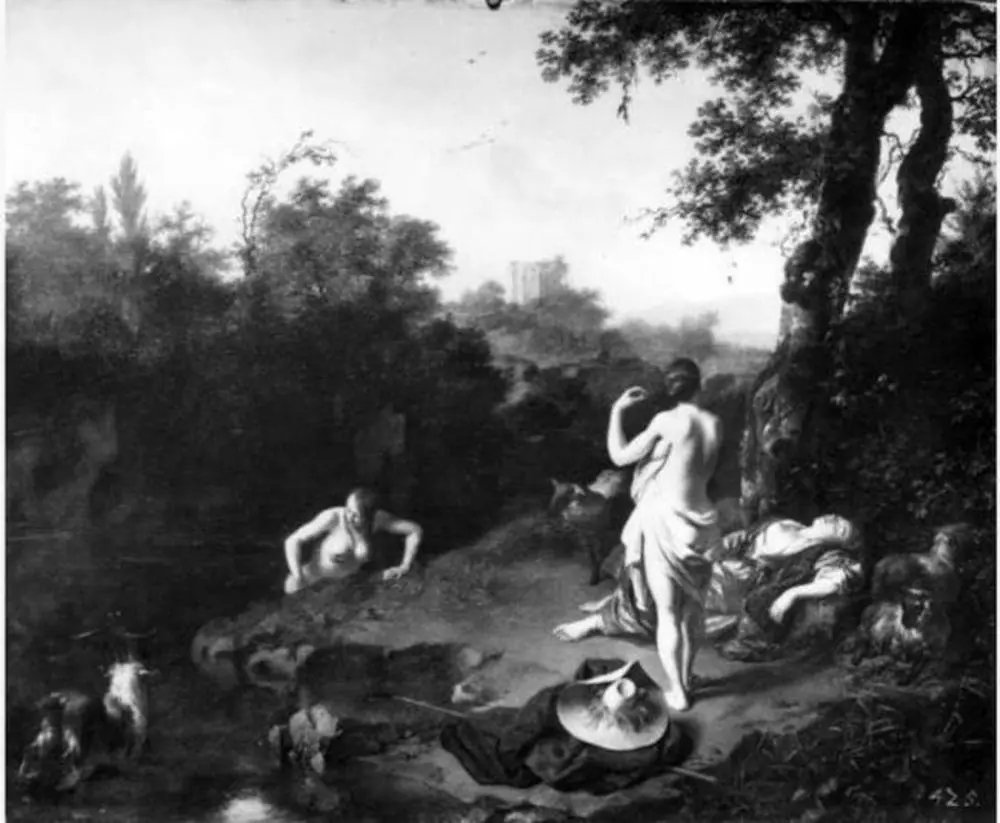
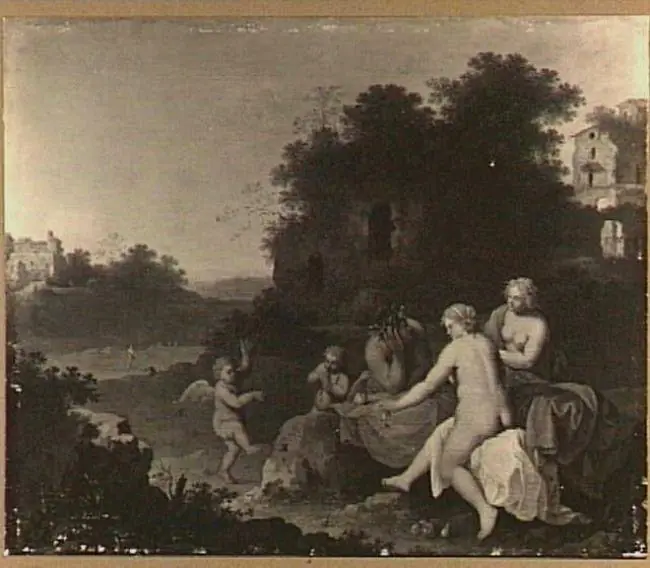
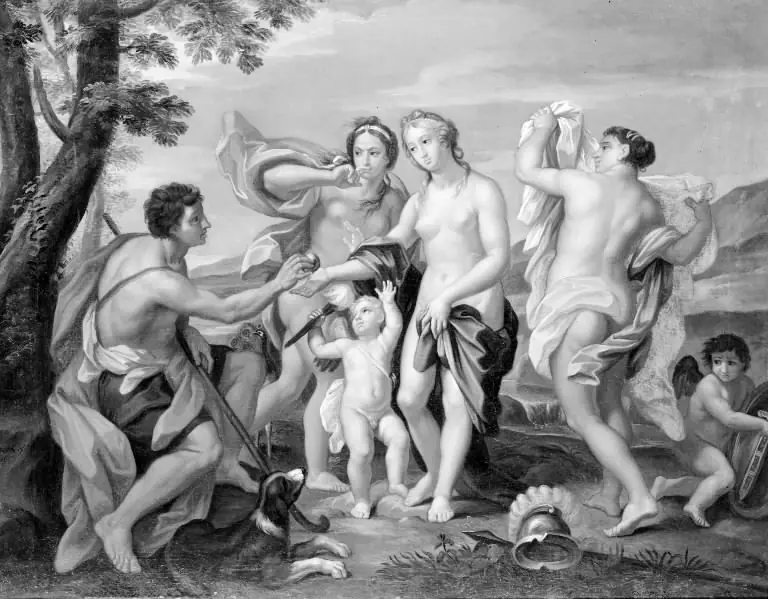
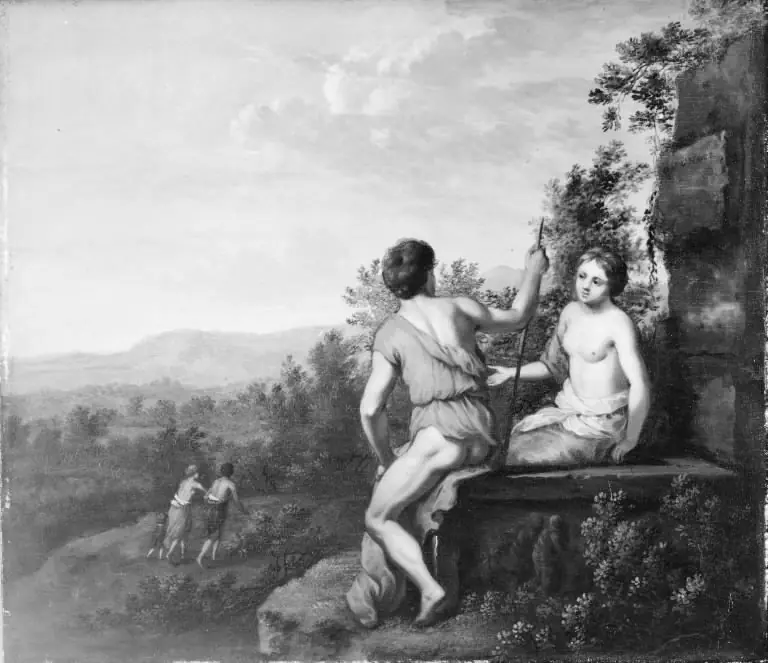
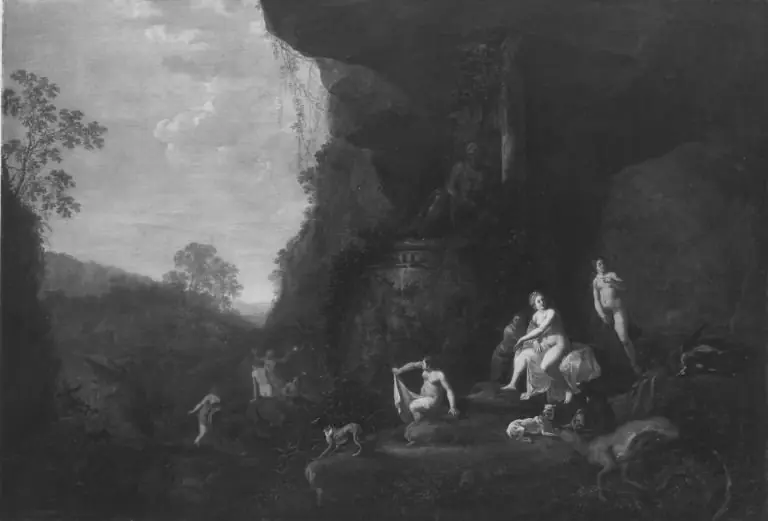
Daniel Vertangen’s 1647 canvas, titled *Diana and her Nymphs*, presents a tranquil woodland tableau populated by several nude women and a dog.
Daniel Vertangen’s 1647 canvas, titled *Diana and her Nymphs*, presents a tranquil woodland tableau populated by several nude women and a dog. Central to the composition is a figure seated on a stone, bow in hand, surrounded by companions who stand or crouch nearby. The background recedes into trees, crumbling architecture, and distant structures, lending the scene a gentle, slightly enigmatic atmosphere. The work is part of the collection of Denmark’s Statens Museum for Kunst.
Subject & Meaning
The central archer is identified as Diana, the Roman goddess of the hunt, accompanied by her attendant nymphs. Their nudity and natural setting reflect the classical tradition of portraying divine figures in harmony with the wilderness they preside over. The inclusion of a faithful dog reinforces Diana’s association with hunting and loyalty, while the ruins hint at the passage of time and the enduring nature of myth.
Technique & Style
Vertangen employs a soft, diffused light that washes over the figures, creating delicate gradations of shadow and a sense of three‑dimensionality. The brushwork is smooth, allowing flesh tones to blend seamlessly with the surrounding foliage. The composition balances vertical elements—the standing figures—with horizontal planes of the landscape, guiding the viewer’s eye toward the distant architectural hints.
History & Provenance
Executed in the mid‑seventeenth century, the painting entered the holdings of the Statens Museum for Kunst, Denmark’s national gallery, where it remains on display. Its acquisition history reflects the museum’s broader effort to assemble a representative collection of Dutch Golden Age works, of which Vertangen was a notable, though less celebrated, practitioner.
Context
Created during a period when mythological subjects were popular among Dutch painters, the work aligns with contemporary interests in classical antiquity and the moralizing potential of such narratives. Vertangen’s choice of Diana—a symbol of chastity and independence—mirrors the era’s fascination with virtuous female archetypes, while the serene setting echoes the tranquil pastoral scenes favored by his peers.
Artist & collection