Artwork
Outside the Tavern
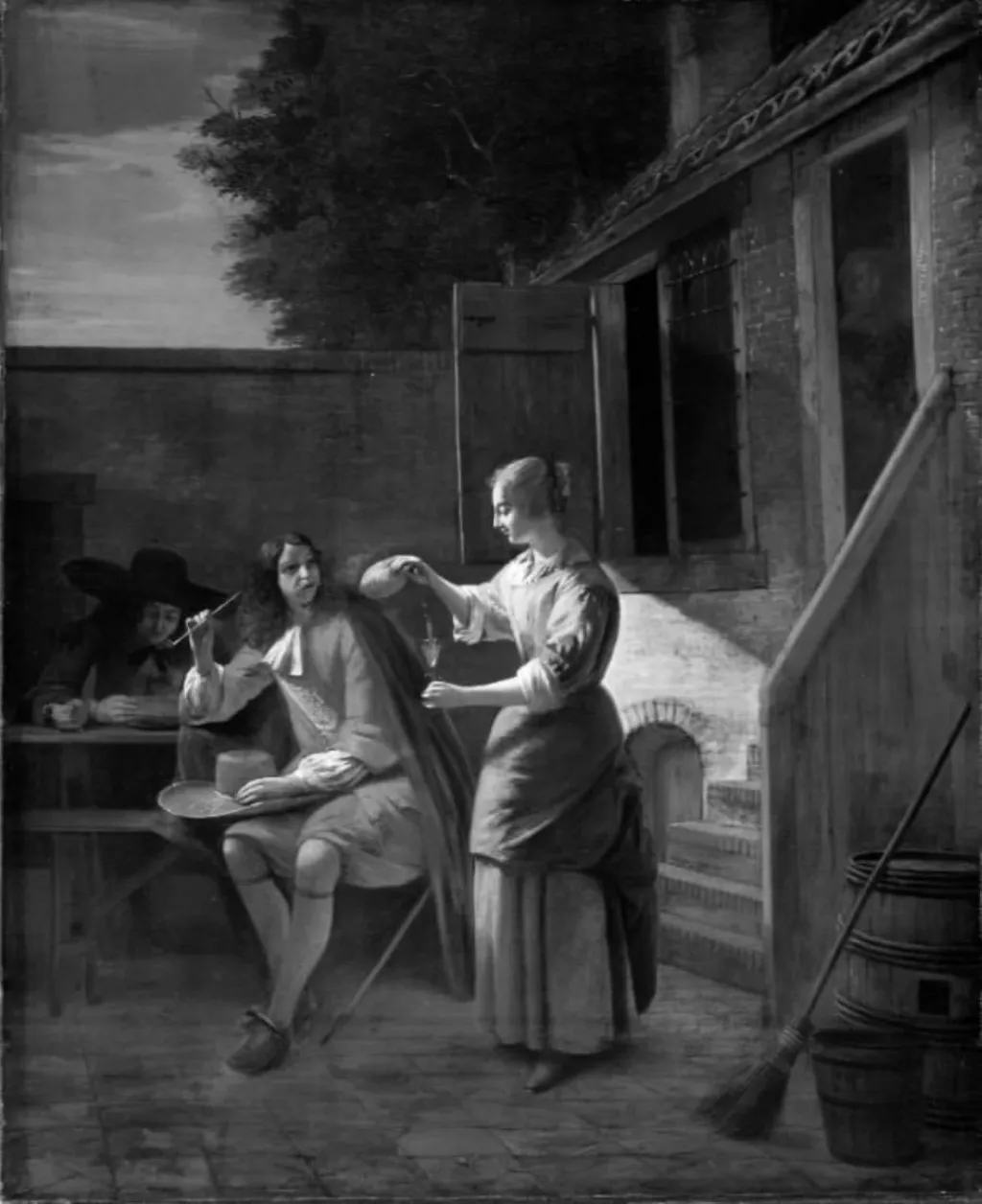
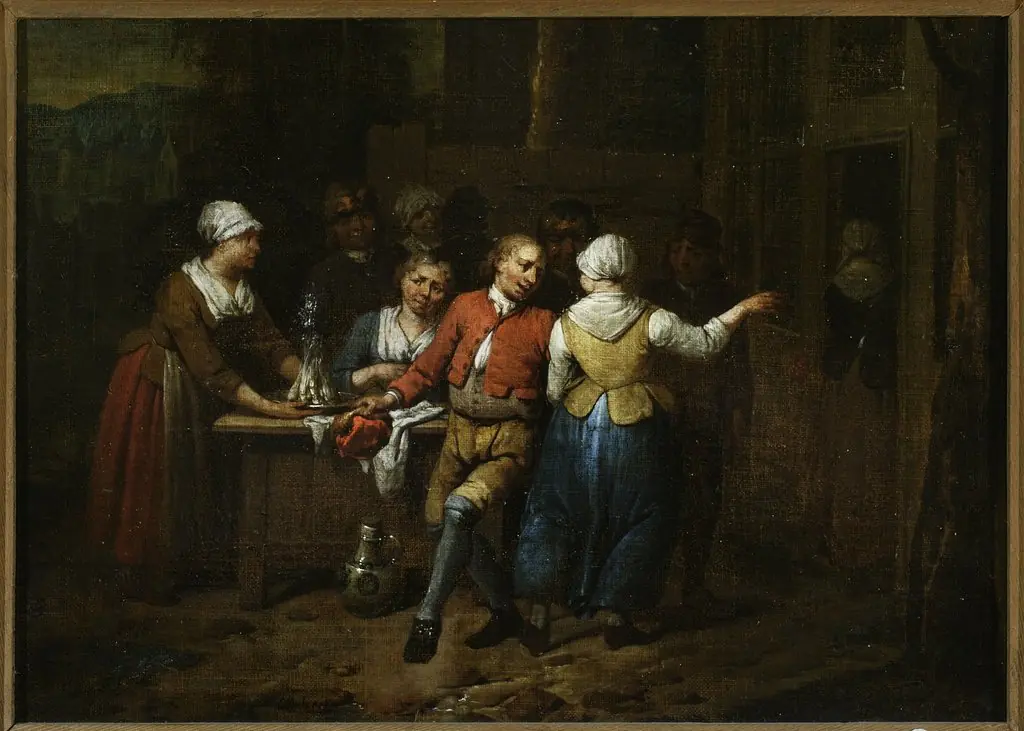
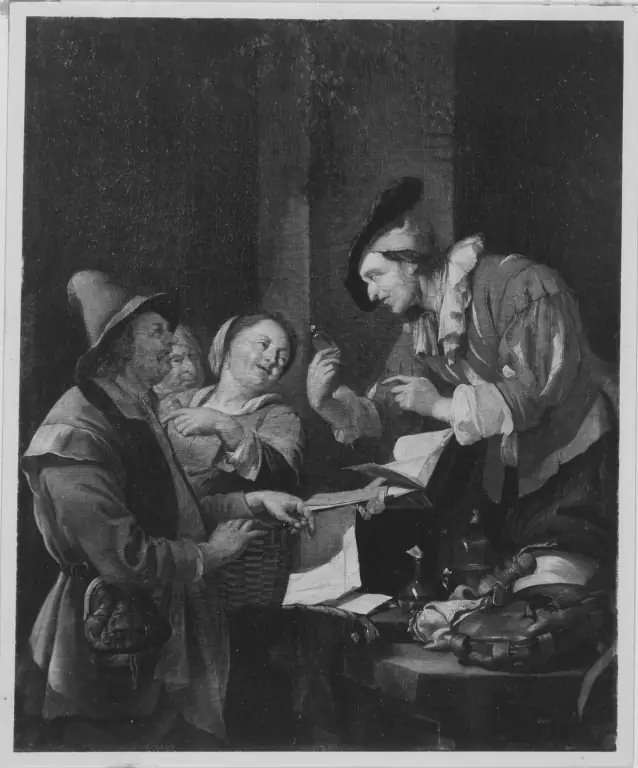
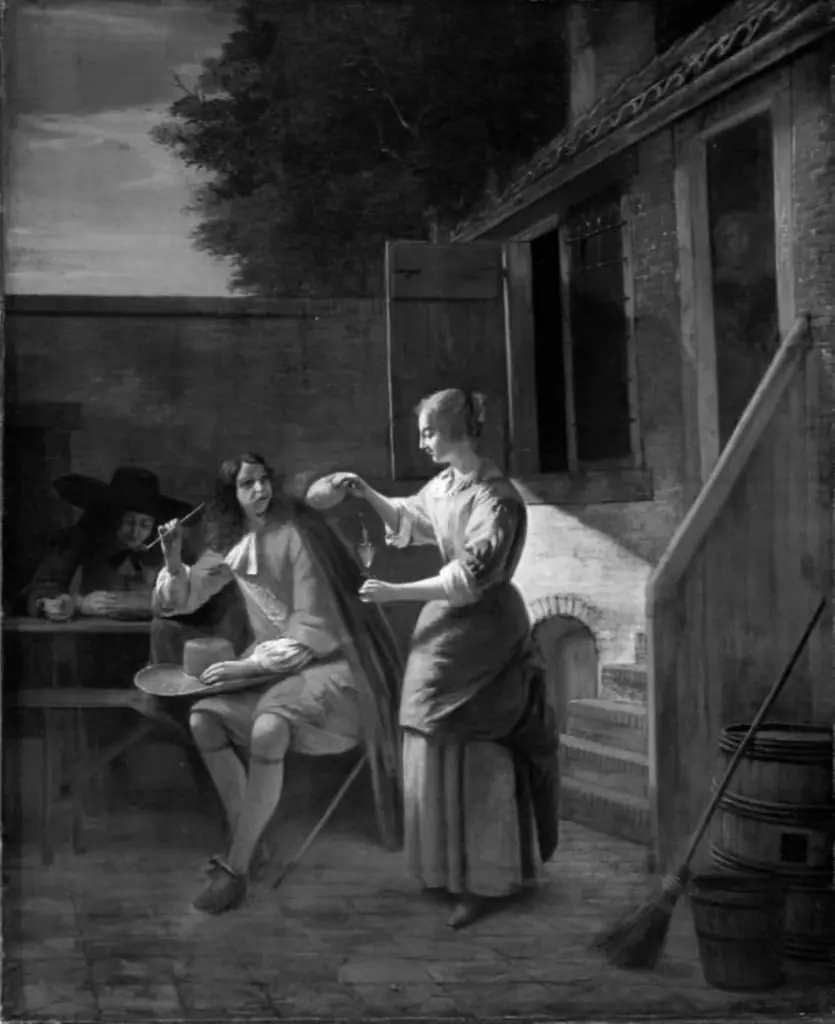
Outside the Tavern is a photography by Unknown. It dates from 1650 and is held in the collection of the Statens Museum for Kunst. This black-and-white photograph, dated around 1650, captures a quiet moment outside a rural tavern.
About this work
Overview
This black-and-white photograph, dated around 1650, captures a quiet moment outside a rural tavern. Attributed to 2622_person, it depicts a small group of individuals in a naturalistic setting. The image is part of the Museum of Ethnography’s collection, where it serves as a record of everyday social life in early modern Europe, rendered with documentary clarity rather than theatrical flourish.
Subject & Meaning
The composition avoids narrative drama, instead emphasizing the quiet rhythms of daily interaction, hinting at community bonds formed in casual spaces.
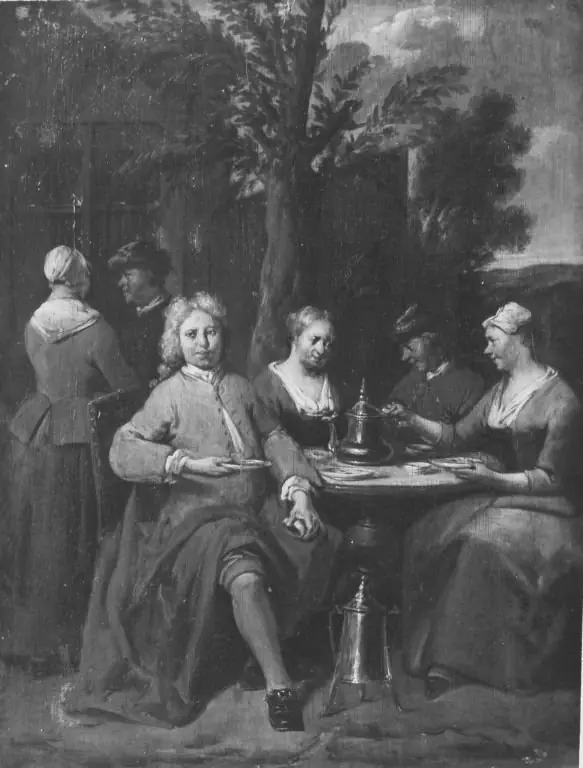
The scene portrays ordinary people in a moment of repose: a woman sits with a hat and brush, possibly engaged in light grooming or repair, while a man beside her holds a hat and pipe. Two others sit at a nearby table, their posture suggesting informal conversation. The composition avoids narrative drama, instead emphasizing the quiet rhythms of daily interaction, hinting at community bonds formed in casual spaces.
Technique & Style
Rendered in monochrome, the photograph relies on tonal contrast and spatial arrangement to convey depth and mood. Figures are positioned with deliberate asymmetry, avoiding formal staging. The background—brick wall, tree, and uneven ground—grounds the scene in a tangible environment. The lack of overt lighting effects suggests a candid, observational approach, typical of early photographic documentation of social life.
History & Provenance
The work entered the Museum of Ethnography’s holdings in the late 19th or early 20th century, likely acquired as part of a broader effort to preserve visual records of vernacular culture. Its attribution to 2622_person remains tentative, with no definitive archival records confirming authorship. The photograph’s origin as a studio or field study is unclear, but its preservation suggests early recognition of its ethnographic value.
Context
Taverns in 17th-century Europe functioned as social hubs for laborers, travelers, and locals. This image reflects the informal, gendered dynamics of such spaces—women present but not central to male-dominated activities like drinking. The presence of a brush and hat may indicate preparation for travel or work, situating the scene within broader patterns of daily mobility and labor outside formal institutions.
Legacy
As a rare surviving visual record of non-elite life from the mid-17th century, the photograph contributes to studies of material culture and social behavior. Though not widely exhibited, it remains a quiet reference point for scholars examining how ordinary people inhabited public spaces. Its value lies not in artistic innovation, but in its unembellished witness to a fleeting, everyday moment.
Artist & collection

 Domestic Scene
 Giacomo and Cardinal Marco, investing Andrea, Abbot of San Zeno, with his Benefice
 The Nymph of Fontainebleau
 Portrait of a Woman
 Madonna and Child with Saints in the Enclosed Garden
 Venus and Minerva
 Family Group of Four on Sofa
 Wall painting from Room H of the Villa of P. Fannius Synistor at Boscoreale