Artwork
Bacarolle
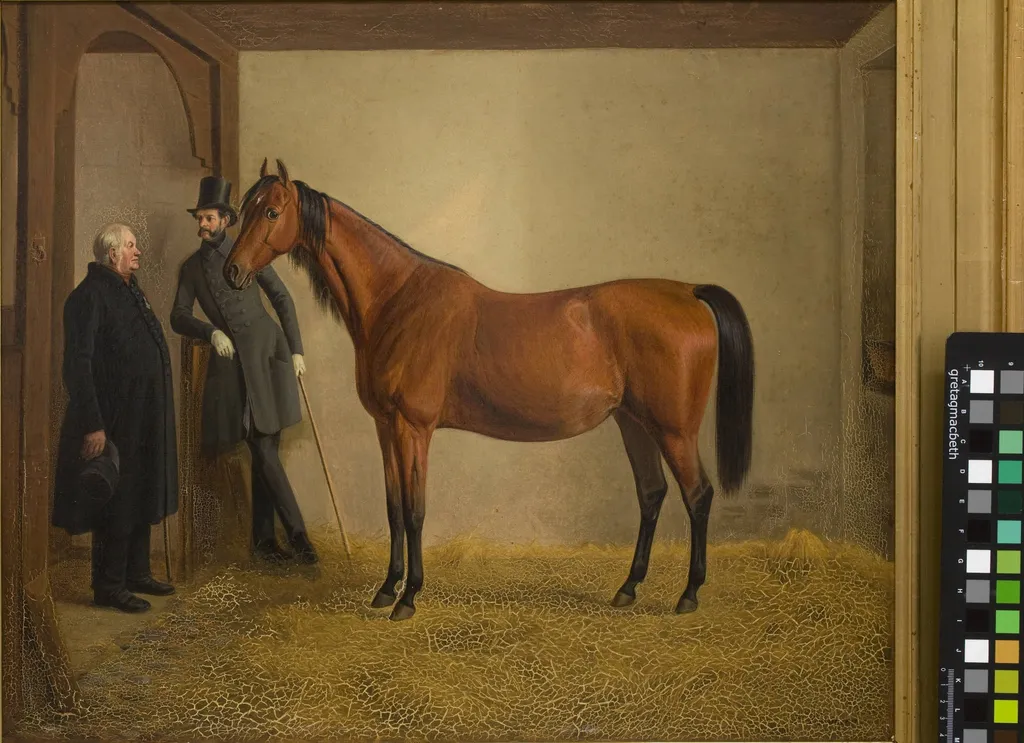
Bacarolle is a photography by Unknown. It dates from 1850 and is held in the collection of the Statens Museum for Kunst.
About this work
Overview
The image is part of the Museum of Ethnography’s collection, where it serves as a record of rural labor and animal care in the mid-nineteenth century.
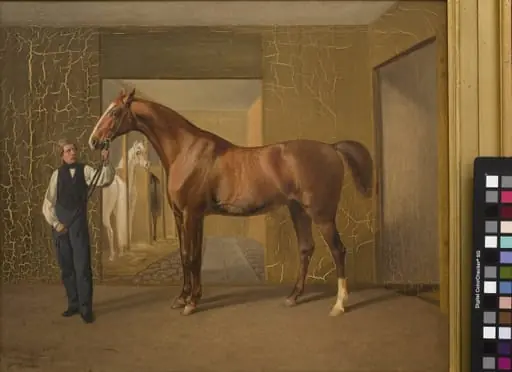
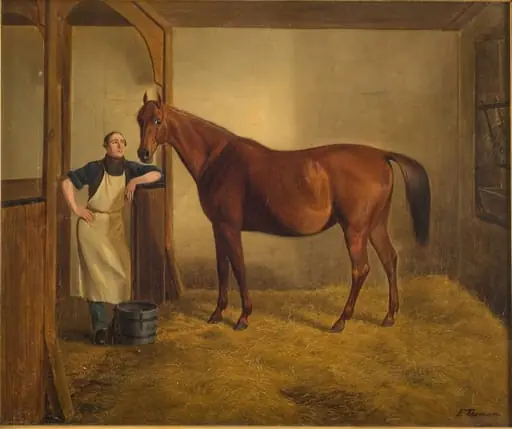
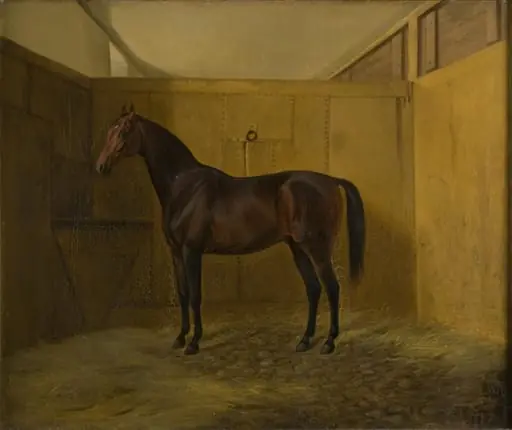
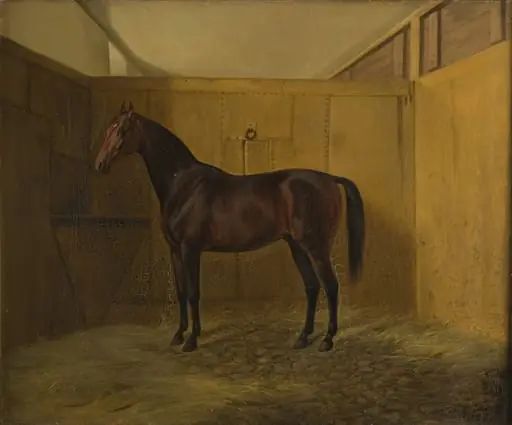
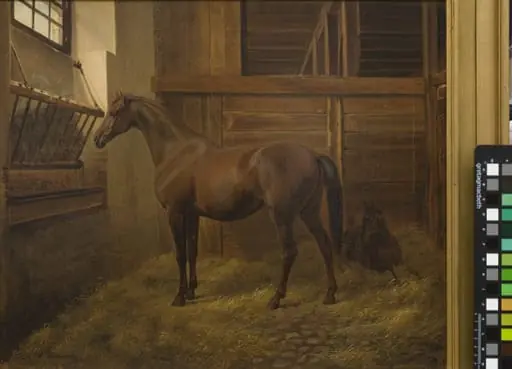
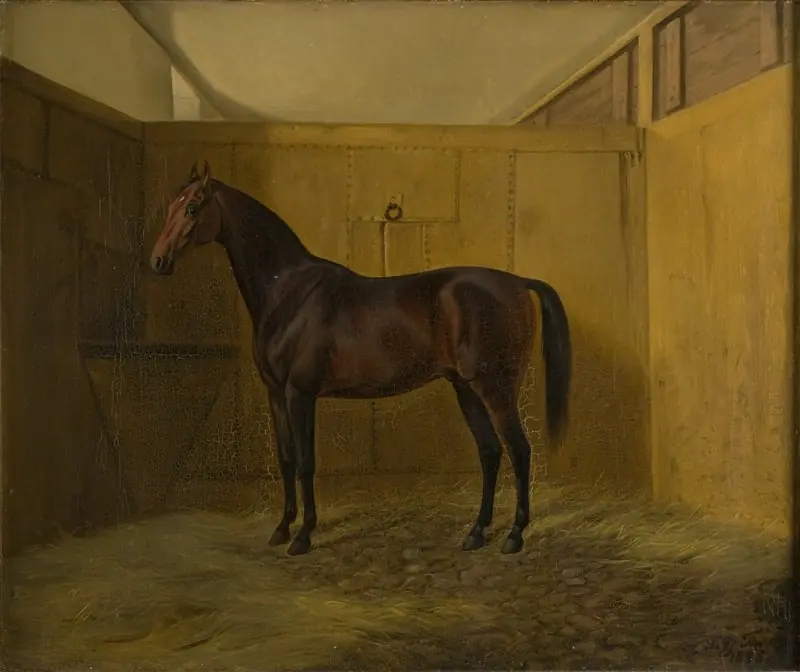
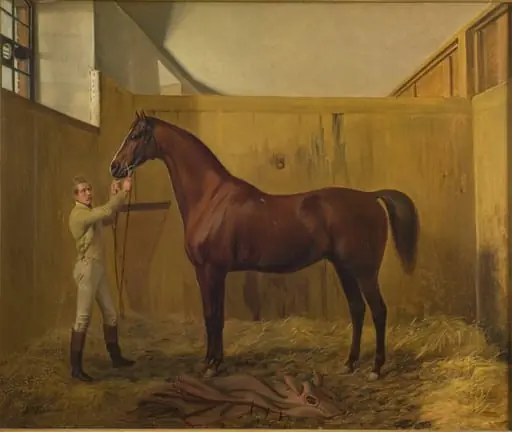
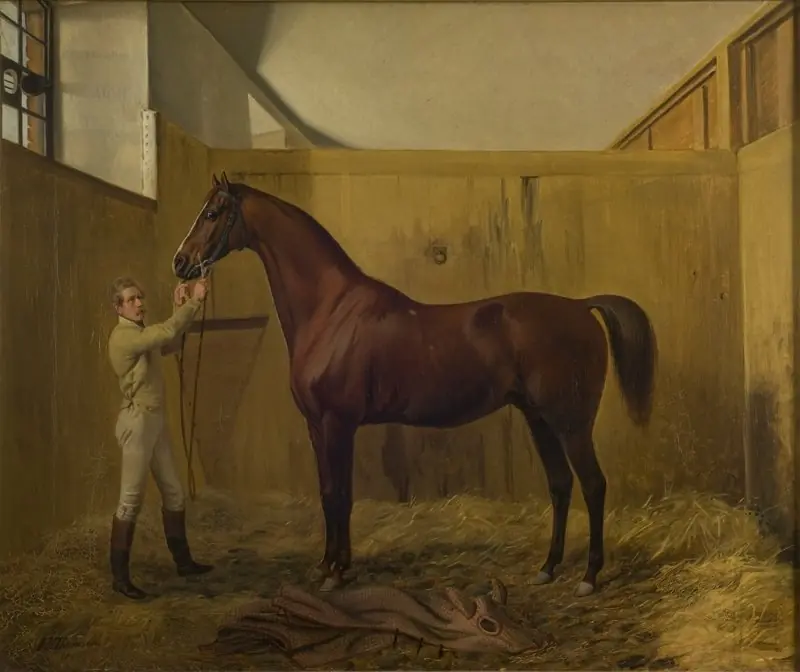
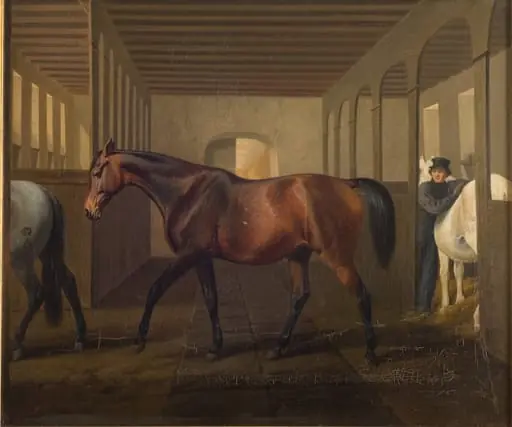
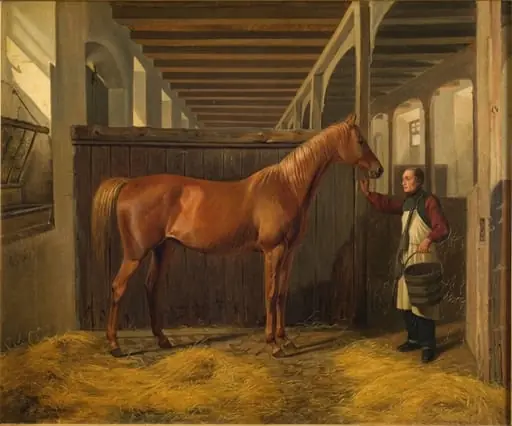
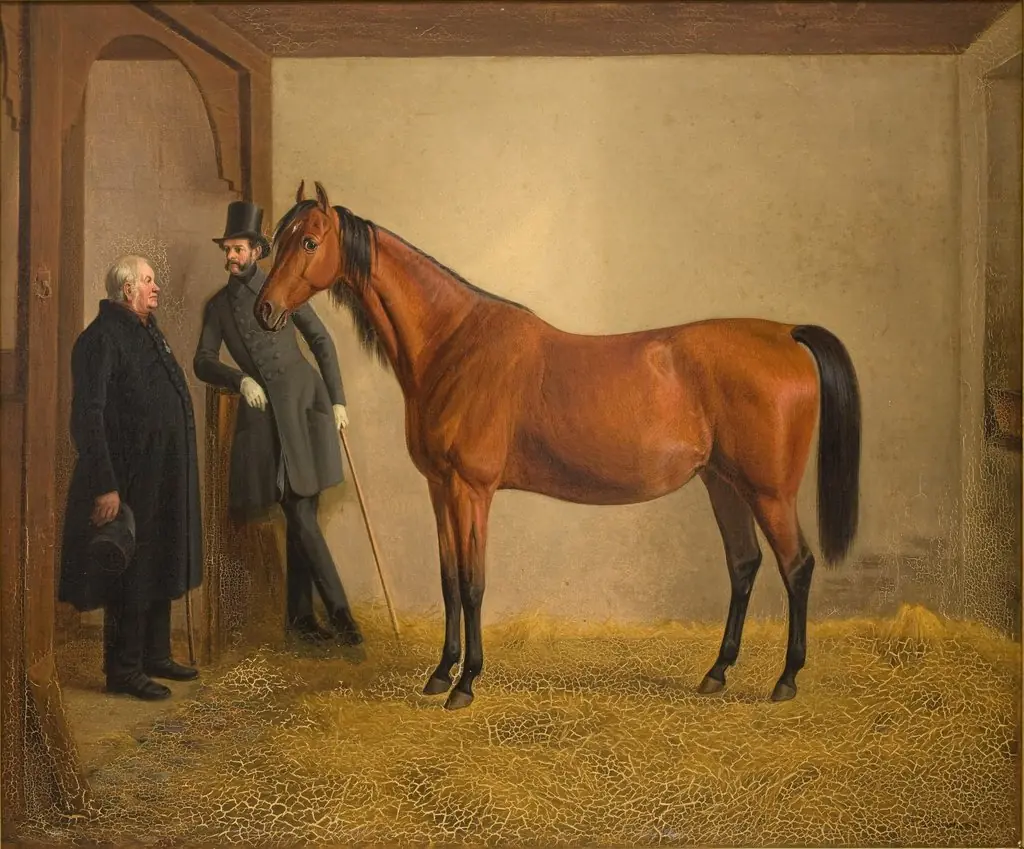
Created around 1850, Bacarolle is a photographic work attributed to 2708_person. It depicts two men and a horse within an enclosed, likely equestrian, space. The image is part of the Museum of Ethnography’s collection, where it serves as a record of rural labor and animal care in the mid-nineteenth century. The composition emphasizes stillness and quiet observation, avoiding theatricality in favor of documentary precision.
Subject & Meaning
The two figures, one upright and the other leaning on a post, appear to be stable hands or caretakers. Their calm expressions and relaxed postures suggest routine rather than ceremony. The horse, central to the scene, is rendered with attention to its physical presence, implying its value in daily work. The setting—straw, wooden beams, plain walls—points to a functional space, not a showplace, reinforcing the image’s grounding in practical life.
Technique & Style
The photograph employs chiaroscuro to model the horse’s form, using soft, directional light to highlight muscle definition and the sheen of its coat. Shadows fall gently across the floor and walls, creating depth without harsh contrast. The men’s clothing and the wooden post absorb light differently, adding texture and spatial clarity. The overall effect is one of quiet realism, prioritizing observation over dramatic effect.
History & Provenance
The work entered the Museum of Ethnography’s holdings in the late nineteenth or early twentieth century, likely as part of a broader collection documenting rural European life. Its attribution to 2708_person remains tentative, with no definitive documentation of the photographer’s identity or the circumstances of its creation. The image’s survival suggests it was valued for its ethnographic detail rather than artistic ambition.
Context
In the mid-1800s, photography was increasingly used to record everyday life, especially in agricultural communities. This image aligns with emerging efforts to document labor, animal husbandry, and vernacular architecture before industrialization transformed these practices. The stable setting reflects a world still reliant on equine power, where human and animal roles were closely intertwined in daily routines.
Legacy
Bacarolle endures as a quiet testament to pre-industrial rural labor. Though not widely exhibited, it contributes to scholarly understanding of how early photographers approached ethnographic subjects with restraint and attention to detail. Its value lies not in spectacle but in its unembellished portrayal of a moment, preserving the dignity of ordinary work and the presence of the working horse.
Artist & collection

 Domestic Scene
 Giacomo and Cardinal Marco, investing Andrea, Abbot of San Zeno, with his Benefice
 The Nymph of Fontainebleau
 Portrait of a Woman
 Madonna and Child with Saints in the Enclosed Garden
 Venus and Minerva
 Family Group of Four on Sofa
 Wall painting from Room H of the Villa of P. Fannius Synistor at Boscoreale