Artwork
La Danseuse
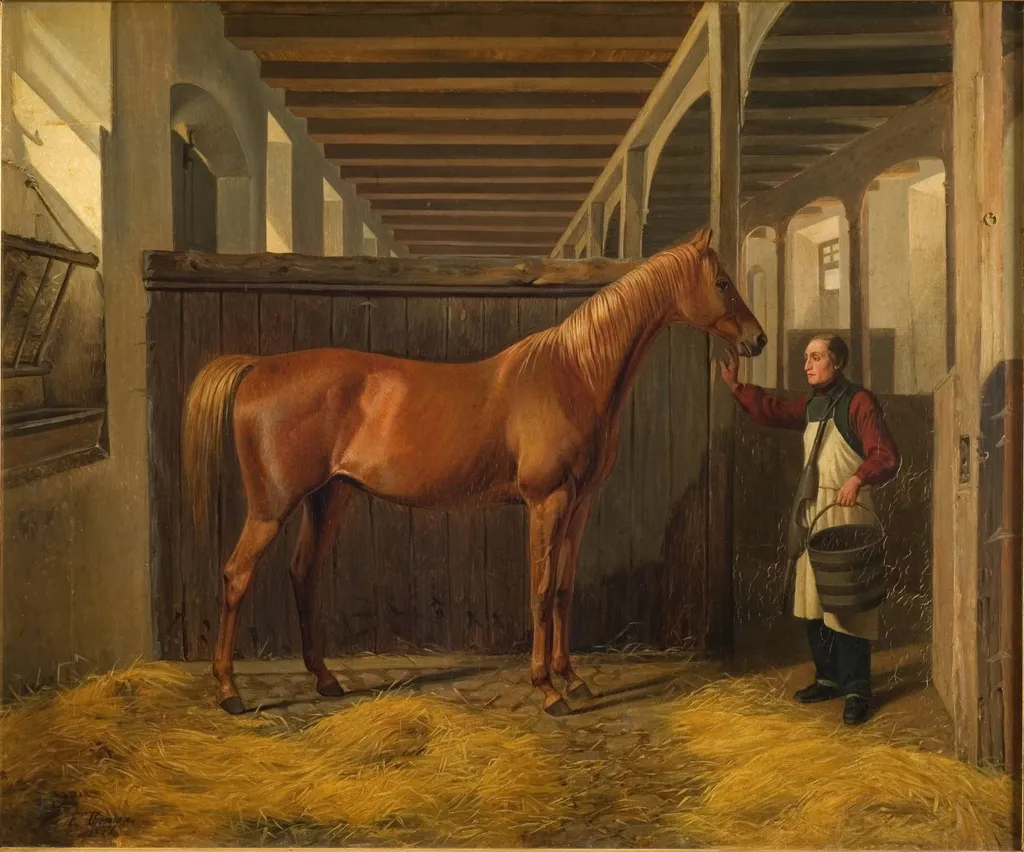
La Danseuse is a photography by the Romanticist artist Unknown. It dates from 1847 and is held in the collection of the Statens Museum for Kunst.
About this work
Overview
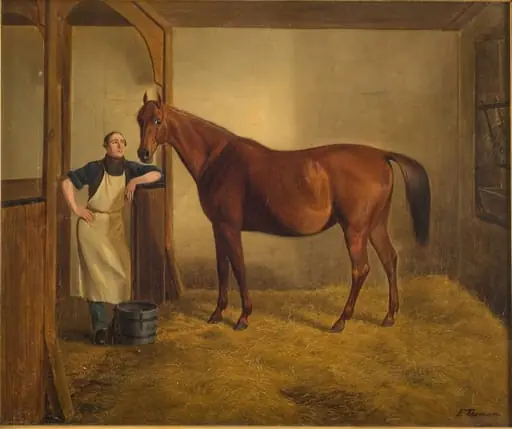
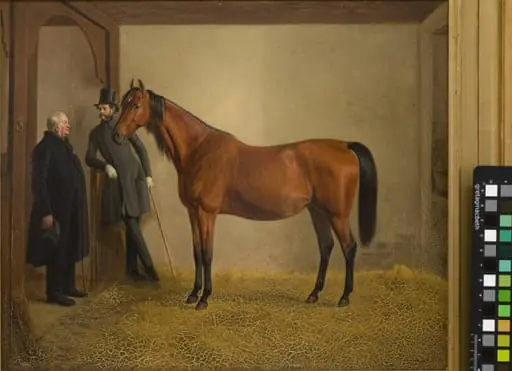
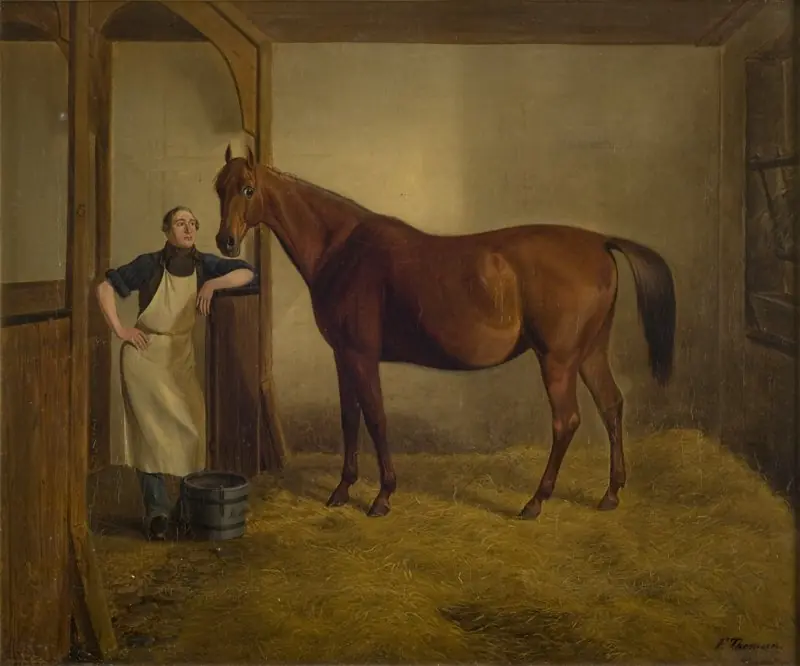
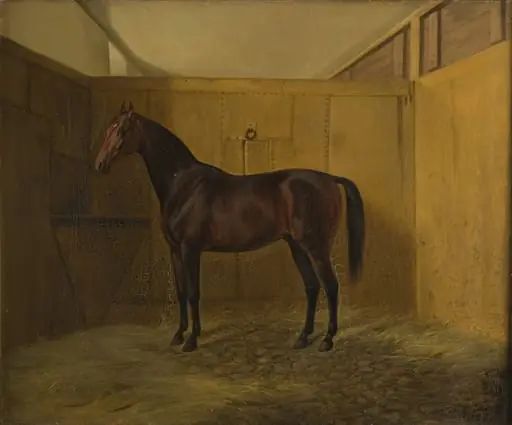
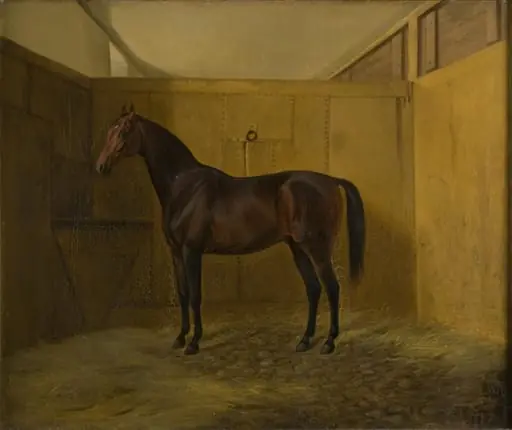
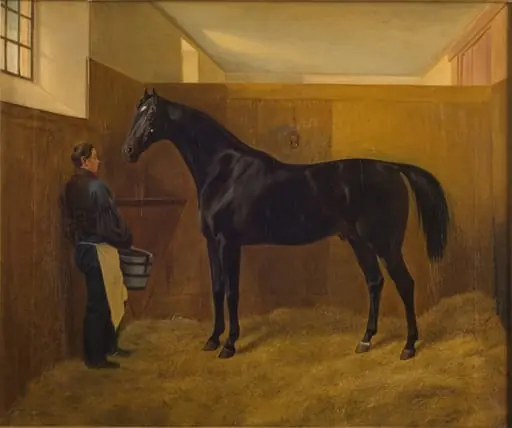
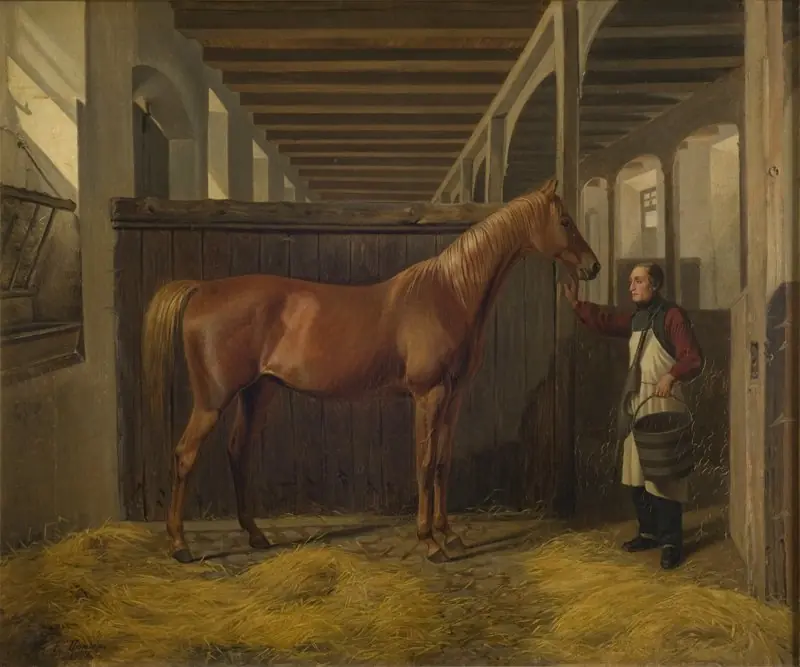
La Danseuse, dated 1847, is a painted scene depicting a man and a horse within a stable. Though titled to suggest movement, the image captures stillness: the figures are poised in quiet routine. The work is held in the collection of the Museum of Ethnography, where it is contextualized among artifacts of daily life rather than fine art traditions.
Subject & Meaning
The painting shows a laborer in an apron, holding a bucket, beside a brown horse with a flowing mane. Neither figure is engaged in dramatic action; instead, the scene conveys a moment of unremarkable care. The title, meaning 'The Dancer,' contrasts with the stillness, possibly hinting at rhythm in labor or an ironic reference to the horse's posture.
Technique & Style
The artist employs chiaroscuro to model the forms of the horse and the man, emphasizing texture in fur, fabric, and wood. Dim, ambient light filters through the stable, casting soft shadows across scattered hay and rough walls. The brushwork is restrained, favoring atmospheric tone over detail, reinforcing the quiet mood of the scene.
History & Provenance
Created in 1847, the painting entered the Museum of Ethnography’s collection without clear documentation of its early ownership. Its classification as ethnographic rather than fine art suggests it was acquired for its depiction of rural labor, reflecting 19th-century interests in documenting everyday life across social classes.
Context
In mid-19th-century Europe, depictions of rural labor gained attention as industrialization reshaped society. This work aligns with a broader trend of observing ordinary moments in agricultural settings. Unlike romanticized equestrian portraits, it presents the horse as part of a working environment, not a symbol of status.
Legacy
La Danseuse remains a quiet example of observational realism from a period when art increasingly turned to the mundane. Its presence in an ethnographic museum underscores shifting attitudes toward what constitutes culturally significant imagery, valuing authenticity over grandeur in representations of labor.
Artist & collection

 Domestic Scene
 Giacomo and Cardinal Marco, investing Andrea, Abbot of San Zeno, with his Benefice
 The Nymph of Fontainebleau
 Portrait of a Woman
 Madonna and Child with Saints in the Enclosed Garden
 Venus and Minerva
 Family Group of Four on Sofa
 Wall painting from Room H of the Villa of P. Fannius Synistor at Boscoreale