Artwork
The Carnival in Rome. Fragment
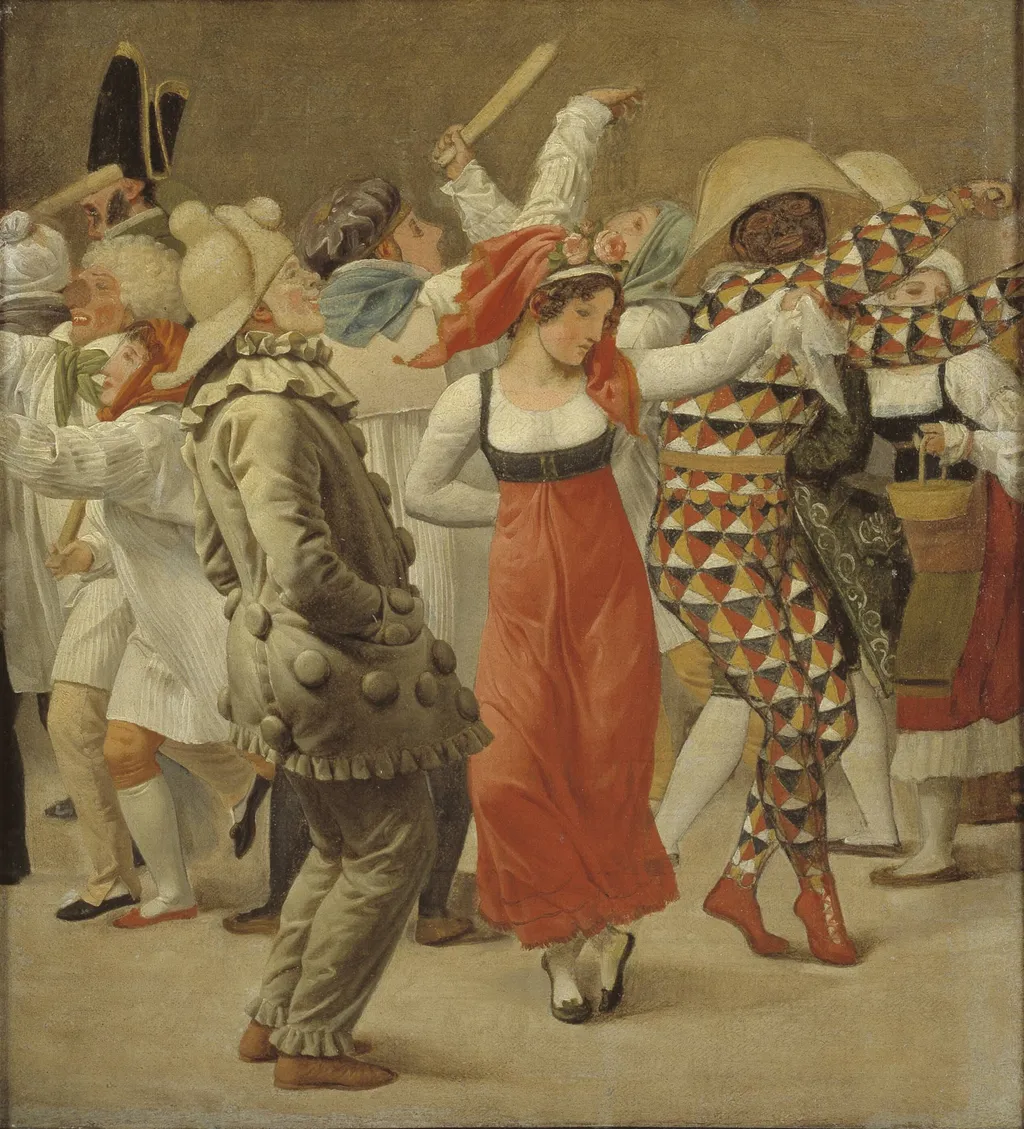
The Carnival in Rome. Fragment is a photography by the Romanticist artist Unknown artist. It is held in the collection of the Statens Museum for Kunst.
About this work
Overview
The work is held in the Museum of Ethnography and exists only as a partial composition, with much of the original surface lost.
The surviving fragment of *The Carnival in Rome* is attributed to Xun Xu, a late Three Kingdoms and early Jin dynasty scholar-official known for his work in music and painting. Though dated to 1828, this date conflicts with Xun Xu’s lifetime, suggesting a misattribution or later annotation. The work is held in the Museum of Ethnography and exists only as a partial composition, with much of the original surface lost.
Subject & Meaning
The scene captures a masked gathering, possibly a seasonal or ritual festival, with figures in vivid, mismatched garments and obscured faces. A woman in red holds a flower, while another figure in a patchwork costume dances nearby. Observers in dark clothing stand apart, suggesting a distinction between participants and spectators. The ambiguity of identities and the lack of clear narrative imply a focus on collective ritual rather than individual story.
Technique & Style
The fragment employs bold, saturated colors against a dark, indistinct background to heighten visual contrast. Brushwork is loose and expressive, with forms rendered in simplified outlines rather than detailed modeling. Facial features are blurred or omitted, emphasizing costume and movement over individuality. The composition feels spontaneous, as if capturing a fleeting moment rather than a staged tableau.
History & Provenance
The painting’s origin and early history are undocumented. Its attribution to Xun Xu is chronologically implausible, raising questions about its true authorship or the accuracy of its labeling. The fragment likely survived as part of a larger scroll or panel, now lost. It entered the Museum of Ethnography’s collection under unclear circumstances, possibly through 19th-century acquisitions of Asian art with misattributed European subjects.
Context
Xun Xu lived in a period when Chinese literati painting emphasized restraint and scholarly ideals. A depiction of a Roman carnival would be highly unusual, suggesting either a fantastical invention, a misidentified subject, or a later European influence misread as Chinese. The work may reflect 19th-century curiosity about foreign cultures, filtered through unfamiliar artistic conventions and incomplete knowledge.
Legacy
The fragment remains an enigmatic object, valued more for its visual strangeness than its historical clarity. It has not influenced mainstream art movements but serves as a case study in cross-cultural misattribution and the challenges of interpreting hybrid or mislabeled artifacts. Its persistence in museum collections underscores the enduring fascination with ambiguous, visually arresting fragments from uncertain origins.
Artist & collection
Artist
Xun Xu (c. 221 – 289), courtesy name Gongzeng, was a Chinese musician, painter, politician, and writer who lived during the late Three Kingdoms period and early Jin dynasty of China. Born in the influential Xun family,…

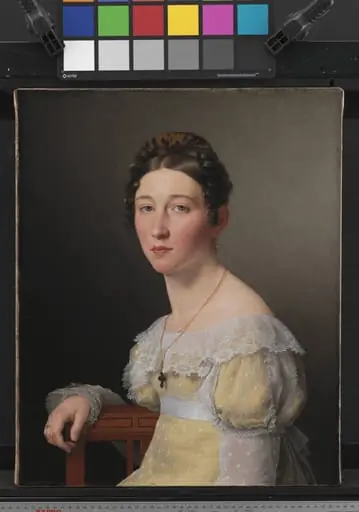 Portrait of Emilie Henriette Massmann, Betrothed of Frederik Wilhelm Caspar von Benzon
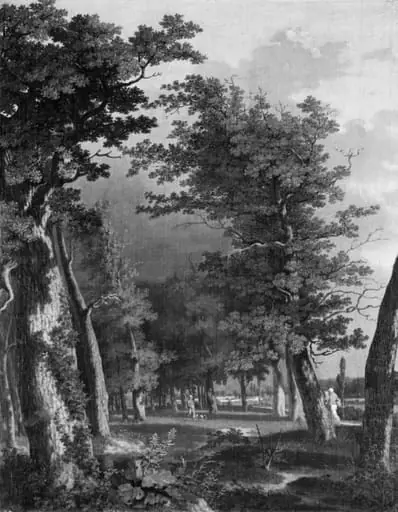 Landscape with Trees near Paris
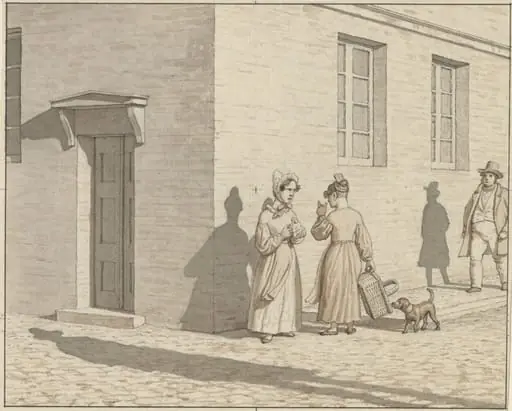 Linear Perspective as Applied in Painting - Plate VII, 1 - A Street Corner Encounter
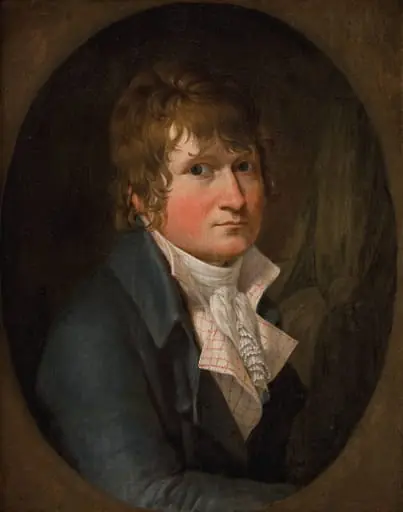 Self-Portrait
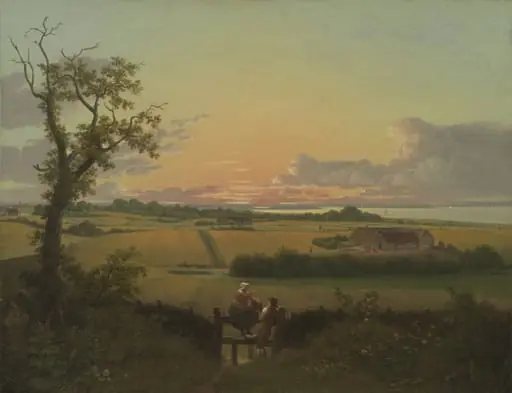 Landscape with a Stile. The Isle of Møn
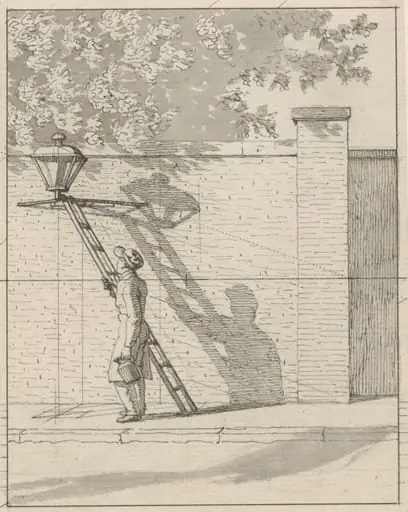 Linear Perspctive as Applied in Painting - Plate VI. The Street Lamp on the Garden Wall, Daylight
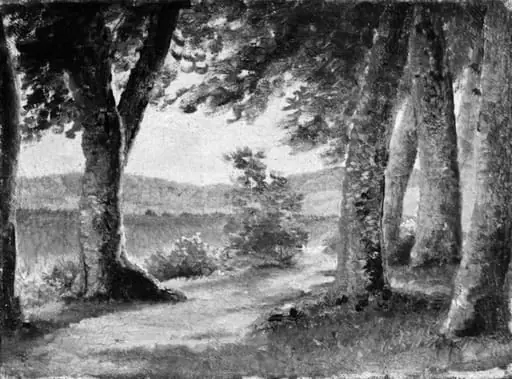 Study of a Wood
 Study of Clouds over the Sea
 Merry Company
 The Ball
 Masked Ball at the Opera
 Katharina and Petruchio (Scene from Shakespeare's "The Taming of the Shrew")
 The Meeting of Gautier, Count of Antwerp, and his Daughter, Violante
 Representation from the Life of the Young Tobias II
 The Ball
 The Clapping Game
 Carnival Jesters
 На карнавале в Венеции