Artwork
Trompe l'Oeil. Board with an Etching of a Man with a Pipe
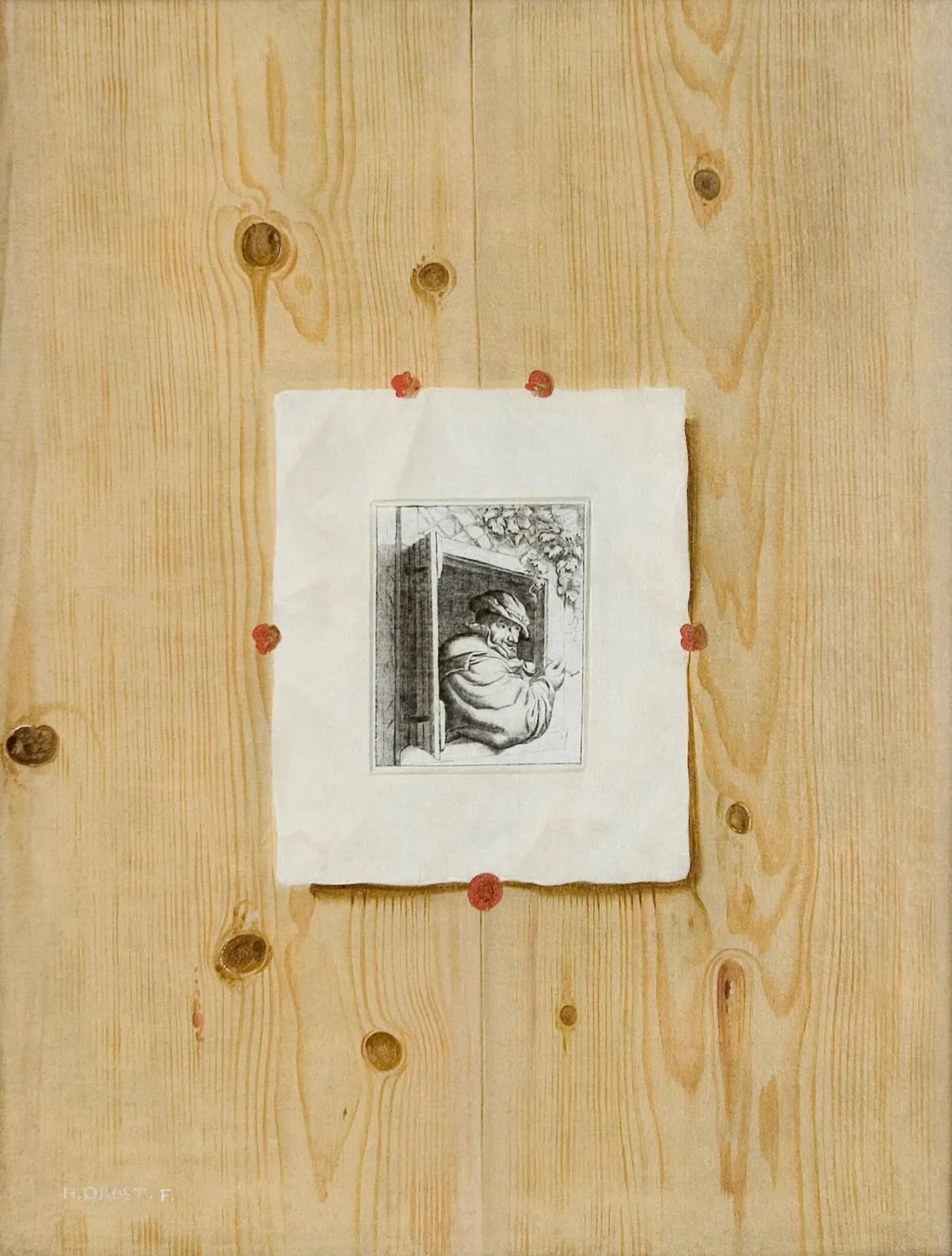
Trompe l'Oeil. Board with an Etching of a Man with a Pipe is a print by Unknown. It dates from 1650 and is held in the collection of the Statens Museum for Kunst.
About this work
Overview
The piece is held in the collection of the Museum of Ethnography, where its material simplicity and illusionistic intent invite close inspection.
This work consists of a wooden panel bearing a printed image of a man holding a pipe, arranged to simulate a real object affixed to the surface. Created around 1650, it employs trompe l'oeil to blur the boundary between representation and physical artifact. The piece is held in the collection of the Museum of Ethnography, where its material simplicity and illusionistic intent invite close inspection.
Subject & Meaning
The central figure is a solitary man, depicted in profile, wearing a broad-brimmed hat and a loose shirt, with a pipe held loosely in his right hand. His posture suggests quiet contemplation. The image avoids narrative or symbolic overload, instead presenting an ordinary moment of daily life. The illusion of a pinned print implies a casual, domestic context—perhaps a wall decoration or personal keepsake.
Technique & Style
The artist used a printed image mounted on a wooden board, enhanced with subtle shading to mimic three-dimensionality. A white border frames the print, secured by small red pins that mimic real fasteners. The wood grain of the board is left visible, contrasting with the flatness of the print. Chiaroscuro is applied sparingly to model the figure’s face and clothing, reinforcing the illusion without overt theatricality.
History & Provenance
The work is attributed to an anonymous creator active in the mid-17th century, likely within a Northern European context where trompe l'oeil was practiced in domestic and studio settings. It entered the Museum of Ethnography’s collection through documented acquisition, though its original ownership and exact place of creation remain undocumented. Its survival suggests it was valued as a curiosity or study in visual deception.
Context
In the 1650s, trompe l'oeil was used in both fine art and craft to explore perception and materiality. This piece aligns with a broader trend of integrating printed images into decorative objects, reflecting the growing accessibility of print media. Unlike grand allegorical works, it reflects a quieter, more intimate engagement with image-making—perhaps intended for private contemplation rather than public display.
Legacy
This work contributes to the understanding of early modern visual culture’s fascination with illusion and reproduction. It stands as a modest but deliberate example of how printed imagery was manipulated to challenge the viewer’s assumptions about authenticity and surface. Its preservation highlights the historical interest in everyday visual artifacts as objects of artistic inquiry.
Artist & collection

 Domestic Scene
 Giacomo and Cardinal Marco, investing Andrea, Abbot of San Zeno, with his Benefice
 The Nymph of Fontainebleau
 Portrait of a Woman
 Madonna and Child with Saints in the Enclosed Garden
 Venus and Minerva
 Family Group of Four on Sofa
 Wall painting from Room H of the Villa of P. Fannius Synistor at Boscoreale
 Essai de bois gravé
 Pulcinello/Pulcinella
 En Hollande (La petite liseuse)
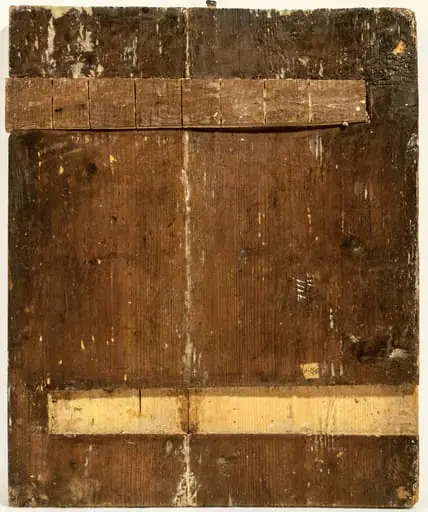 Compoziție complexă, (13 scene), centrată pe scena Învierii redată în varianta coborârii lui Iisus la Iad, episod biblic cunoscut și sub denumirea de Anastasis sau Învierea.Mântuitorul încadrat de o mandorlă îl scoate pe Adam și pe alți drepți(sfinți, prooroci) din gura gheenei. Deasupra este pictată scena ridicării din mormânt a Mântuitorului, lângă piatra mormântului, îngerul. În celelalte casete sunt reprezentate scene din viața lui Iisus Hristos și a Maicii Domnului, cu un număr redus de personaje (3 – 4, maxim 5): „Sfânta Treime”(ospitalitatea lui Avraam), Nașterea Fecioarei Maria”, „Intrarea Maicii Domnului în biserică(Ovidenia), „Buna Vestire”, „Nașterea lui Iisus Hristos”, Întâmpinarea Domnului(Stretenia), „Botezul lui Hristos” „Schimbarea la față” „Intrarea Domnului în Ierusalim”, , „Înălțarea Domnului, Adormirea Maicii Domnului, „Înălțarea Sfintei Cruci”. Toate personajele au nimburi trasate cu alb.Desen schematic, trasat cu finețe, ușor dezordonat, ca și inscripțiile. Cromatica specifică, tonuri calde, brun, galben, roșu în contrast cu verde, albastru, negru, valorate de foița de aur. Chenarul lat, roșu(tipul de icoană krasnushka)
 Untitled
 Untitled
 Untitled