Artwork
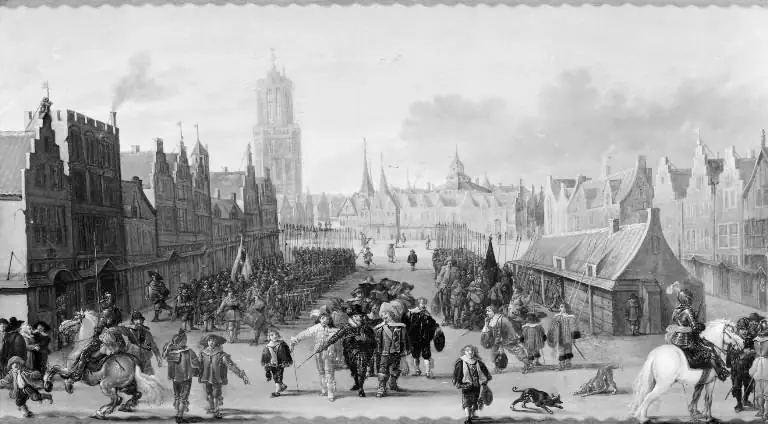
Disbanding of the Mercenary Troops on the Neude, Utrecht, July 31st, 1618
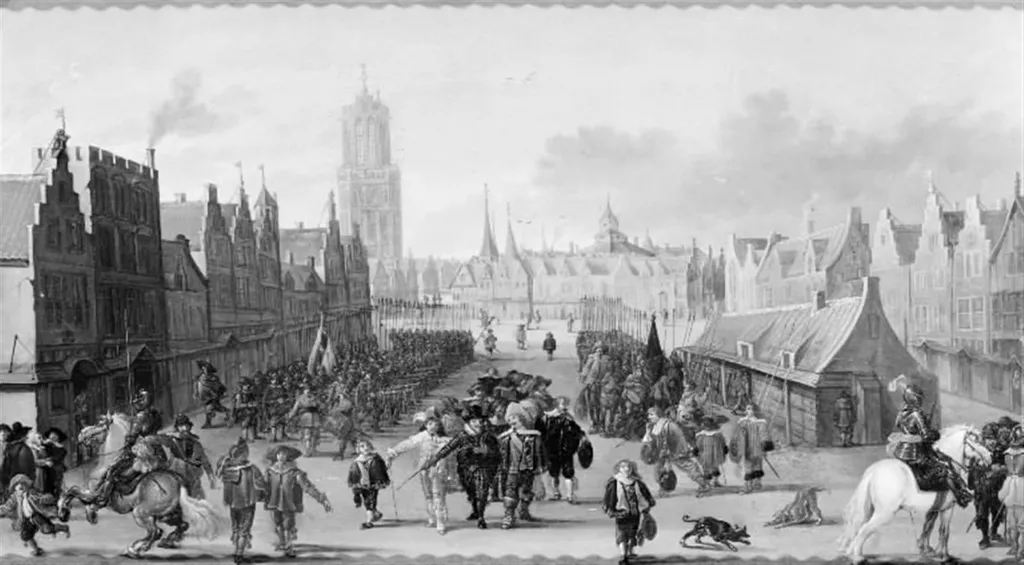
Disbanding of the Mercenary Troops on the Neude, Utrecht, July 31st, 1618 is a photography by the Baroque artist Unknown. It dates from 1618 and is held in the collection of the Statens Museum for Kunst.
About this work
Overview
The canvas titled *Disbanding of the Mercenary Troops on the Neude, Utrecht, July 31st, 1618* depicts a bustling urban street in early‑17th‑century Utrecht. A dense crowd occupies the foreground, with figures on foot and on horseback moving along a thoroughfare flanked by tall, orderly buildings. In the distance a larger assemblage can be seen, suggesting a public gathering of considerable scale.
Subject & Meaning
The work records the formal dissolution of hired soldiers on Utrecht’s central square, the Neude, on 31 July 1618. By portraying the orderly departure of the mercenaries amid a civilian audience, the painting conveys a moment of civic transition from wartime mobilization to peacetime stability, reflecting contemporary concerns about military authority and municipal order.
Technique & Style
Executed with a high degree of naturalistic detail, the artist employs a clear, balanced composition typical of early Baroque urban scenes. Precise rendering of individual faces, horse tack, and architectural elements creates a sense of immediacy, while the muted palette and controlled lighting emphasize the documentary character of the event rather than theatrical dramatization.
History & Provenance
Created in the year of the event, the painting is attributed to the otherwise anonymous artist catalogued as 2928_person. It entered the collection of the Museum of Ethnography, where it remains on display, providing a visual record of Utrecht’s civic life in the early 1600s.
Context
The disbanding of mercenary forces was a recurring issue in the Dutch Republic, where private troops were often employed during the Eighty Years’ War. By 1618, the Republic was moving toward a more centralized, standing army, and public ceremonies such as this one served to legitimize the shift and reassure the populace of restored peace.
Artist & collection

 Domestic Scene
 Giacomo and Cardinal Marco, investing Andrea, Abbot of San Zeno, with his Benefice
 The Nymph of Fontainebleau
 Portrait of a Woman
 Madonna and Child with Saints in the Enclosed Garden
 Venus and Minerva
 Family Group of Four on Sofa
 Wall painting from Room H of the Villa of P. Fannius Synistor at Boscoreale
 Belebte Straße in einer flämischen Stadt
 Portrait of the Members of the Guild ''Oude Voetboog'' ("Old Arbalest") in Antwerp
 The coronation procession of Joseph II at the Römerberg in Frankfurt am Main
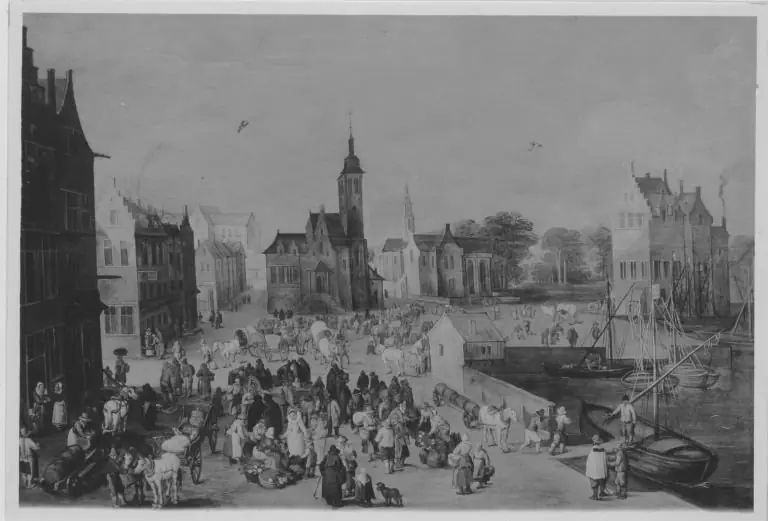 Marktplatz mit Gracht
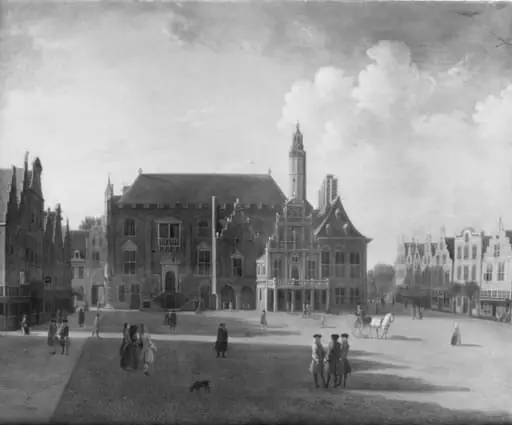 Marketplace at Haarlem, Looking towards the Town Hall
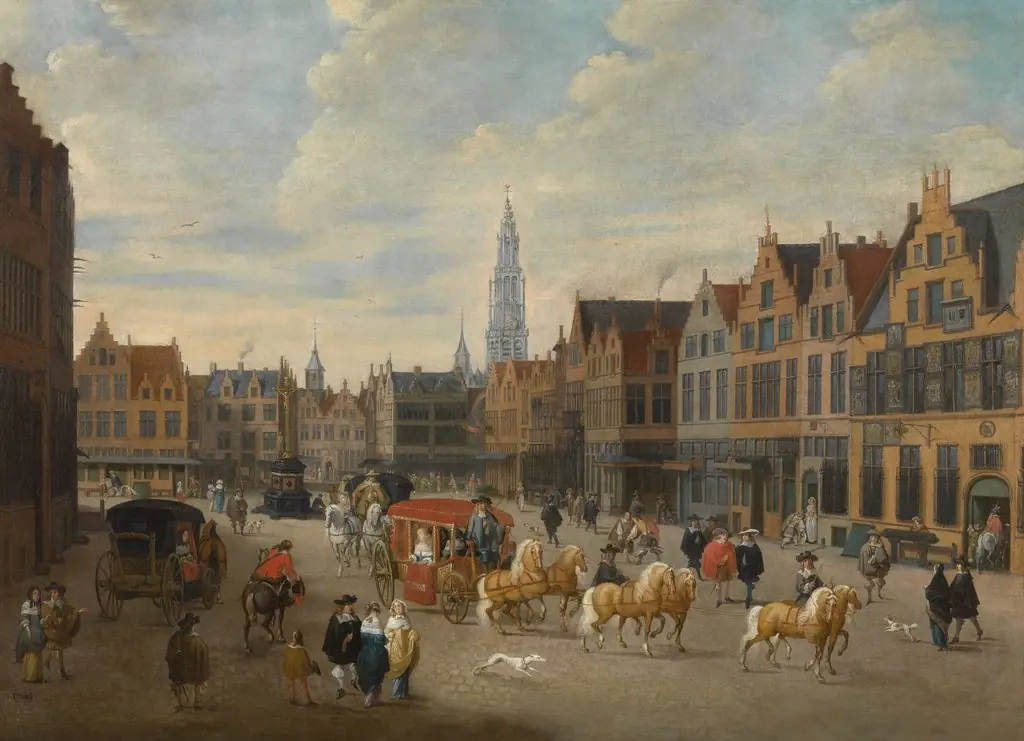 Meirplaats in Antwerp
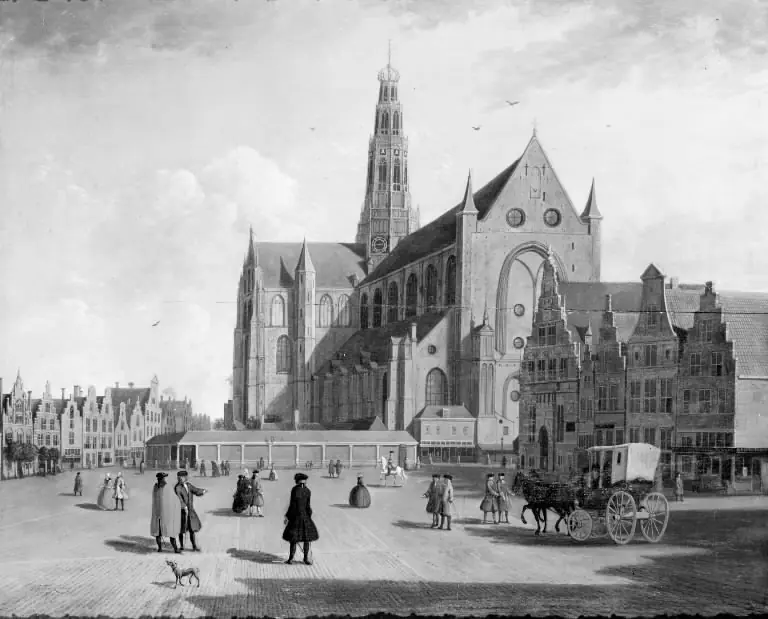 Grootekerk at Haarlem
 Marketplace at Haarlem, Looking towards the Town Hall
 Der Marktplatz von Hoorn
 The Infante Isabella shoots the jay of the Grand Serment with a crossbow in the Sablon in Brussels, May 15th 1615
 Disbanding of the Mercenary Troops on the Neude, Utrecht, July 31st, 1618
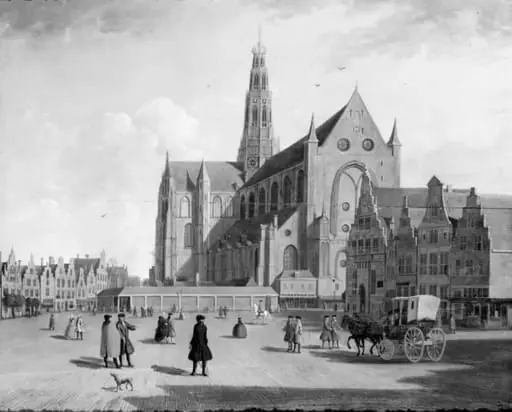 Grootekerk at Haarlem