Artwork
In Europe
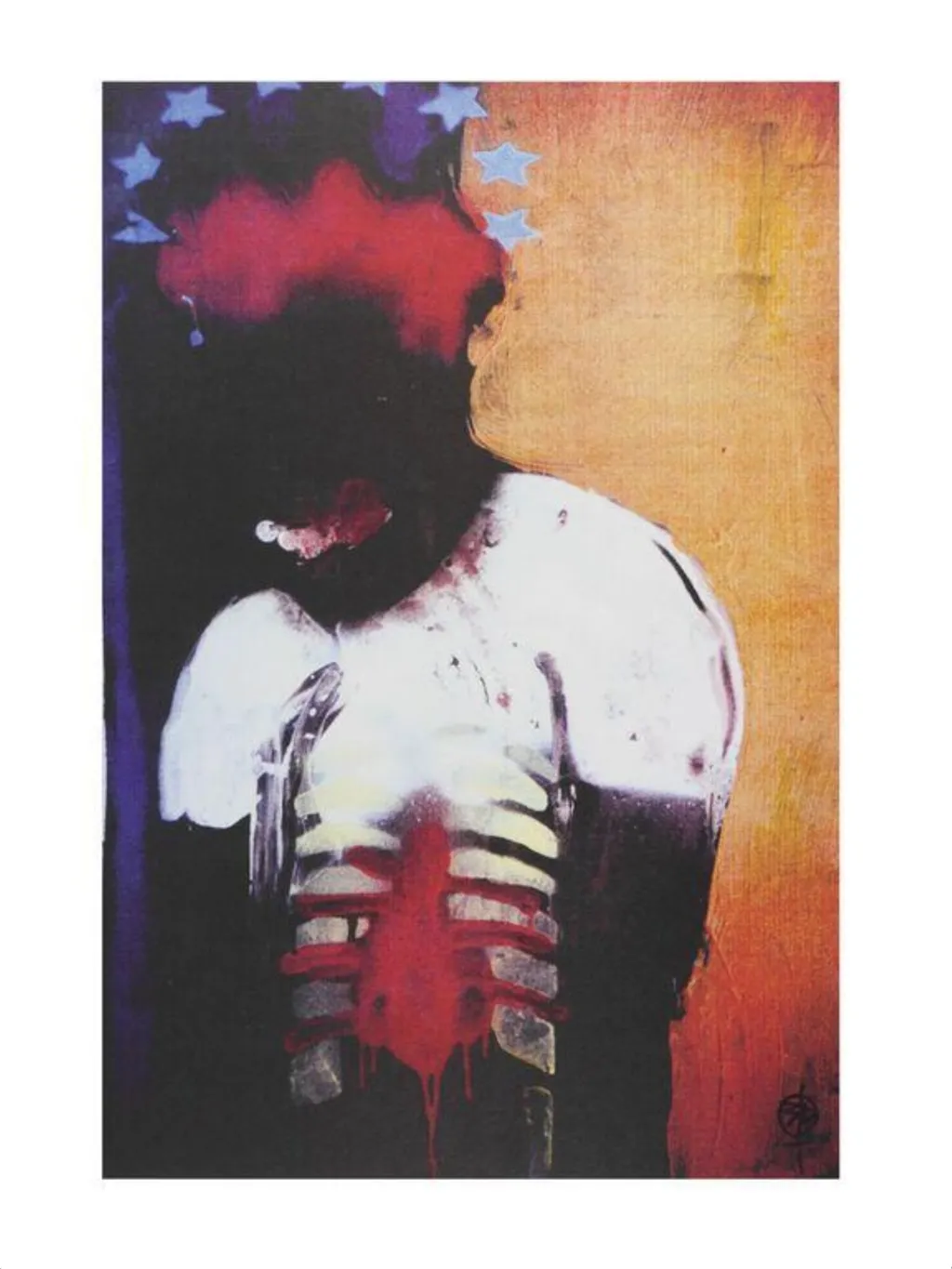
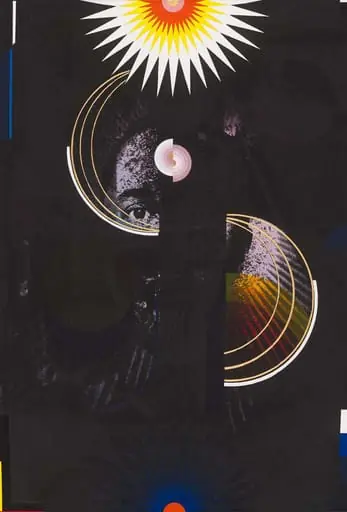
In Europe is a print by Unknown. It dates from 2004 and is held in the collection of the Victoria and Albert Museum. This screenprint is the work of Robert Del Naja, known professionally as 3-D, a founding member of the musical group Massive Attack.
About this work
Overview
This screenprint is the work of Robert Del Naja, known professionally as 3-D, a founding member of the musical group Massive Attack.
This screenprint is the work of Robert Del Naja, known professionally as 3-D, a founding member of the musical group Massive Attack. While recognized for his contributions to music, Del Naja has maintained a parallel career in visual art. This piece, produced as a limited edition print, reflects his interest in merging political symbolism with spiritual iconography, extending his artistic practice beyond album design.
Subject & Meaning
The central figure is faceless, devoid of individual identity, suggesting anonymity or collective representation. Above it, the twelve stars of the European Union are arranged as a halo—a deliberate reconfiguration of religious iconography. This juxtaposition invites reflection on the secular authority of political institutions and the quasi-sacred status they sometimes assume in public consciousness.
Technique & Style
Executed as a screenprint, the work employs flat, high-contrast colors and sharp graphic lines typical of poster art. The composition is minimal, relying on symbolic clarity rather than detail. The halo of stars is rendered with precise geometric regularity, contrasting with the blurred, undefined form of the figure beneath, reinforcing the tension between institutional order and human ambiguity.
History & Provenance
Created in the early 2000s, the print emerged during a period of heightened debate over European identity and integration. It was produced independently of Massive Attack’s musical releases, as part of Del Naja’s broader visual projects. Examples reside in institutional collections, including the Victoria and Albert Museum, where it is held as part of a series documenting contemporary political art.
Context
The work responds to the cultural and political climate of post-Maastricht Europe, when the EU’s institutional presence expanded and its symbolism became more visible in public life. Del Naja’s use of religious imagery critiques the deification of bureaucratic structures, aligning with broader artistic inquiries into power, authority, and collective belief systems in late modern society.
Legacy
As one of the few works by a musician to enter major museum collections as fine art, the print bridges popular culture and institutional critique. It has influenced a generation of artists who blend music, graphic design, and political commentary. Its enduring relevance lies in its quiet, persistent questioning of how symbols acquire moral weight beyond their original intent.
Artist & collection

 Domestic Scene
 Giacomo and Cardinal Marco, investing Andrea, Abbot of San Zeno, with his Benefice
 The Nymph of Fontainebleau
 Portrait of a Woman
 Madonna and Child with Saints in the Enclosed Garden
 Venus and Minerva
 Family Group of Four on Sofa
 Wall painting from Room H of the Villa of P. Fannius Synistor at Boscoreale