Artwork
Death of Dido
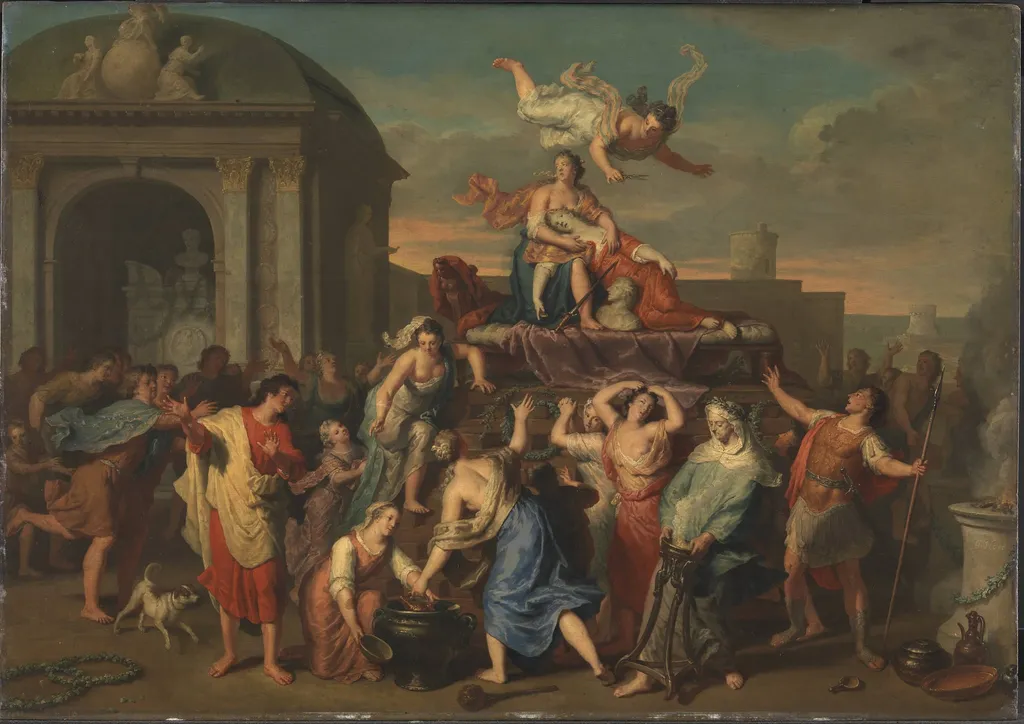
Death of Dido is a photography by Unknown. It dates from 1750 and is held in the collection of the Statens Museum for Kunst. Painted around 1750, this work depicts the final moments of Dido, queen of Carthage, as she prepares to take her own life.
About this work
Overview
Painted around 1750, this work depicts the final moments of Dido, queen of Carthage, as she prepares to take her own life. Executed in oil on canvas, it is part of the Museum of Ethnography’s collection. The scene is rendered with heightened emotional intensity, emphasizing isolation and fate through composition and lighting, rather than strict historical accuracy.
Subject & Meaning
Surrounding figures, draped in classical robes, react with grief and awe, suggesting a moment of tragic inevitability.
The central figure, Dido, sits atop a stone platform, cradling her infant while a winged entity above holds a flaming torch—symbolizing death or divine intervention. Surrounding figures, draped in classical robes, react with grief and awe, suggesting a moment of tragic inevitability. The scene draws from Virgil’s Aeneid, portraying Dido’s suicide after being abandoned by Aeneas, though the inclusion of the child is an interpretive addition not found in the original text.
Technique & Style
The artist employs chiaroscuro to heighten emotional tension, with stark contrasts between the illuminated figures and the dimming background. Drapery flows in rhythmic folds, guiding the viewer’s eye toward Dido, while the sky softens into muted clouds, reinforcing the solemnity. Figures are arranged in a semi-circle, creating a stage-like focus that isolates the central tragedy.
History & Provenance
The painting entered the Museum of Ethnography’s holdings in the late 18th century, likely acquired during a period of renewed interest in classical themes among European collectors. Its attribution to the artist remains unverified, and no documentary records confirm its commission or early ownership. The work has remained in the museum’s collection since its acquisition, with minimal public display until the 20th century.
Context
Created during the mid-18th century, the painting reflects the era’s fascination with classical antiquity and tragic heroism, common in Enlightenment-era art. While many contemporaries depicted Dido’s death without the infant, this version introduces a symbolic layer—perhaps commenting on the cost of political duty or maternal loss. The architectural backdrop aligns with neoclassical ideals, though the emotional tone leans toward romantic sensibility.
Legacy
Though not widely reproduced or studied, the painting offers a rare visual interpretation of Dido’s death that diverges from canonical depictions. Its inclusion of the child and the ambiguous winged figure invites reinterpretation beyond Virgil’s narrative. It remains a quiet example of how classical myths were adapted in private and institutional collections to explore themes of loss and fate.
Artist & collection

 Domestic Scene
 Giacomo and Cardinal Marco, investing Andrea, Abbot of San Zeno, with his Benefice
 The Nymph of Fontainebleau
 Portrait of a Woman
 Madonna and Child with Saints in the Enclosed Garden
 Venus and Minerva
 Family Group of Four on Sofa
 Wall painting from Room H of the Villa of P. Fannius Synistor at Boscoreale
 The Marriage of Alexander the Great and Roxane of Bactria
 Marriage of Alexander the Great, King of Macedonia, with Roxana of Bacteriane
 The Death of Cleopatra
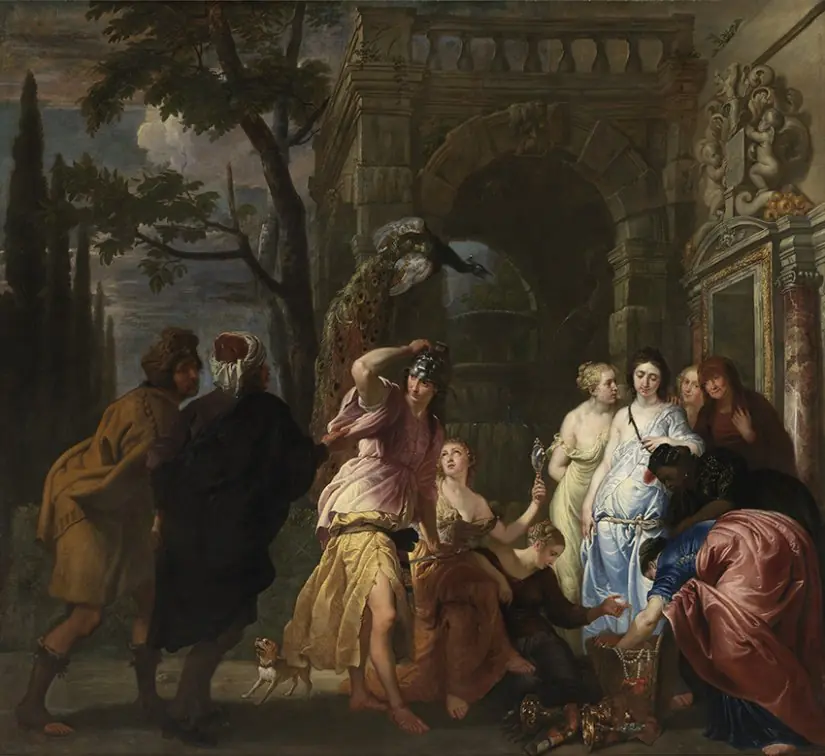 Achilles among the Daughters of Lycomedes
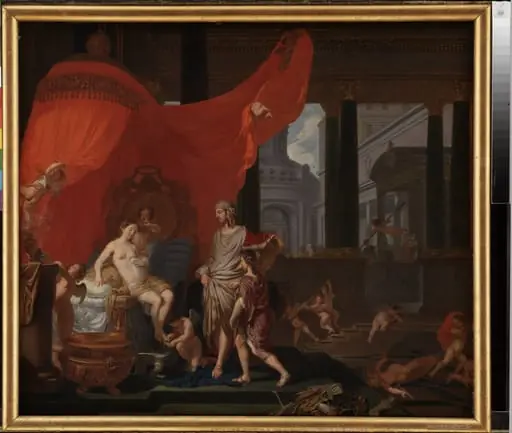 The Wedding of Alexander and Roxana
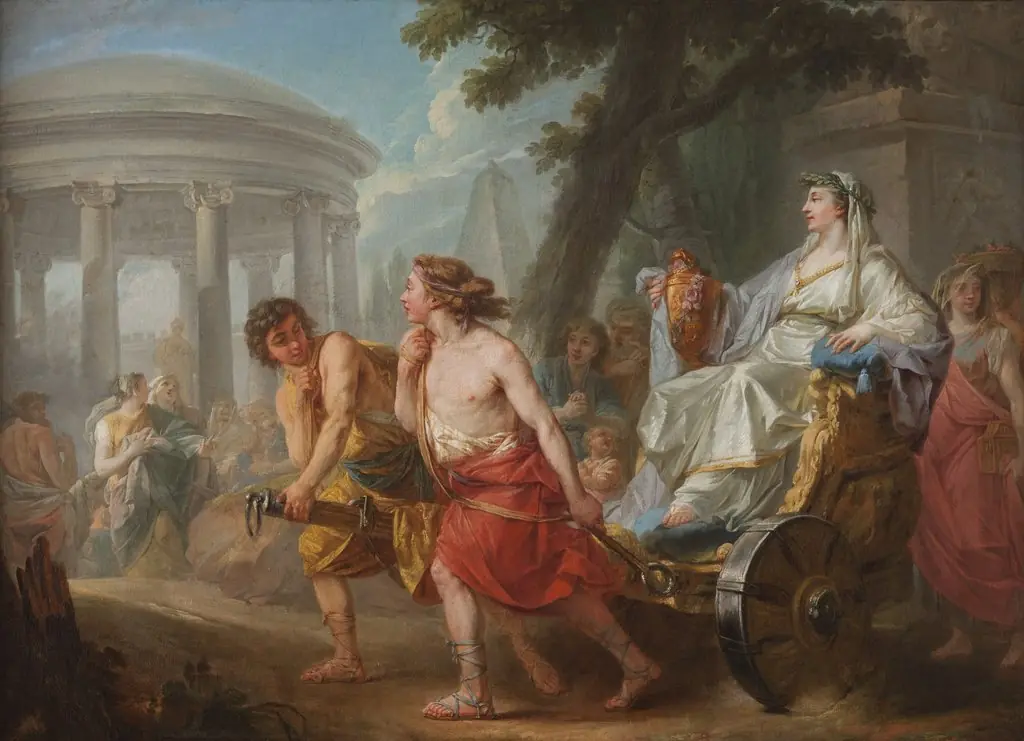 Cleobis and Biton with Cydippe in the Front of Hera Temple
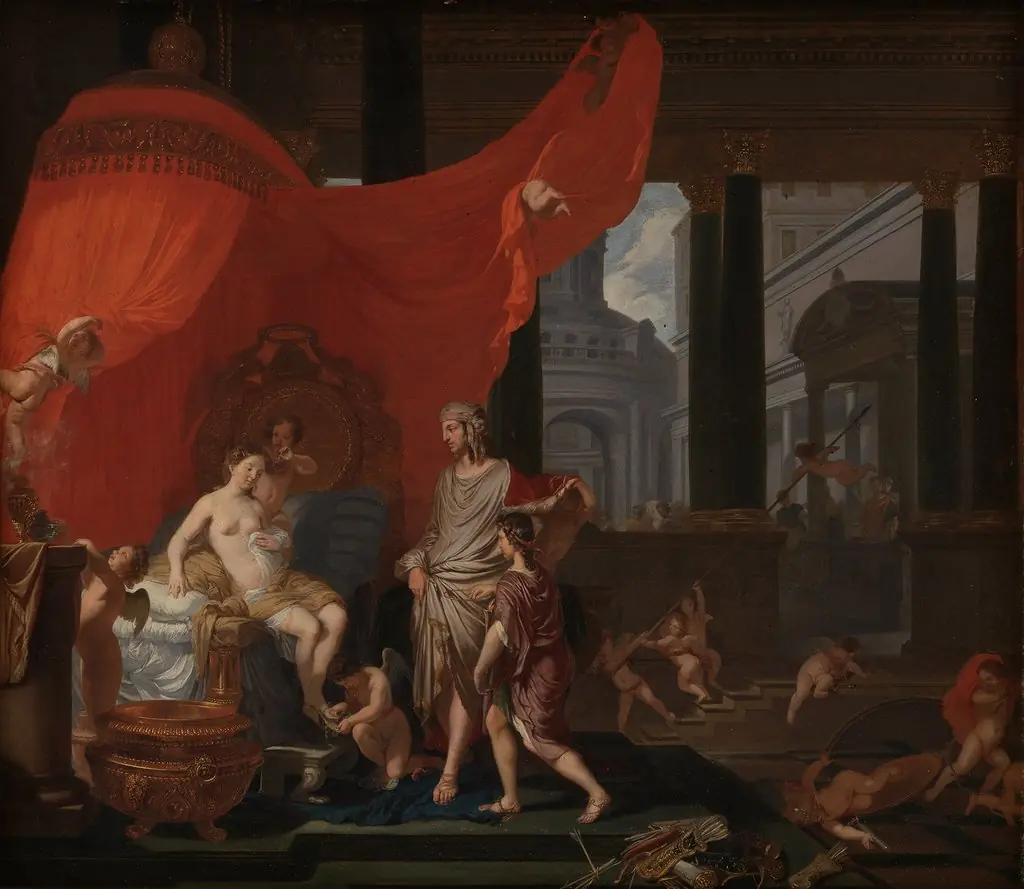 The Wedding of Alexander and Roxana
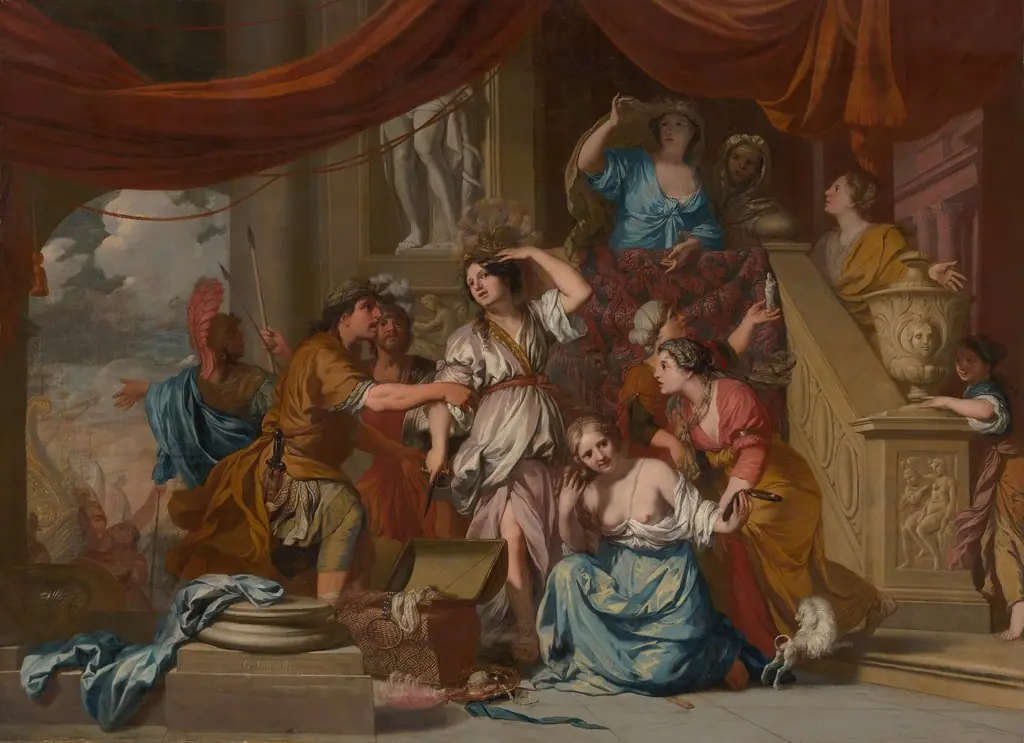 Achilles Discovered among the Daughters of Lycomedes
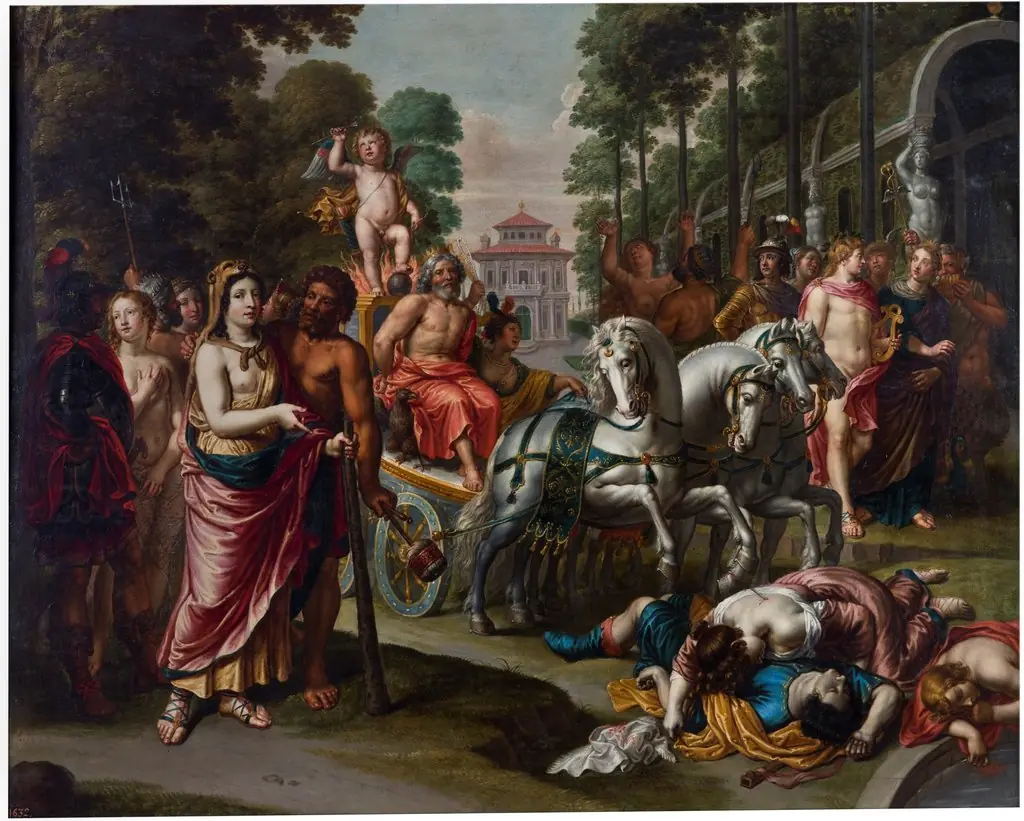 Triumph of Love