Artwork
Cleobis and Biton with Cydippe in the Front of Hera Temple
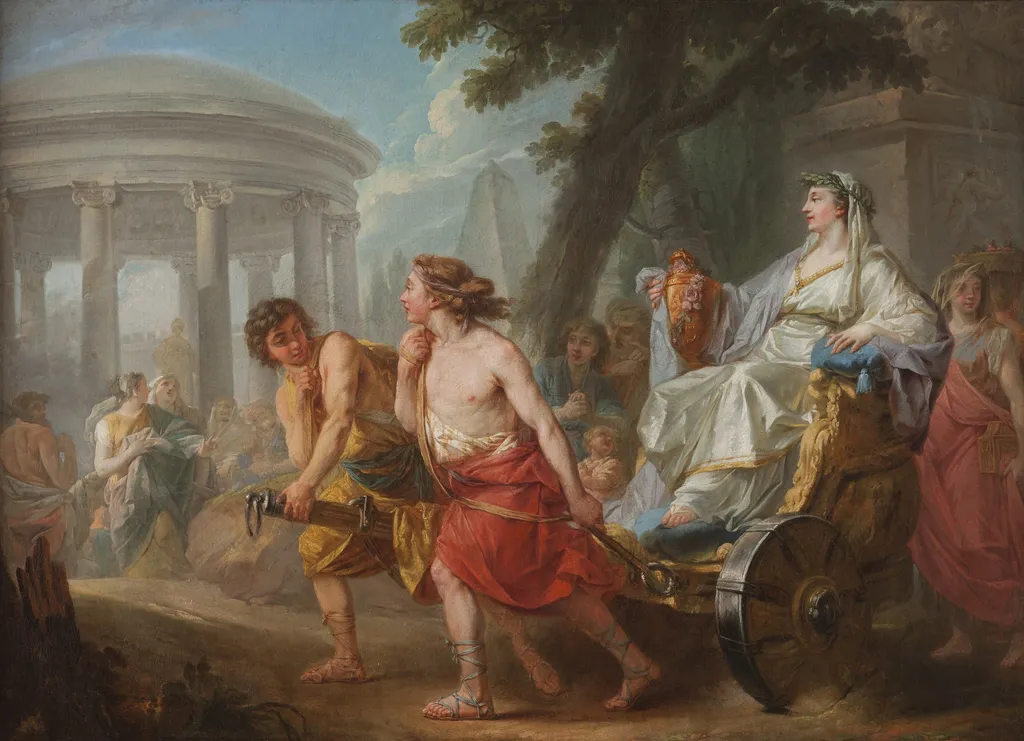
Cleobis and Biton with Cydippe in the Front of Hera Temple is an oil painting by the Rococo painting artist Jean Bardin. It dates from 1764 and is held in the collection of the National Museum in Kraków.
About this work
Overview
Painted in 1764 by Jean Bardin, this oil work depicts a moment from Greek myth involving the brothers Cleobis and Biton and their mother Cydippe.
Painted in 1764 by Jean Bardin, this oil work depicts a moment from Greek myth involving the brothers Cleobis and Biton and their mother Cydippe. The painting is part of the collection at the National Museum in Kraków. It presents a narrative scene set before a classical temple, rendered with restrained tones and careful attention to architectural detail. The composition centers on a chariot drawn by the two sons, emphasizing familial devotion and physical exertion.
Subject & Meaning
The scene illustrates the myth in which Cleobis and Biton, after pulling their mother’s chariot to a temple in place of sluggish oxen, are honored by the goddess Hera with a peaceful death. Bardin captures the moment of arrival, with Cydippe seated in the vehicle, her sons straining in motion. The narrative underscores themes of filial piety and divine reward, rooted in ancient Greek ideals of virtue and physical endurance.
Technique & Style
Bardin employs a muted palette dominated by earthy browns and grays, lending the scene a solemn, timeless quality. Figures are modeled with subtle gradations of light and shadow, suggesting volume without dramatic contrast. The architectural backdrop is rendered with precise linear perspective, reinforcing the temple’s grandeur. Clothing folds and musculature are defined with restrained brushwork, avoiding theatricality in favor of classical restraint.
History & Provenance
Commissioned during the height of Neoclassical interest in antiquity, the painting entered the National Museum in Kraków in the 19th century. Its provenance traces back to Bardin’s active period in France, where he produced historical and mythological subjects for private and institutional patrons. The work reflects the broader European fascination with reconstructing ancient narratives through academic painting traditions of the time.
Context
Created in the mid-18th century, the painting aligns with the Enlightenment-era revival of classical antiquity in art and philosophy. Artists like Bardin drew from textual sources such as Herodotus to visualize moral tales from Greek myth. The emphasis on stoic virtue, physical dedication, and divine favor resonated with contemporary ideals of civic duty and rational morality, even as the style remained rooted in academic conventions.
Legacy
While not widely exhibited beyond regional collections, the painting remains a representative example of French academic history painting in the Neoclassical vein. It contributes to the understanding of how mythological subjects were interpreted in the 18th century—not as spectacle, but as vehicles for ethical reflection. Its preservation in Kraków underscores the transnational circulation of artistic ideas during the period.
Own this work as a print
Artist & collection

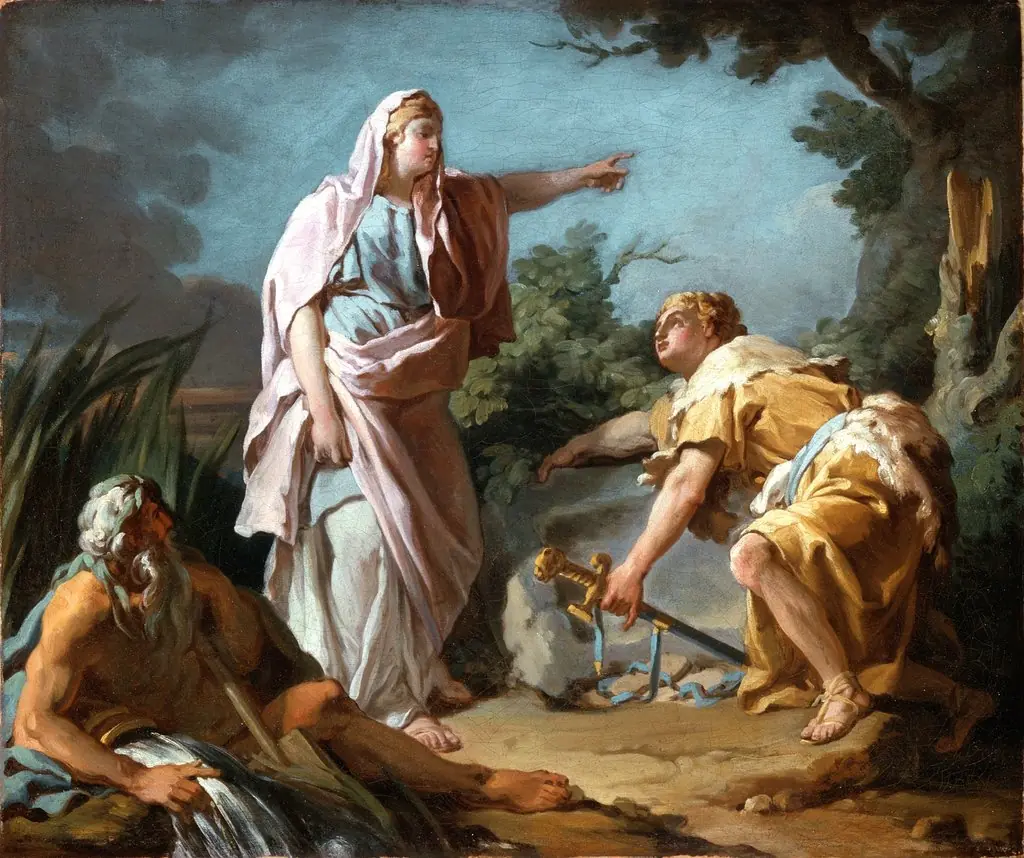 Aethra Showing her Son Theseus the Place Where his Father had Hidden his Arms
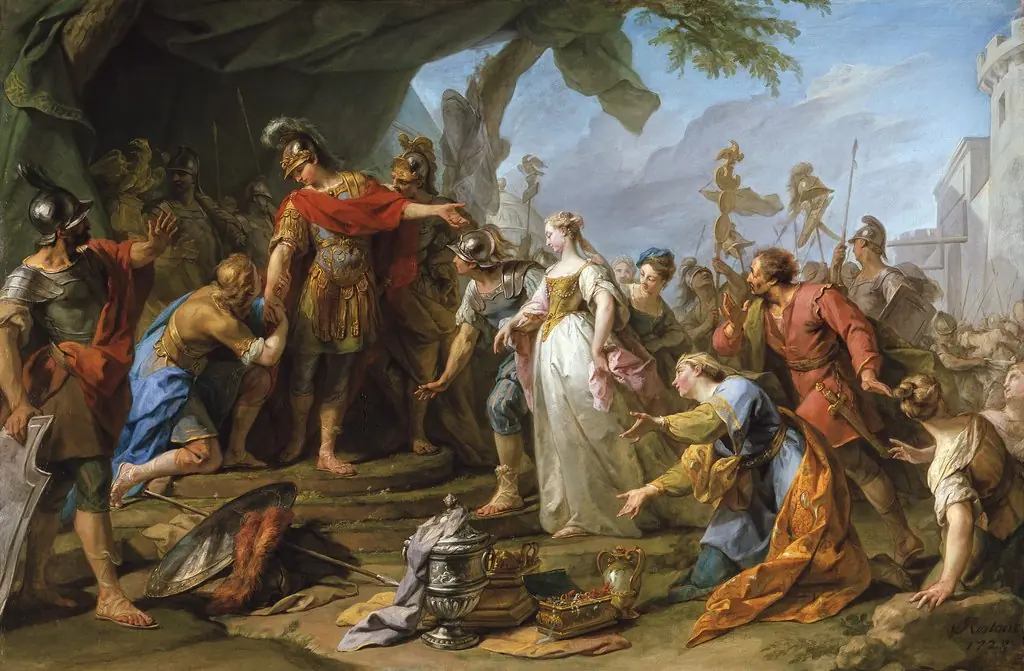 The Generosity of Scipio
 Der Zug des Bacchus
 Psyche Obtaining the Elixir of Beauty from Proserpine
 Messengers of Godfrey of Bouillon in Gardens of Armida
 Venus Ordering Arms from Vulcan for Aeneas
 Rebecca at the Well
 Rinaldos farewell from Armida
 Death of Dido
 David Returning Victorious after Defeating Goliath and the Philistines
 Classical Landscape
 Bacchanal