Artwork
An Alchemist in his Laboratory
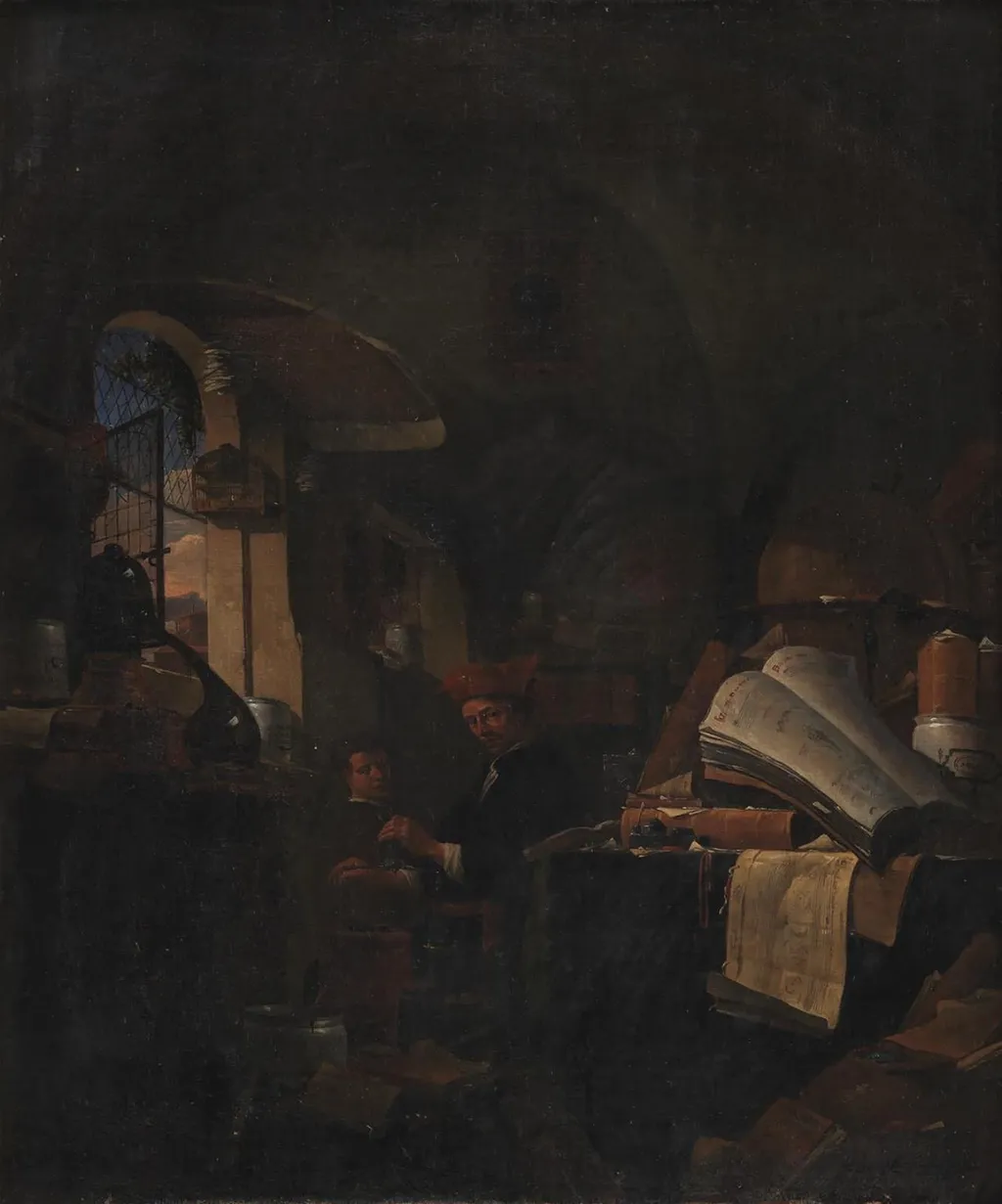
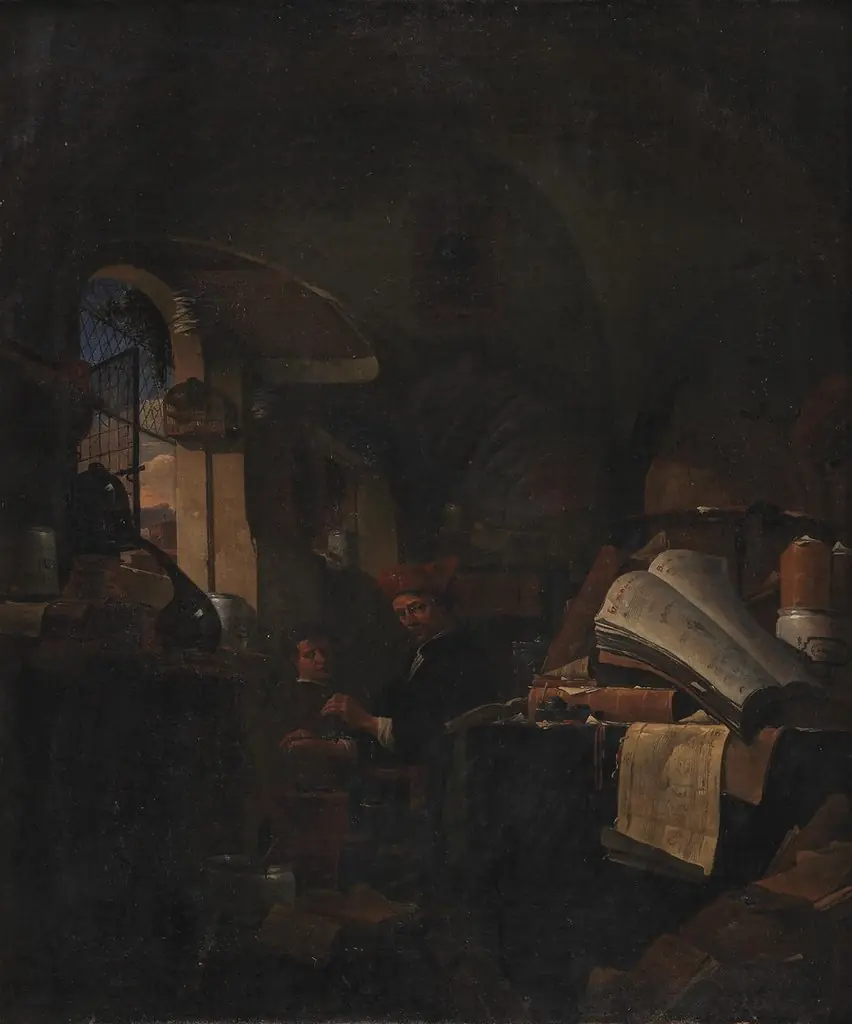
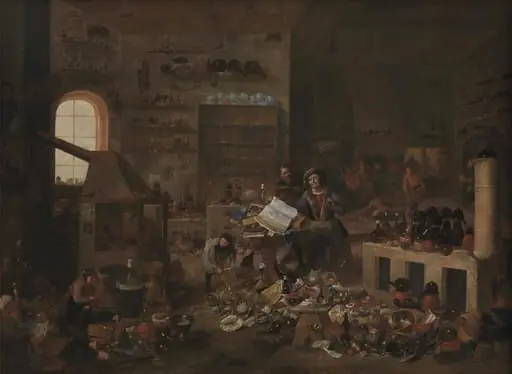
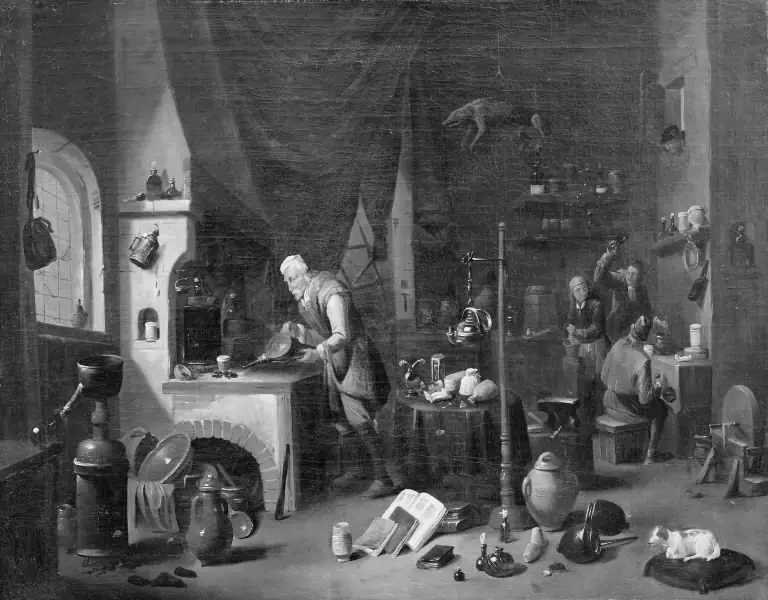
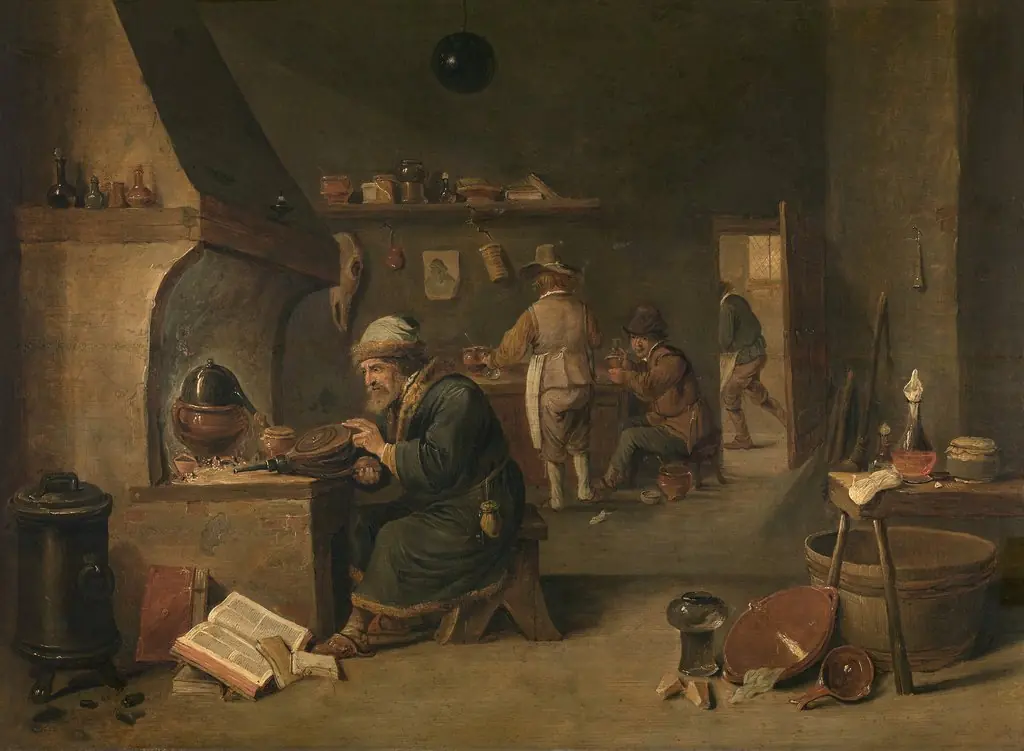
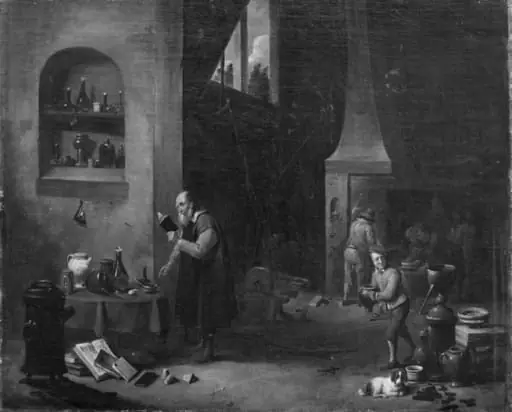
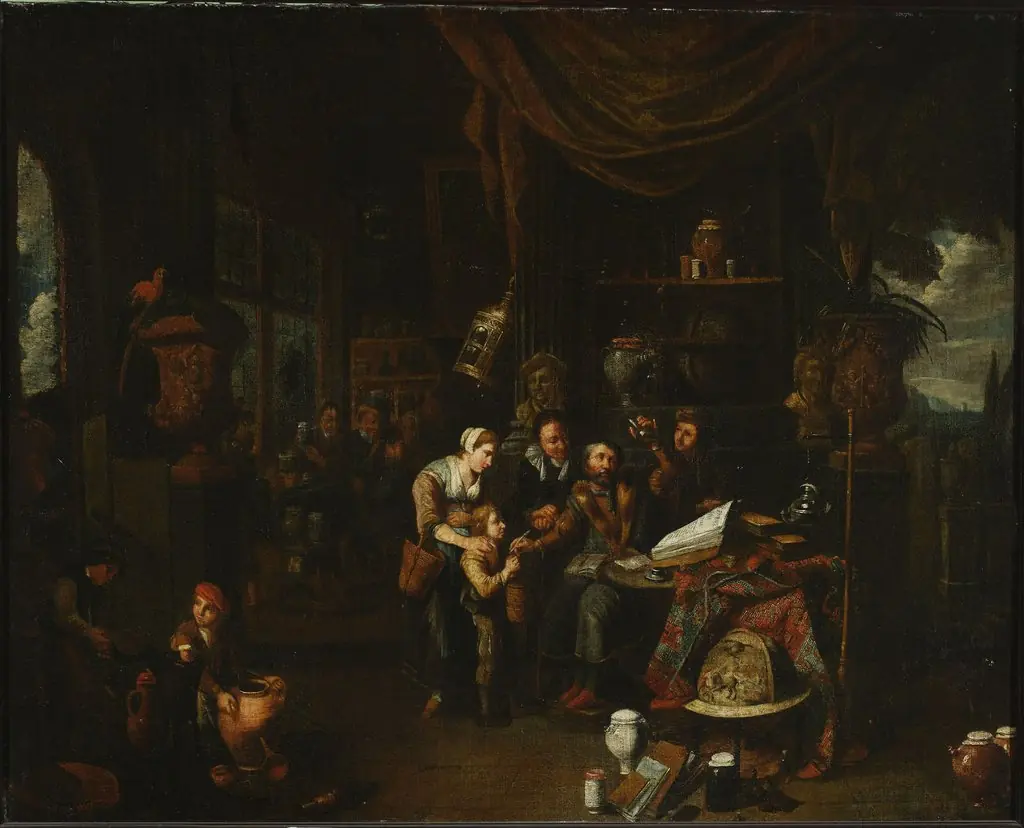
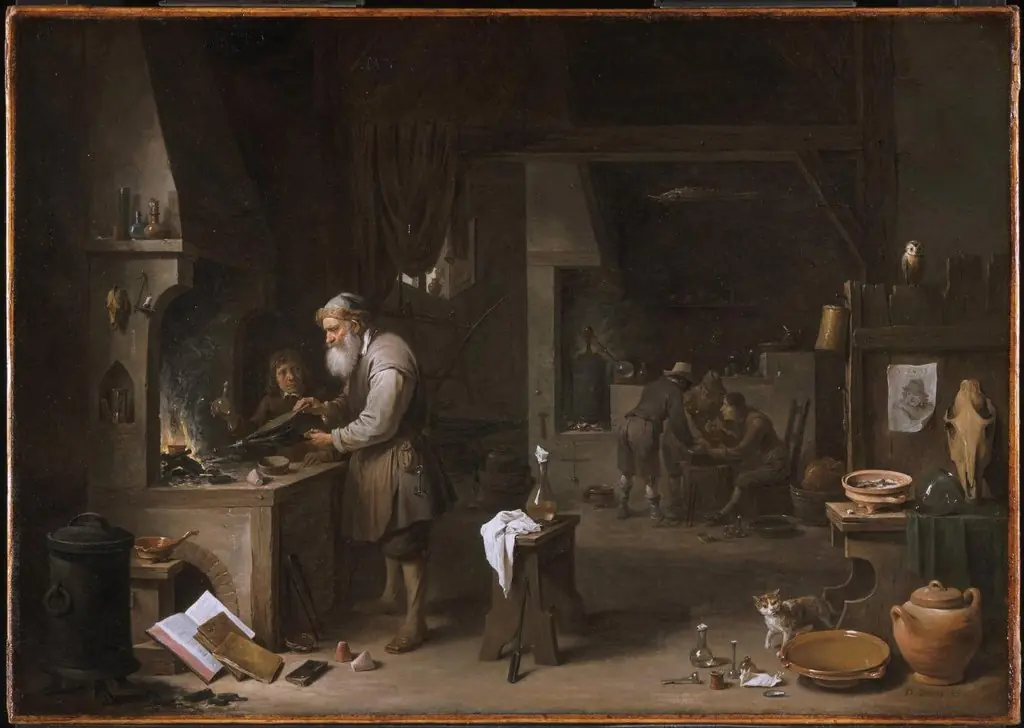
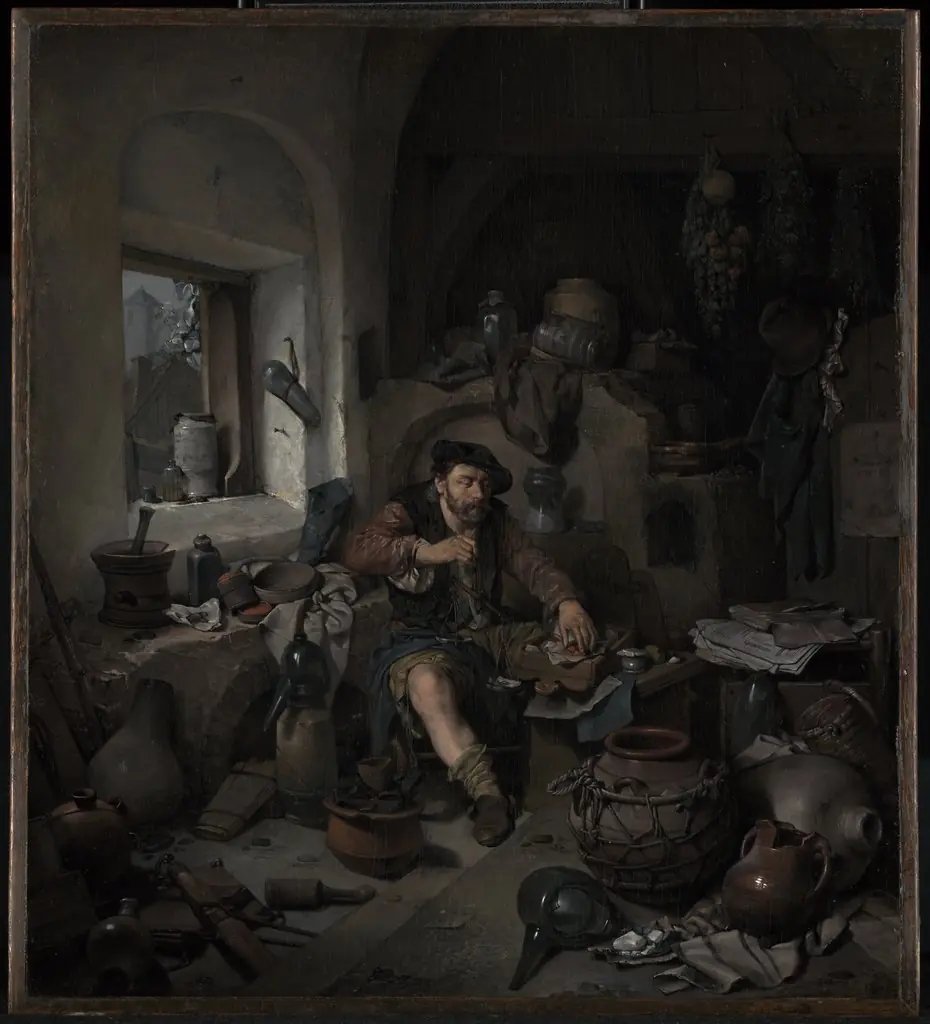
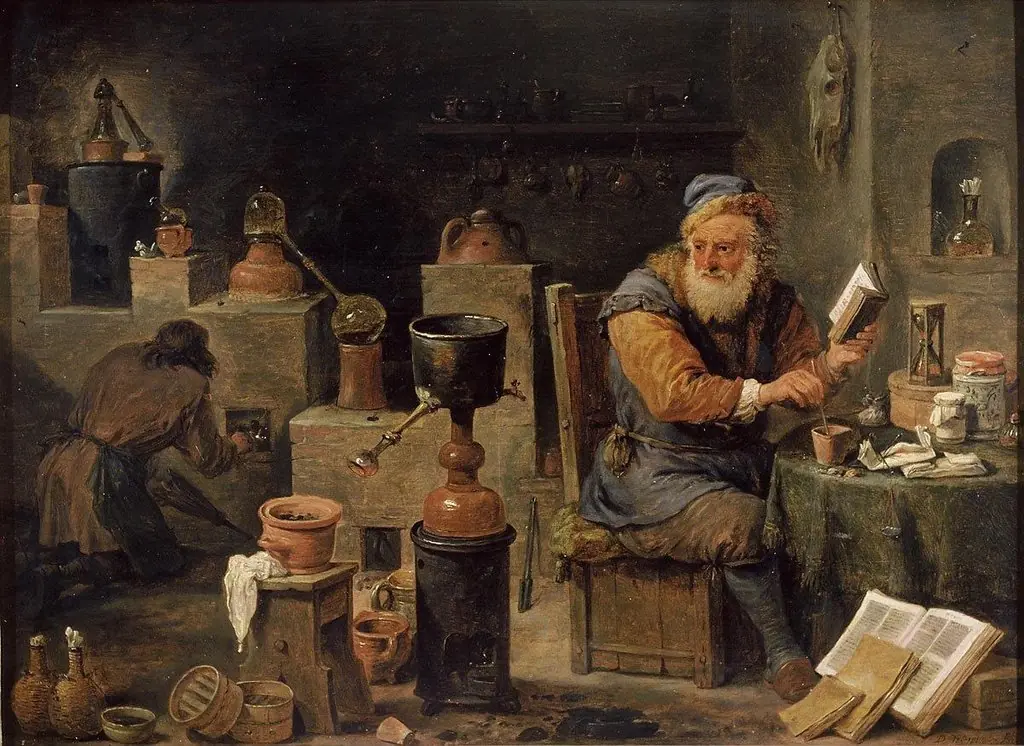
An Alchemist in his Laboratory is a photography by Unknown. It dates from 1650 and is held in the collection of the Statens Museum for Kunst. Created around 1650, this oil painting portrays an alchemist in a dimly lit study, capturing a moment of quiet reflection.
About this work
Overview
Created around 1650, this oil painting portrays an alchemist in a dimly lit study, capturing a moment of quiet reflection.
Created around 1650, this oil painting portrays an alchemist in a dimly lit study, capturing a moment of quiet reflection. The artist, identified only by a numerical code, rendered the scene with restrained detail and a muted palette. The work is part of the Museum of Ethnography’s collection, where it is preserved as an example of early modern scientific inquiry depicted through domestic imagery.
Subject & Meaning
The central figure, dressed in dark garments and a red cap, sits motionless with hands clasped, suggesting introspection rather than active experimentation. Surrounding him are books, scrolls, and vessels—symbols of alchemical knowledge. His serious gaze implies deep concentration, possibly on the pursuit of transmutation or spiritual enlightenment, reflecting the era’s blurred lines between science, mysticism, and philosophy.
Technique & Style
The artist employed a subdued color scheme dominated by earth tones, enhancing the somber mood. Light enters through a large window, casting soft shadows that define the cluttered surfaces without overwhelming them. Brushwork is precise but unobtrusive, emphasizing texture over drama. The composition is tightly framed, directing attention to the figure’s stillness amid organized chaos.
History & Provenance
The painting’s early ownership is undocumented. It entered the Museum of Ethnography’s holdings in the late 19th century, likely acquired during a period of increased interest in historical scientific practices. Its attribution remains tentative, as no signed or dated variants are known. The work has been consistently cataloged as a 17th-century Dutch or Flemish genre scene.
Context
In mid-17th-century Europe, alchemy was transitioning from occult practice to early chemistry. Depictions of alchemists often served as moral or intellectual allegories. This painting avoids caricature, instead presenting its subject with dignity, aligning with broader trends in Northern European art that valued quiet labor and scholarly devotion over spectacle.
Legacy
Though not widely exhibited, the painting contributes to scholarly discussions on the visual representation of early science. Its restrained tone distinguishes it from more theatrical portrayals of alchemists, offering a nuanced view of intellectual pursuit during a time of epistemological change. It remains a quiet testament to the dignity of solitary inquiry.
Artist & collection

 Domestic Scene
 Giacomo and Cardinal Marco, investing Andrea, Abbot of San Zeno, with his Benefice
 The Nymph of Fontainebleau
 Portrait of a Woman
 Madonna and Child with Saints in the Enclosed Garden
 Venus and Minerva
 Family Group of Four on Sofa
 Wall painting from Room H of the Villa of P. Fannius Synistor at Boscoreale