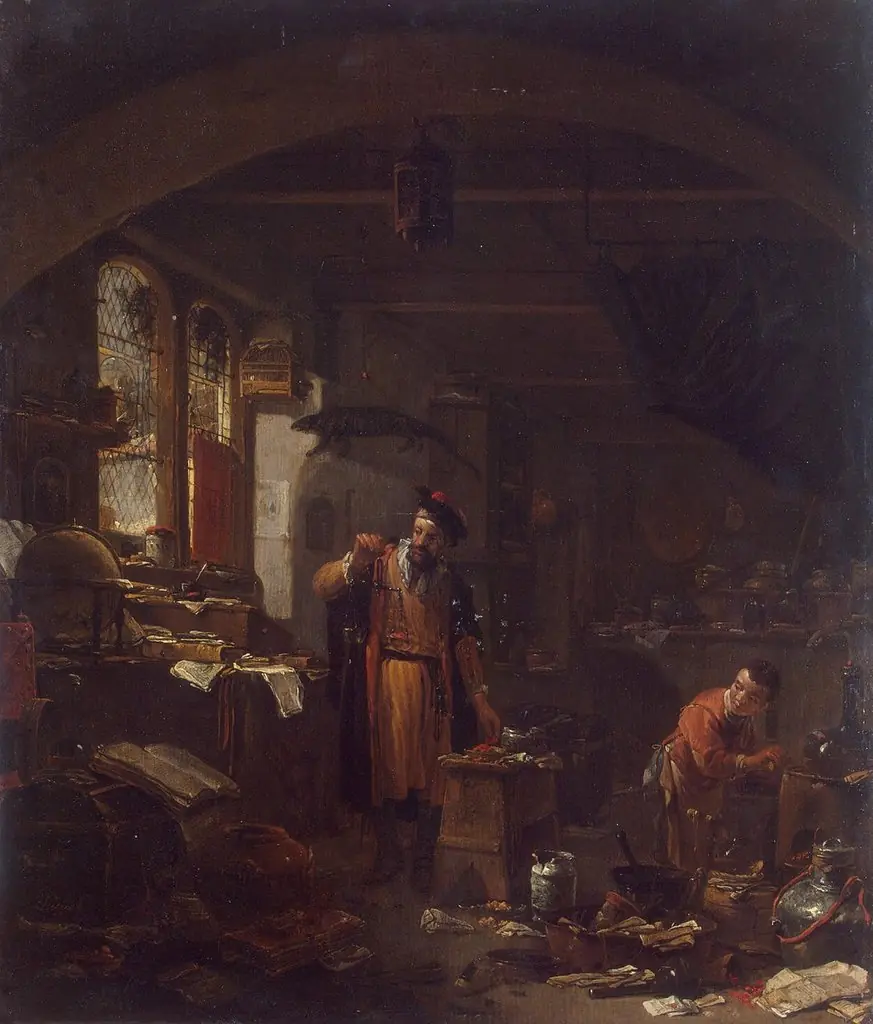
Artwork
In the alchemist's study
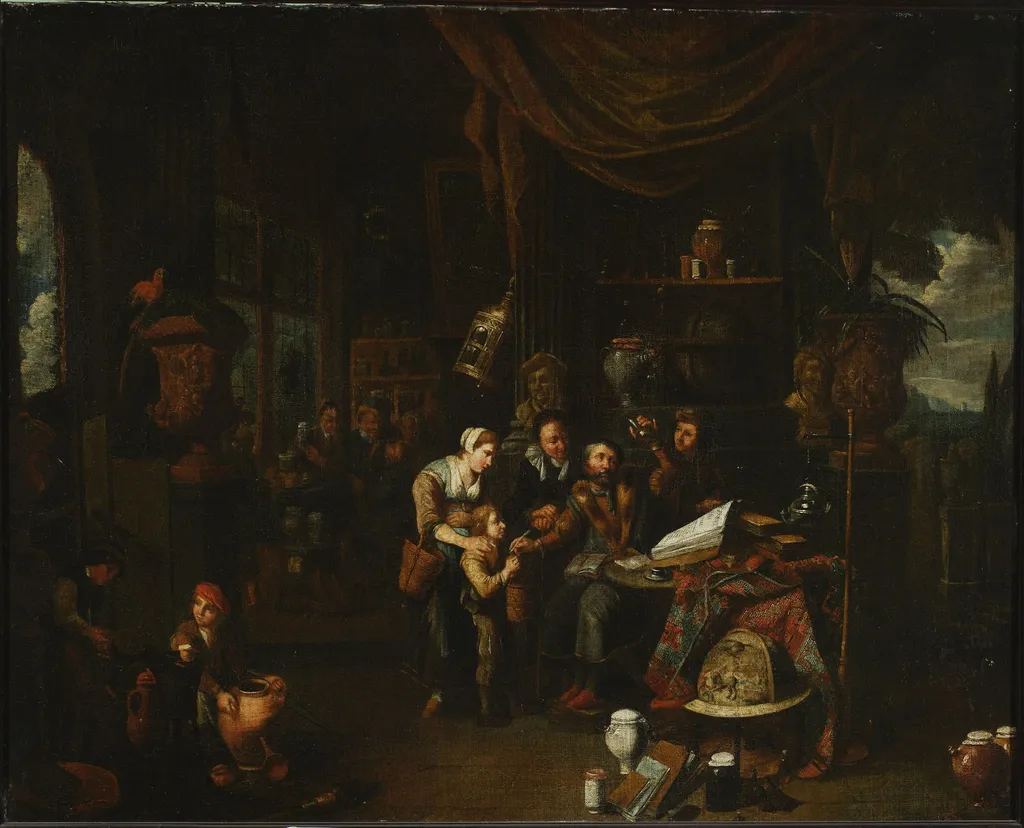
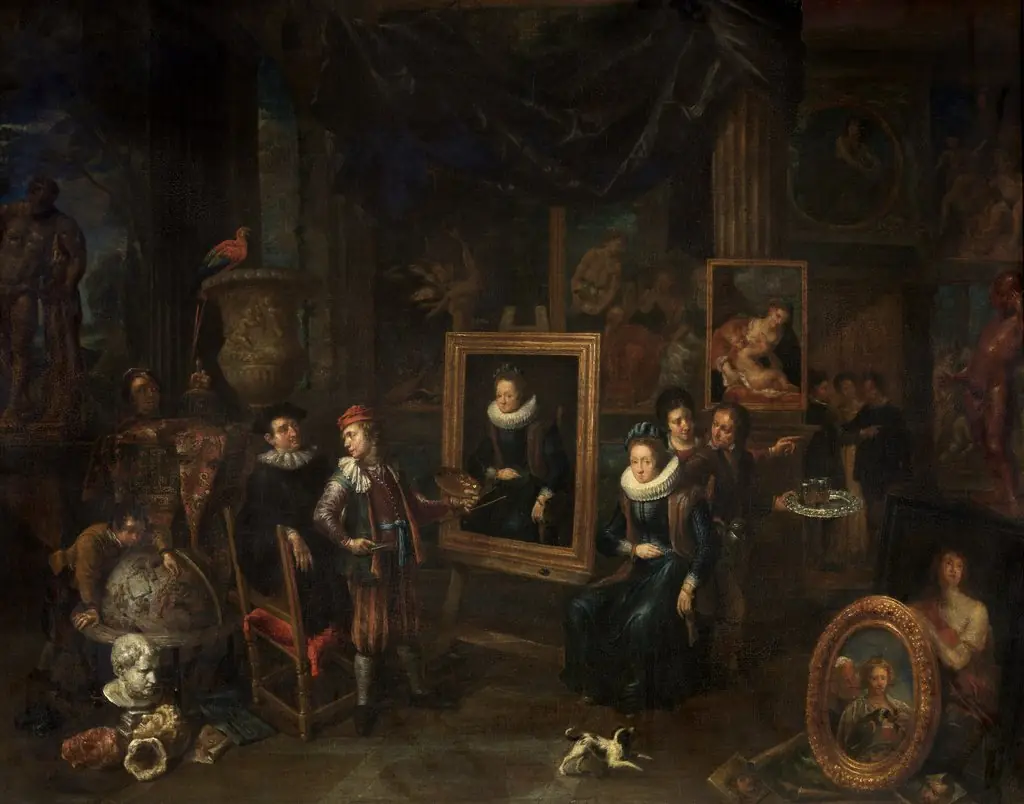
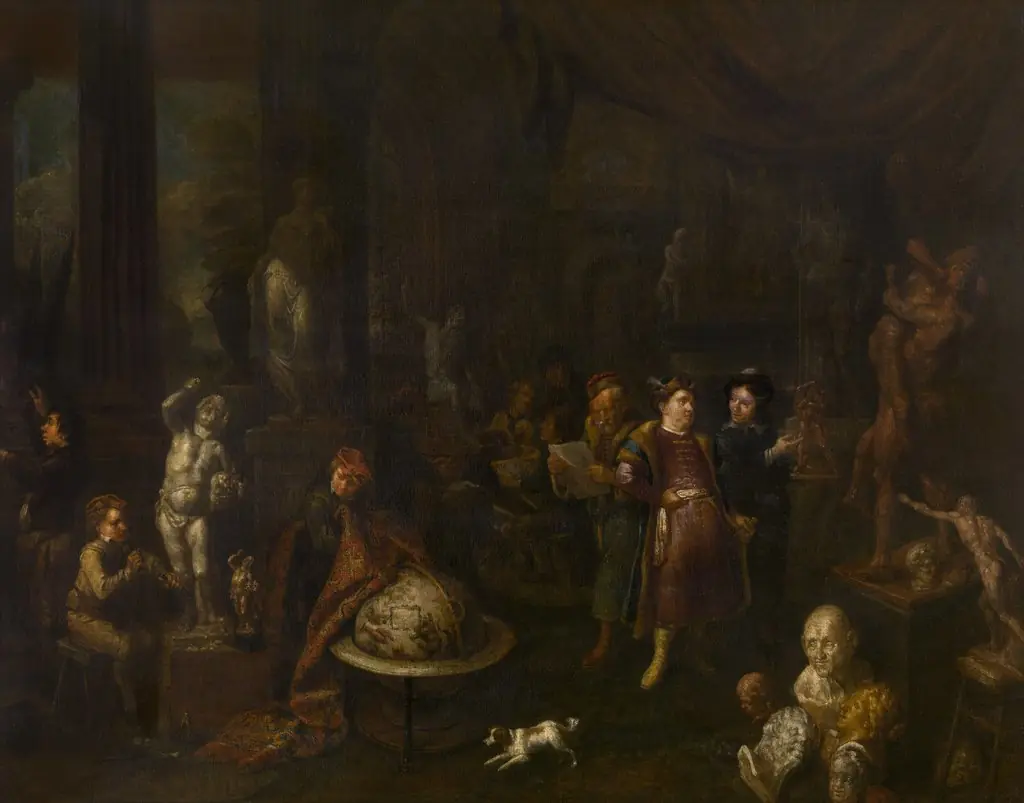
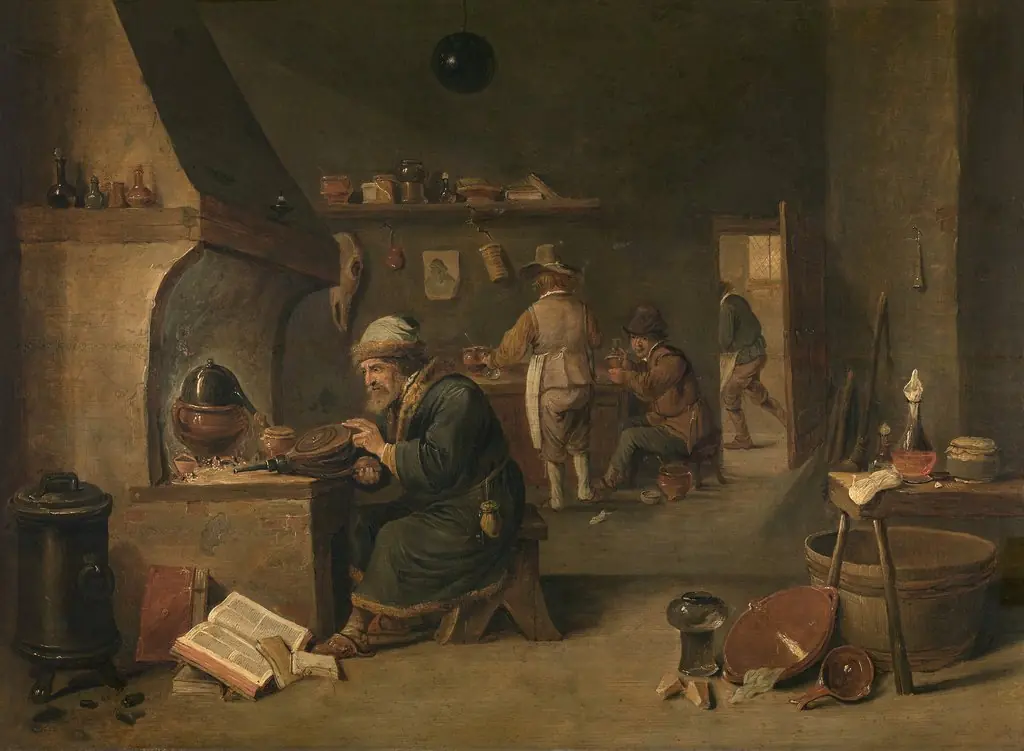
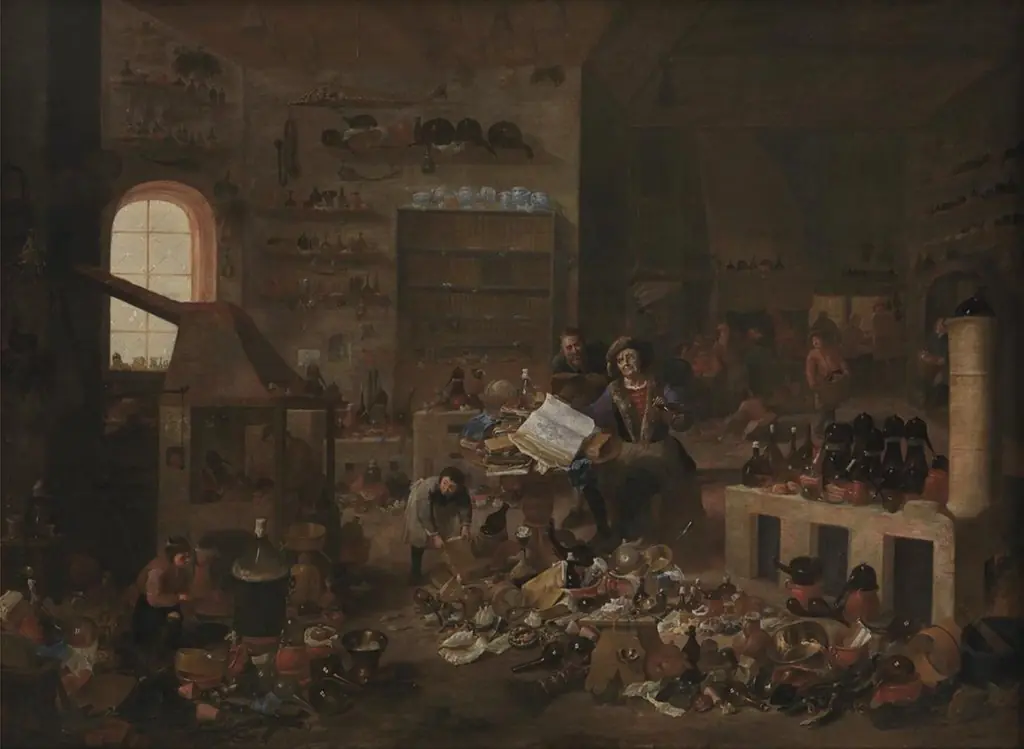
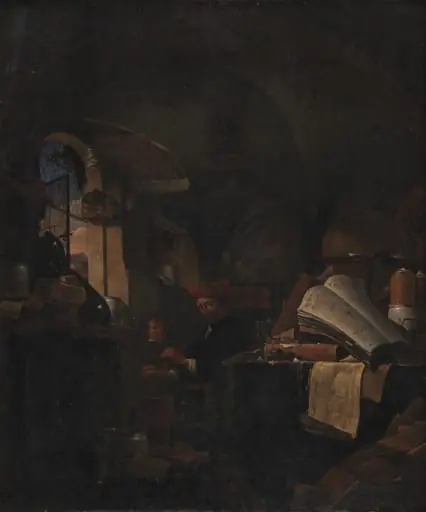
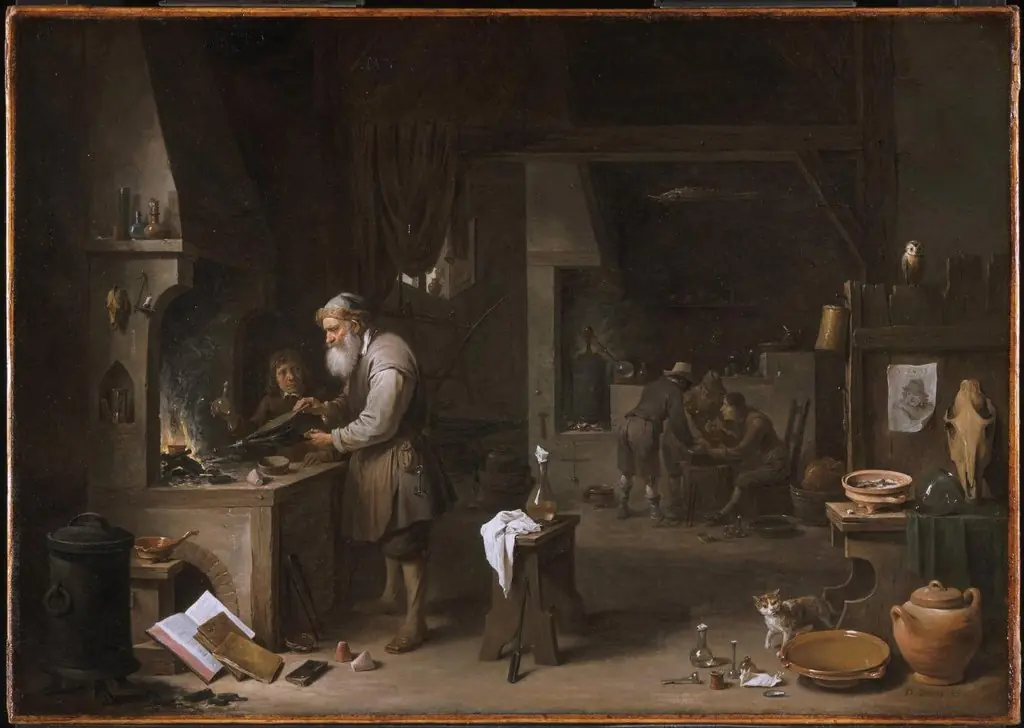
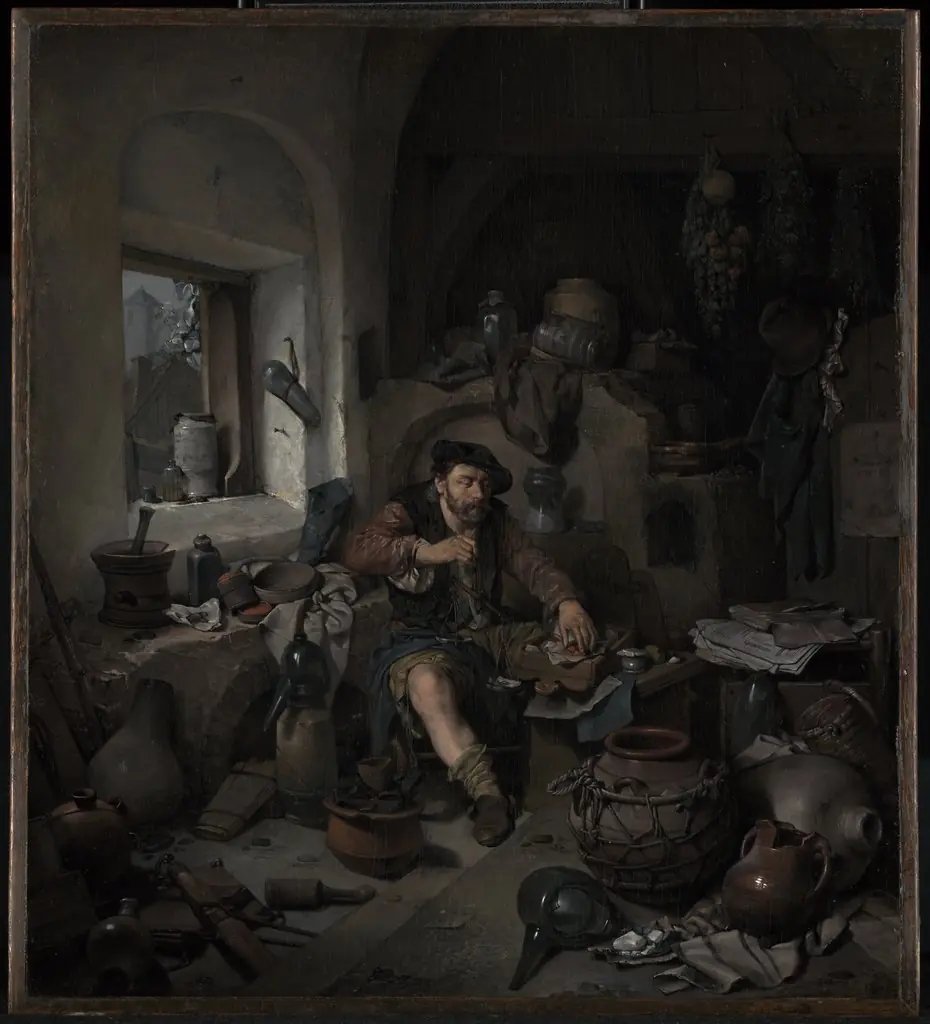
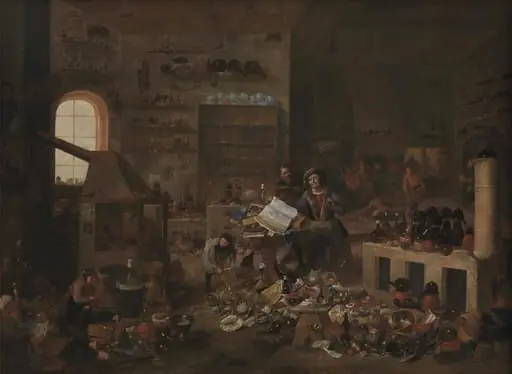
In the alchemist's study is an oil painting by the Flemish Baroque painting artist Gerard Thomas. It dates from 1702 and is held in the collection of the National Museum in Warsaw.
About this work
Overview
The composition reflects a broader Antwerp interest in depicting intellectual pursuits, merging scientific inquiry with the visual culture of the time.
Painted around 1702 by Gerard Thomas, a Flemish artist active in Antwerp, this oil on canvas depicts an alchemist’s workshop. Thomas was known for interior scenes that blended scholarly activity with references to artistic tradition. The composition reflects a broader Antwerp interest in depicting intellectual pursuits, merging scientific inquiry with the visual culture of the time. The painting resides today in the National Museum in Warsaw.
Subject & Meaning
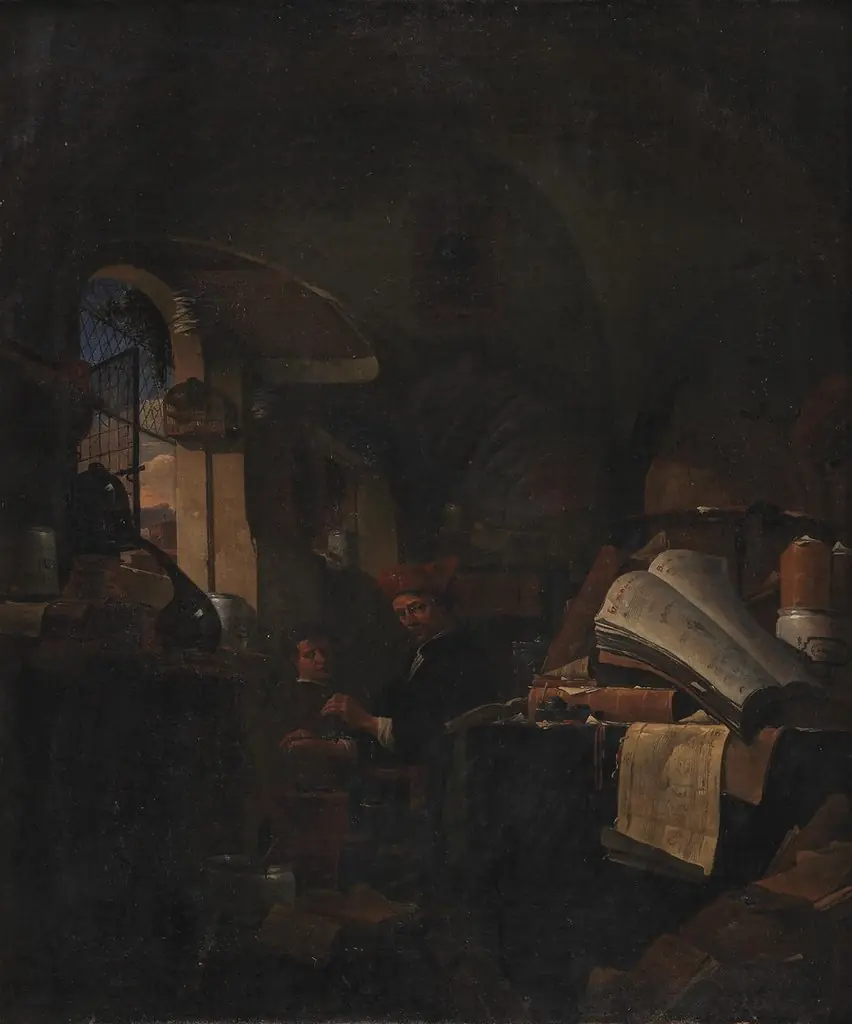
The scene centers on a group engaged in alchemical practice, surrounded by flasks, books, and instruments. Figures are arranged around a cluttered table, suggesting collaborative study rather than solitary mysticism. The presence of painted portraits on the walls implies a connection to established artistic and scientific lineages. The work frames alchemy as a learned discipline, not mere superstition, aligning it with the intellectual currents of early 18th-century Antwerp.
Technique & Style
Thomas employs chiaroscuro to model forms and direct attention, with warm light emanating from the right, casting soft shadows across the dense interior. Colors are muted yet rich, enhancing the tactile quality of metals, fabrics, and parchment. Brushwork is precise but unobtrusive, allowing the arrangement of objects to convey narrative. The composition avoids theatricality, favoring quiet observation over dramatic tension, characteristic of Flemish genre painting of the period.
History & Provenance
The painting entered the National Museum in Warsaw’s collection in the 19th century, likely through acquisitions of Central European art. Its journey from Antwerp to Poland reflects broader patterns of art movement during the Habsburg and Polish-Lithuanian cultural exchanges. No documentation of its early ownership survives, but its style and subject align with known works by Thomas and his contemporaries, supporting its attribution.
Context
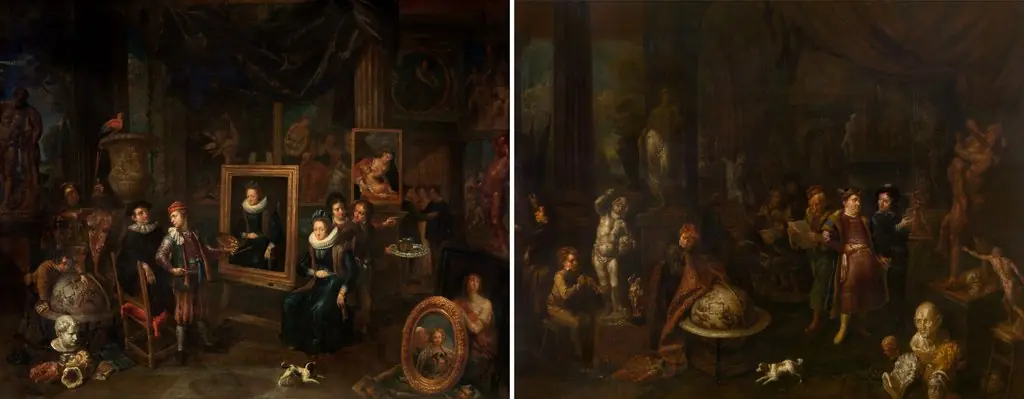
At the turn of the 18th century, Antwerp artists increasingly turned to interiors that celebrated knowledge, whether artistic, scientific, or alchemical. Thomas’s work fits within this trend, echoing the popularity of studio and cabinet scenes. Alchemy, though declining as a legitimate science, retained cultural resonance as a symbol of hidden knowledge. Such paintings appealed to collectors who valued erudition and the visual representation of intellectual pursuit.
Legacy
While not widely reproduced, the painting contributes to the understanding of how alchemy was visually framed in early modern Europe—not as occult fantasy, but as a serious, material practice. Thomas’s approach influenced later genre painters who depicted scientific and scholarly environments. The work remains a quiet testament to the intersection of art, science, and daily intellectual life in late Baroque Flanders.
Own this work as a print
Artist & collection
Artist
Gerard Thomas (1663–1721) was a late Flemish Baroque painter who specialized in studio and picture gallery interiors.