Artwork
Fru Lindam, f. Goos, enke efter superkargo Lindam i Ostindien
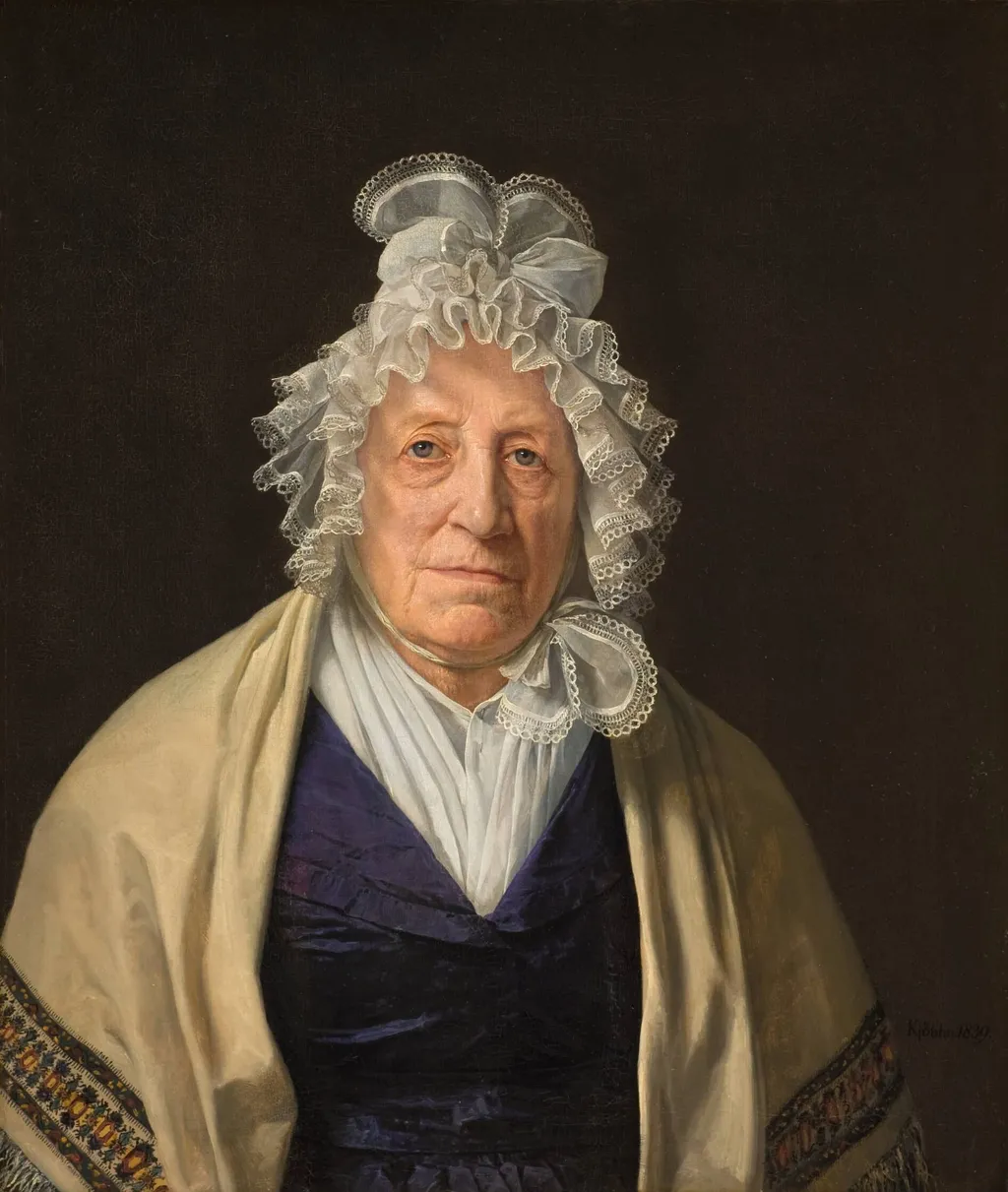
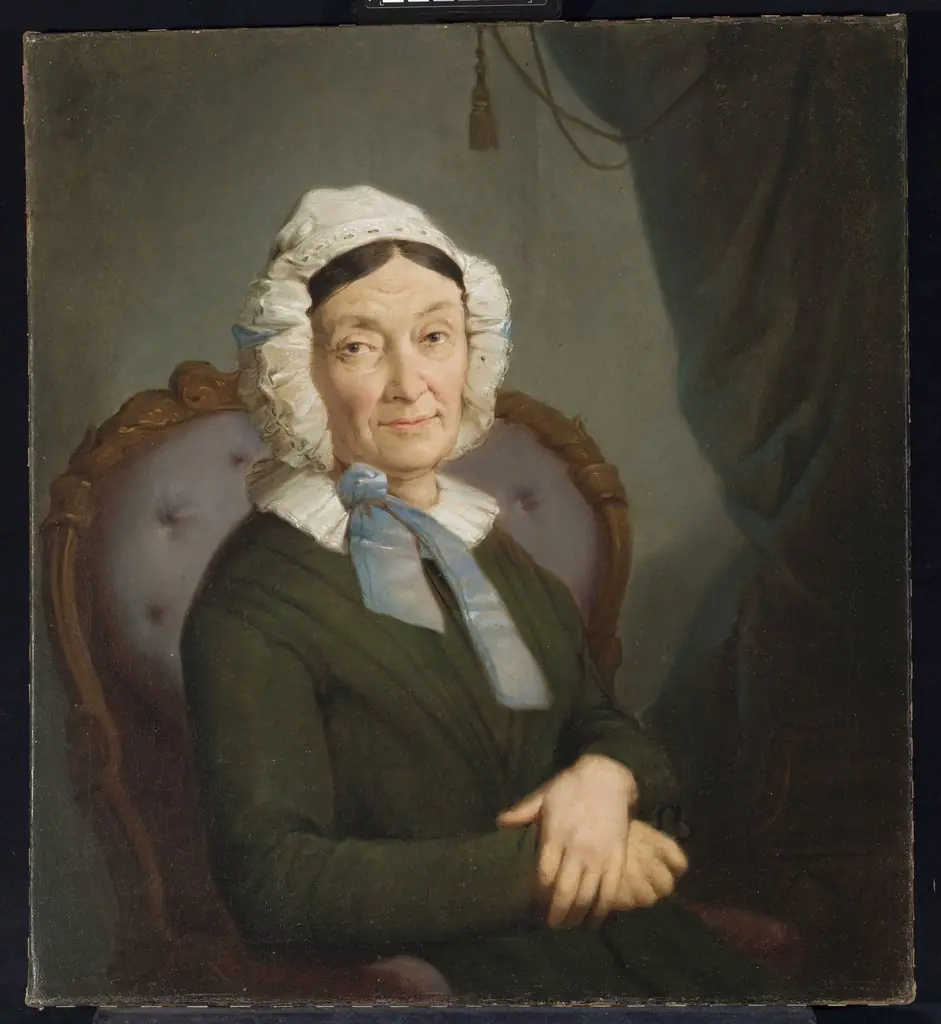
Fru Lindam, f. Goos, enke efter superkargo Lindam i Ostindien is a photography by the Romanticist artist Unknown. It dates from 1839 and is held in the collection of the Statens Museum for Kunst. A black-and-white portrait from 1839 depicts an elderly woman identified as the widow of a Danish East India Company supercargo.
About this work
She wears a large lace cap with a bow on top, a dark dress with a high collar, and a light shawl over her shoulders.
This is a black-and-white portrait of an older woman. She wears a large lace cap with a bow on top, a dark dress with a high collar, and a light shawl over her shoulders. Her expression is serious, and the background is completely dark.
This photo was taken in 1839, and the woman was the widow of a cargo ship captain who traded with Asia. The simple lighting and plain background focus all attention on her face.
Look up *chiaroscuro* to see how artists use light and shadow for dramatic effect.
Overview
A black-and-white portrait from 1839 depicts an elderly woman identified as the widow of a Danish East India Company supercargo. The image, held at the Museum of Ethnography, is a straightforward photographic study, notable for its restrained composition and absence of decorative elements. The subject’s identity is tied to her husband’s role in colonial trade, though the image itself avoids overt references to his profession.
Subject & Meaning
The woman, born Goos and widowed after her husband’s service in Asia, is portrayed with solemn dignity. Her attire—a lace cap, high-collared dark dress, and light shawl—reflects mid-19th-century widow’s dress codes, signaling both mourning and social standing. The direct gaze and neutral expression convey quiet resilience rather than emotional display, aligning with contemporary norms of female comportment among the merchant class.
Technique & Style
The photograph employs stark tonal contrast, with the subject illuminated against a void-like background. This use of light and shadow, reminiscent of chiaroscuro in painting, isolates the face and gestures, drawing attention to texture and form. The lack of props or setting emphasizes the subject’s presence, suggesting an early photographic interest in psychological immediacy over narrative context.
History & Provenance
Created in 1839, the portrait entered the collection of the Museum of Ethnography, likely through familial or institutional donation tied to Denmark’s colonial networks. Its preservation reflects an early interest in documenting individuals connected to overseas trade. No records indicate the photographer’s identity, but the technical precision suggests a professional studio practice in Copenhagen or a major port city.
Context
In 1839, Denmark still maintained a modest presence in the East Indies trade, with supercargoes managing commercial operations in Asia. Widows of such men often retained social visibility through dress and domestic roles. This portrait captures a moment when photography was emerging as a tool for recording personal and professional identities within colonial society, bridging private grief and public legacy.
Legacy
The portrait endures as a quiet testament to the lives of women behind colonial commerce. Unlike grand historical paintings, it offers no symbolism of empire—only a human face framed by mourning and modesty. Its preservation in an ethnographic museum underscores its value as a material trace of everyday life in a globalized, yet deeply personal, historical moment.
Artist & collection

 Domestic Scene
 Giacomo and Cardinal Marco, investing Andrea, Abbot of San Zeno, with his Benefice
 The Nymph of Fontainebleau
 Portrait of a Woman
 Madonna and Child with Saints in the Enclosed Garden
 Venus and Minerva
 Family Group of Four on Sofa
 Wall painting from Room H of the Villa of P. Fannius Synistor at Boscoreale
 Portrait of Inger Margrethe Høyen, née Schrøder, the Mother of the Art Historian N.L. Høyen
 Portrait of Inger Margrethe Høyen, née Schrøder, the Mother of the Art Historian N.L. Høyen
 Țărancă sârboaică din 1851
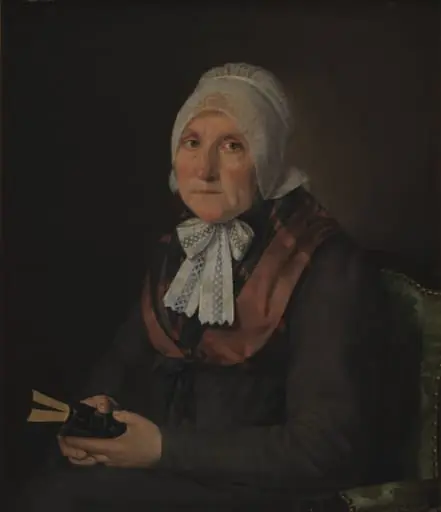 Maria Magdalena Jensen, née Jessen, the Artist's Mother
![Mrs. Pearson [possibly Sarah Thompson Pearson], by Pieter Christoffel Wonder](https://artifactworldgallery.com/img/pieter-christoffel-wonder--mrs-pearson-possibly-sarah-thompson-pearson--0006ffde77661f8c-w320.webp) Mrs. Pearson [possibly Sarah Thompson Pearson]
Mrs. Pearson [possibly Sarah Thompson Pearson]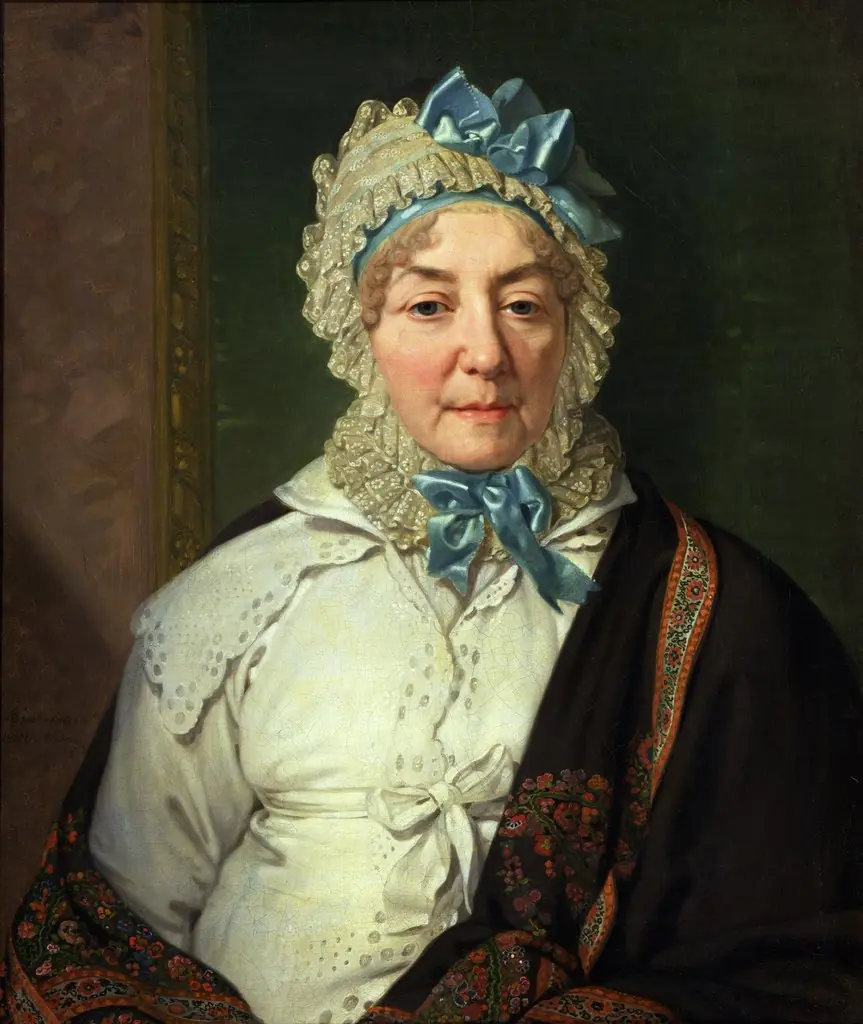 Porträt der Ye. A. Arkharova
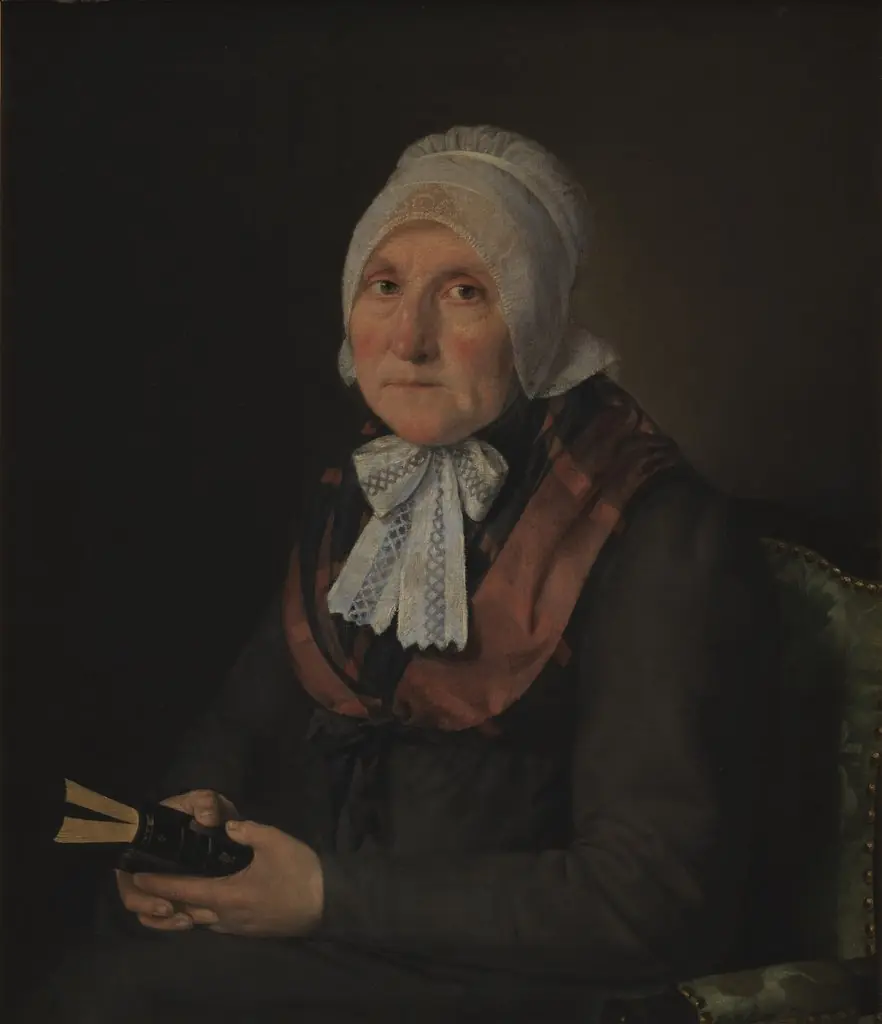 Maria Magdalena Jensen, née Jessen, the Artist's Mother
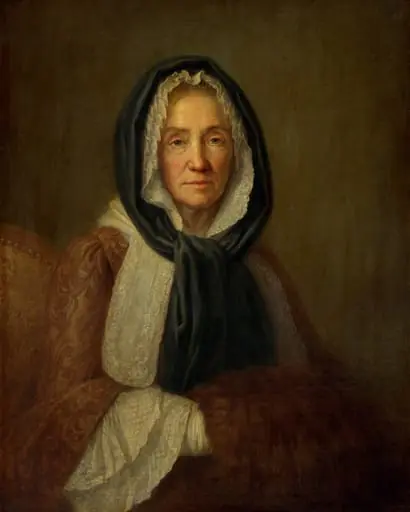 Old Woman with a Muff
 Portrait of Anna Kurpiewska née Olszakiewicz
 Mrs. Charles Willson Peale (Hannah Moore)