Artwork
Stor paradisfugl
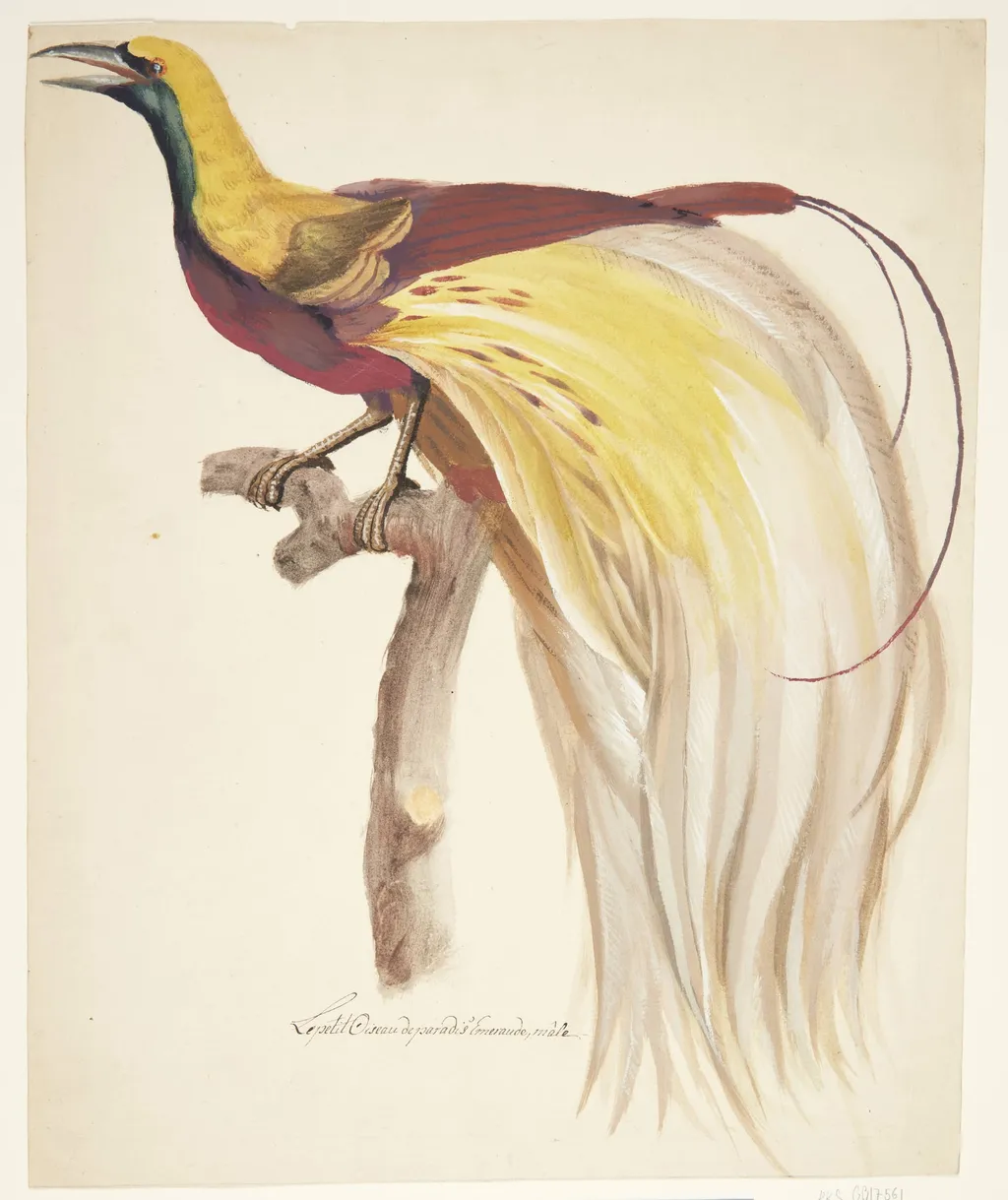
Stor paradisfugl is an unspecified work on paper by Unknown. It dates from 1829 and is held in the collection of the Statens Museum for Kunst.
About this work
Overview
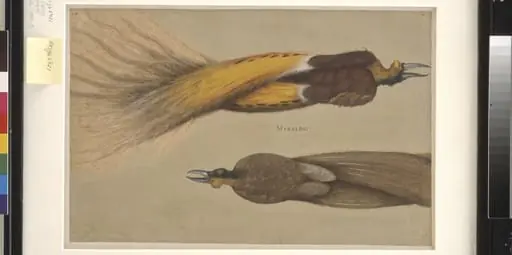
Created around 1829, Stor paradisfugl is a watercolor painting depicting a bird of paradise, attributed to an artist associated with the Museum of Ethnography.
Created around 1829, Stor paradisfugl is a watercolor painting depicting a bird of paradise, attributed to an artist associated with the Museum of Ethnography. The work was likely made as a scientific illustration, capturing the bird’s physical traits with precision. Its Swedish title, meaning 'great bird of paradise,' reflects the cultural context of Nordic natural history studies during the early 19th century.
Subject & Meaning
The painting portrays a male bird of paradise, known for its elaborate plumage and courtship displays. The emphasis on its vibrant yellow head, red-brown wings, and elongated tail feathers suggests an interest in biological distinctiveness rather than mythological symbolism. The depiction aligns with contemporary naturalist goals: to document exotic species encountered through colonial exploration and trade.
Technique & Style
Executed in watercolor, the artist employed transparent washes to layer color gradually, enhancing the bird’s luminous feathers without obscuring fine details. Delicate linework defines the structure of the plumage and slender legs, while the background remains unadorned, directing focus entirely to the subject. This restrained approach reflects the conventions of scientific illustration of the period.
History & Provenance
The painting entered the collection of the Museum of Ethnography in the 19th century, likely as part of a broader effort to assemble visual records of global biodiversity. It may have been created from a preserved specimen brought to Europe, as live specimens were rarely available. The artist’s identity remains unconfirmed, though the style suggests training in natural history illustration.
Context
During the 1820s, European institutions increasingly collected and illustrated specimens from distant regions, driven by scientific curiosity and imperial expansion. Birds of paradise, exotic and rarely seen in Europe, were particularly prized. This work belongs to a wave of visual documentation that sought to classify and display nature’s diversity, often detached from the Indigenous knowledge systems of its origin.
Legacy
Stor paradisfugl endures as a quiet artifact of early natural history practice, illustrating how visual accuracy was prioritized over artistic flourish. It contributes to a historical record of how European science perceived and represented non-European wildlife. Today, it serves as a reference for both biological study and the evolving ethics of specimen collection and representation.
Artist & collection

 Domestic Scene
 Giacomo and Cardinal Marco, investing Andrea, Abbot of San Zeno, with his Benefice
 The Nymph of Fontainebleau
 Portrait of a Woman
 Madonna and Child with Saints in the Enclosed Garden
 Venus and Minerva
 Family Group of Four on Sofa
 Wall painting from Room H of the Villa of P. Fannius Synistor at Boscoreale
 Klippehane
 Golden Pheasant (Chrysolophus pictus)
 Bird of Paradise (Paradisea apoda)
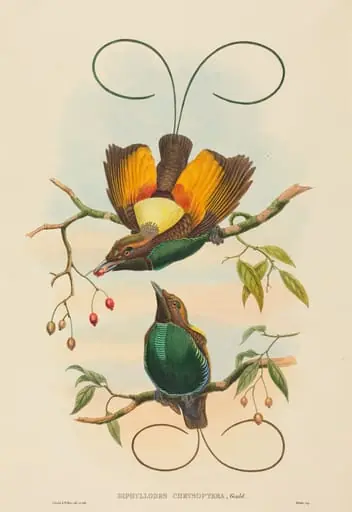 Diphyllodes chrysoptera (Magnificent Bird of Paradise)
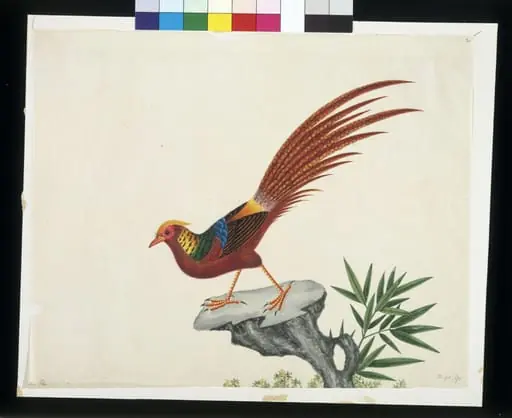 Golden pheasant
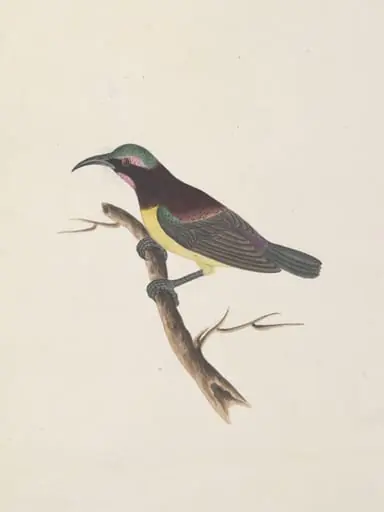 Purple-rumped sun bird
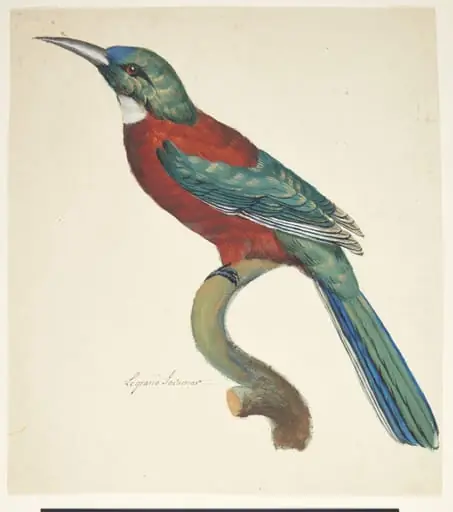 Eksotisk fugl
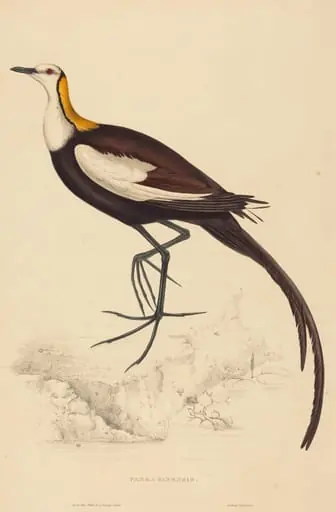 Parra Sinensis (Pheasant-Tailed Jacana)
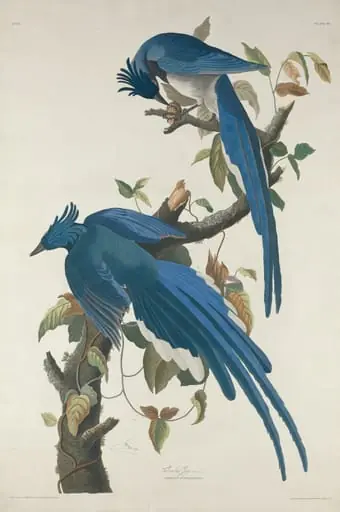 Columbia Jay
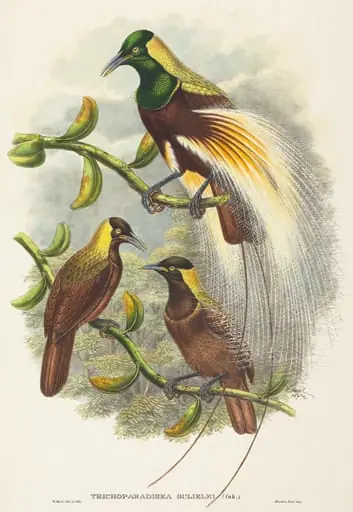 Trichoparadisea Gulielmi
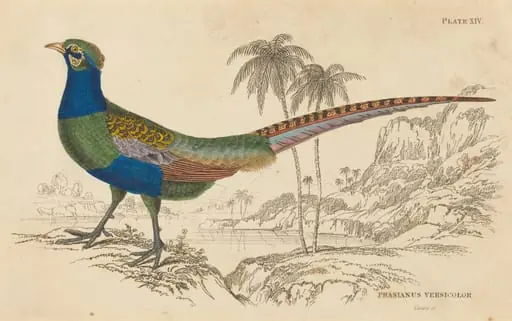 Phasianus Versicolor
 To døde paradisfugle, en han og en hun