Artwork
Bird of Paradise (Paradisea apoda)
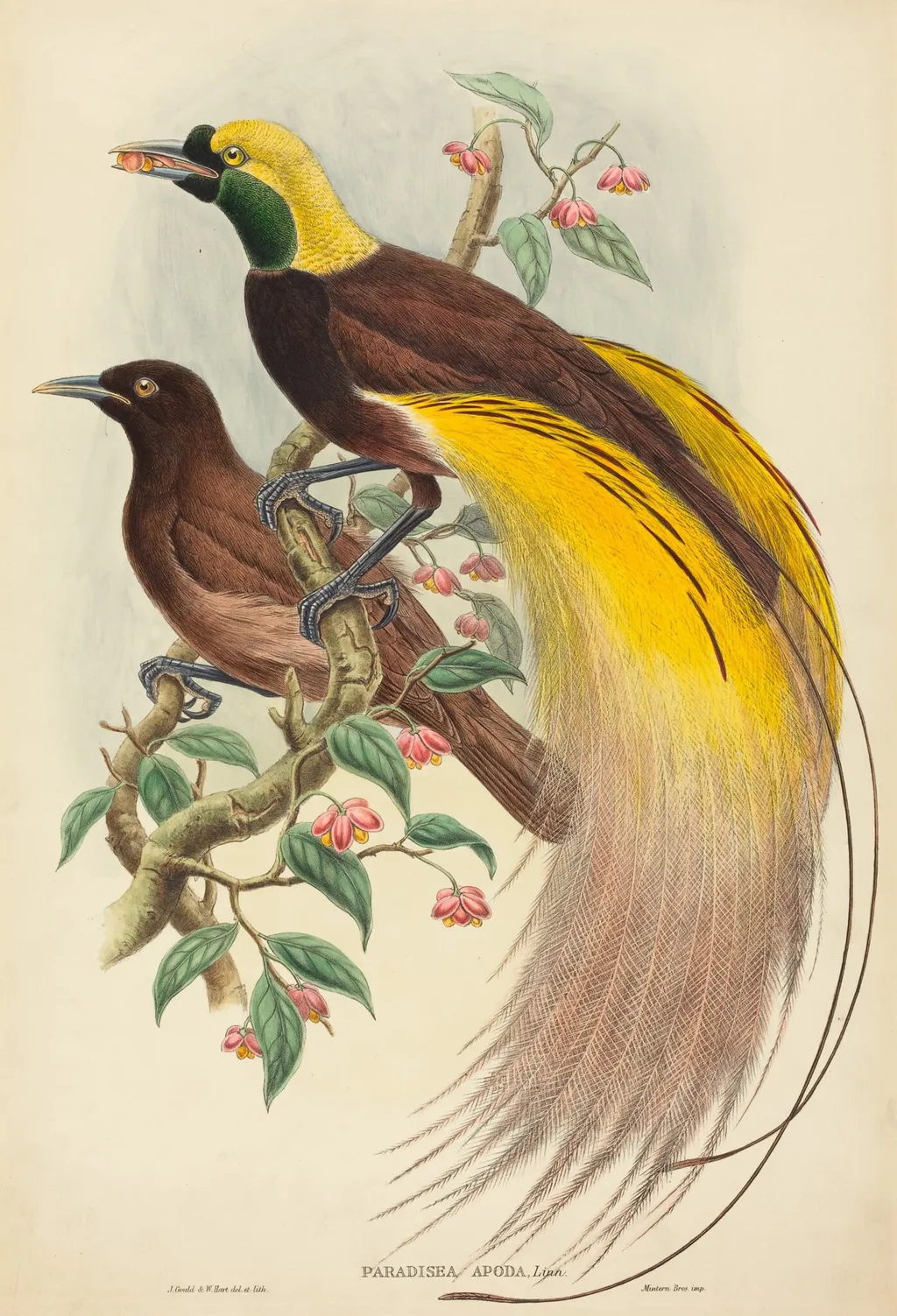
Bird of Paradise (Paradisea apoda) is an ink print by the Impressionist artist John Gould. It is held in the collection of the National Gallery of Art. This hand-colored lithograph, produced in 1882, depicts a male and female bird of paradise on a branch.
About this work
Overview
Created as part of John Gould’s broader ornithological publications, the print combines scientific documentation with artistic precision.
This hand-colored lithograph, produced in 1882, depicts a male and female bird of paradise on a branch. Created as part of John Gould’s broader ornithological publications, the print combines scientific documentation with artistic precision. The image was made using lithographic technique and then individually colored by hand, a common practice in 19th-century natural history illustration to achieve vivid detail not possible with standard printing methods.
Subject & Meaning
The two birds represent the species Paradisea apoda, known for the male’s elaborate plumage used in courtship displays. The contrast between the male’s radiant yellow and green feathers and the female’s subdued brown tones reflects biological sex differences observed in the wild. The inclusion of native foliage suggests the bird’s habitat in New Guinea’s rainforests, grounding the image in ecological context rather than purely aesthetic presentation.
Technique & Style
The image was produced via lithography on wove paper, a method allowing fine lines and tonal gradations. Each feather was meticulously rendered and then colored by hand, resulting in a lifelike texture that mimics the sheen and layering of real plumage. The background foliage is rendered with equal care, using delicate lines and small red blooms to frame the birds without distracting from their form, emphasizing observational accuracy over decorative flourish.
History & Provenance
This print originates from John Gould’s later publications, following his major works such as The Birds of Australia. Though Gould himself was not the illustrator, he directed a team of artists and colorists, including his late wife Elizabeth and others like Edward Lear. The 1882 date places it within the final phase of his career, when demand for scientifically accurate bird imagery remained high among collectors and institutions.
Context
In the 19th century, European interest in exotic species surged alongside colonial expansion. Gould’s publications served both scientific and public audiences, translating specimens collected in distant lands into accessible visual records. This print reflects the era’s blend of natural history, imperial curiosity, and the rise of illustrated scientific literature as a tool for education and classification.
Legacy
Gould’s bird illustrations set a standard for precision in ornithological art, influencing both scientific documentation and public perception of avian biodiversity. While modern taxonomy has revised classifications, his visual records remain valuable for understanding historical knowledge of species and the techniques used to preserve them before photography became widespread.
Artist & collection
Artist
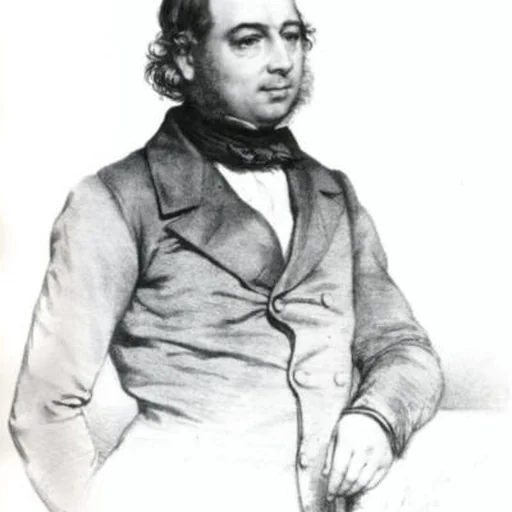
John Gould (; 14 September 1804 – 3 February 1881) was an English ornithologist who published monographs on birds, illustrated by plates produced by his wife, Elizabeth Gould, and several other artists, including Edward…

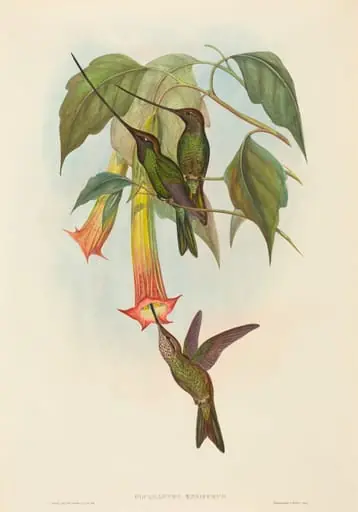 Docimastes ensiferus (Sword-billed Hummingbird)
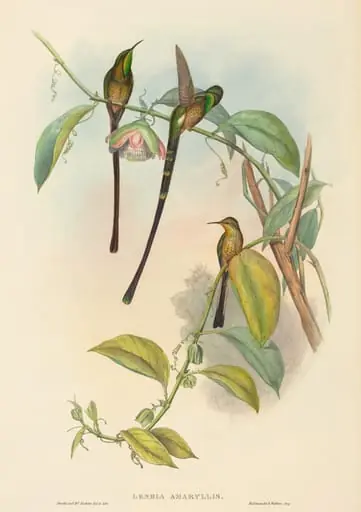 Lesbia Amaryllis
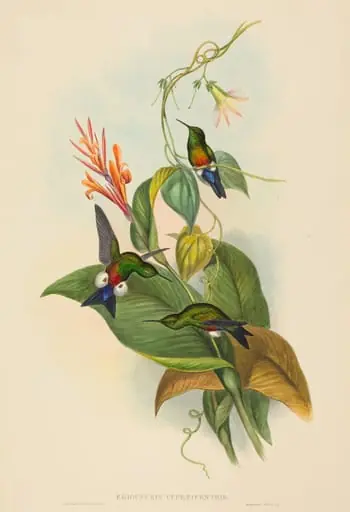 Eriocnemis cupreiventris (Coppery-vented Puff-Leg)
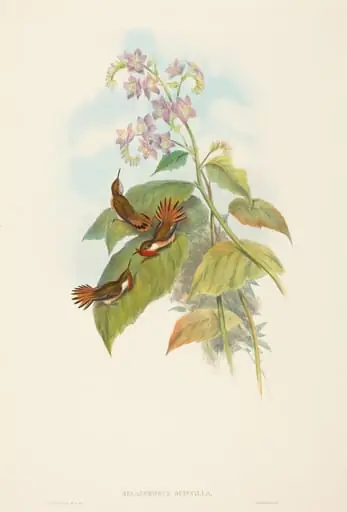 Selashorus scintilla (Scintillant Hummingbird)
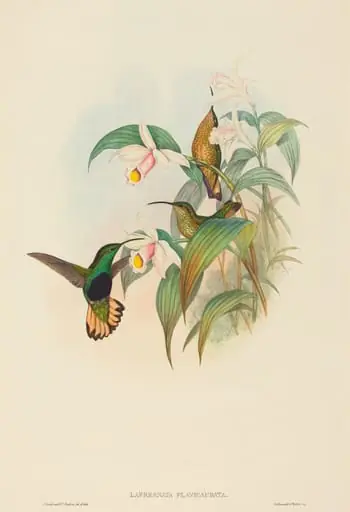 Lafresnaya flavicaudata (Buff-tailed Velvet-breast)
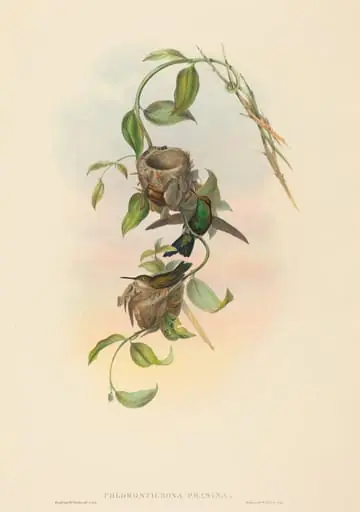 Chlorostilbona prasina (Puncheran's Emerald)
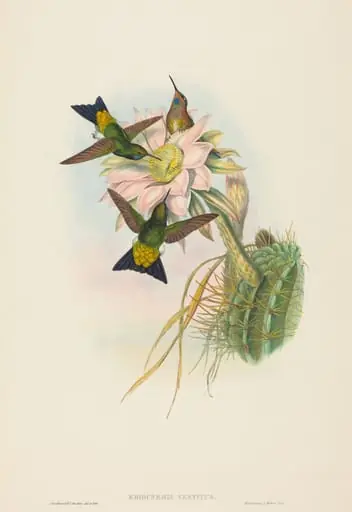 Eriocnemis vestitus (Glowing Puff-Leg)
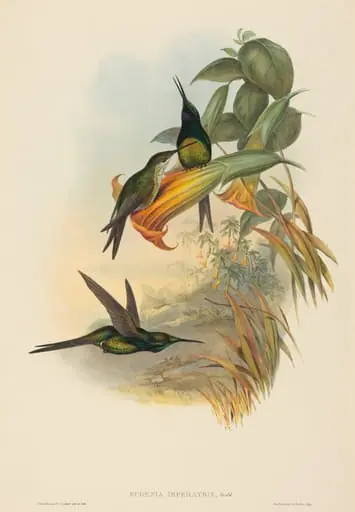 Eugenia imperatrix (Empress Hummingbird)
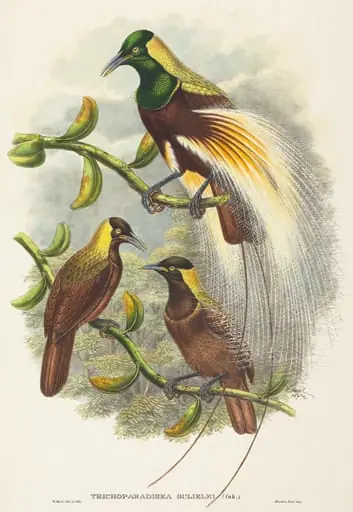 Trichoparadisea Gulielmi
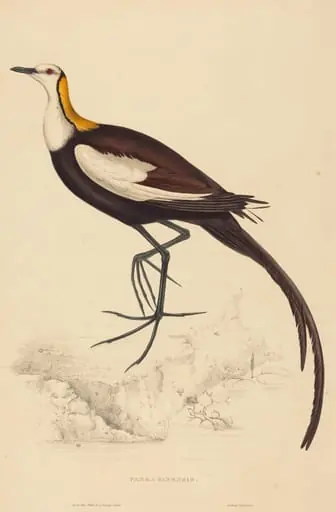 Parra Sinensis (Pheasant-Tailed Jacana)
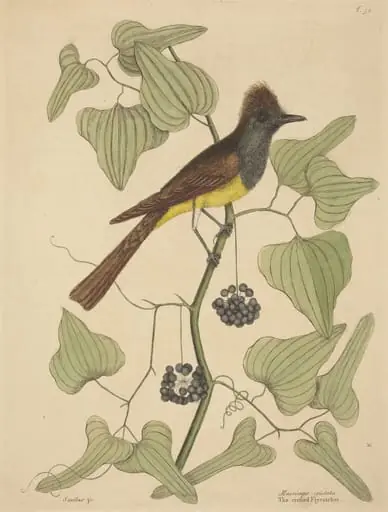 The Crested Flycatcher (Muscicapa cristata)
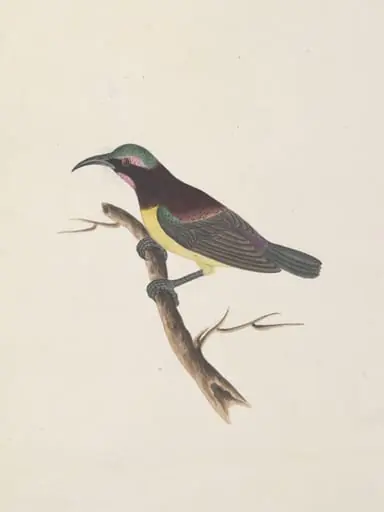 Purple-rumped sun bird
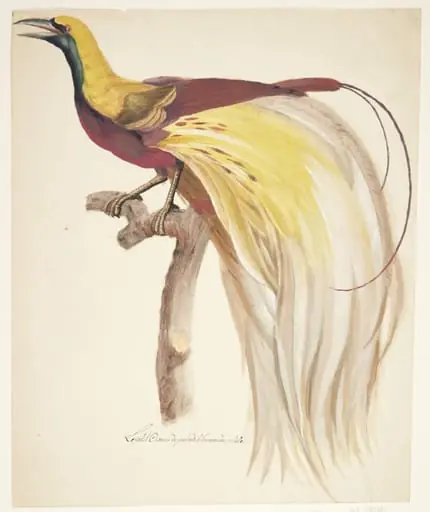 Stor paradisfugl
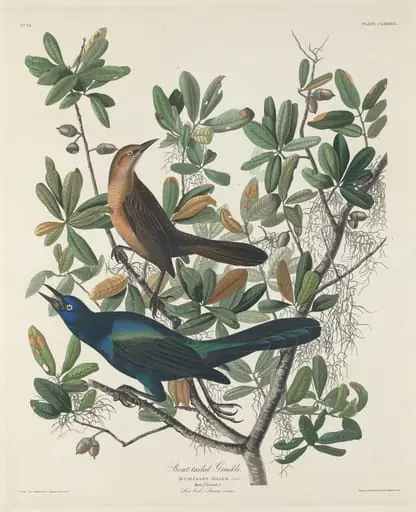 Boat-tailed Grackle
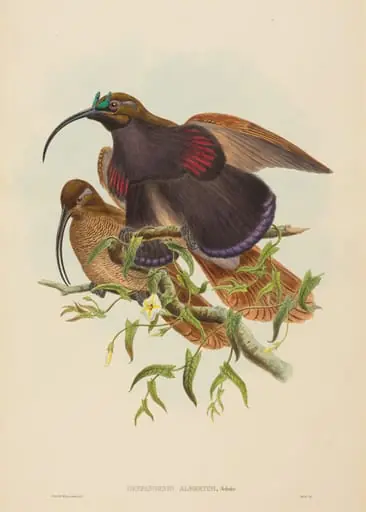 Drepanornis albertisi (Black-billed Sicklebill Bird of Paradise)
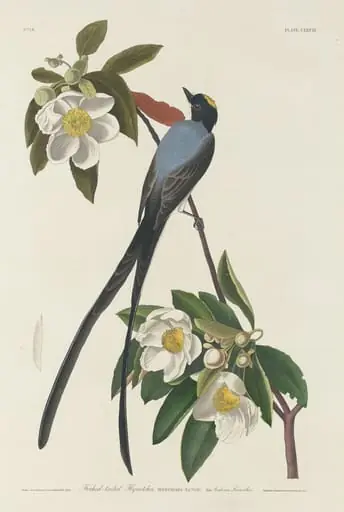 Forked-tail Flycatcher
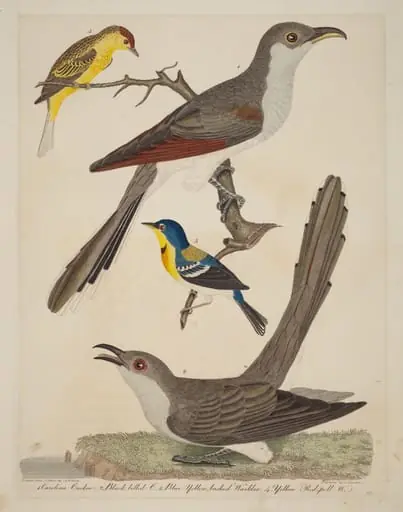 Carolina Cuckoo, Black-billed Cuckoo, Blue Yellow-backed Warbler, and Yellow Red-poll Warbler