Artwork
Columbia Jay
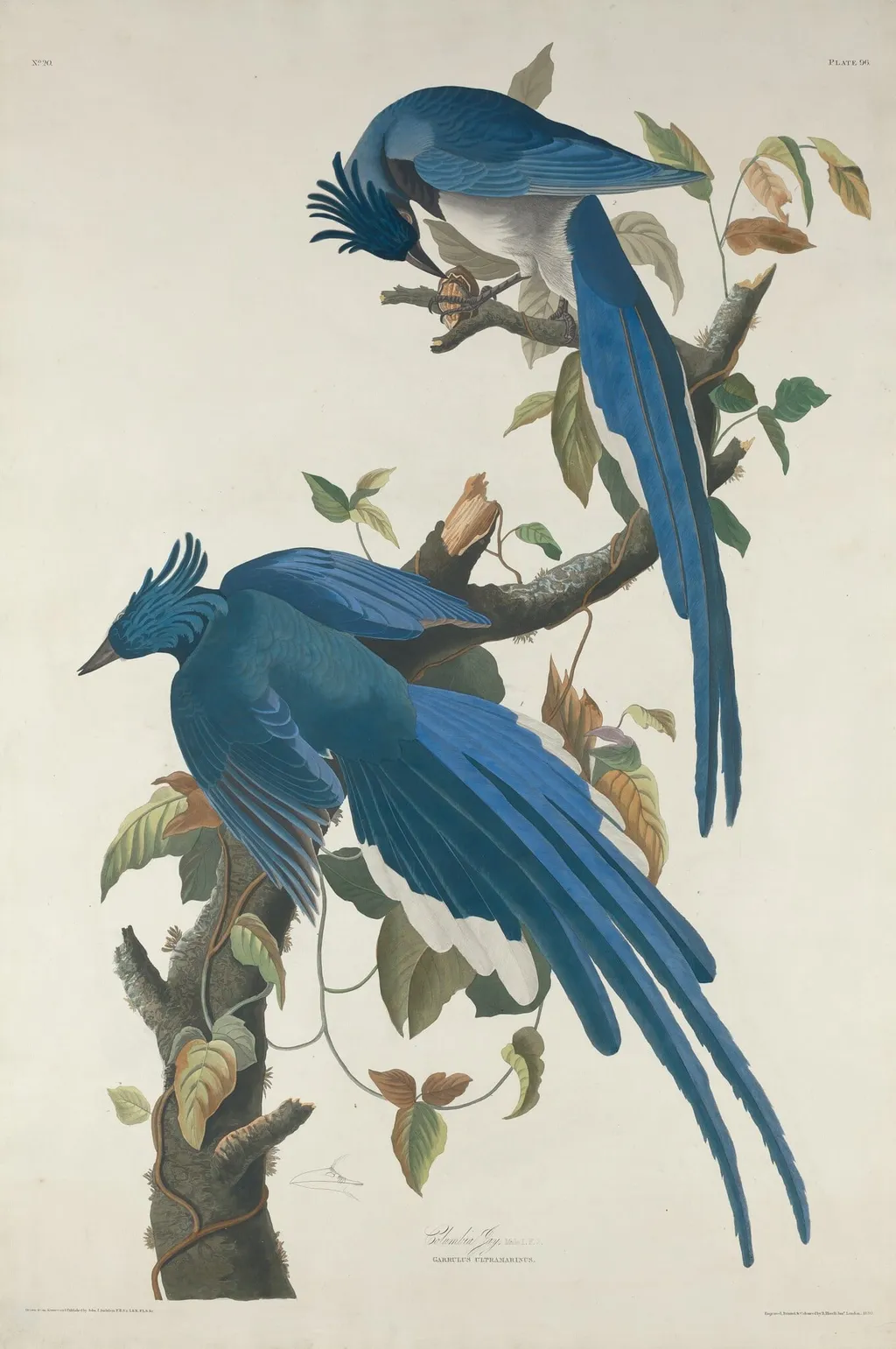
Columbia Jay is an ink print by the Romanticist artist Robert Havell Jr.. It dates from 1830 and is held in the collection of the National Gallery of Art.
About this work
Overview
Created in 1830 by Robert Havell Jr., this hand‑colored engraving and aquatint depicts a pair of Columbia Jays on a branch. Executed on Whatman wove paper, the print combines delicate line work with tonal washes, presenting the birds in vivid blues against a leafy backdrop.
Subject & Meaning
The composition shows two jays perched side by side; the upper bird holds a small insect in its beak while the lower one displays an expanded tail, facing left. The naturalistic portrayal emphasizes the birds’ plumage and behavior, offering a study of the species within its woodland environment.
Technique & Style
Havell employed aquatint to achieve soft, graduated tones, then applied hand‑coloring to render the blues, whites, and browns of the feathers and the greens of the foliage. The use of Whatman wove paper provides a smooth surface that enhances fine detail, reflecting the print‑making practices of early 19th‑century natural illustration.
History & Provenance
Robert Havell Jr. belonged to a prominent family of engravers and etchers, known for their expertise in aquatint and connections to Indian artistic circles. This work forms part of the Havell tradition of documenting natural subjects through print, contributing to the broader visual record of North American wildlife in the period.
Artist & collection

Artist
The Havell family of Reading, Berkshire, England, included a number of notable engravers, etchers and painters, as well as writers, publishers, educators, and musicians.

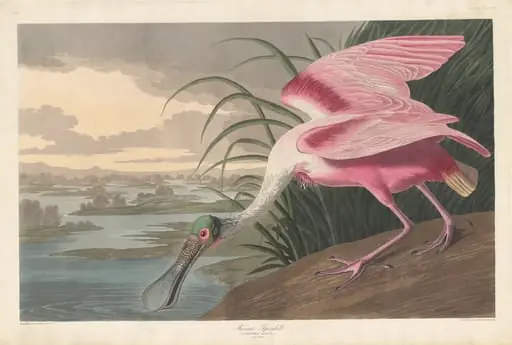
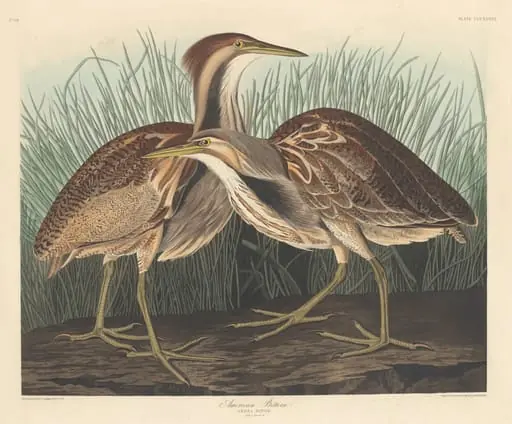
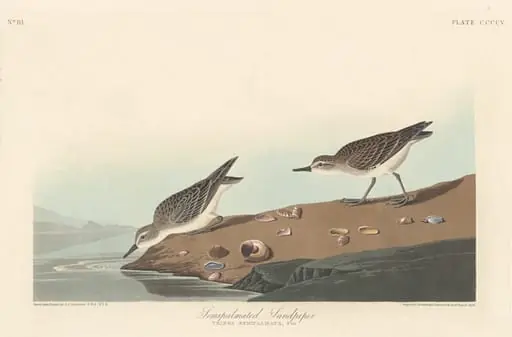
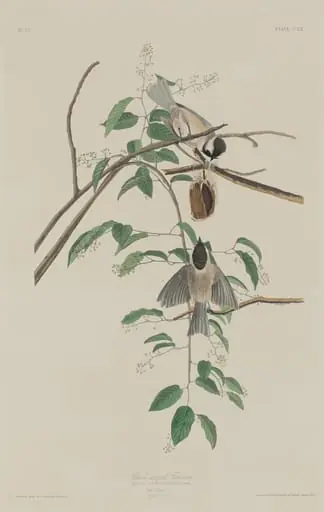
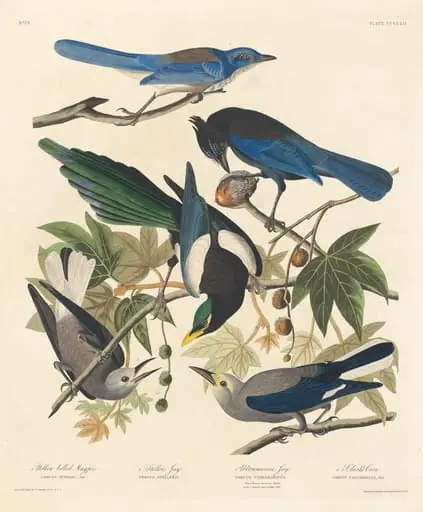 Yellow-billed Magpie, Stellers Jay, Ultramarine Jay and Clark's Crow
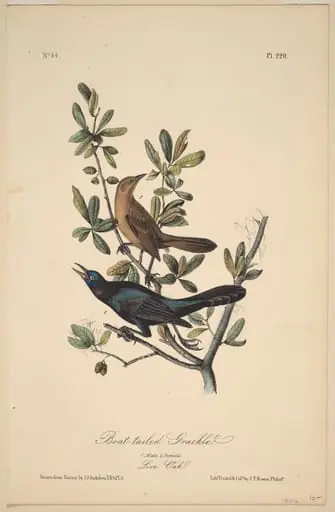 Boat-Tailed Grackle
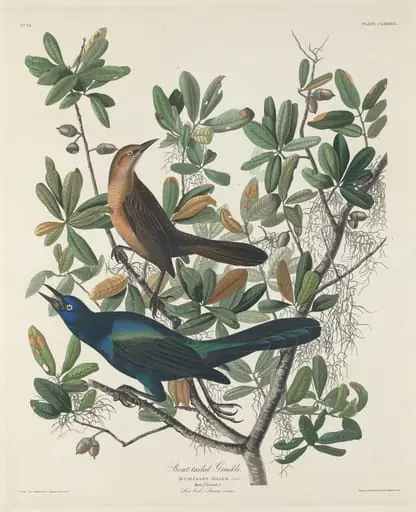 Boat-tailed Grackle
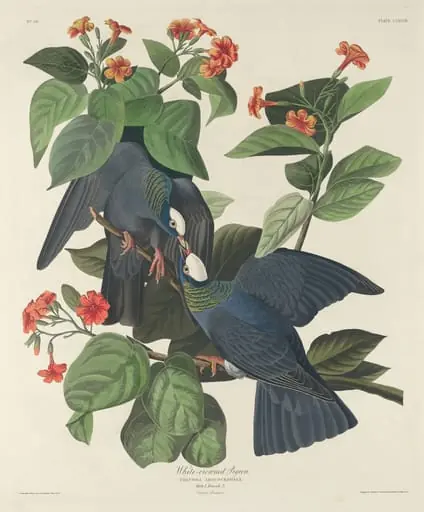 White-crowned Pigeon
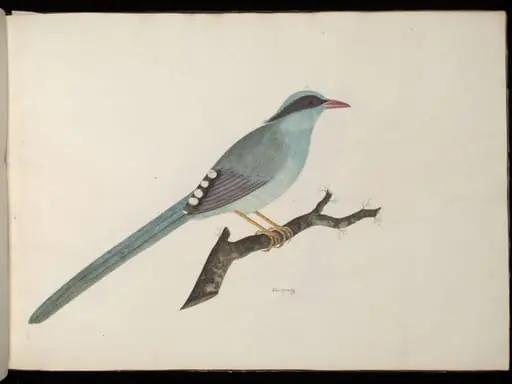 Green magpie
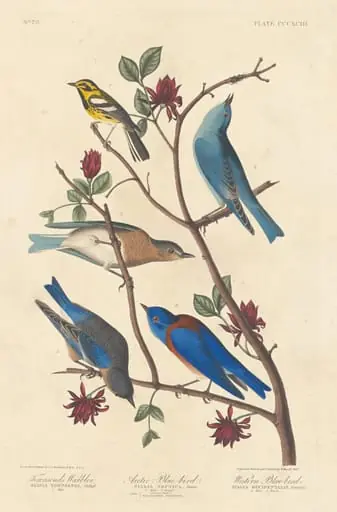 Townsend's Warbler, Arctic Blue Bird and Western Blue Bird
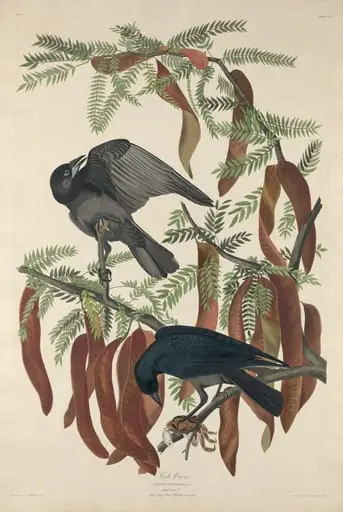 Fish Crow
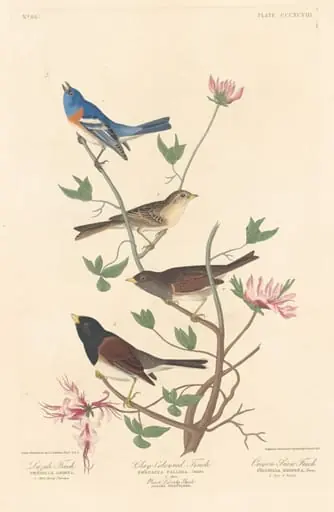 Lazuli Finch, Clay-colored Finch and Oregon Snow Finch
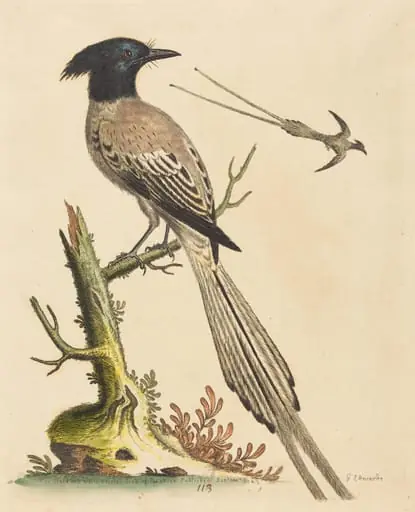 The Black and White Crested Bird of Paradise