Artwork
Landscape with Castle
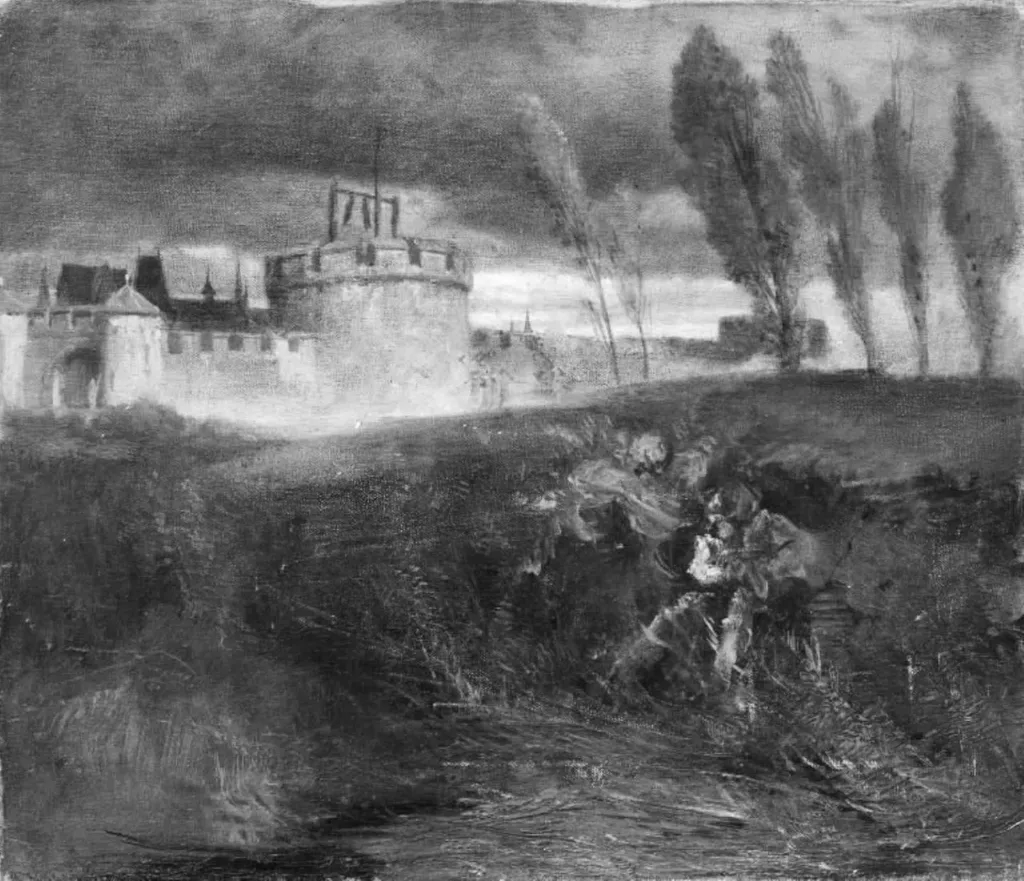
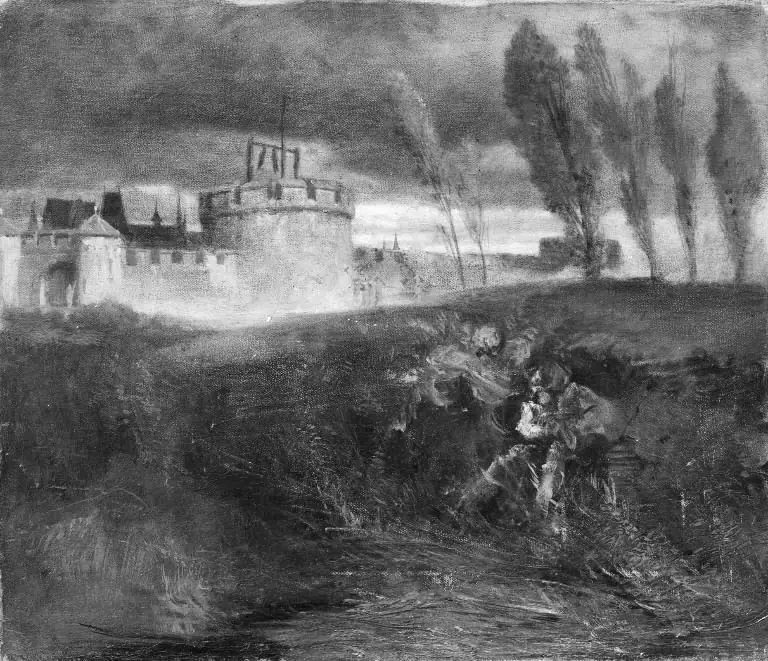
Landscape with Castle is an unspecified painting by Unknown. It dates from 1869 and is held in the collection of the Statens Museum for Kunst. Created around 1869, this landscape depicts a distant castle surrounded by natural elements under a moody sky.
About this work
Overview
The artist employed thick, expressive brushwork to render texture in the terrain and foliage, emphasizing materiality over precise detail.
Created around 1869, this landscape depicts a distant castle surrounded by natural elements under a moody sky. Executed in dark, muted tones with subtle highlights in the clouds, the work conveys a sense of atmospheric tension. The artist employed thick, expressive brushwork to render texture in the terrain and foliage, emphasizing materiality over precise detail. The painting resides in the Museum of Ethnography, though its thematic focus is secular rather than ethnographic.
Subject & Meaning
The composition centers on a fortified castle perched on a hill, its tall tower and enclosing walls suggesting isolation or historical endurance. Below, a sparse foreground of grass and bushes grounds the scene in quiet rural stillness. The overcast sky and heavy brushwork imply an impending storm, evoking a mood of somber contemplation rather than narrative drama. The castle appears as a silent witness to the landscape, not a center of human activity.
Technique & Style
The artist used impasto techniques to build texture in the grass, foliage, and cloud formations, creating a tactile surface that contrasts with the smoother rendering of the castle’s stone. Color is restrained—deep greens, grays, and browns dominate—with only faint highlights suggesting light breaking through clouds. The brushwork is deliberate and physical, prioritizing emotional resonance over topographical accuracy, aligning with emerging tendencies in late 19th-century landscape painting.
History & Provenance
The painting entered the Museum of Ethnography’s collection in the late 19th century, though its subject matter does not reflect ethnographic themes. Its acquisition likely resulted from broader institutional efforts to document regional artistic production rather than cultural artifacts. No documented exhibition history or ownership prior to the museum is available, and the artist’s identity remains unverified in public records.
Context
Painted during a period when European artists increasingly turned to nature as a vehicle for mood and introspection, this work aligns with broader trends in Romantic and early Realist landscape traditions. While not part of a known series, its emphasis on atmosphere and texture reflects influences from contemporaries who rejected idealized scenery in favor of more personal, weather-worn vistas. The castle’s presence may nod to regional folklore or historical memory, though no specific location is identified.
Legacy
The painting remains a quiet example of 19th-century landscape practice, notable for its restrained palette and tactile brushwork. It has not been widely reproduced or studied, and its presence in an ethnographic museum raises questions about classification and curatorial intent. While not influential in broader art movements, it offers insight into regional artistic habits and the evolving role of landscape in non-academic contexts.
Artist & collection

 Domestic Scene
 Giacomo and Cardinal Marco, investing Andrea, Abbot of San Zeno, with his Benefice
 The Nymph of Fontainebleau
 Portrait of a Woman
 Madonna and Child with Saints in the Enclosed Garden
 Venus and Minerva
 Family Group of Four on Sofa
 Wall painting from Room H of the Villa of P. Fannius Synistor at Boscoreale
 Reitergefecht gegen Türken
 Landschaft mit Musikanten (Fälschung nach)
 Reitergefecht gegen Türken
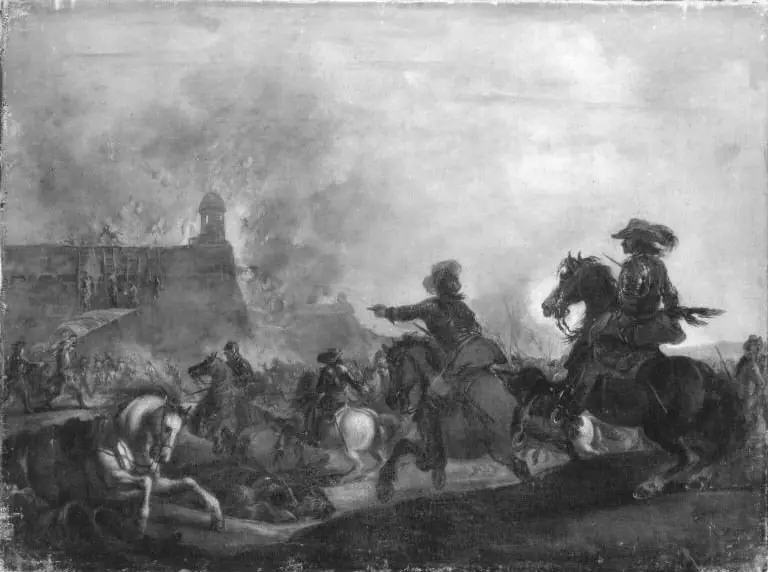 Gefechtsszene
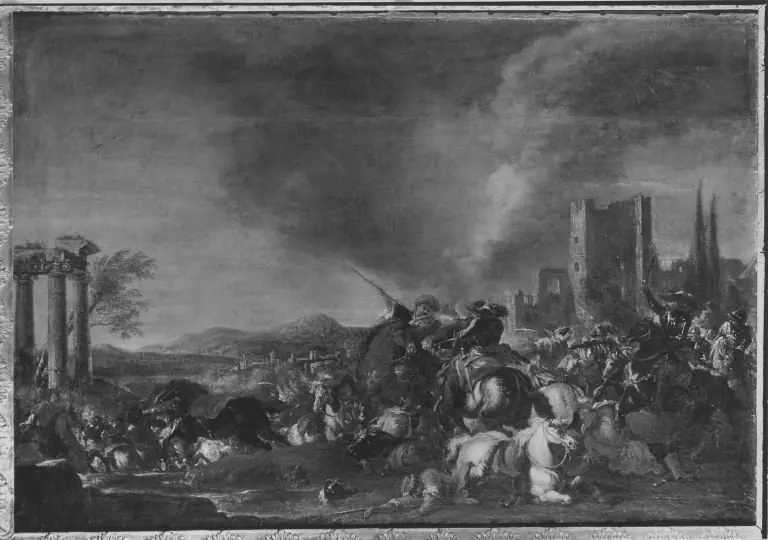 Reitergefecht
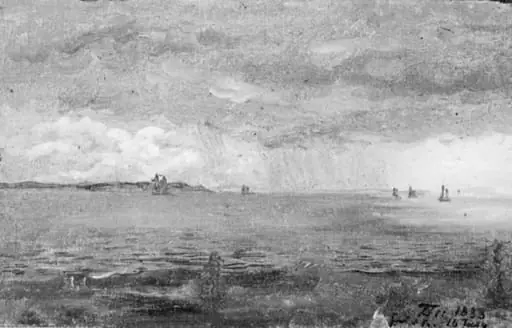 The Sound with Rain Clouds and Ships in the Background
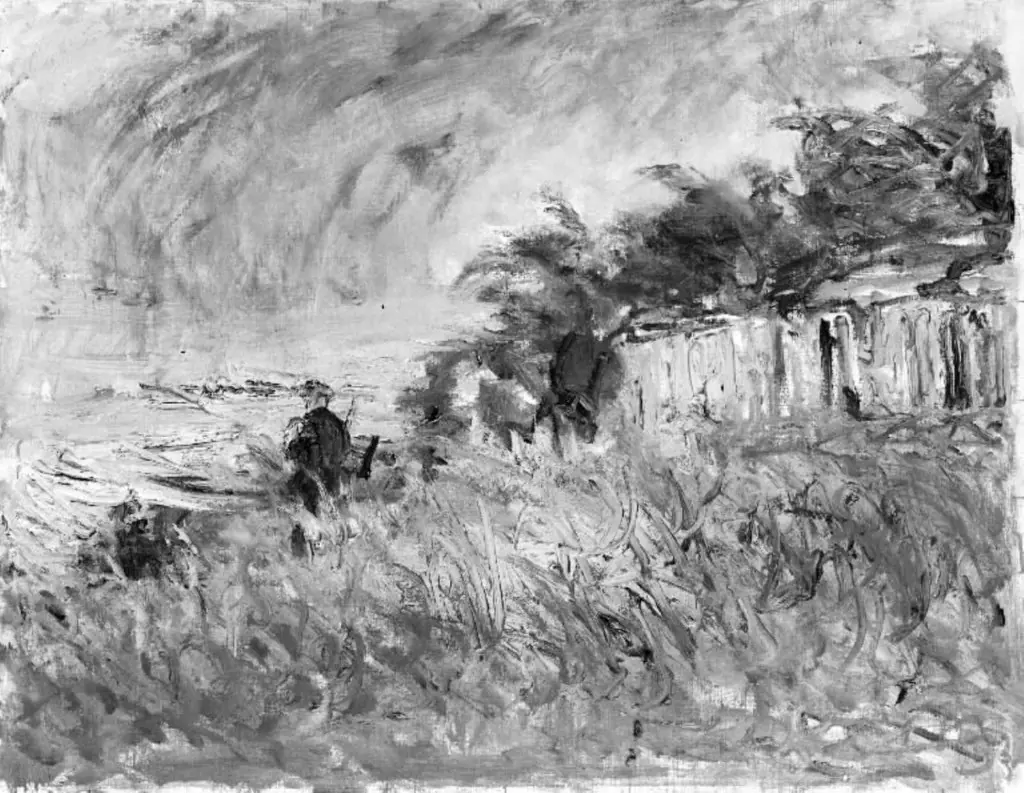 Gathering Thunderstorm, Gilleleje
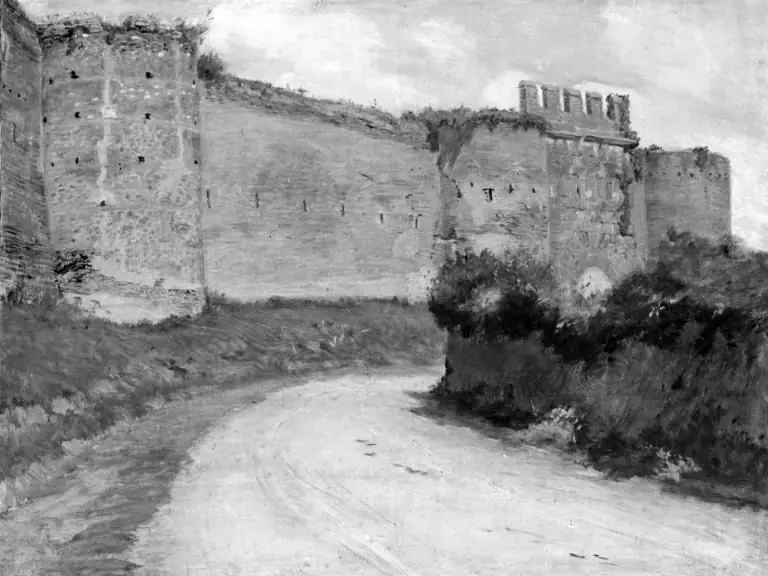 Muren om Rom ved Porta Latina
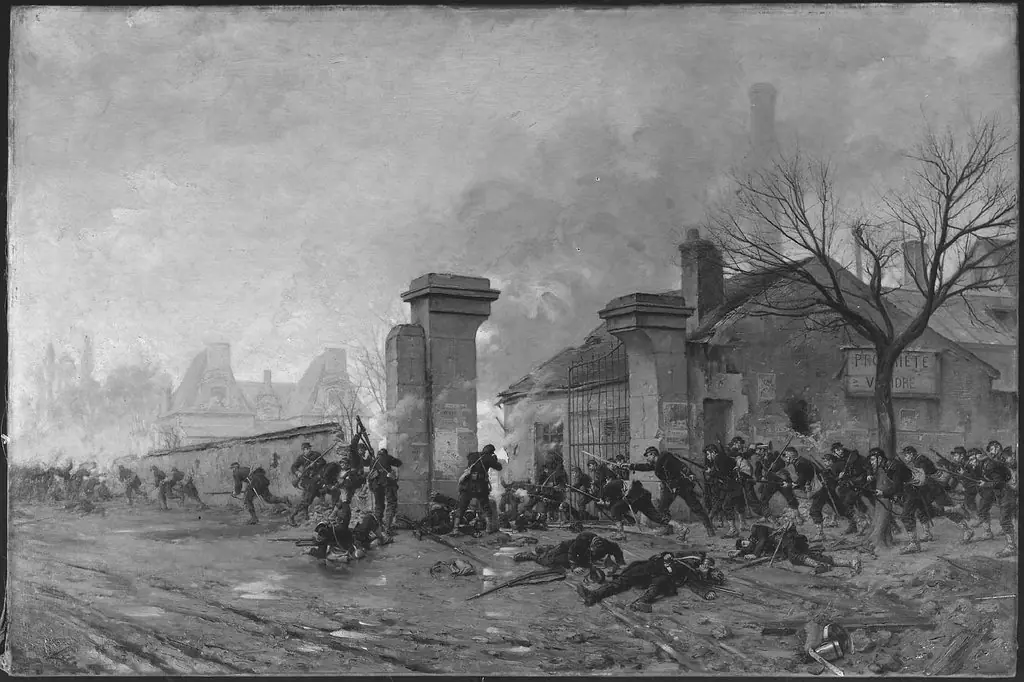 Skirmish on the Outskirts of Paris during Franco-Prussian War
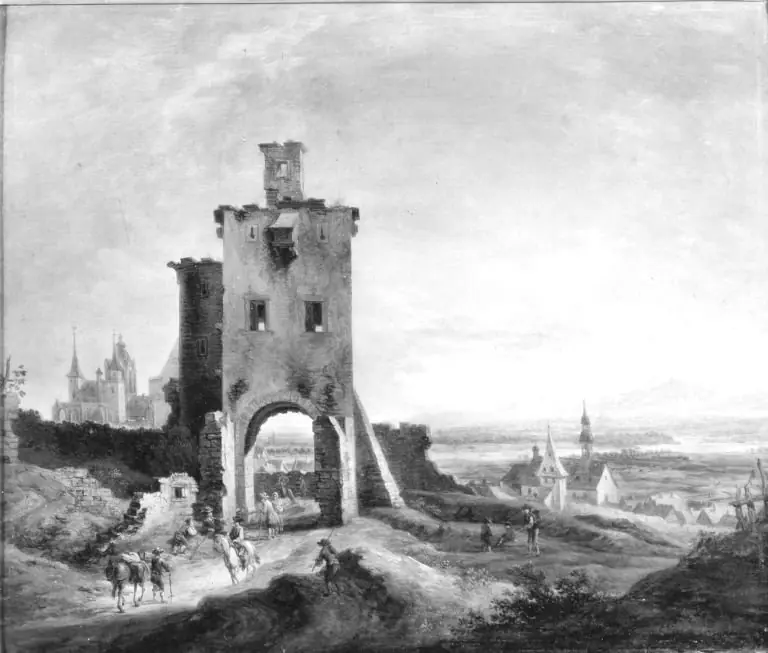 Aussicht auf die Stadt Oppenheim
 Landscape with Castle
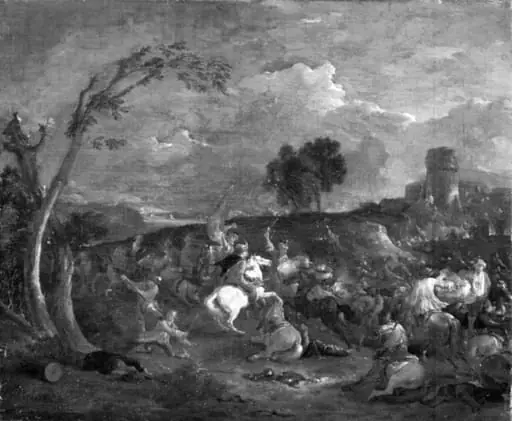 Cavalry Skirmish