Artwork
George III of England
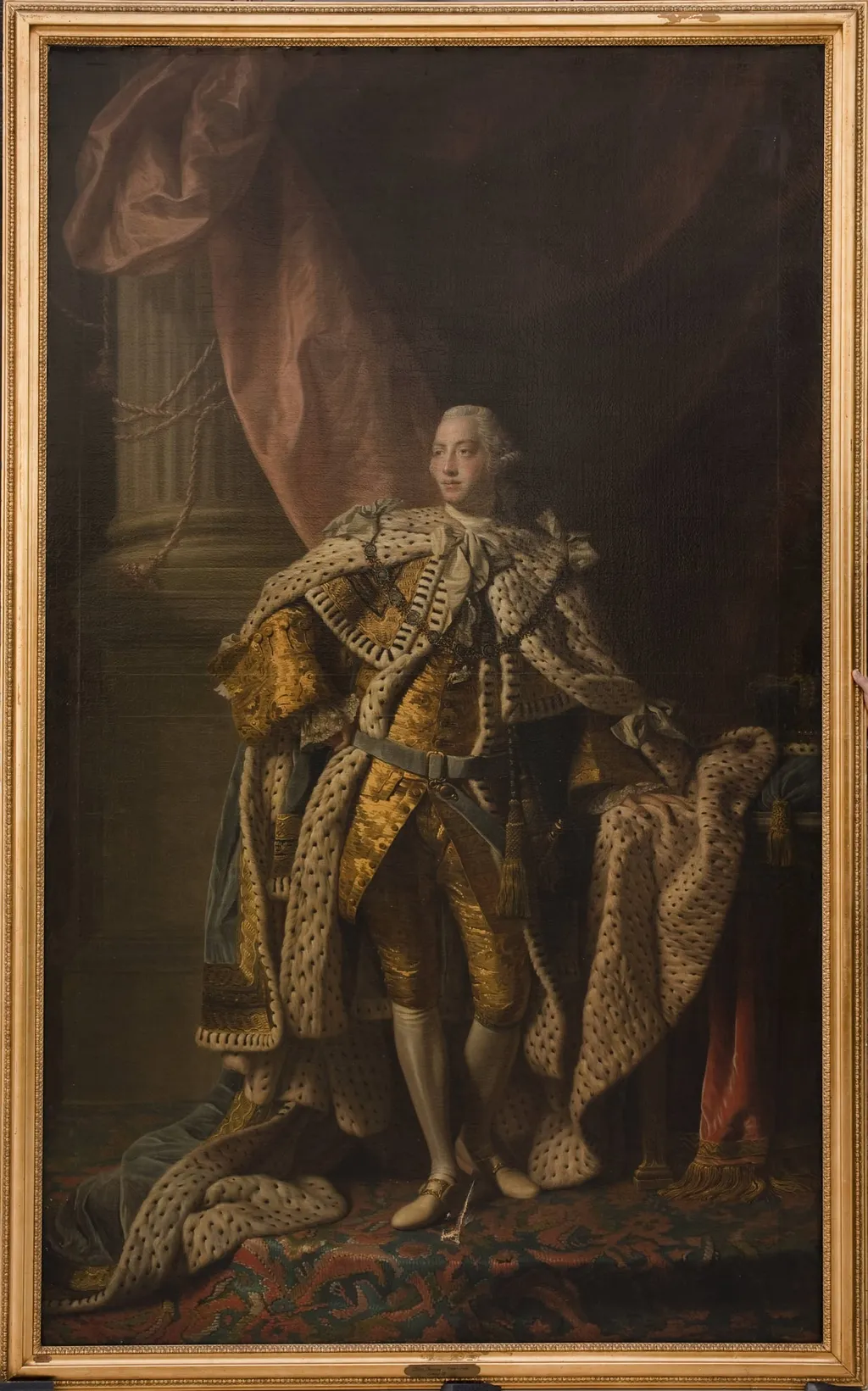
George III of England is a photography by Unknown. It dates from 1750 and is held in the collection of the Statens Museum for Kunst.
About this work
Overview
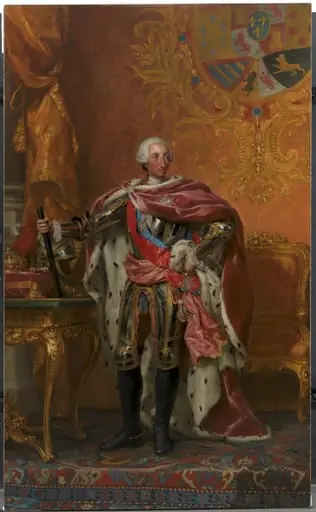
This portrait depicts George III of England, painted around 1750. It is part of the collection at the Museum of Ethnography. The image presents the monarch in ceremonial attire, rendered with deliberate formality and symbolic weight. The composition emphasizes his status through rigid posture and ornate dress, set against a dark, atmospheric background that heightens the sense of solemnity.
Subject & Meaning
George III is shown in royal regalia, holding a folded cloth—possibly a ceremonial mantle or insignia—that suggests ritual authority.
George III is shown in royal regalia, holding a folded cloth—possibly a ceremonial mantle or insignia—that suggests ritual authority. The shadowy red figure behind him, barely discernible beneath a draped curtain, introduces an enigmatic presence, perhaps evoking divine sanction or the weight of monarchy. The overall tone conveys power tempered by isolation, reinforcing the ceremonial distance between ruler and subject.
Technique & Style
The artist employs chiaroscuro to model the king’s form, using stark contrasts between the luminous gold embroidery and the deep, receding shadows. The fabric’s texture is rendered with precise detail, while the background remains ambiguous, drawing focus to the figure. The rigid composition and lack of naturalistic space reflect a courtly tradition prioritizing symbolism over psychological depth.
History & Provenance
The painting’s origin is tied to early Georgian court portraiture, though its attribution remains unverified. It entered the Museum of Ethnography’s collection in the late 19th century, likely acquired as part of a broader effort to document European monarchical imagery. Its presence in an ethnographic context suggests an interest in monarchy as a cultural institution rather than a political one.
Context
Painted during George III’s early reign, the image aligns with a period when British royalty sought to project stability and continuity. The elaborate dress and formal setting reflect continental influences, particularly from French and Dutch court portraiture. The inclusion of a mysterious figure behind the monarch may echo older traditions of divine or ancestral presence in royal imagery.
Legacy
Though not widely exhibited, the portrait remains a rare example of early George III iconography outside official royal collections. Its placement in an ethnographic museum underscores shifting 19th-century attitudes toward monarchy—as cultural artifact rather than living institution. The work invites reflection on how power is visually encoded and preserved across time.
Artist & collection

 Domestic Scene
 Giacomo and Cardinal Marco, investing Andrea, Abbot of San Zeno, with his Benefice
 The Nymph of Fontainebleau
 Portrait of a Woman
 Madonna and Child with Saints in the Enclosed Garden
 Venus and Minerva
 Family Group of Four on Sofa
 Wall painting from Room H of the Villa of P. Fannius Synistor at Boscoreale
 Richard Grenville, 2nd Earl Temple
 Portrait of Stanisław August in the coronation costume
 Portrait of King Charles III of Spain
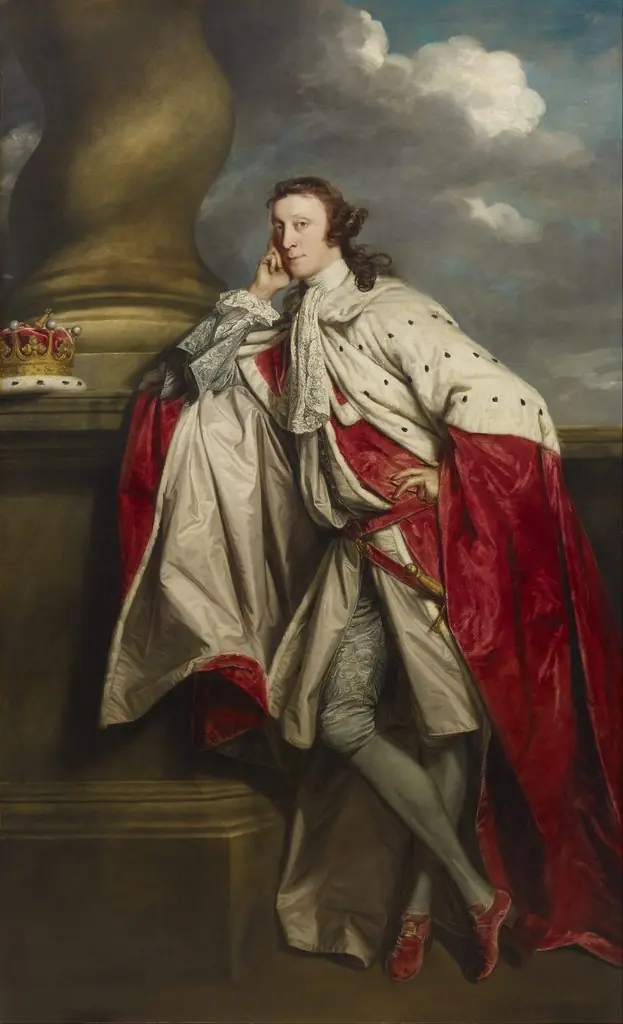 James Maitland, 7th Earl of Lauderdale
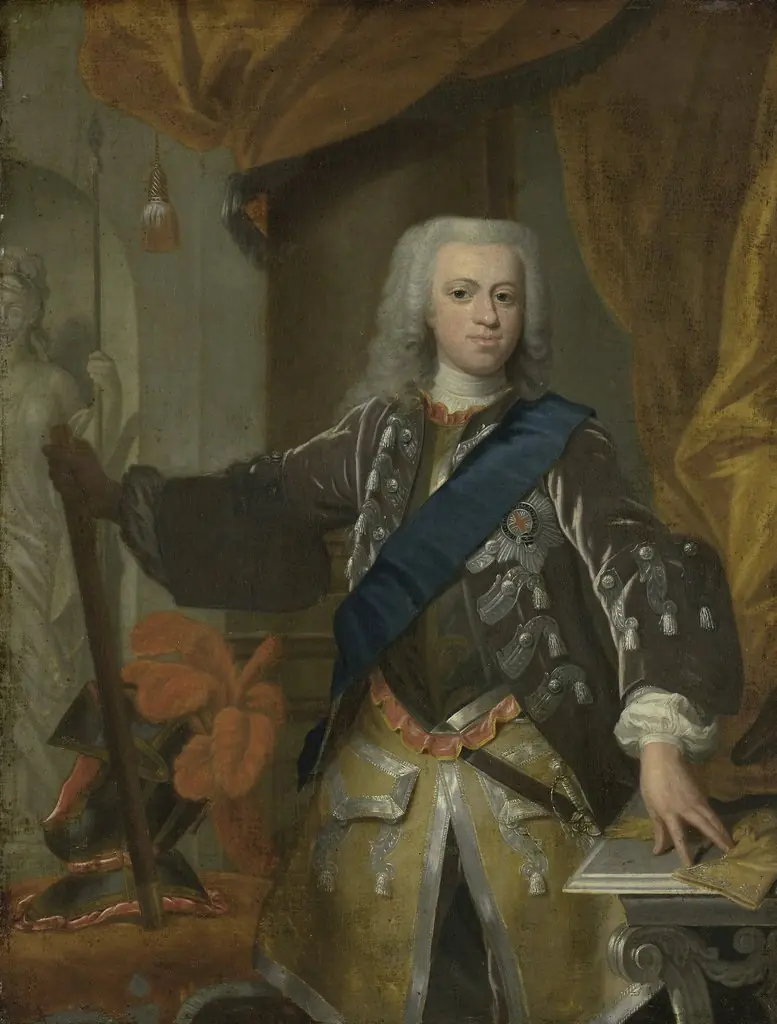 Portrait of William IV, Prince of Orange
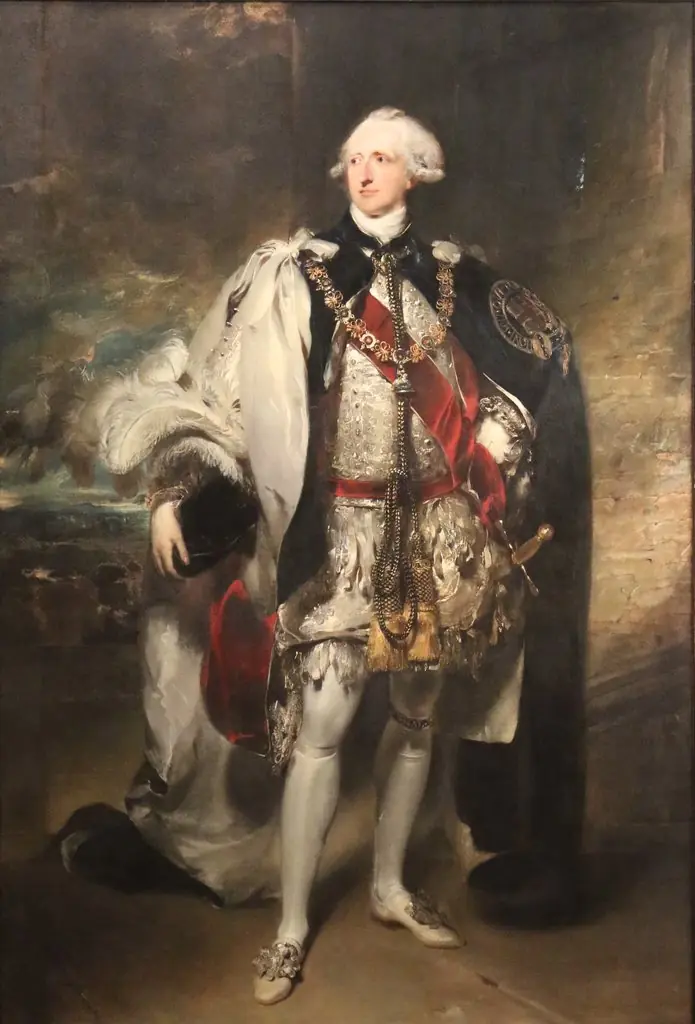 Francis Osborne, 5th Duke of Leeds
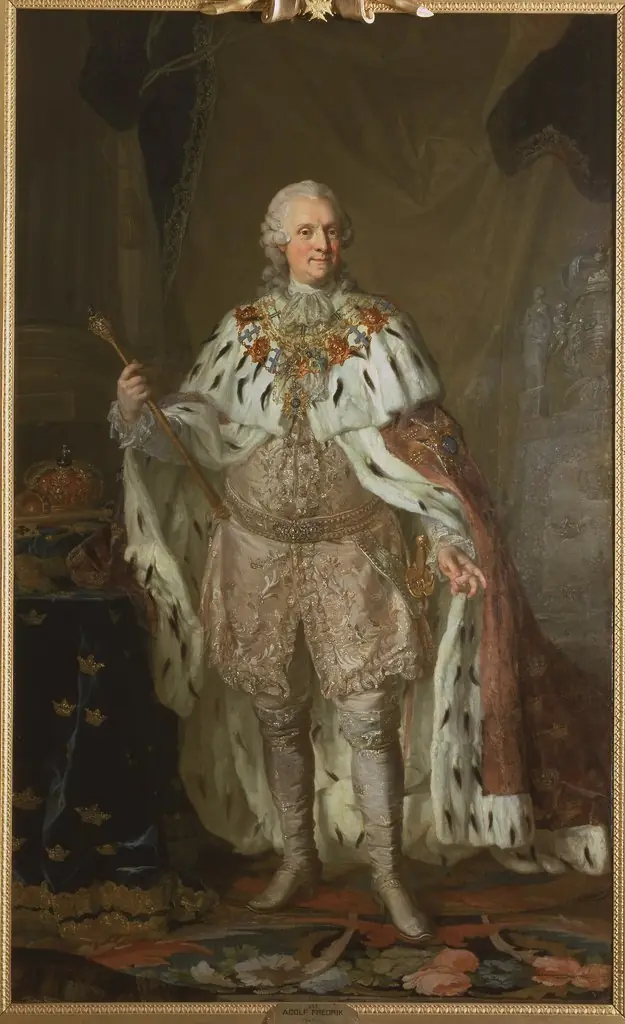 Adolf Fredrik, 1710-1771, konung av Sverige hertig av Holstein-Gottorp
 Portrait of King Charles III of Spain