Artwork
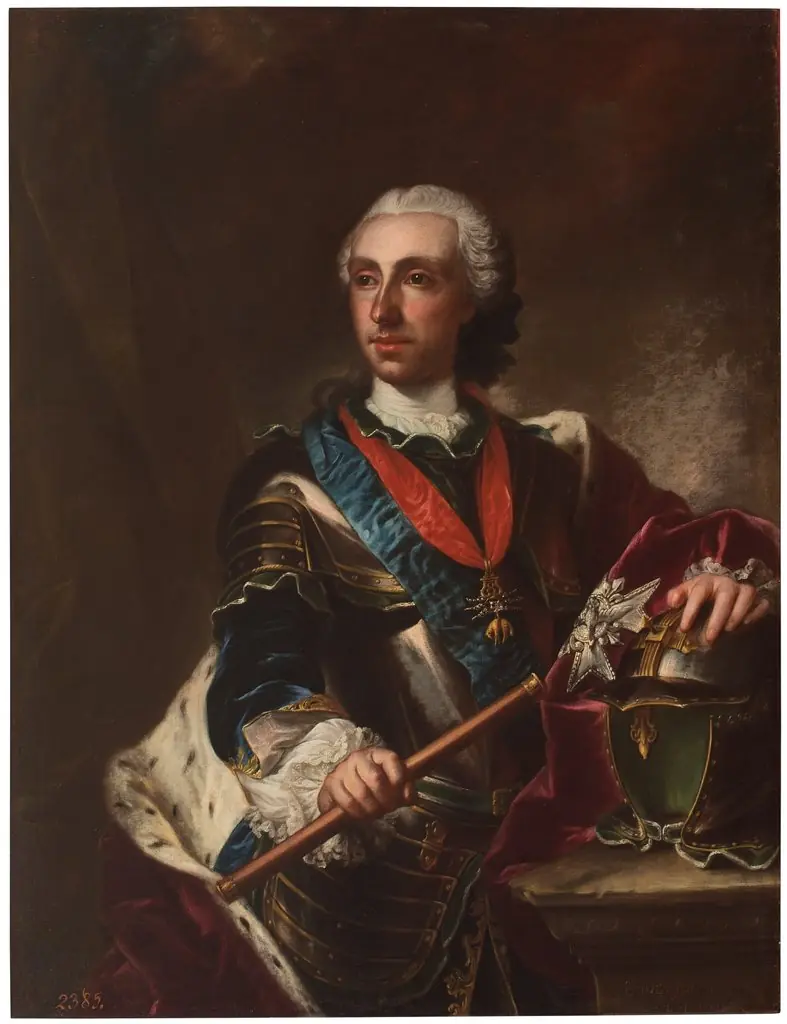
Portrait of King Charles III of Spain
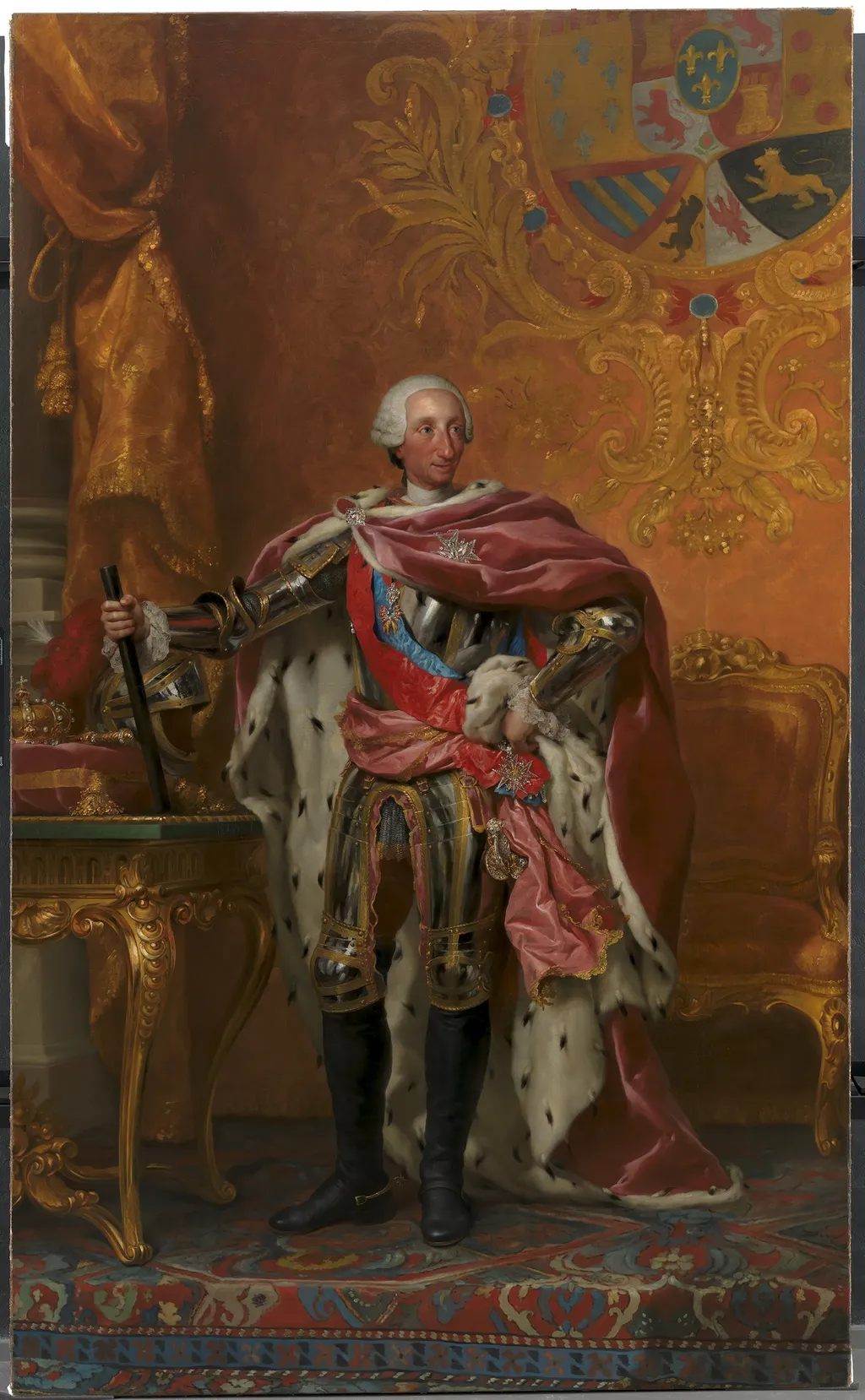
Portrait of King Charles III of Spain is an oil painting by Anton Raphael Mengs. It dates from 1765 and is held in the collection of the Statens Museum for Kunst.
About this work
Overview
Painted in 1765 by Anton Raphael Mengs, this oil portrait depicts King Charles III of Spain in a formal, three-quarter stance within an opulent interior.
Painted in 1765 by Anton Raphael Mengs, this oil portrait depicts King Charles III of Spain in a formal, three-quarter stance within an opulent interior. The monarch is attired in a voluminous red velvet robe lined with ermine, worn over a black and gold embroidered suit. His chest is adorned with the insignia of the Order of the Golden Fleece and other royal medals. One hand rests confidently on the hilt of a sword, while the other supports a fur-lined cloak draped over a gilded chair. The composition utilizes a rich palette of deep reds, golds, and blacks to emphasize royal authority, set against a background featuring a patterned rug and ornate wall decorations. Created during Mengs's tenure as court painter in Madrid, the work exemplifies the Neoclassical style's shift away from Baroque excess toward clarity, order, and idealized dignity. It serves as a definitive state portrait of Charles III, reflecting the Enlightenment values of the Spanish court under his reign and establishing Mengs as a leading figure in 18th-century European portraiture.
Subject & Meaning
The sitter, Charles III, is shown in regal attire that underscores his monarchical authority. He wears a crimson mantle over a black and gold uniform, adorned with medals and a fur collar, while a sword rests in one hand, symbolising both military command and sovereign duty.
Technique & Style
Mengs employs a subtle chiaroscuro, illuminating the king’s face and hands with a smooth, almost luminous quality that contrasts with the deeper shadows of the fur and armor. This handling of light creates a three‑dimensional presence, allowing the figure to emerge from the richly decorated interior.
History & Provenance
Created shortly after Charles III’s accession to the Spanish throne, the work entered the Statens Museum for Kunst’s holdings in the early 20th century through acquisition from a private European collection. Its provenance reflects the broader movement of royal portraits into public museum contexts.
Context
The portrait belongs to the transitional period between Rococo elegance and Neoclassical restraint, a time when Mengs was a leading advocate of academic classicism. The elaborate backdrop—gold‑trimmed chairs, patterned rug, and heraldic wall panels—situates the king within a setting that emphasizes both wealth and dynastic lineage.
Artist & collection


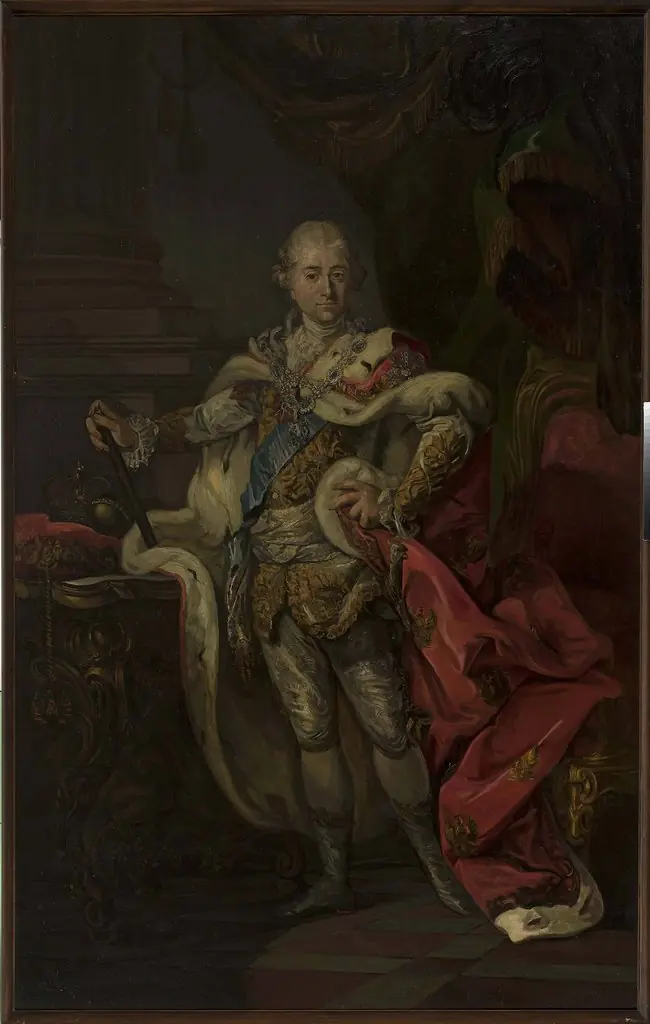 Portrait of Stanisław August in the coronation costume
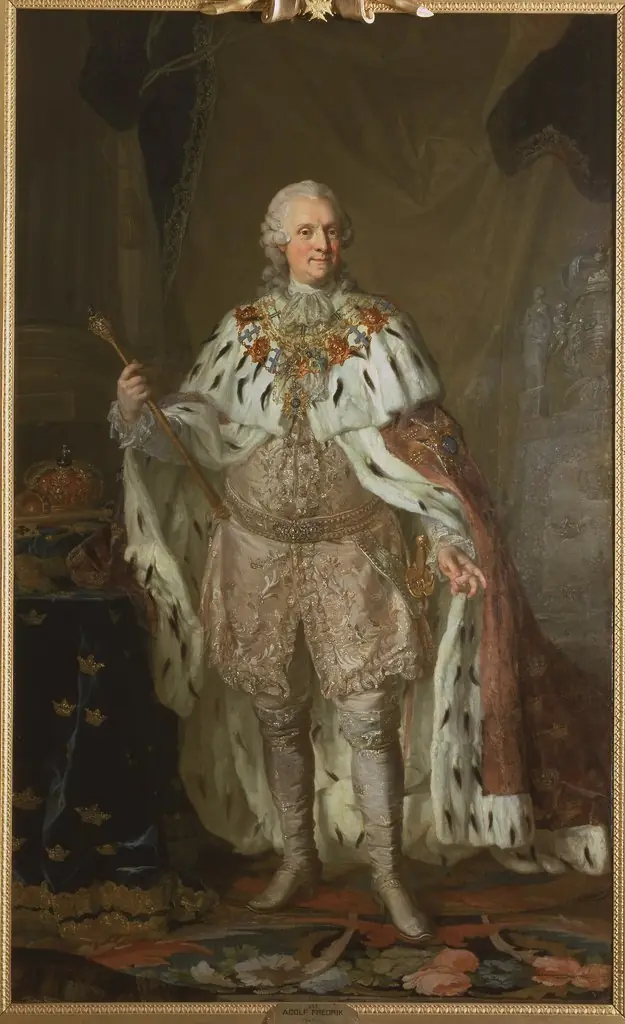 Adolf Fredrik, 1710-1771, konung av Sverige hertig av Holstein-Gottorp
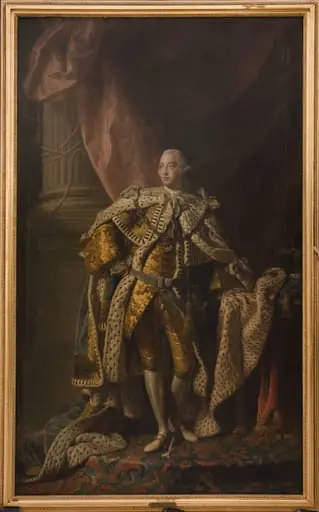 George III of England
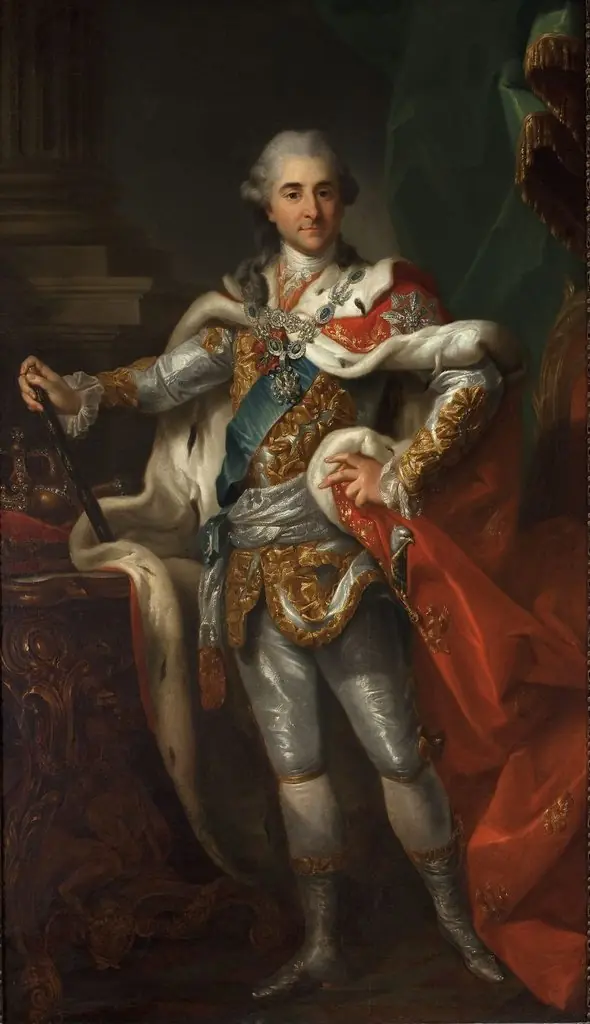 Portrait of Stanisław August Poniatowski in the coronation costume
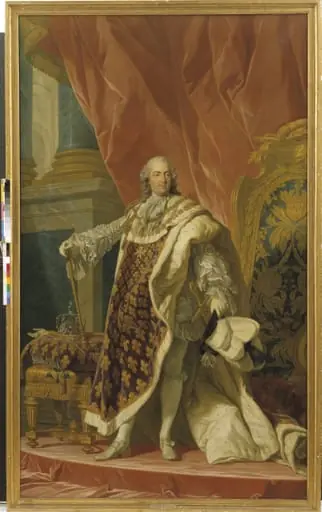 Louis XV of France (1710-1774)
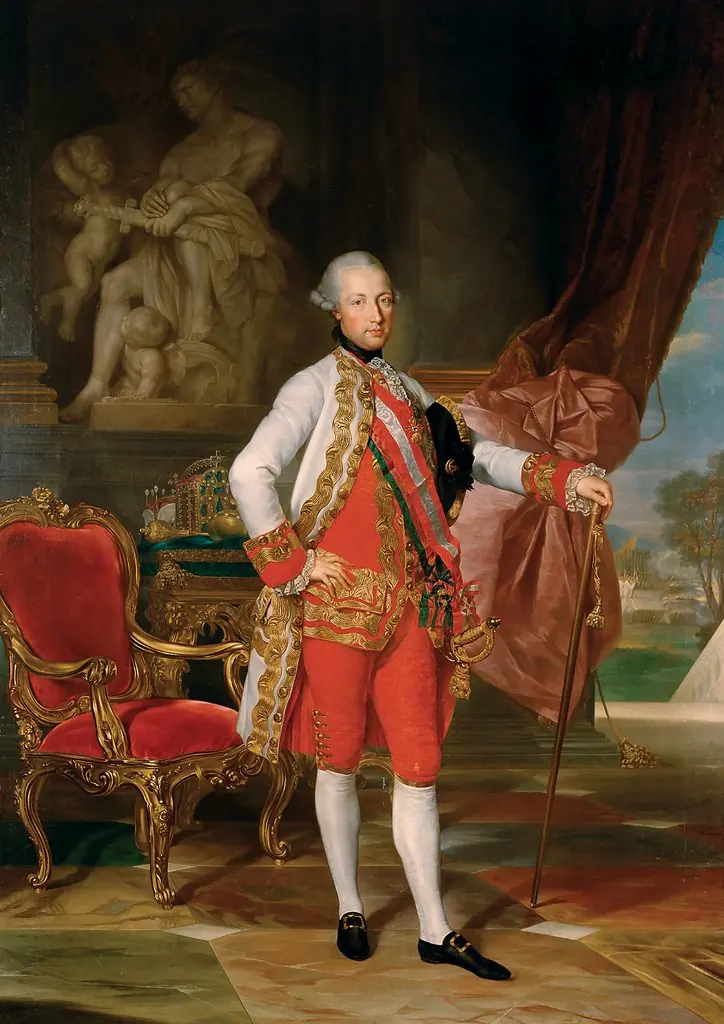 Kaiser Joseph II. (1741-1790) with a Statue of Mars
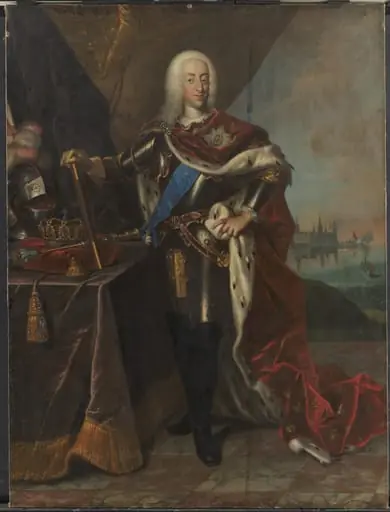 Christian VI
 Felipe de Borbón duque de Parma