Artwork
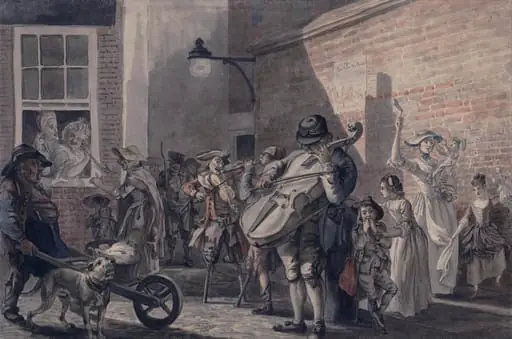
A Street Scene in the Dogdays
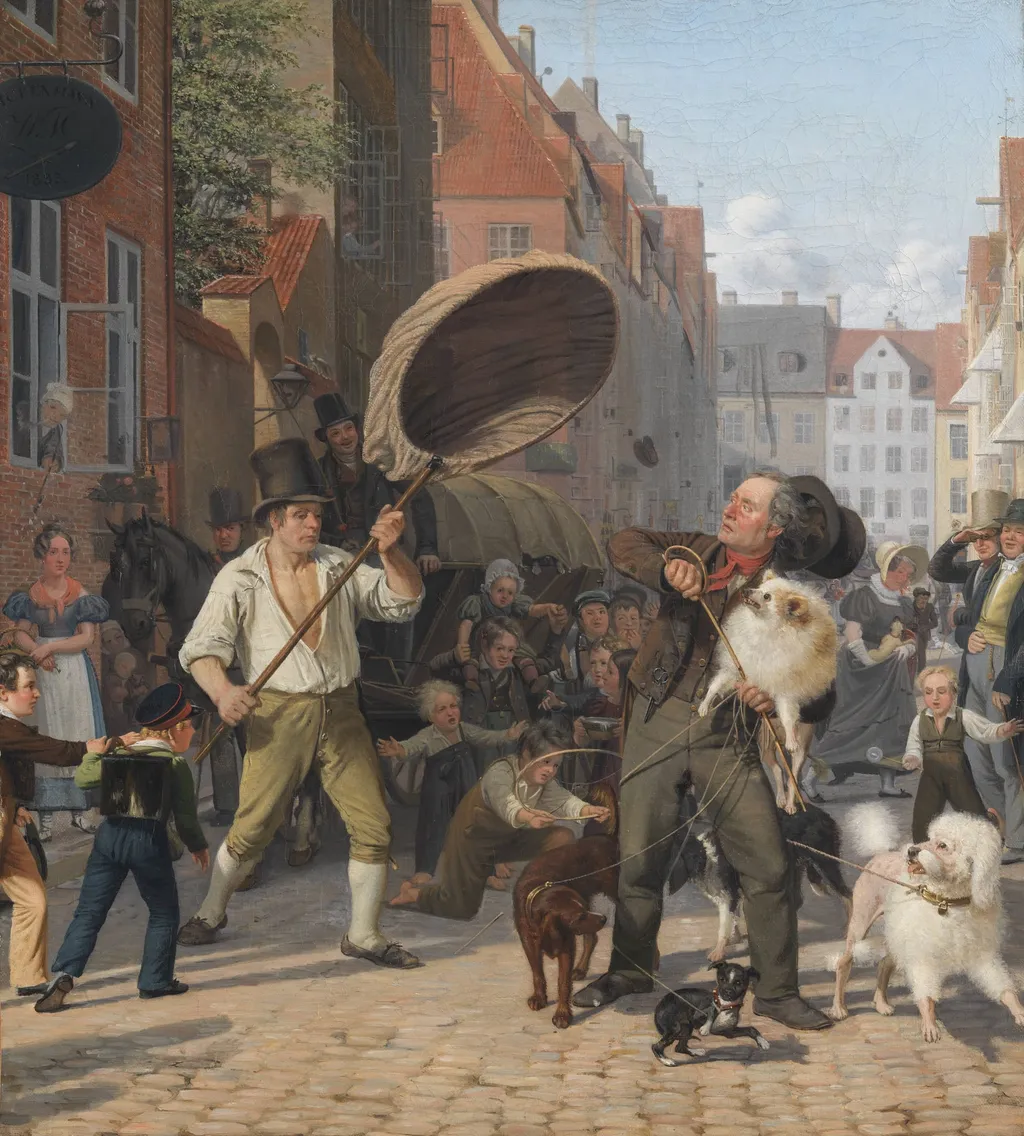
A Street Scene in the Dogdays is a photography by the Romanticist artist Unknown. It dates from 1832 and is held in the collection of the Statens Museum for Kunst. Created in 1832 by 330_person, this oil painting captures a bustling urban street during the height of summer.
About this work
Overview
Created in 1832 by 330_person, this oil painting captures a bustling urban street during the height of summer. It is part of the collection at the Museum of Ethnography. The scene unfolds with everyday figures and animals interacting in a densely populated environment, suggesting a moment of ordinary life rendered with deliberate attention to motion and social detail.
Subject & Meaning
The painting portrays a moment of communal activity centered around dogs and their handlers.
The painting portrays a moment of communal activity centered around dogs and their handlers. Two men in top hats, one with a net, another with a leashed dog, dominate the foreground, while a child similarly holds a dog, indicating shared domestic routines. The presence of a horse-drawn carriage and cobblestone streets situates the scene in a pre-industrial city, reflecting the interplay between human and animal life in urban settings of the era.
Technique & Style
The artist employs loose brushwork and warm, muted tones to convey the heat and motion of a summer day. Figures are arranged diagonally to guide the viewer’s eye through the composition, enhancing the sense of movement. Lighting suggests late afternoon, casting soft shadows that deepen the spatial depth. The style aligns with Romantic-era tendencies to elevate everyday life through emotional resonance rather than idealized form.
History & Provenance
The painting entered the Museum of Ethnography’s collection in the late 19th century, likely through acquisition or donation from a private collector. Its origins trace to the artist’s early career in urban genre painting, a field gaining traction in the 1830s. No significant alterations or restorations are documented, preserving its original surface and tonal balance.
Context
In the 1830s, European cities saw growing interest in depicting ordinary life, influenced by Romanticism’s focus on authenticity and emotion. Urban scenes featuring animals were uncommon in fine art, making this work a rare example of domesticated canine life as a subject. The top hats and carriage reflect middle-class urban norms, while the street’s texture hints at the physical realities of city living before modern sanitation.
Legacy
Though not widely exhibited, the painting contributes to a small body of 19th-century works that documented the quiet rhythms of city life. Its inclusion in an ethnographic museum underscores its value as a cultural record rather than a purely aesthetic object. It remains a quiet testament to the overlooked interactions between people, animals, and urban space in early industrial Europe.
Artist & collection

 Domestic Scene
 Giacomo and Cardinal Marco, investing Andrea, Abbot of San Zeno, with his Benefice
 The Nymph of Fontainebleau
 Portrait of a Woman
 Madonna and Child with Saints in the Enclosed Garden
 Venus and Minerva
 Family Group of Four on Sofa
 Wall painting from Room H of the Villa of P. Fannius Synistor at Boscoreale
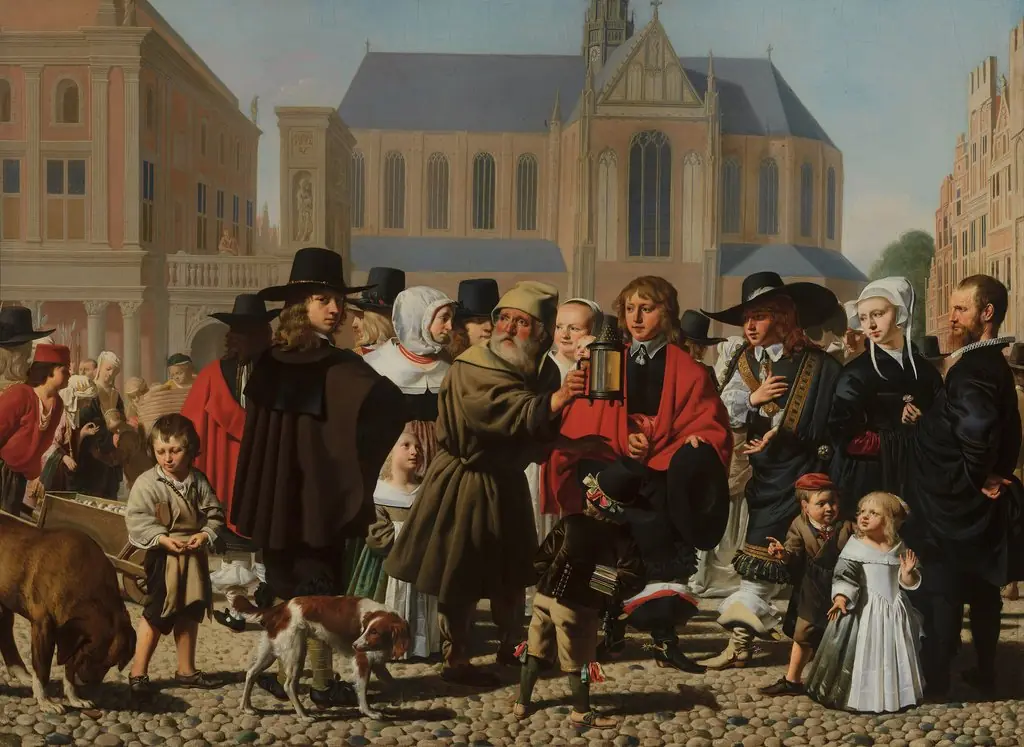 Allegorical portrait of the Steyn family as scene of Diogenes
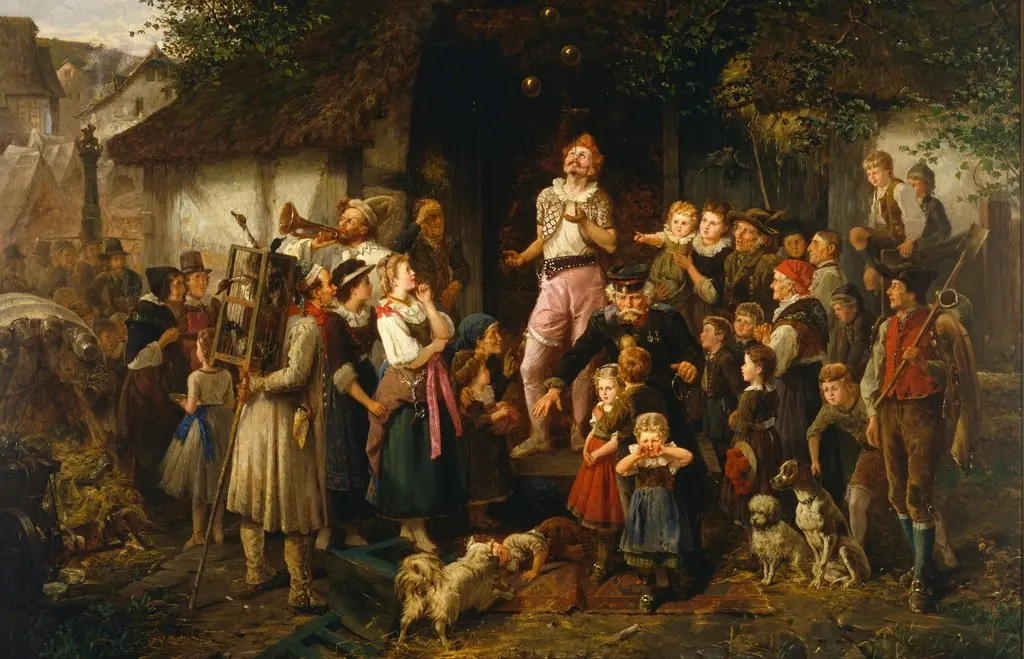 The juggler: a village fair
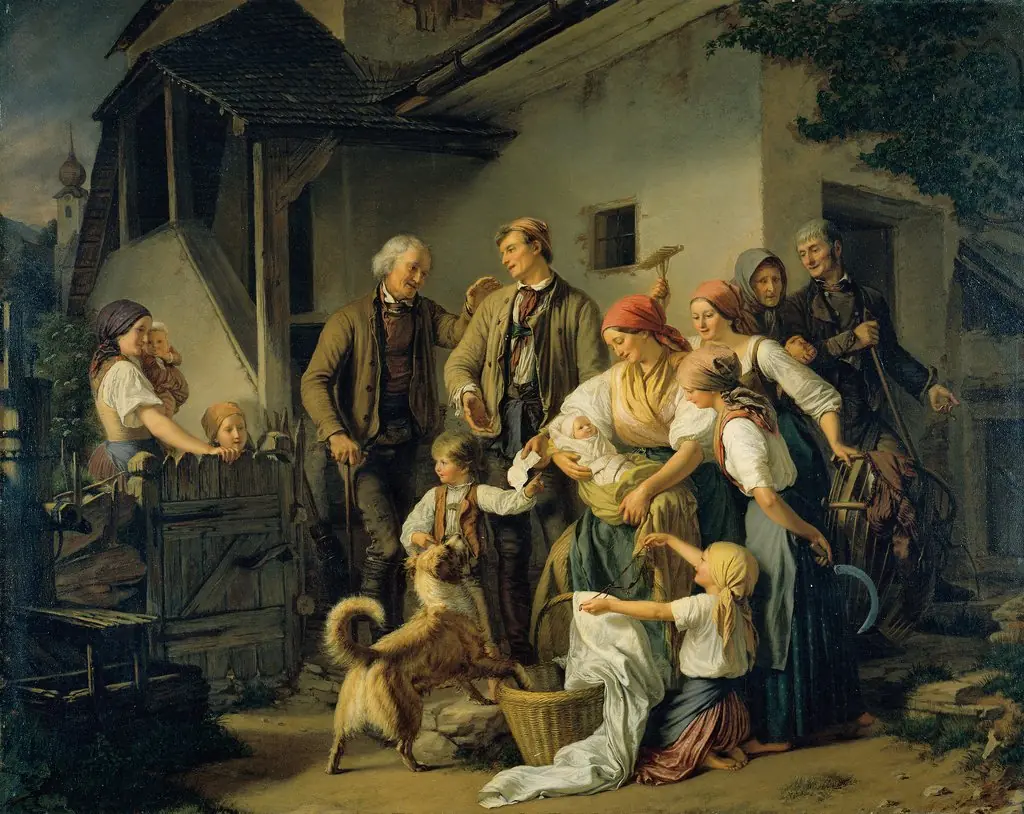 The Foundling
 A Country Dance in the Hedebo District, Zealand
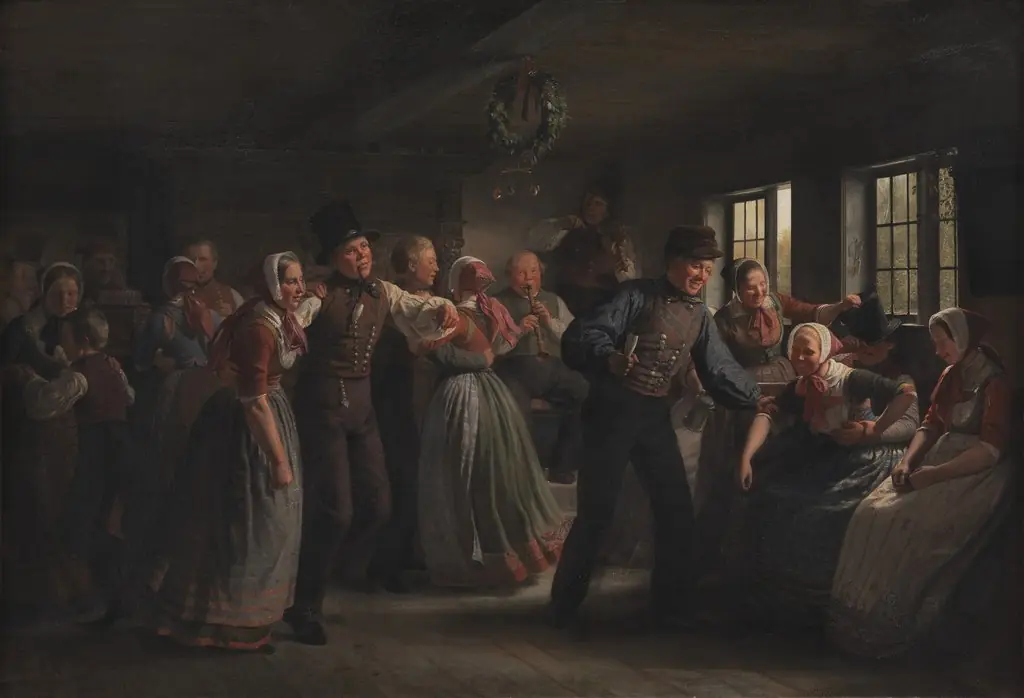 A Country Dance in the Hedebo District, Zealand
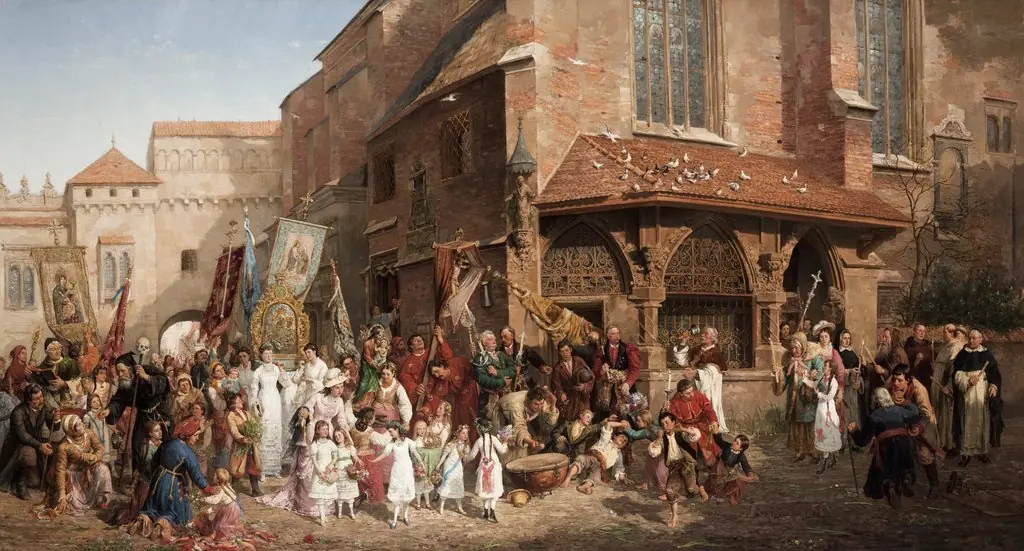 The Corpus Christi Procession
 The Asylum for the Deaf
 Peasants Celebrating Twelfth Night
 A Collision at the Porte de Hal, Brussels
 Horsemen at the Inn