Artwork
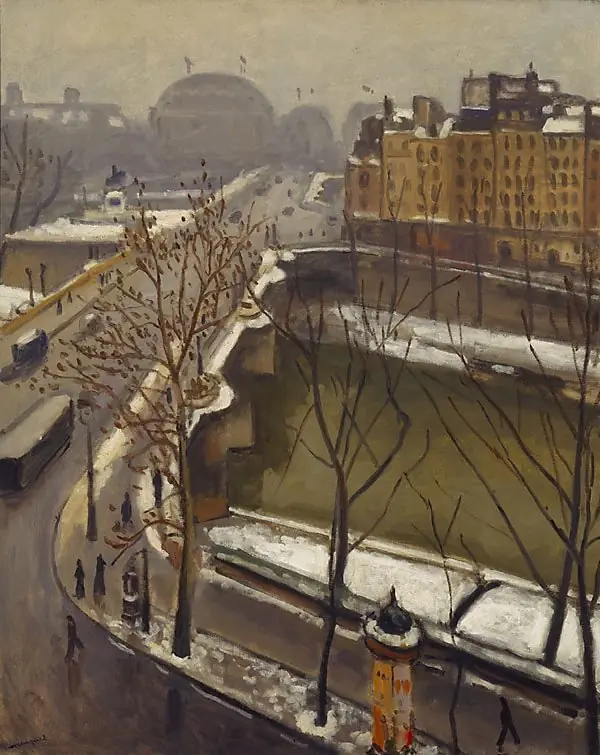
From Quai de la Tournelle, Paris
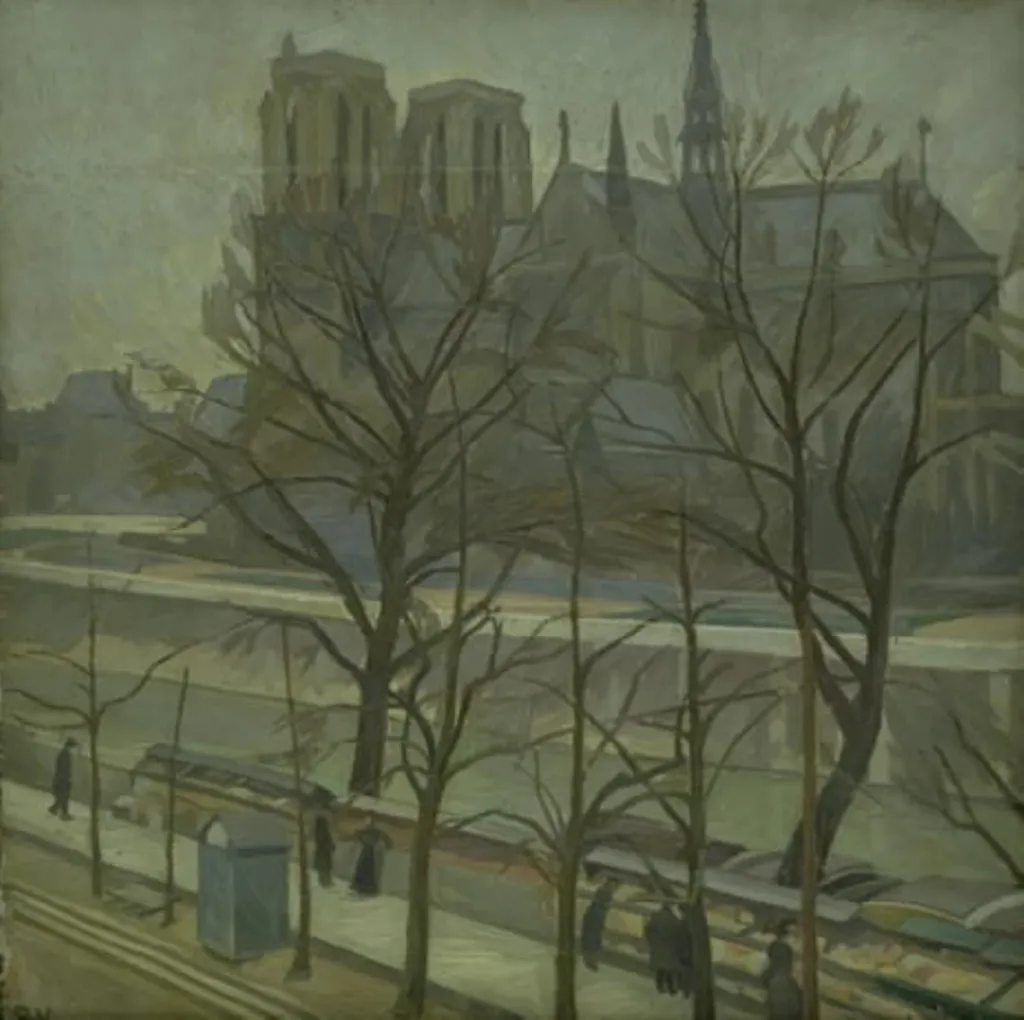
From Quai de la Tournelle, Paris is a photography by Unknown. It dates from 1912 and is held in the collection of the Statens Museum for Kunst. Created in 1912, this photograph captures a quiet winter scene along the Quai de la Tournelle in Paris.
About this work
Overview
The work is held in the collection of the Museum of Ethnography, where it is valued for its documentary tone and quiet observation of daily life.
Created in 1912, this photograph captures a quiet winter scene along the Quai de la Tournelle in Paris. The image presents an unadorned urban landscape, devoid of spectacle or movement. Its composition emphasizes stillness and atmosphere, focusing on ordinary architecture and the subtle effects of seasonal weather. The work is held in the collection of the Museum of Ethnography, where it is valued for its documentary tone and quiet observation of daily life.
Subject & Meaning
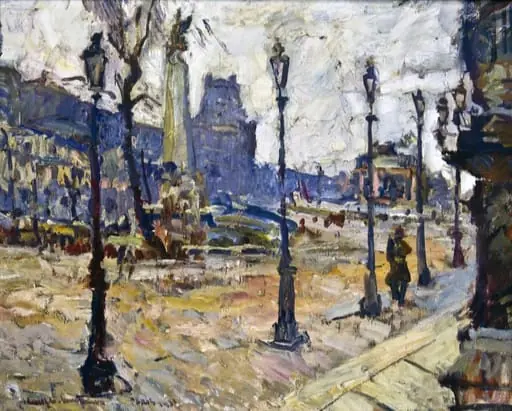
The photograph depicts a solitary pedestrian moving along a rain-slicked sidewalk beneath bare trees and closely spaced buildings with steeply pitched roofs. No landmarks or notable events are present—only the routine rhythm of urban existence. The absence of human interaction and the muted tones suggest introspection, inviting contemplation of solitude within the city. The scene resists narrative, instead offering a moment suspended in time.
Technique & Style
The image employs a restrained palette of grays and muted browns, with soft contrasts that enhance the sense of cold and damp. Sharp outlines are softened by atmospheric conditions, lending the scene a quiet, almost ethereal quality. The composition is deliberately uncluttered, using the verticality of trees and chimneys to frame the empty space of the street. The technical approach prioritizes tonal nuance over detail, reinforcing the mood over the subject.
History & Provenance
The photograph was made in 1912 and entered the Museum of Ethnography’s collection shortly thereafter. Its acquisition reflects early 20th-century interest in photographic records of everyday environments, particularly those that captured urban life without romanticization. While the artist’s full identity remains unverified in public records, the work’s inclusion in an ethnographic context suggests its value as a cultural document rather than an artistic statement.
Context
In 1912, Paris was undergoing rapid modernization, yet this image deliberately avoids industrial or architectural spectacle. Instead, it aligns with emerging photographic practices that sought to record the ordinary—sidewalks, weather, solitary figures—as worthy of attention. Similar works by contemporaries emphasized realism and emotional restraint, reflecting a broader shift away from staged compositions toward candid observation of the urban fabric.
Legacy
The photograph contributes to a quieter strand of early modern photography that valued subtlety over drama. Though not widely exhibited or reproduced, its presence in an ethnographic collection underscores its role as a record of lived experience. It remains a quiet reference point for later photographers interested in the poetic potential of mundane urban spaces, influencing approaches that prioritize atmosphere over action.
Artist & collection

 Domestic Scene
 Giacomo and Cardinal Marco, investing Andrea, Abbot of San Zeno, with his Benefice
 The Nymph of Fontainebleau
 Portrait of a Woman
 Madonna and Child with Saints in the Enclosed Garden
 Venus and Minerva
 Family Group of Four on Sofa
 Wall painting from Room H of the Villa of P. Fannius Synistor at Boscoreale