Artwork
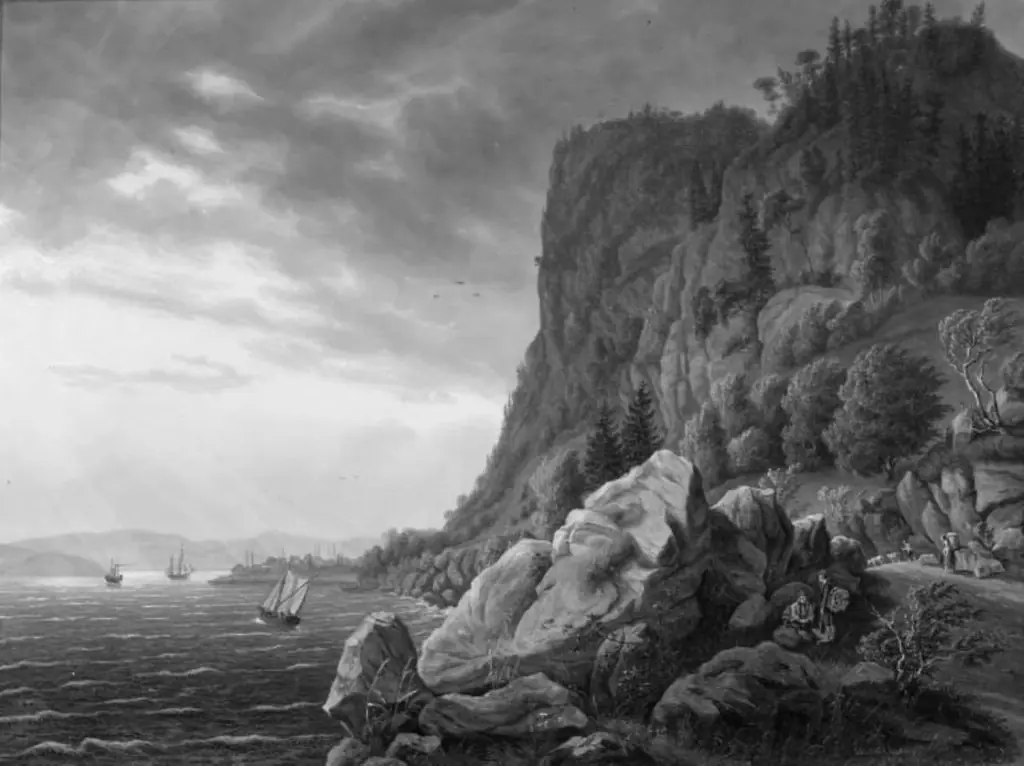
Indsejlingen til Holmestrand i Norge med vejen fra Drammen langs klippevæggen. Tidlig morgen
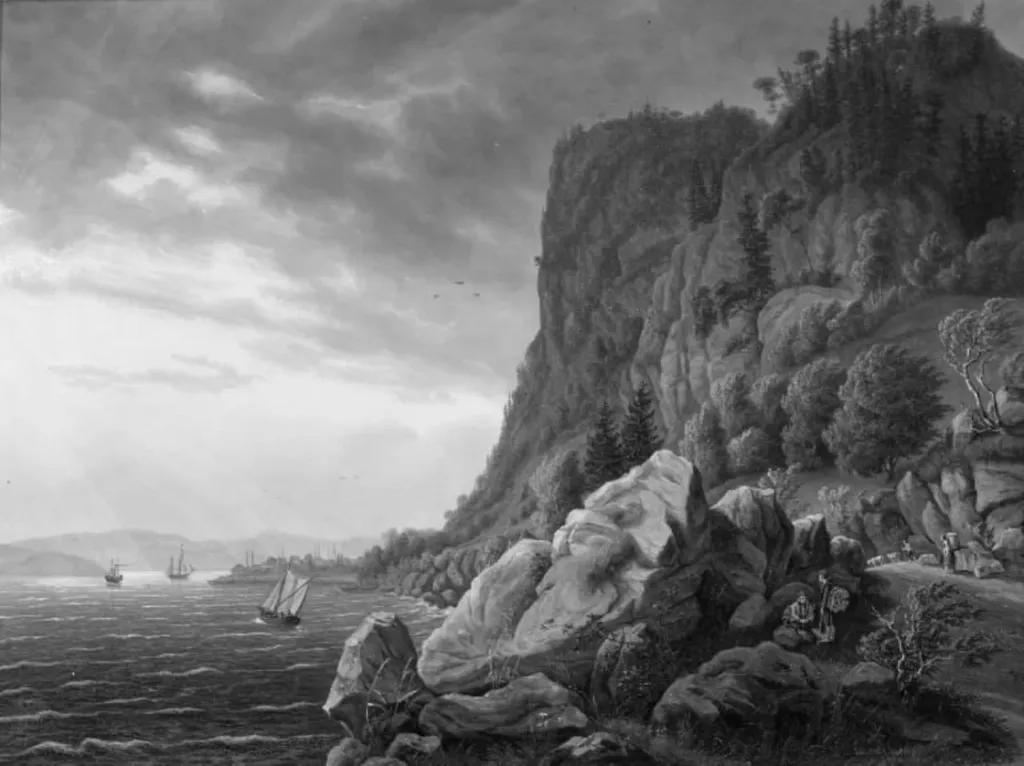
Indsejlingen til Holmestrand i Norge med vejen fra Drammen langs klippevæggen. Tidlig morgen is a photography by Unknown. It dates from 1750 and is held in the collection of the Statens Museum for Kunst. This landscape painting, dated around 1750, depicts the approach to Holmestrand, Norway, along the coastal road from Drammen.
About this work
Overview
This landscape painting, dated around 1750, depicts the approach to Holmestrand, Norway, along the coastal road from Drammen. Rendered in oil or tempera, it captures a quiet morning scene with minimal human presence. The work is part of the collection at the Museum of Ethnography, where it is preserved as an example of early Nordic topographical observation through art.
Subject & Meaning
The scene portrays a tranquil coastal route framed by a steep rock face and open water, suggesting a moment of transition between land and sea. The absence of figures emphasizes solitude and natural order. The early morning light and stillness imply a contemplative mood, possibly reflecting the quiet rhythms of rural Norwegian life rather than a narrative event.
Technique & Style
The artist employs chiaroscuro to model the cliff’s surface and the water’s surface, creating subtle gradations of light and shadow that suggest volume and spatial depth. Textures in the rock and water are rendered with careful brushwork, avoiding dramatic contrast in favor of muted, naturalistic tones. The cloudy sky softens the illumination, reinforcing the calm, early-hour atmosphere.
History & Provenance
The painting’s origins are tied to local Norwegian observation, likely made by an artist familiar with the Drammen-Holmestrand route. It entered the Museum of Ethnography’s holdings in the 19th or early 20th century, possibly as part of a broader collection documenting regional life. Its attribution remains unverified, and no documented commission or exhibition history is known.
Context
Created during a period when Scandinavian artists increasingly turned to native landscapes, this work reflects a growing interest in depicting local geography with observational accuracy. Unlike grand historical or mythological scenes, it focuses on an ordinary coastal passage, aligning with emerging trends in Nordic art that valued quiet realism over idealization.
Legacy
Though not widely exhibited or reproduced, the painting contributes to the historical record of Norwegian landscape representation. Its restrained style and attention to natural detail offer insight into pre-modern visual documentation of the region’s topography, influencing later generations interested in authentic depictions of Nordic environments.
Artist & collection

 Domestic Scene
 Giacomo and Cardinal Marco, investing Andrea, Abbot of San Zeno, with his Benefice
 The Nymph of Fontainebleau
 Portrait of a Woman
 Madonna and Child with Saints in the Enclosed Garden
 Venus and Minerva
 Family Group of Four on Sofa
 Wall painting from Room H of the Villa of P. Fannius Synistor at Boscoreale
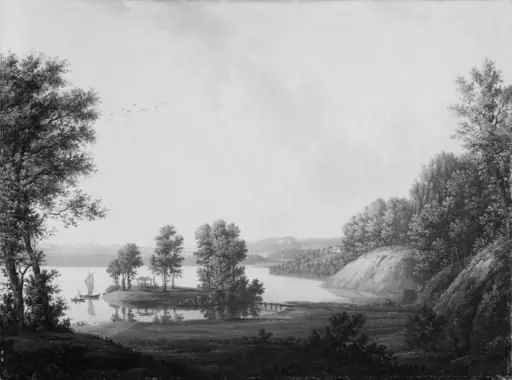 Prospekt fra Dronninggård over Furesøen. I forgrunden øen Chevallier med det kinesiske lysthus
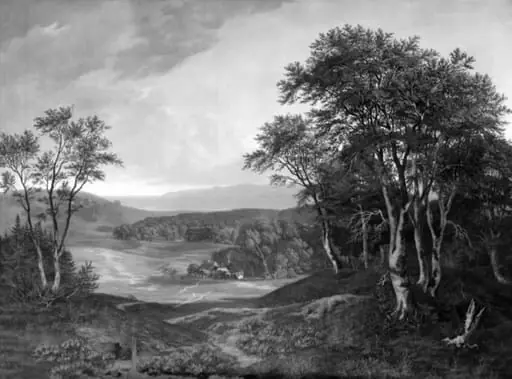 Parti ved Esrom med udsigt mod Kattegat
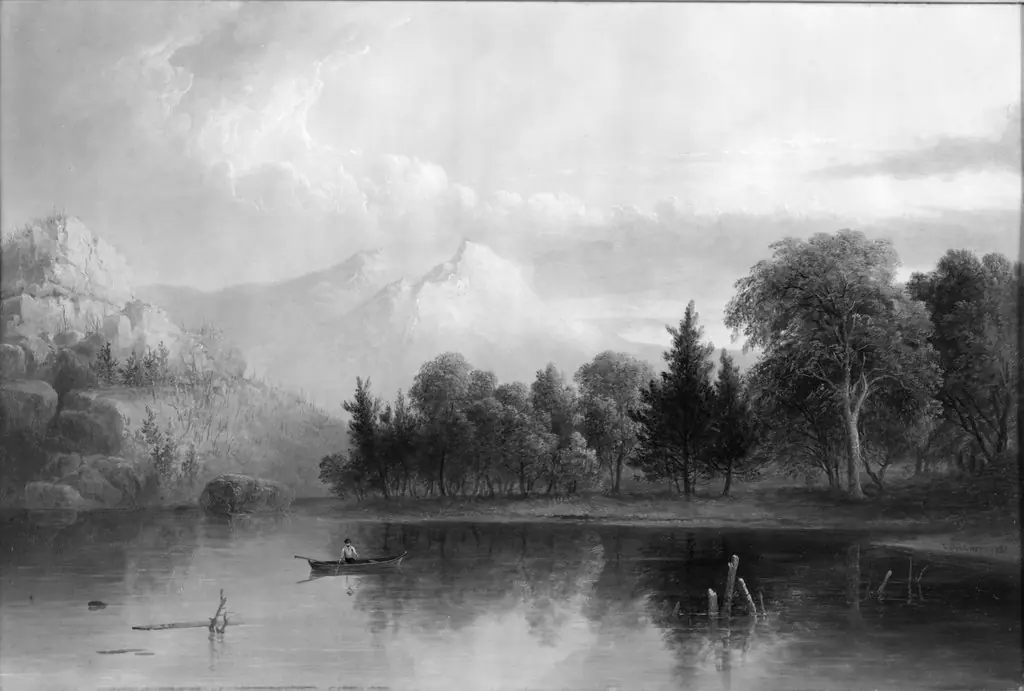 Mountain and Lake
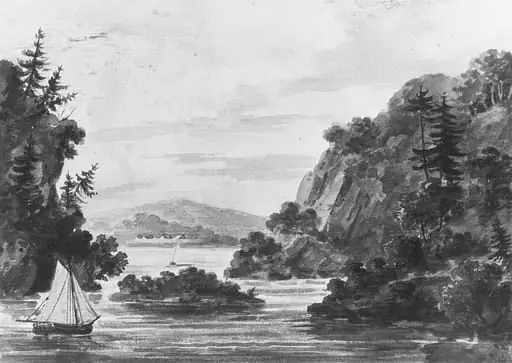 View on the Hudson River (Copy after Engraving by Weld and S. Springsguth in Weld, Travels Through the States of North America, 1807)
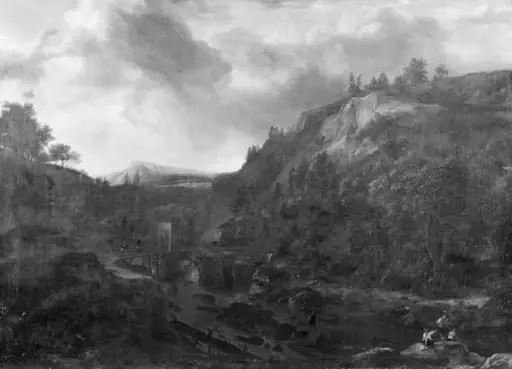 Mountain Scenery with a River
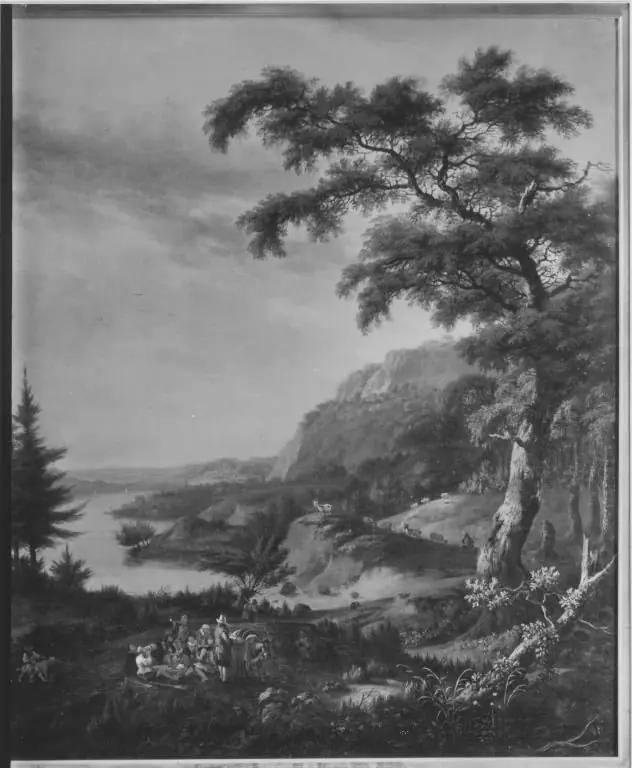 Flusslandschaft
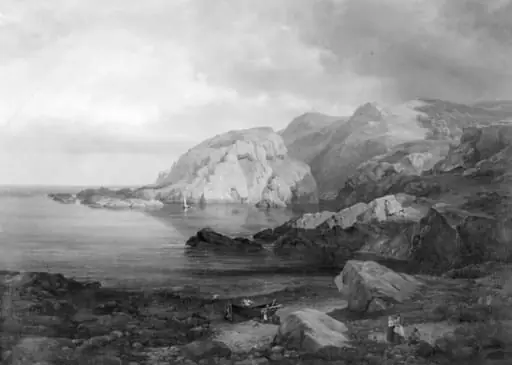 Klippekyst, Kullen
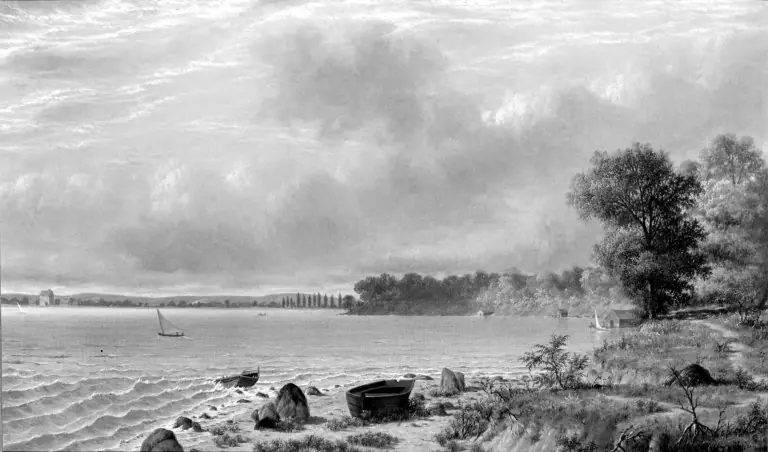 Lake Mendota, Madison, Wisconsin
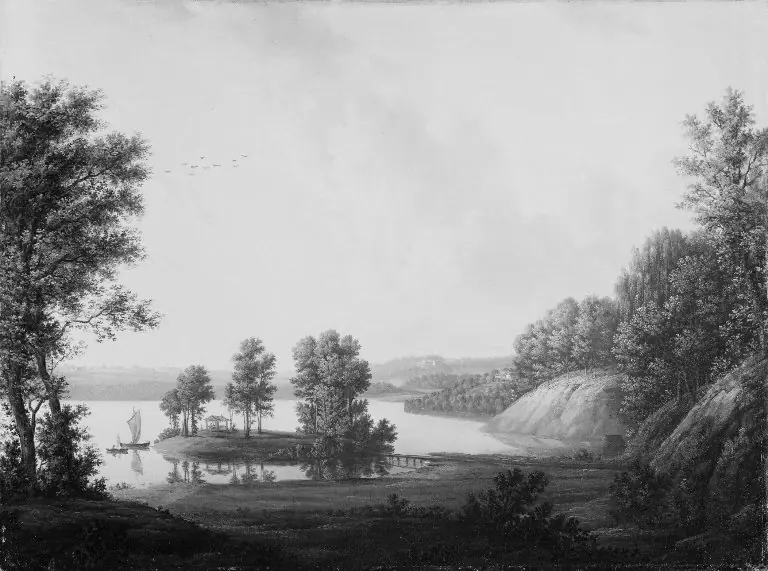 Prospekt fra Dronninggård over Furesøen. I forgrunden øen Chevallier med det kinesiske lysthus
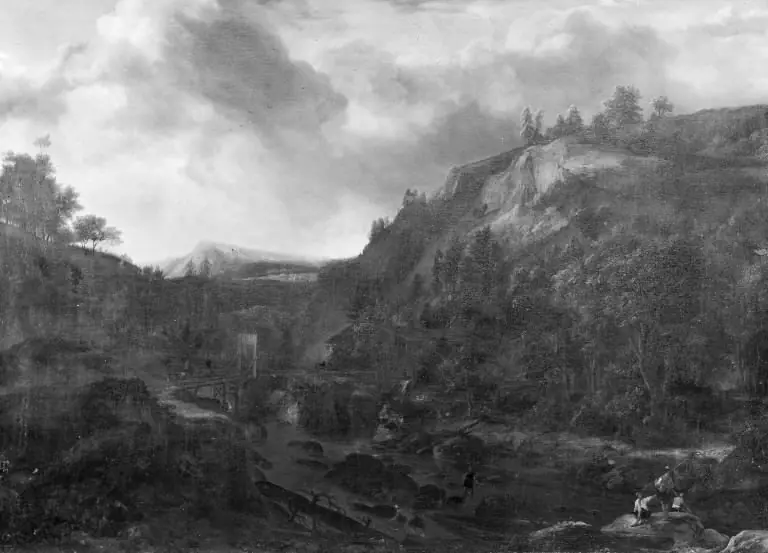 Mountain Scenery with a River
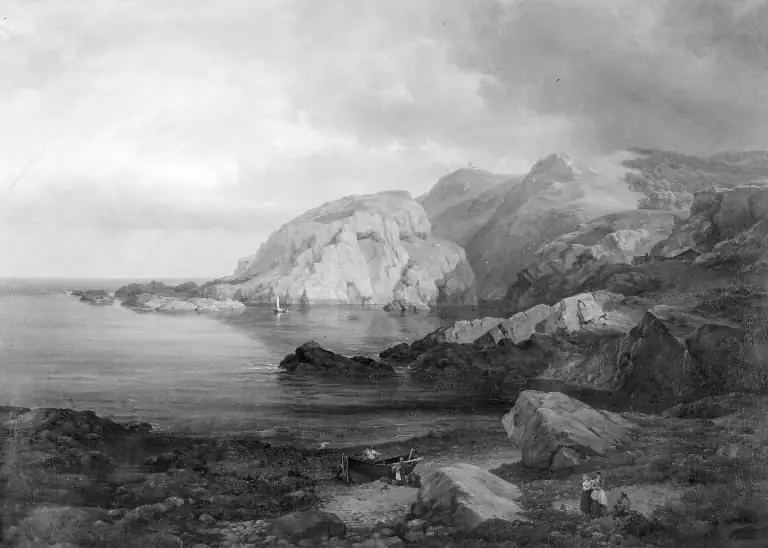 Klippekyst, Kullen
 Indsejlingen til Holmestrand i Norge med vejen fra Drammen langs klippevæggen. Tidlig morgen