Artwork
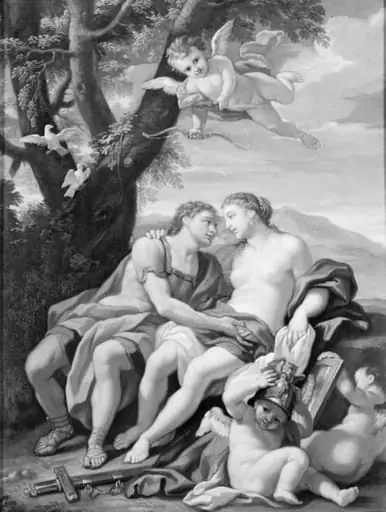
Hymen og Amor
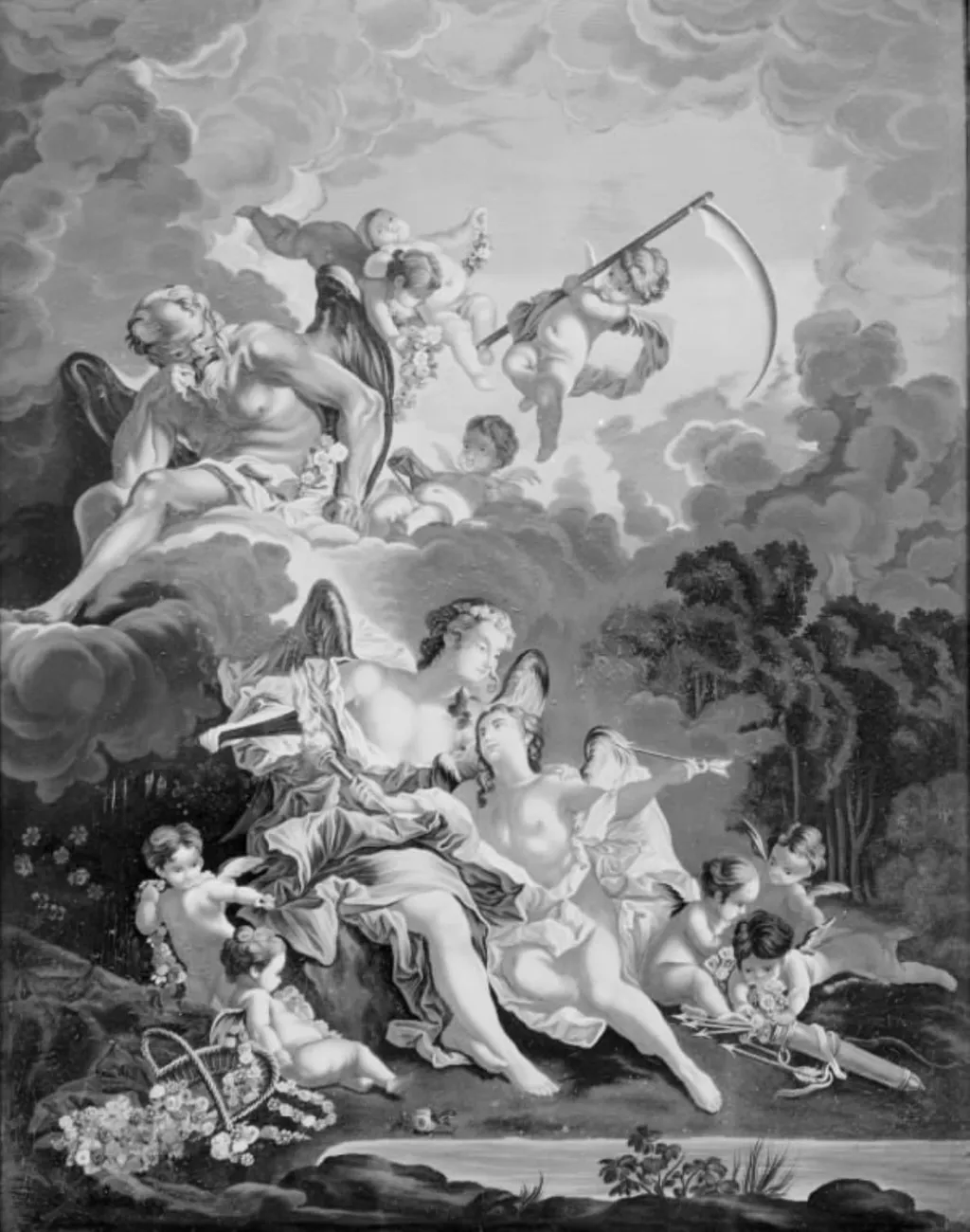
Hymen og Amor is an unspecified work on paper by Unknown. It dates from 1750 and is held in the collection of the Statens Museum for Kunst.
About this work
Overview
The composition blends allegory with naturalistic elements, using layered glazes to achieve subtle tonal transitions and a luminous surface.
Created around 1750, Hymen og Amor is a watercolor painting held in the collection of the Museum of Ethnography. It portrays a mythological scene featuring symbolic figures surrounded by cherubs in a pastoral setting. The composition blends allegory with naturalistic elements, using layered glazes to achieve subtle tonal transitions and a luminous surface. The work reflects 18th-century interest in classical themes rendered through intimate, decorative means.
Subject & Meaning
The central figures represent Hymen, the god of marriage, depicted with a scythe—symbolizing the cutting of the nuptial veil—and Amor, the god of love, armed with a bow and arrow. Surrounding cherubs engage in playful acts with flowers and objects, evoking the rituals and joys of union. The imagery conveys a symbolic narrative of love and matrimony, rooted in classical mythology but adapted into a gentle, celebratory vision suited to private contemplation.
Technique & Style
The artist employed watercolor with glazing techniques, applying thin, transparent layers to build depth and luminosity. Delicate brushwork defines the figures and cherubs, while the background merges soft washes of green and blue to suggest foliage and sky. The style is refined yet intimate, favoring atmospheric harmony over dramatic contrast. This method enhances the ethereal quality of the scene, aligning with contemporary tastes for lyrical, poetic imagery.
History & Provenance
The painting entered the Museum of Ethnography’s collection in the late 19th or early 20th century, though its earlier ownership remains undocumented. Its attribution to an artist identified as 34306_person is based on archival records, though little is known about the creator’s life or other works. The piece likely originated in a private European collection, possibly commissioned for domestic decoration rather than public display.
Context
In mid-18th-century Europe, mythological allegories were popular in decorative arts, especially among the educated elite. Hymen og Amor reflects this trend, adapting classical symbols into a gentle, accessible format. Unlike grand historical paintings, this work emphasizes charm and symbolism over narrative complexity, aligning with the Rococo sensibility that favored intimacy, elegance, and emotional nuance over monumental scale.
Legacy
Though not widely exhibited or studied, Hymen og Amor remains a quiet example of how classical themes were reinterpreted in private, decorative contexts. Its preservation in an ethnographic museum underscores its value as a cultural artifact rather than a canonical artwork. The piece contributes to understanding the breadth of 18th-century visual culture beyond major artistic centers and canonical masters.
Artist & collection

 Domestic Scene
 Giacomo and Cardinal Marco, investing Andrea, Abbot of San Zeno, with his Benefice
 The Nymph of Fontainebleau
 Portrait of a Woman
 Madonna and Child with Saints in the Enclosed Garden
 Venus and Minerva
 Family Group of Four on Sofa
 Wall painting from Room H of the Villa of P. Fannius Synistor at Boscoreale
 Fehltritt der Kallisto
 Apotheose der Maria Anna Luisa de' Medici
 Enthauptung Johannes des Täufers
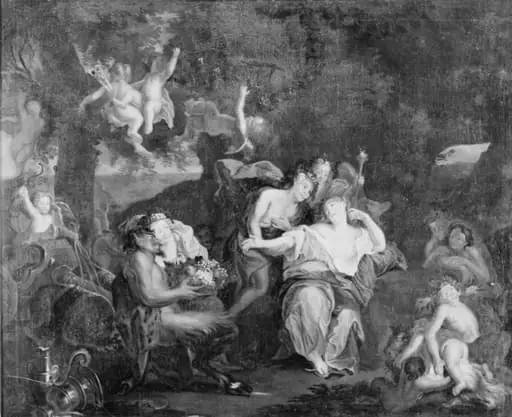 Bacchus og Ariadne sidder sammen i et landskab omgivne af amoriner, bacchantinder og satyrer
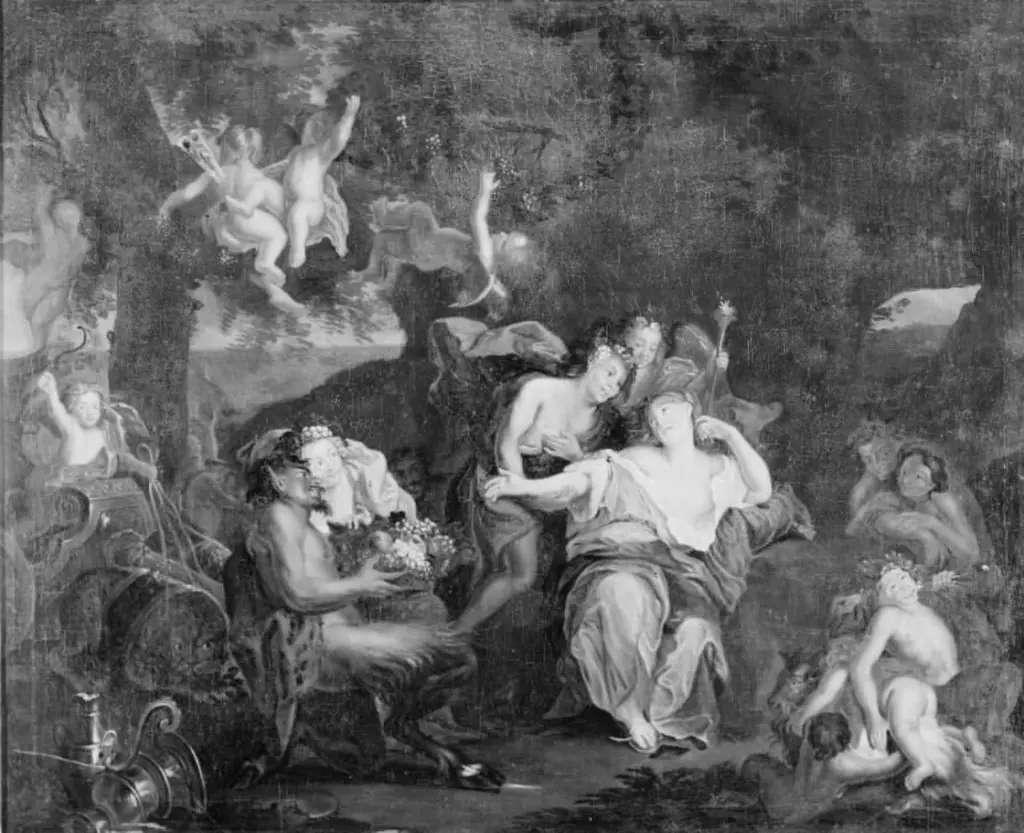 Bacchus og Ariadne sidder sammen i et landskab omgivne af amoriner, bacchantinder og satyrer
 Allegorical Portrait of Pierre Buirette de Belloy
 Neptun und Koronis
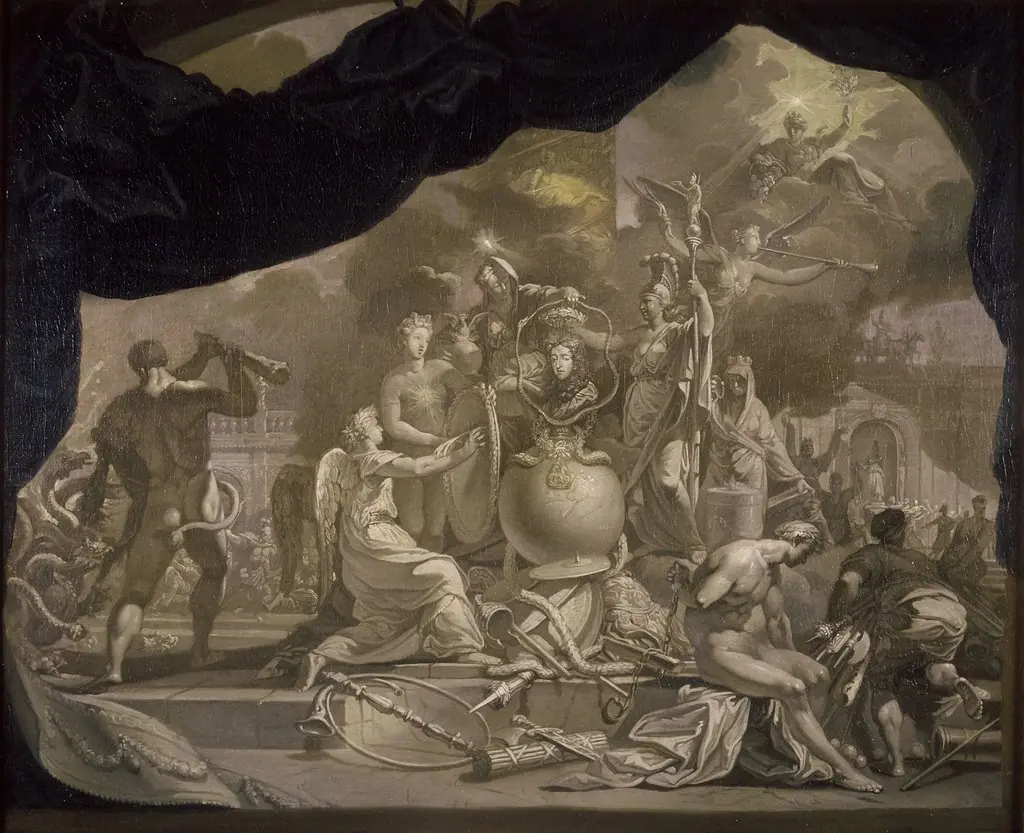 The Glorification of Stadholder-King William III (1650-1702)
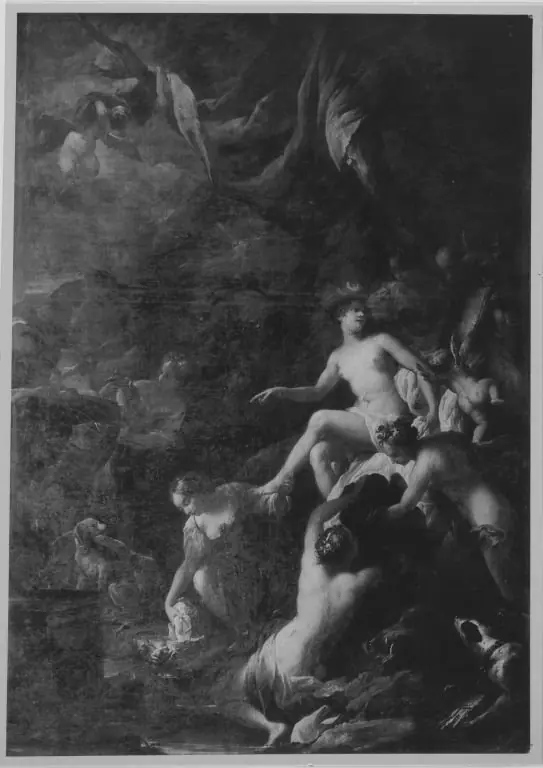 Das Bad der Diana
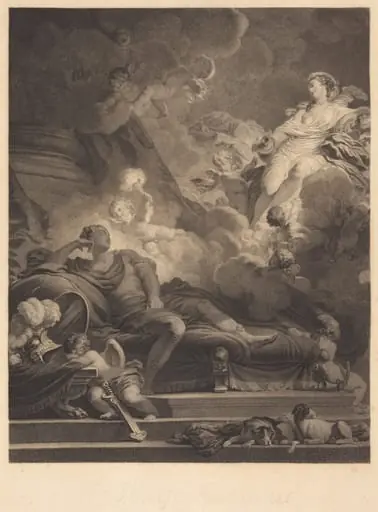 Le Songe d'Amour (Love's Dream)
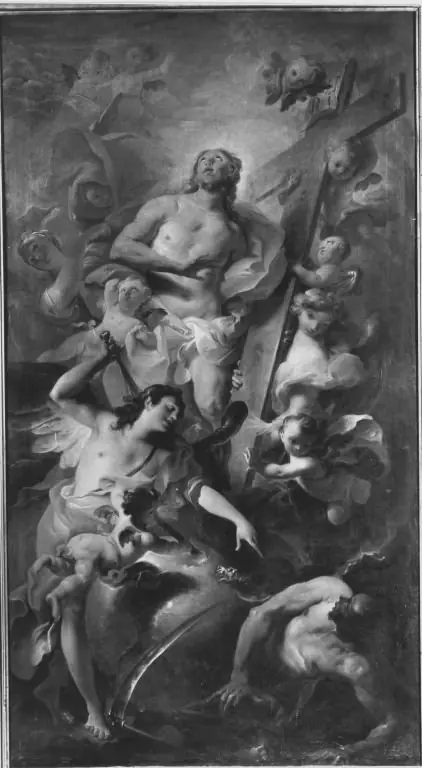 Christus als Überwinder
 Mars, Venus og Amor