Artwork
Le Songe d'Amour (Love's Dream)
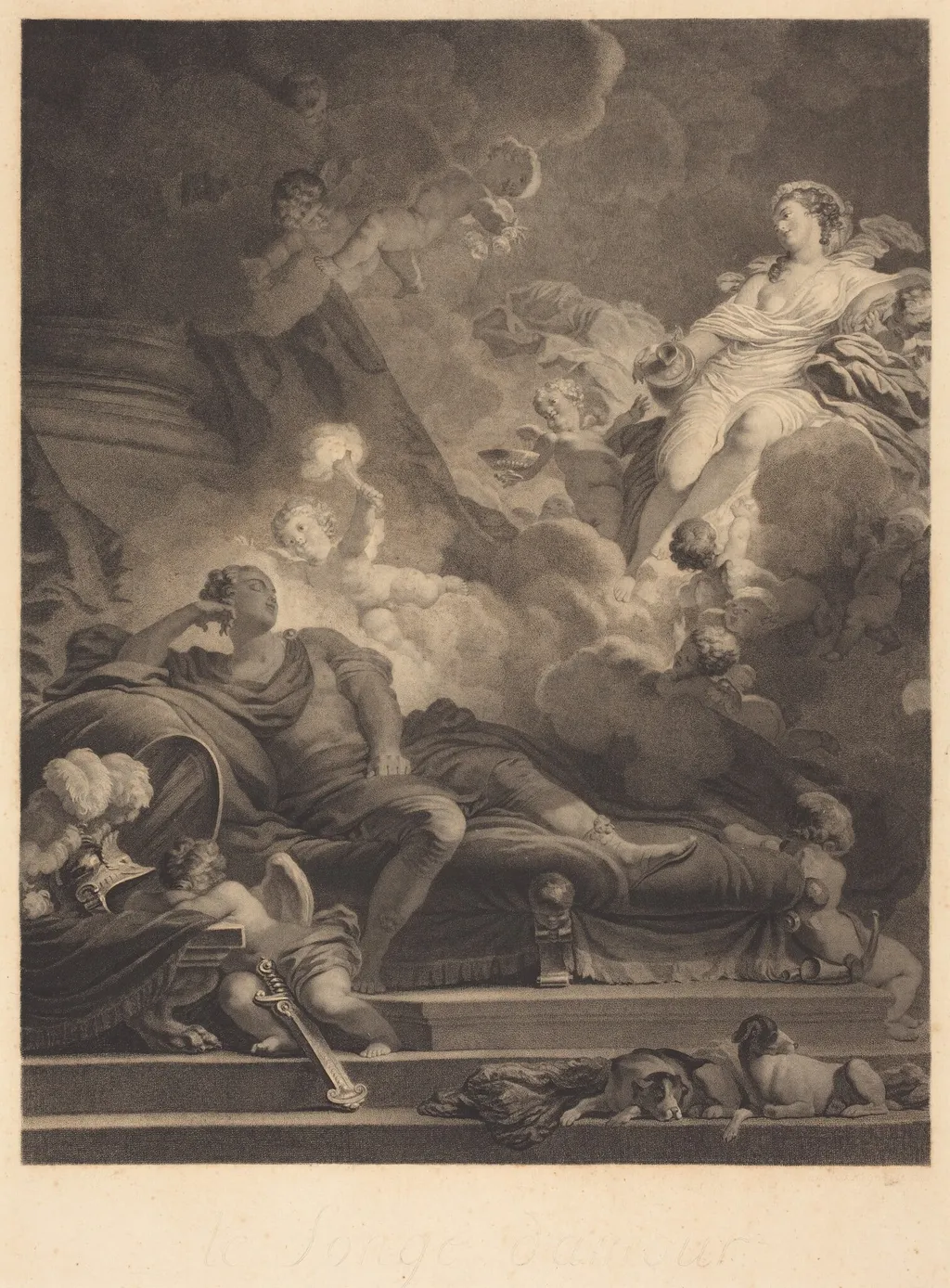
Le Songe d'Amour (Love's Dream) is an ink print by the Romanticist artist Nicolas François Regnault. It dates from 1785 and is held in the collection of the National Gallery of Art.
About this work
Overview
Le Songe d'Amour, executed in 1785 by French printmaker Nicolas François Regnault, is a stipple etching produced as a proof prior to the addition of its engraved title. The work presents a tranquil, dreamlike tableau that blends classical costume with celestial motifs, inviting contemplation of love’s idealized realm.
Subject & Meaning
At the composition’s centre lies a reclining male figure in classical attire, his shoulder draped with a cloth, suggesting repose. Above him, a woman in a flowing white robe sits upon a cloud, her gaze directed downward, while surrounding cherubic figures engage with a sword and a torch. The arrangement evokes an allegorical vision of love as a serene, heavenly dream.
Technique & Style
Regnault employed the stipple etching method, creating delicate tonal variations through fine, closely spaced dots. This approach yields soft transitions of light and shadow, particularly evident in the subtle gray gradient of the background and the gentle illumination of the figures, enhancing the work’s ethereal quality.
History & Provenance
The print originates from a proof stage, produced before the final engraving of its title, indicating its role in the artist’s preparatory process. While specific ownership records are scarce, the piece is documented as part of Regnault’s output during the late eighteenth century, reflecting his engagement with allegorical subjects.
Context
Created in the waning years of the Ancien Régime, the image aligns with contemporary neoclassical tastes for mythological and pastoral themes. The inclusion of cherubs and classical dress mirrors the period’s fascination with idealized antiquity and the romanticization of love as a lofty, almost divine experience.
Artist & collection


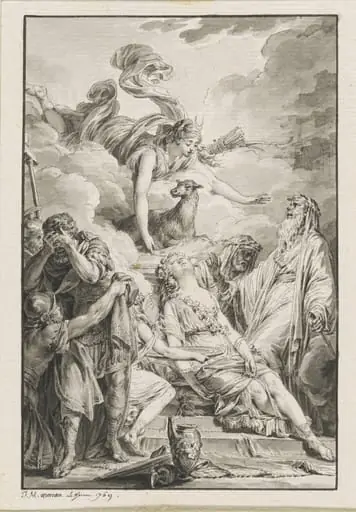 The Sacrifice of Iphigenia
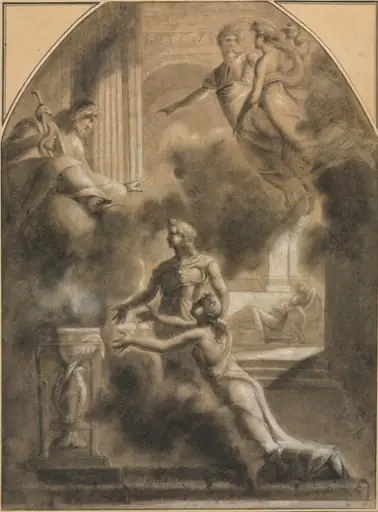 Mythological Scene
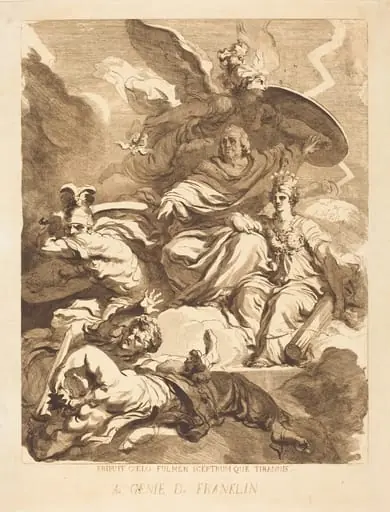 The Genius of Franklin (Au Génie de Franklin)
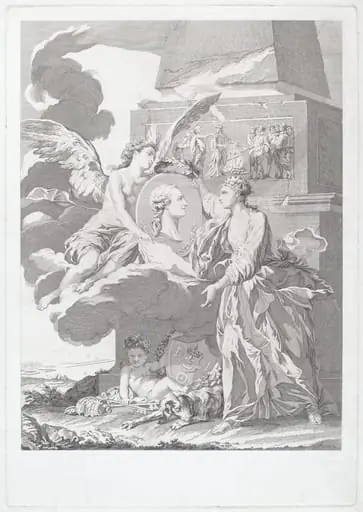 Allegorical Portrait of Pierre Buirette de Belloy
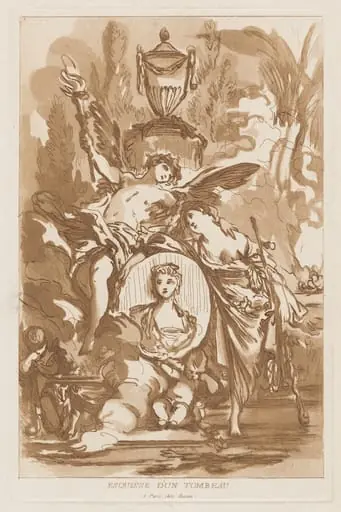 Esquisse d’un tombeau (Sketch for a Tomb)
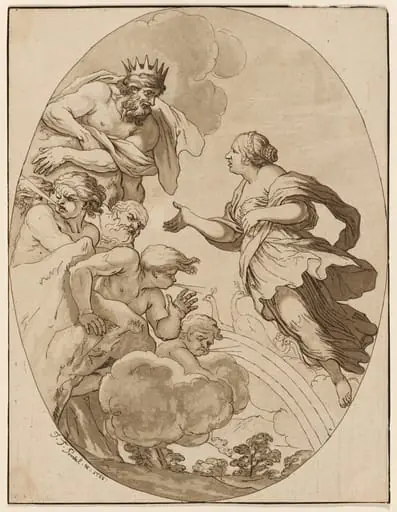 Jupiter and Juno
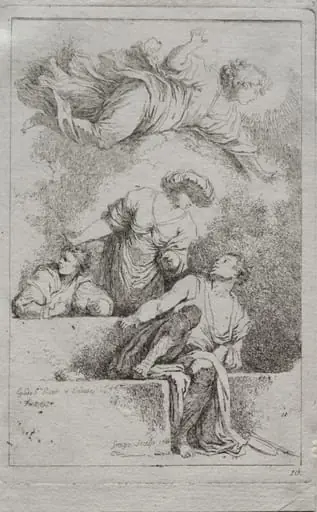 The Disciples at the Tomb
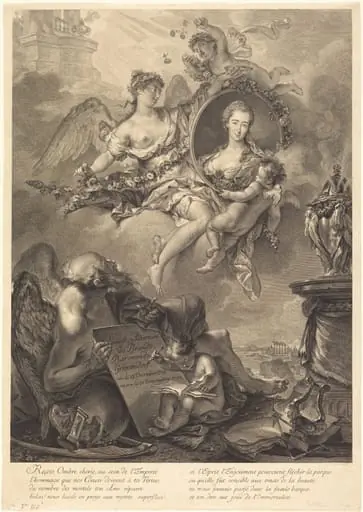 Louise Albertine de Brandt, Baroness von Grapendorf
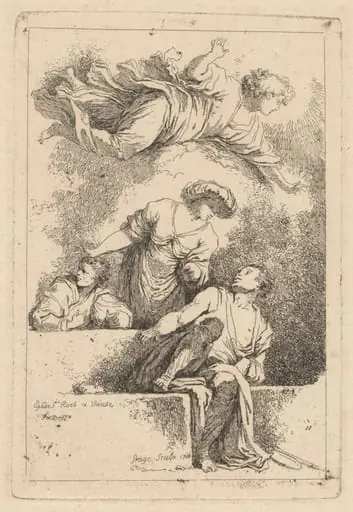 The Disciples at the Tomb
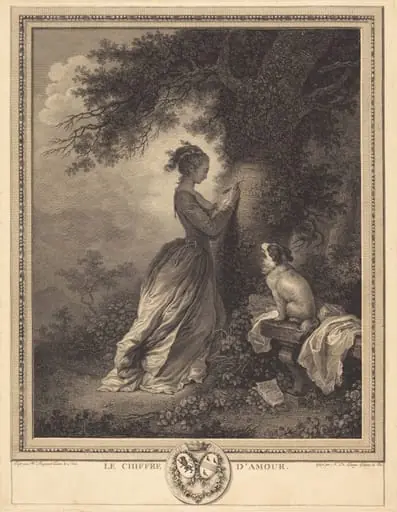 Le Chiffre d'amour