Artwork
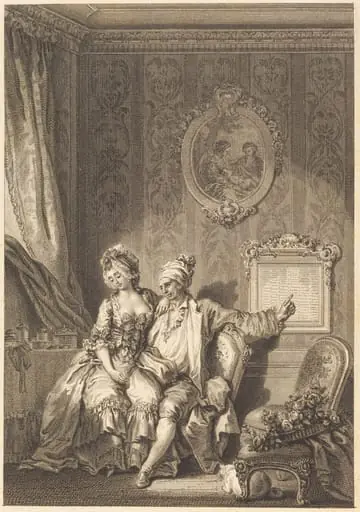
Ung kvinde der spejler sig, mens en gammel mand ser til
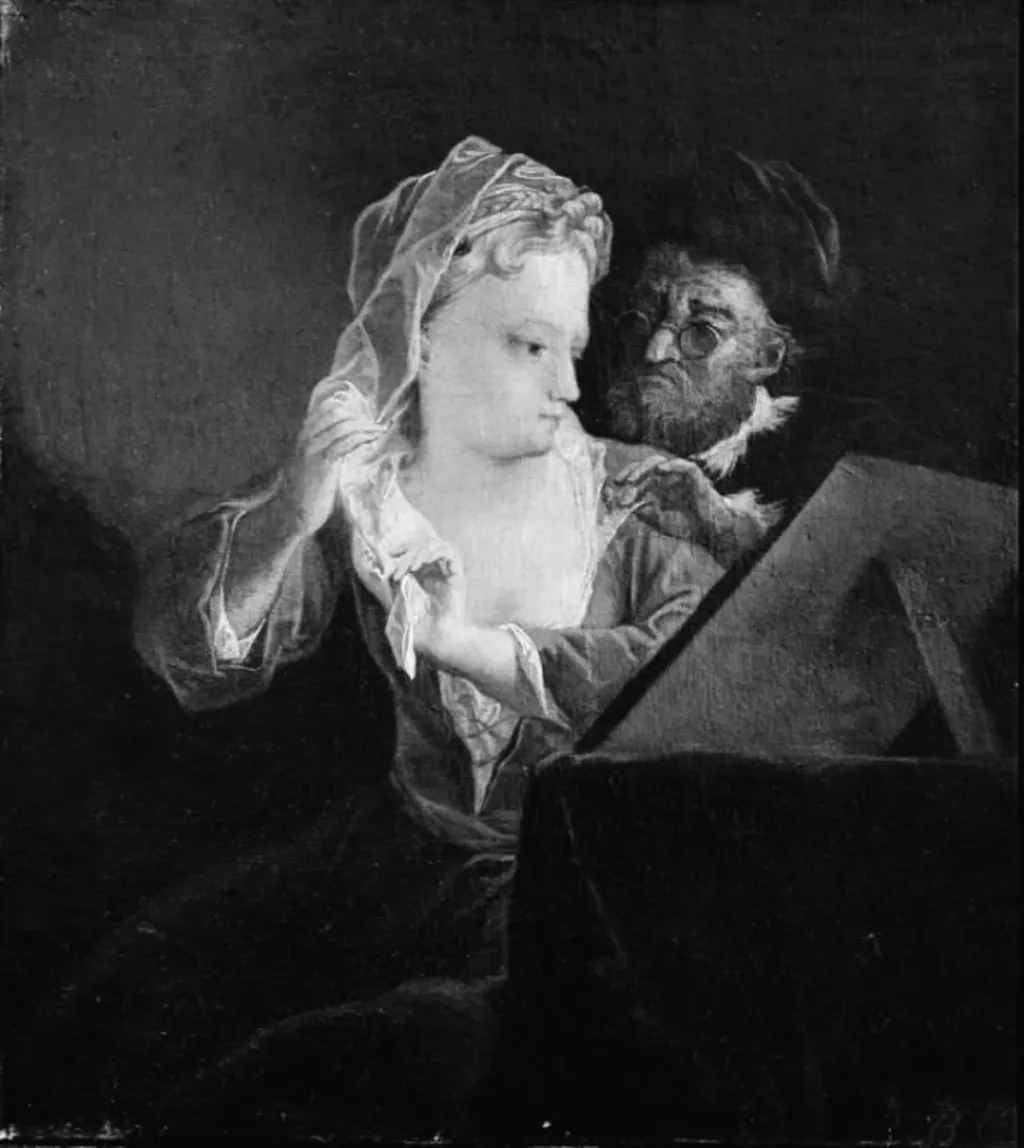
Ung kvinde der spejler sig, mens en gammel mand ser til is a photography by Unknown. It dates from 1750 and is held in the collection of the Statens Museum for Kunst.
About this work
Overview
The image is held in the collection of the Museum of Ethnography.
This black-and-white photograph, dated around 1750, depicts a quiet domestic moment: a young woman gazing into a mirror while an older man stands behind her, his hand resting on her shoulder. The image is held in the collection of the Museum of Ethnography. Though labeled as an image, its style and context suggest it may be a photographic reproduction of a painted composition, rather than a direct photograph from the period.
Subject & Meaning
The scene captures a private interaction between two generations, centered on self-perception and observation. The woman’s absorbed gaze into the mirror suggests introspection, while the man’s silent presence implies guardianship or quiet scrutiny. The raised hand near her head and his touch on her shoulder reinforce a physical and emotional closeness, hinting at themes of identity, aging, and familial duty within a domestic setting.
Technique & Style
The composition relies on subtle contrasts of light and shadow to define form and mood, drawing attention to the figures’ gestures and the mirror’s reflective surface. The framing is intimate, with minimal background detail, focusing attention on the interaction. The tonal range and soft modeling suggest a deliberate use of chiaroscuro, a technique common in earlier painting traditions, adapted here to convey psychological depth.
History & Provenance
The work is attributed to an artist identified only as 34589_person, with no further biographical details available. It entered the Museum of Ethnography’s collection as part of a broader documentation of everyday life, likely acquired during the late 19th or early 20th century. Its origin as a photograph or reproduction remains unclear, but its preservation suggests it was valued for its anthropological rather than purely artistic significance.
Context
Created in the mid-18th century, the image reflects societal norms around gender, age, and observation in European domestic life. Mirrors were often symbols of vanity or self-awareness, while elder figures frequently represented moral or social oversight. The quiet tension between the figures aligns with broader visual traditions that portrayed women’s self-reflection as a moment laden with unspoken social expectations.
Legacy
Though not widely exhibited or studied, the image endures as a quiet testament to the intimacy of everyday moments captured in visual culture. Its preservation in an ethnographic context underscores its value as a record of social behavior rather than artistic innovation. It continues to invite reflection on how observation, gender, and time are visually encoded in historical imagery.
Artist & collection

 Domestic Scene
 Giacomo and Cardinal Marco, investing Andrea, Abbot of San Zeno, with his Benefice
 The Nymph of Fontainebleau
 Portrait of a Woman
 Madonna and Child with Saints in the Enclosed Garden
 Venus and Minerva
 Family Group of Four on Sofa
 Wall painting from Room H of the Villa of P. Fannius Synistor at Boscoreale
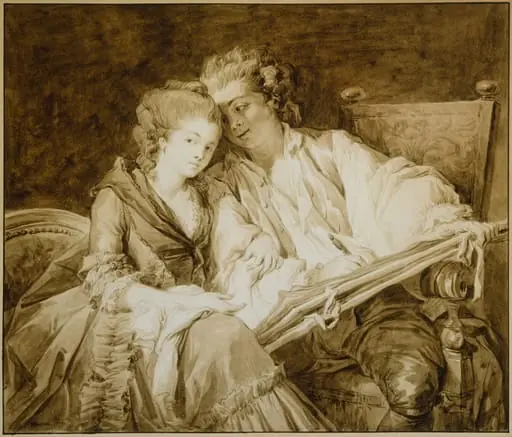 The Drawing Lesson
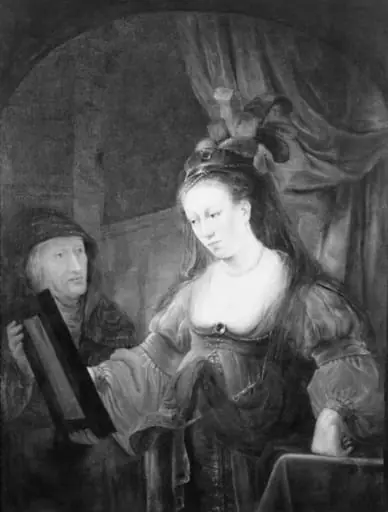 A Lady Looking at Herself in a Mirror
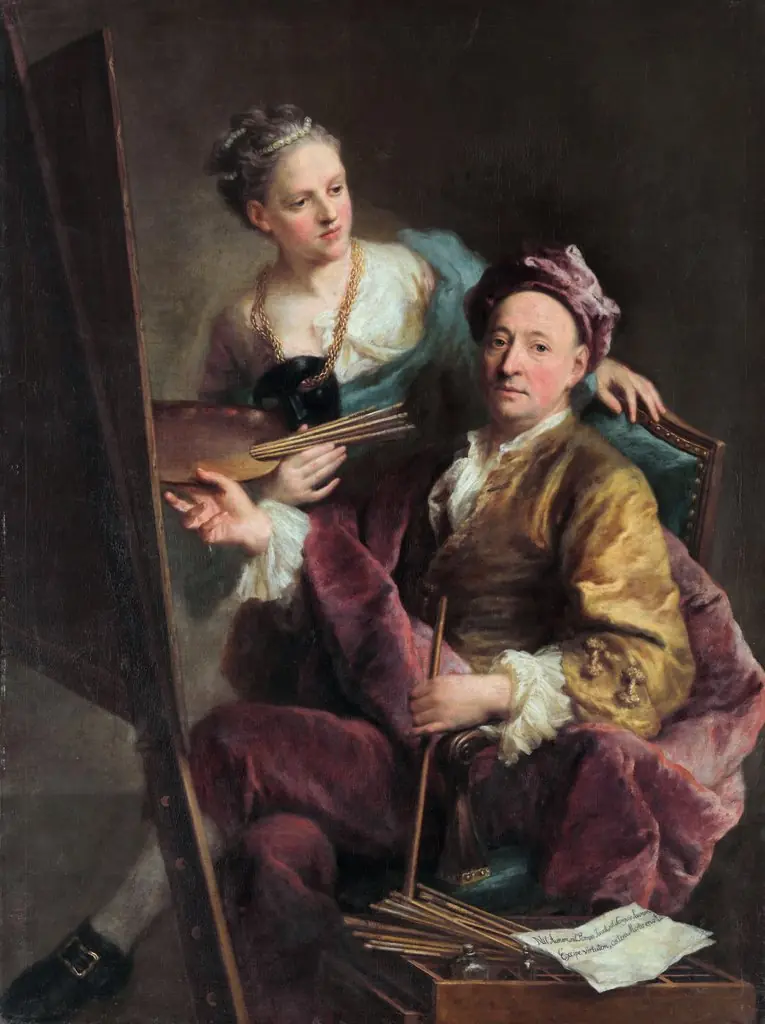 Self-portrait of the Artist with his Daughter Antonia
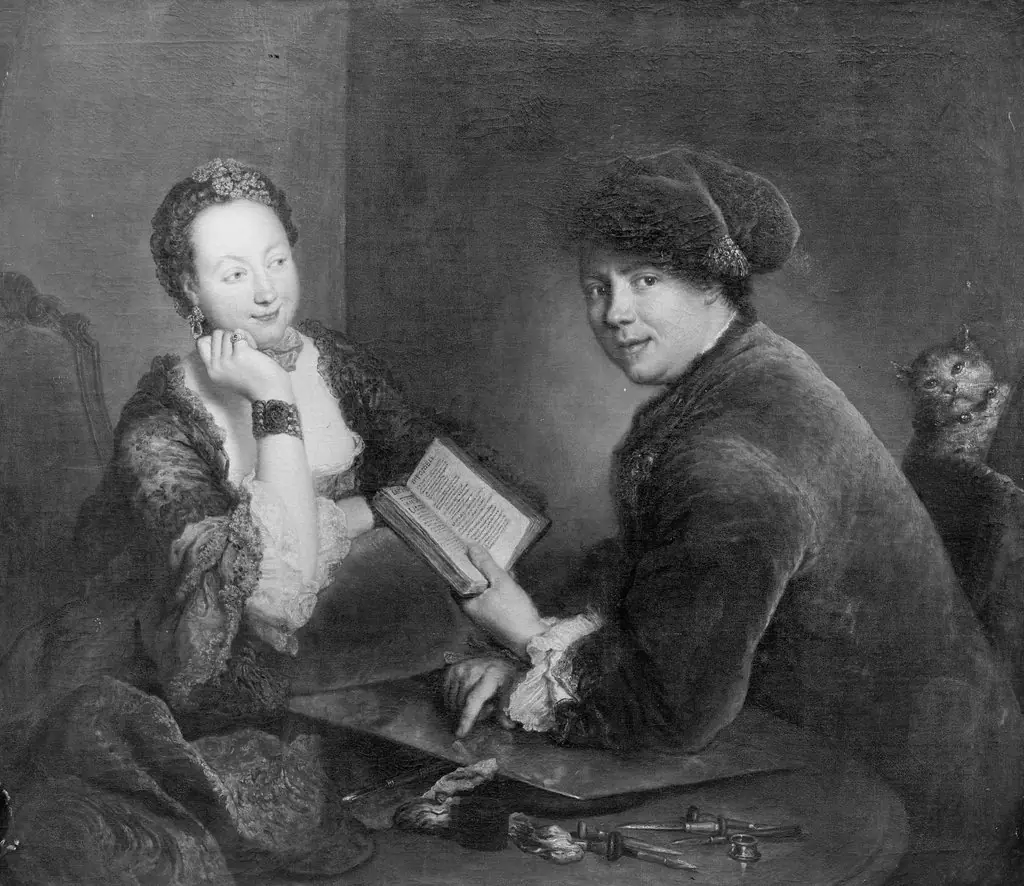 Portrait of the engraver Georg Friedrich Schmidt and his wife Dorothea Luise, born Videbant
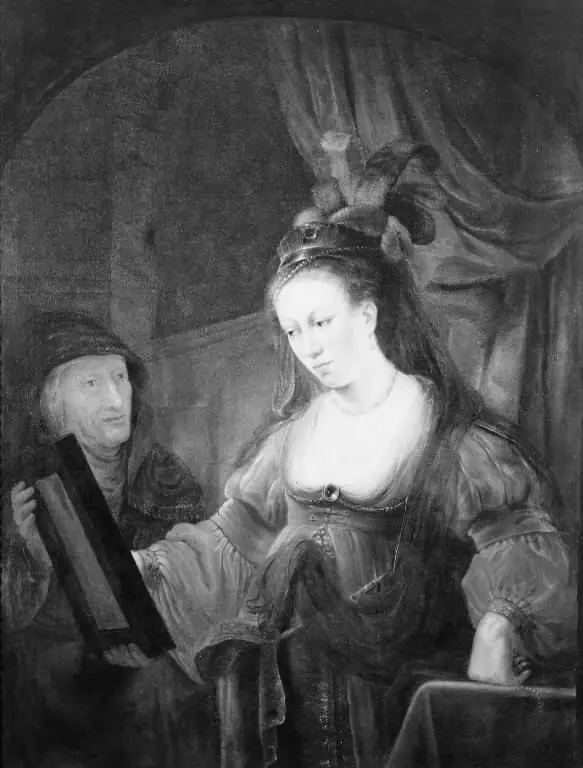 A Lady Looking at Herself in a Mirror
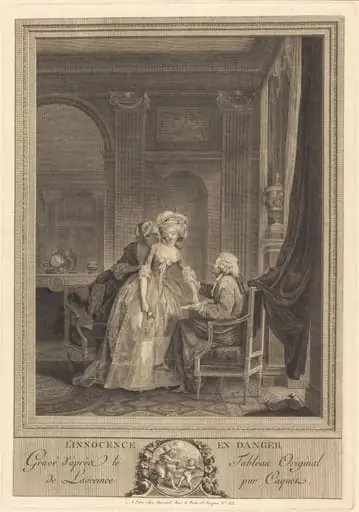 L'innocence en danger
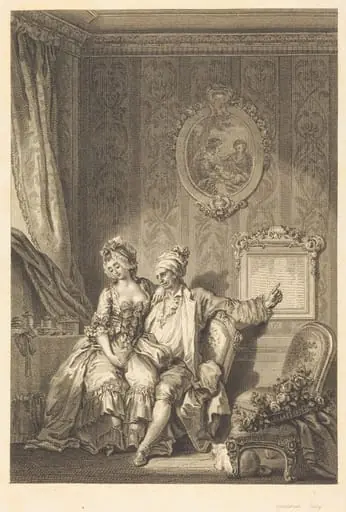 Le calendrier des viellards
 Le calendrier des viellards
 Geometrie