Artwork
A Lady Looking at Herself in a Mirror
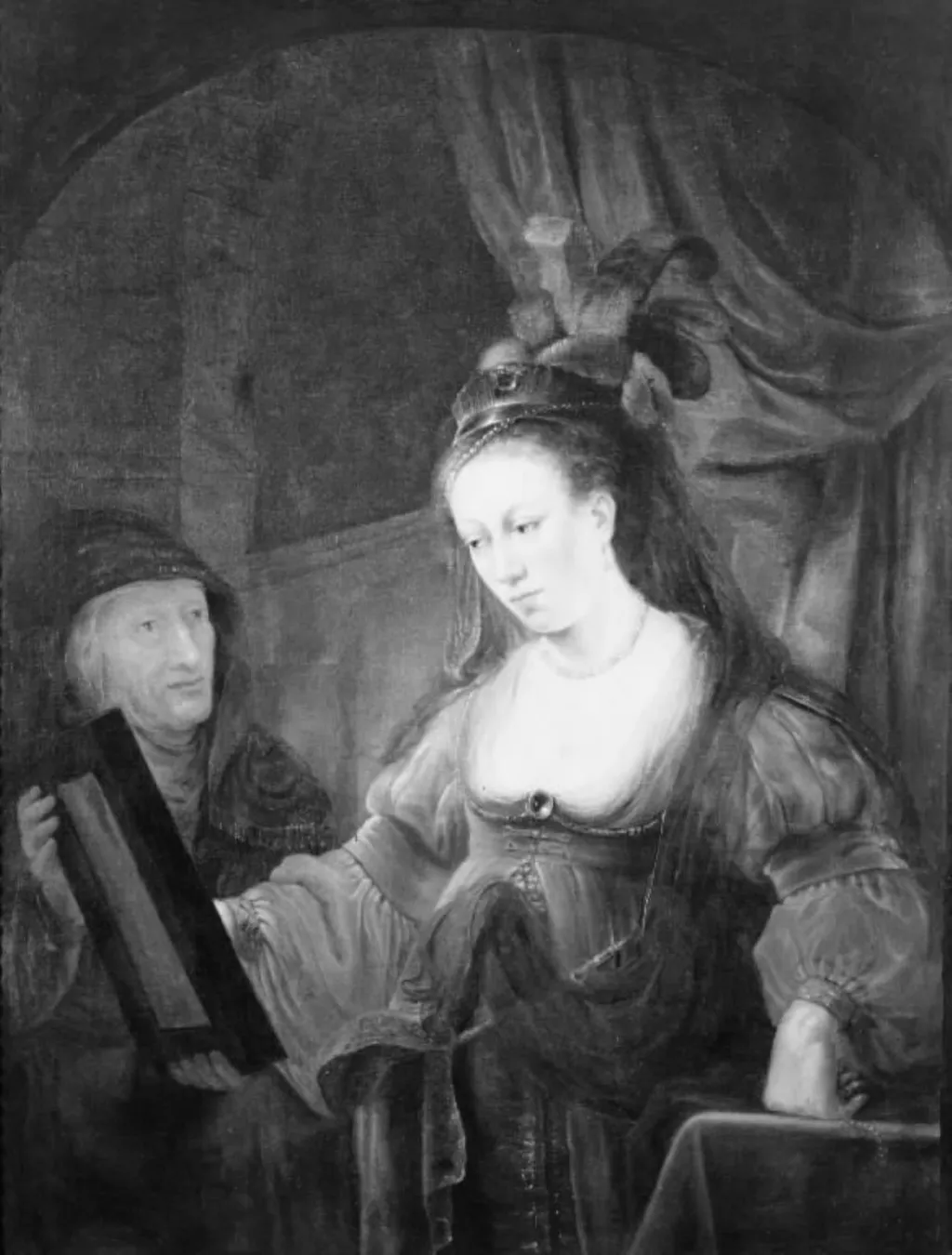
A Lady Looking at Herself in a Mirror is a photography by Unknown. It dates from 1650 and is held in the collection of the Statens Museum for Kunst.
About this work
Overview
The composition emphasizes stillness and introspection, with lighting concentrated on the woman’s face, isolating her expression from the surrounding gloom.
This black-and-white photograph, dated around 1650, depicts a woman seated with her back to the viewer, gazing into a mirror held by a male figure in dark attire. The scene is set in a dim interior, framed by heavy curtains and shadowed walls. The composition emphasizes stillness and introspection, with lighting concentrated on the woman’s face, isolating her expression from the surrounding gloom.
Subject & Meaning
The woman’s contemplative gaze into the mirror suggests self-reflection, possibly symbolizing inner awareness or the tension between appearance and identity. The presence of the man, whose role is ambiguous, may imply observation, guidance, or control. The lack of overt narrative invites interpretation, framing the moment as a quiet psychological encounter rather than a staged event.
Technique & Style
The image employs strong contrasts between light and shadow, directing attention to the woman’s face while submerging the rest of the scene in near-darkness. This use of chiaroscuro enhances emotional depth and spatial ambiguity. The figures are rendered with restrained detail, prioritizing mood over realism, and the composition’s asymmetry reinforces a sense of quiet tension.
History & Provenance
The work is held in the collection of the Museum of Ethnography, though its origins remain undocumented. It was likely produced as a study or private commission, possibly within a European context where mirror imagery carried symbolic weight. The photograph’s medium suggests it may be a later reproduction of an earlier painted composition, though no original painting has been identified.
Context
In mid-17th-century visual culture, mirrors often represented vanity, truth, or spiritual insight. While painted depictions of women with mirrors were common in Dutch and Flemish art, this image’s photographic form and ethnographic context suggest a different intent—perhaps an anthropological record or a staged tableau meant to evoke timeless themes of self-perception.
Legacy
Though not widely known, the image has contributed to discussions on gender, gaze, and representation in early visual media. Its quiet intensity continues to resonate in scholarly analyses of how identity is constructed through visual reflection, particularly in contexts where direct portraiture was constrained by social or cultural norms.
Artist & collection

 Domestic Scene
 Giacomo and Cardinal Marco, investing Andrea, Abbot of San Zeno, with his Benefice
 The Nymph of Fontainebleau
 Portrait of a Woman
 Madonna and Child with Saints in the Enclosed Garden
 Venus and Minerva
 Family Group of Four on Sofa
 Wall painting from Room H of the Villa of P. Fannius Synistor at Boscoreale
 Ung kvinde der spejler sig, mens en gammel mand ser til
 Judith with the head of Holofernes or Salome with the head of St John the Baptist
 Tvende fruentimmer, hvoraf den forreste holder en bog i sin hånd
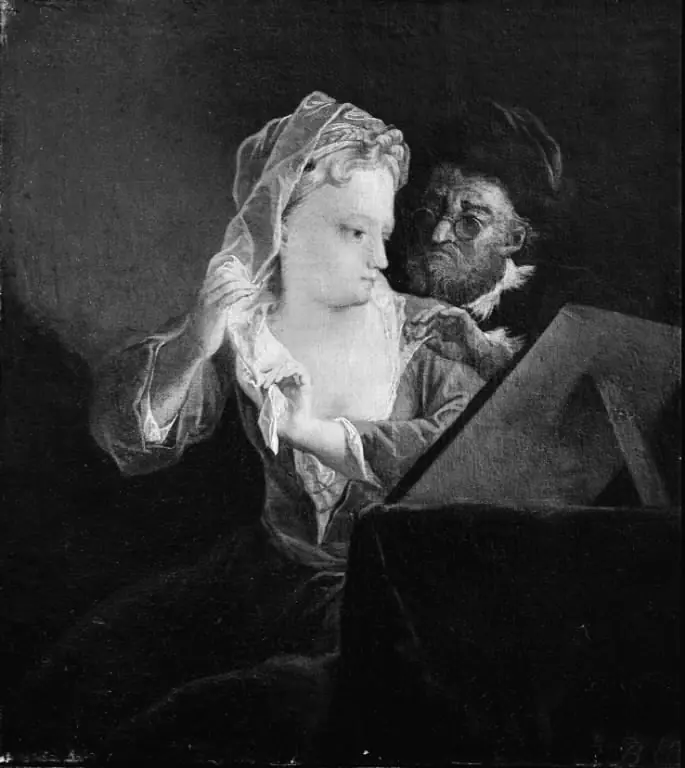 Ung kvinde der spejler sig, mens en gammel mand ser til
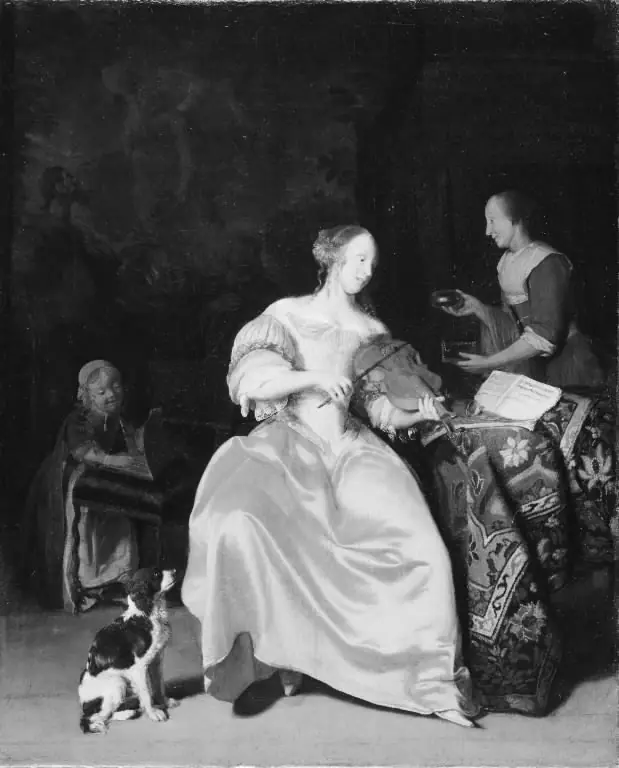 Young Woman playing the Violin
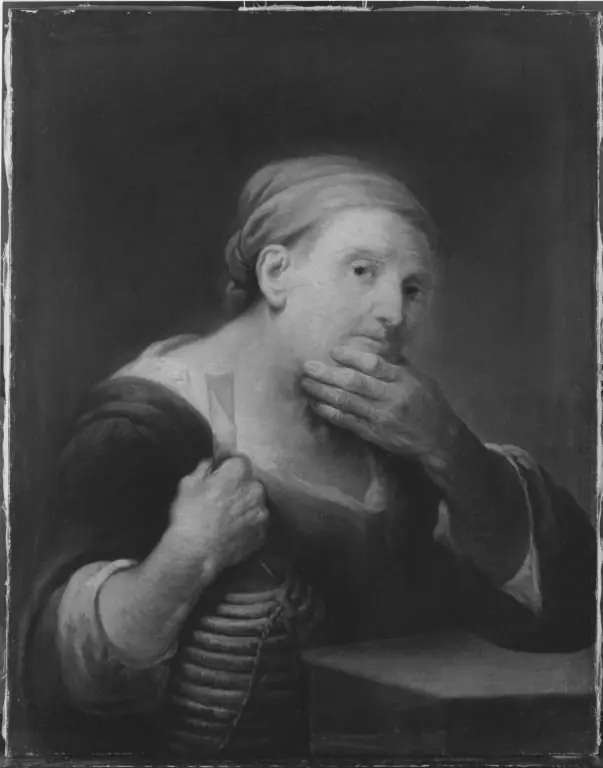 The old woman with a wine bottle
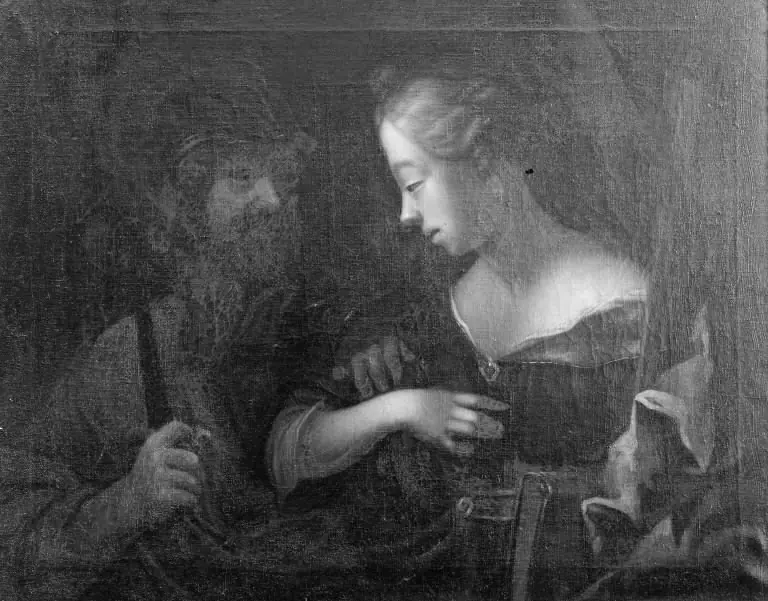 Et ungt fruentimmer i blå kjole, samtaler med en gammel mand
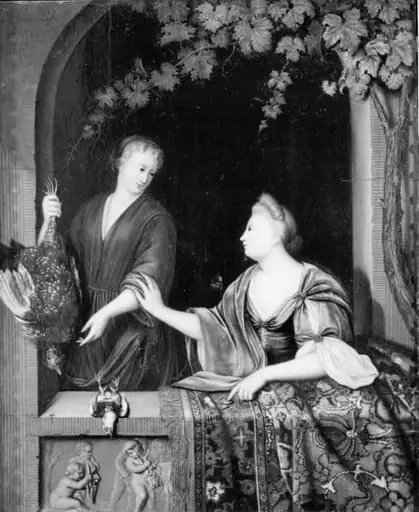 Mistress and Maid