Artwork
Chamerion angustifolium (smalbladet gederams)
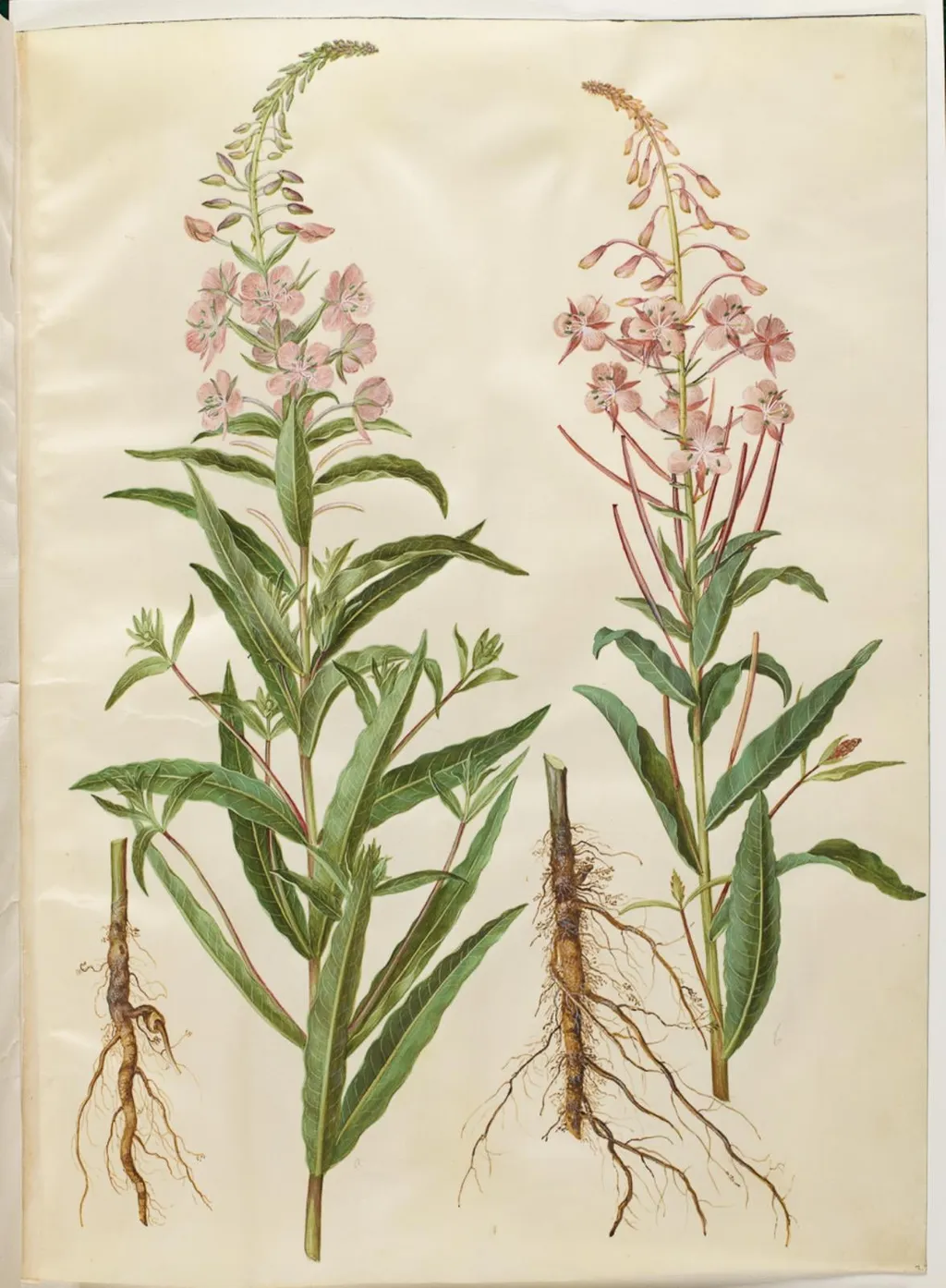
Chamerion angustifolium (smalbladet gederams) is an unspecified work on paper by Unknown. It dates from 1654 and is held in the collection of the Statens Museum for Kunst. This botanical illustration depicts Chamerion angustifolium, commonly known as narrow-leaved willowherb, rendered in watercolor around 1654.
About this work
Overview
This botanical illustration depicts Chamerion angustifolium, commonly known as narrow-leaved willowherb, rendered in watercolor around 1654.
This botanical illustration depicts Chamerion angustifolium, commonly known as narrow-leaved willowherb, rendered in watercolor around 1654. The work is part of the collection at the Museum of Ethnography. It presents the plant with scientific precision, emphasizing structural accuracy over aesthetic embellishment. The composition isolates the specimen against a neutral background to facilitate study.
Subject & Meaning
The painting focuses on a single species of flowering plant, capturing its morphology in detail. Its purpose was likely educational or taxonomic, serving as a visual record for naturalists of the period. The inclusion of root systems suggests an interest in the plant’s full anatomy, not just its visible features, reflecting early modern efforts to classify flora systematically.
Technique & Style
Executed in watercolor, the illustration uses thin, layered washes to suggest subtle variations in tone and texture. Each leaf and petal is rendered with fine, deliberate strokes, and the root structure is meticulously delineated. The absence of decorative elements or landscape context underscores a commitment to observational accuracy, typical of scientific botanical art of the time.
History & Provenance
Created circa 1654, the work is attributed to an artist identified as 35199_person, though little is known about their identity. It entered the Museum of Ethnography’s holdings through documented acquisitions, likely as part of a broader collection of natural history illustrations assembled during the 17th century for scholarly use.
Context
This piece emerged during a period when European scholars were systematically documenting plant species, often in response to global exploration and the rise of botany as a scientific discipline. Such illustrations were vital tools for communication among naturalists before photography, requiring both artistic skill and botanical knowledge.
Legacy
Though unsigned and unattributed to a well-known figure, the work exemplifies the quiet rigor of early scientific illustration. It contributes to a historical archive of plant studies that laid groundwork for modern botany. Its preservation reflects an enduring value placed on visual documentation in the natural sciences.
Artist & collection

 Domestic Scene
 Giacomo and Cardinal Marco, investing Andrea, Abbot of San Zeno, with his Benefice
 The Nymph of Fontainebleau
 Portrait of a Woman
 Madonna and Child with Saints in the Enclosed Garden
 Venus and Minerva
 Family Group of Four on Sofa
 Wall painting from Room H of the Villa of P. Fannius Synistor at Boscoreale
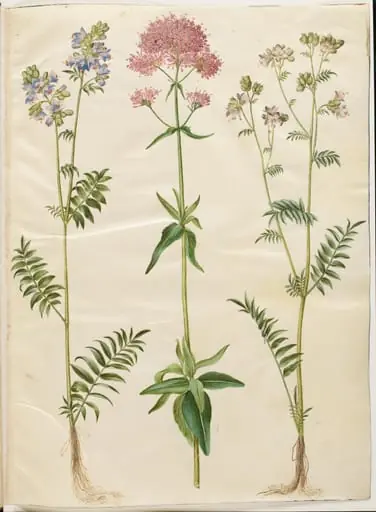 Polemonium caeruleum (almindelig jakobsstige); Centranthus ruber (rød sporebaldrian)
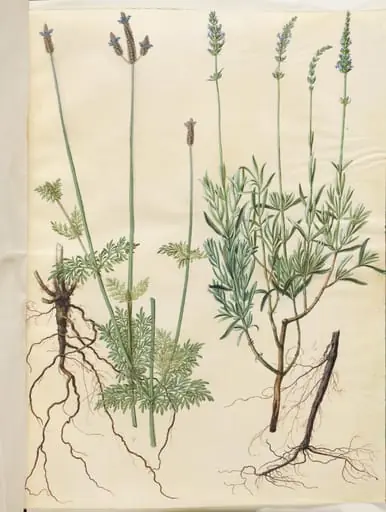 Lavandula multifida (aks-lavendel); Lavandula angustifolia (ægte lavendel)
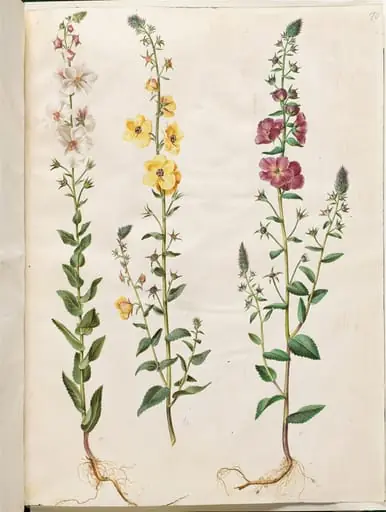 Verbascum blattaria (klase-kongelys); Verbascum phoeniceum (purpur-kongelys)
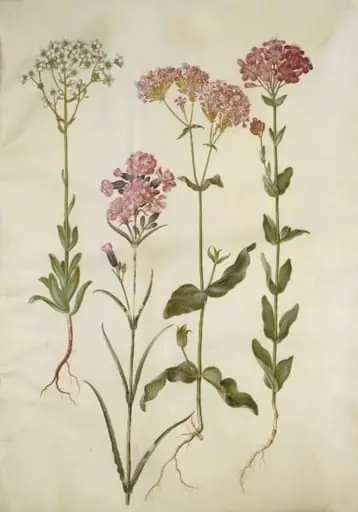 Saxifraga paniculata (klippe-stenbræk); Silene viscaria (almindelig tjærenellike); Silene armeria (knippe-limurt);
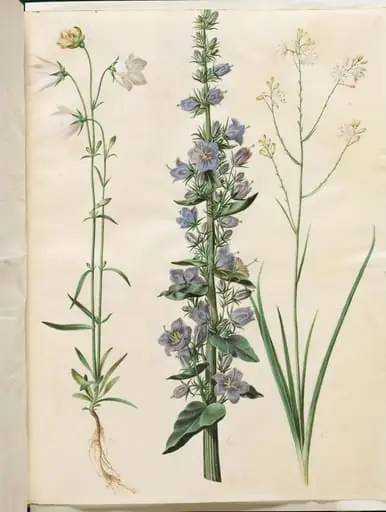 Campanula persicifolia (smalbladet klokke); Campanula pyramidalis (pyramide-klokke); Anthericum ramosum (grenet edderkopurt)
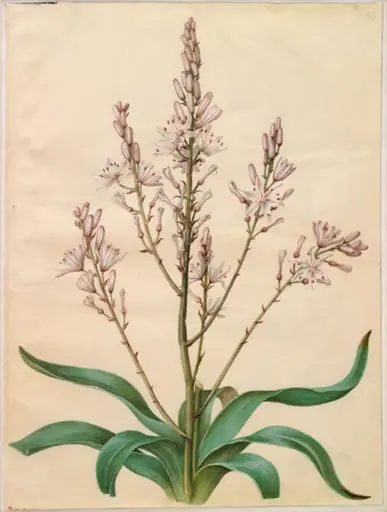 Asphodelus ramosus (grenet affodil)
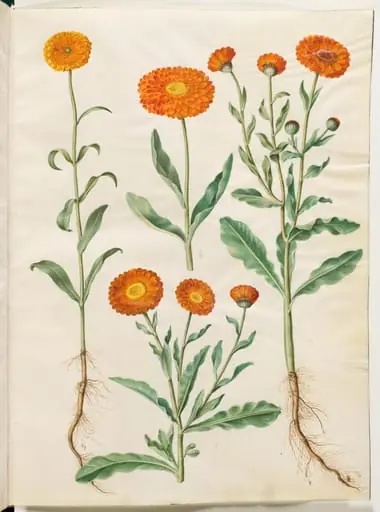 Calendula officinalis (have-morgenfrue)
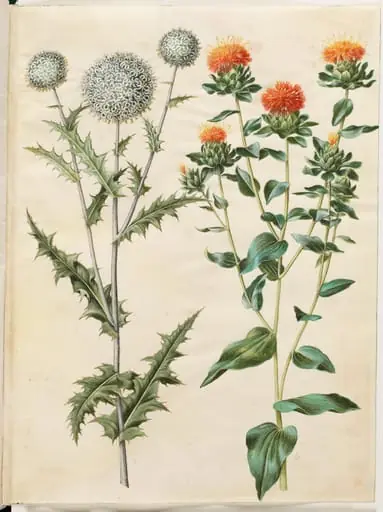 Echinops sphaerocephalus (almindelig tidselkugle); Carthamus tinctorius (gul saflortidsel)
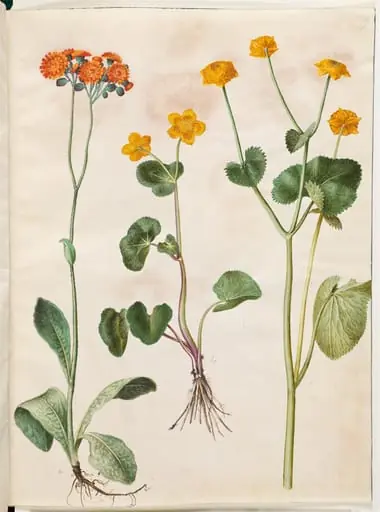 Pilosella aurantiaca (pomerans-høgeurt); Caltha palustris (eng-kabbeleje)