Artwork
Digitalis purpurea (almindelig fingerbøl); Digitalis grandiflora (storblomstret fingerbøl)
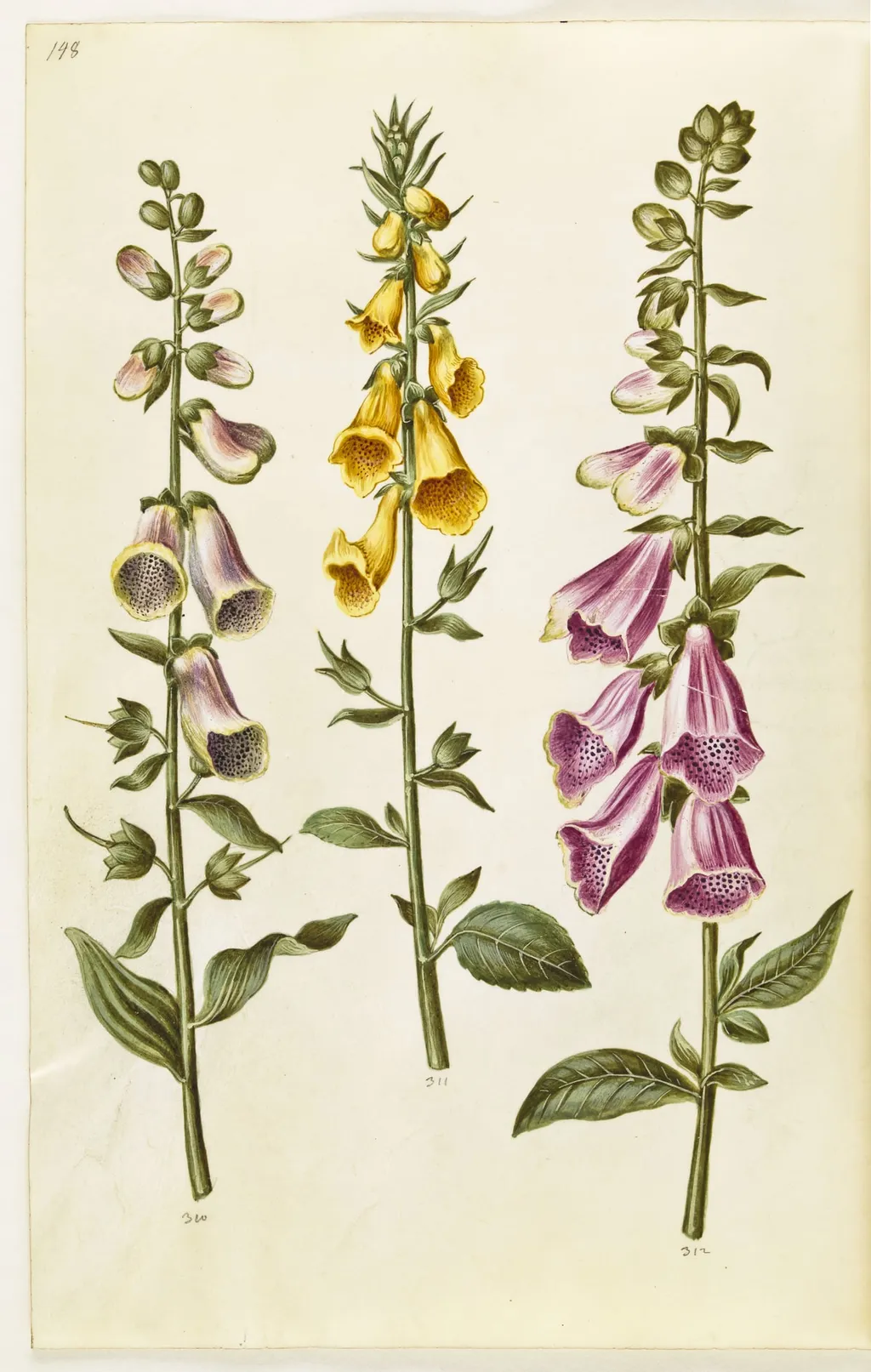
Digitalis purpurea (almindelig fingerbøl); Digitalis grandiflora (storblomstret fingerbøl) is an unspecified work on paper by Unknown. It dates from 1650 and is held in the collection of the Statens Museum for Kunst. This watercolor depicts two species of foxglove: Digitalis purpurea and Digitalis grandiflora, rendered around 1650.
About this work
Overview
Executed with precision, it reflects a scientific interest in botanical differentiation, typical of naturalist illustration in the mid-seventeenth century.
This watercolor depicts two species of foxglove: Digitalis purpurea and Digitalis grandiflora, rendered around 1650. The painting presents three individual specimens with subtle variations in flower color and form. Executed with precision, it reflects a scientific interest in botanical differentiation, typical of naturalist illustration in the mid-seventeenth century. The work is part of the collection at the Museum of Ethnography.
Subject & Meaning
The three foxglove plants are shown to highlight morphological distinctions between species and individual variation within them. Purple and yellow blooms, along with differing tip colors, serve as visual markers for identification. The focus on botanical accuracy suggests an intent to document rather than decorate, aligning with early modern efforts to classify plant life for medicinal and scholarly use.
Technique & Style
The artist employed fine brushwork and translucent watercolor layers to capture the delicate textures of petals, stems, and leaves. Subtle gradations in color, especially in the flower tips, indicate careful observation and control. The composition is sparse and centered, avoiding decorative elements to emphasize botanical clarity. No background distracts from the plants’ structural details.
History & Provenance
The painting’s origin is tied to an unnamed artist active in the mid-1600s, likely working within a European tradition of botanical recording. It entered the Museum of Ethnography’s holdings through unspecified acquisition, possibly as part of a broader collection of natural history illustrations. Its survival suggests it was valued for its descriptive fidelity rather than artistic novelty.
Context
Created during a period when European scholars were systematically documenting flora for pharmacological study, this work reflects the intersection of science and visual representation. Foxglove, known for its cardiac properties, was of particular interest to apothecaries and physicians. Such illustrations often supported herbals and medical texts, serving as visual references before photography.
Legacy
Though attributed to an anonymous hand, the painting contributes to a larger archive of pre-modern botanical records. Its preservation underscores the importance of visual documentation in early scientific practice. Today, it remains a quiet testament to the meticulous observation of nature before the advent of modern botanical imaging techniques.
Artist & collection

 Domestic Scene
 Giacomo and Cardinal Marco, investing Andrea, Abbot of San Zeno, with his Benefice
 The Nymph of Fontainebleau
 Portrait of a Woman
 Madonna and Child with Saints in the Enclosed Garden
 Venus and Minerva
 Family Group of Four on Sofa
 Wall painting from Room H of the Villa of P. Fannius Synistor at Boscoreale
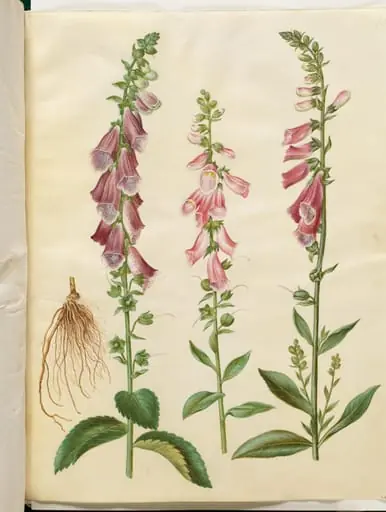 Digitalis purpurea (almindelig fingerbøl)
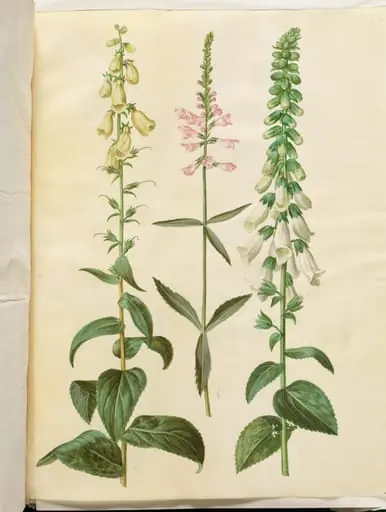 Digitalis grandiflora (storblomstret fingerbøl); Physostegia virginiana (drejeblomst); Digitalis purpurea (almindelig fingerbøl)
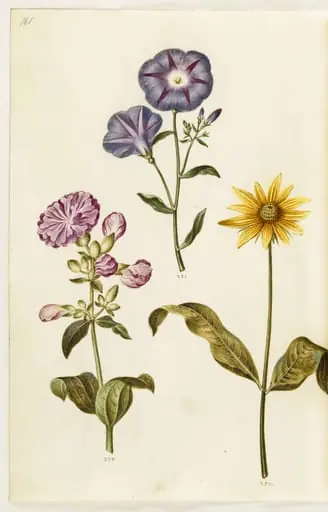 Saponaria officinalis (almindelig sæbeurt); Convolvulus tricolor (jomfruskørt); Helianthus (?) (solsikke-art)
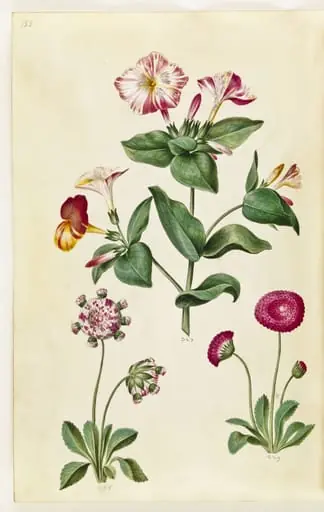 Mirabilis jalapa (vidunderblomst); Bellis perennis (almindelig tusindfryd)
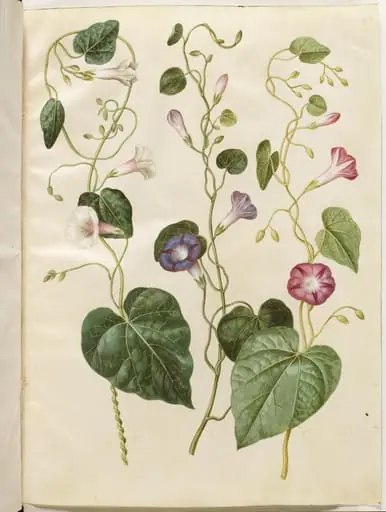 Ipomoea purpurea (purpur-pragtsnerle)
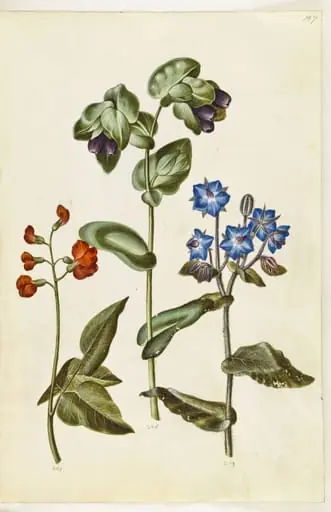 Phaseolus coccineus (pral-bønne); Cerinthe major (stor voksurt); Borago officinalis (almindelig hjulkrone)
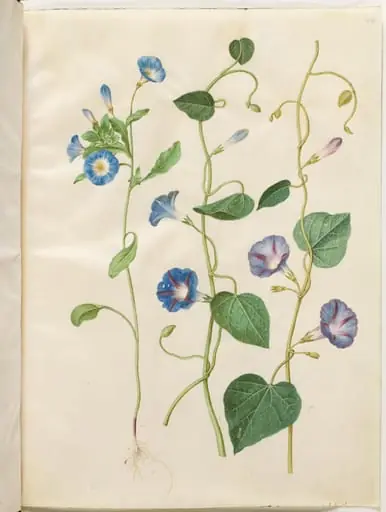 Convolvulus tricolor (jomfruskørt); Ipomoea purpurea (purpur-pragtsnerle)
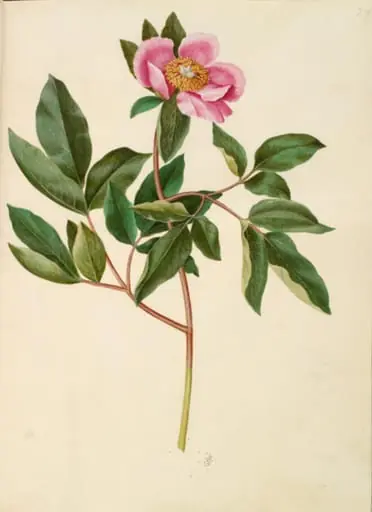 Paeonia mascula (storbladet pæon)
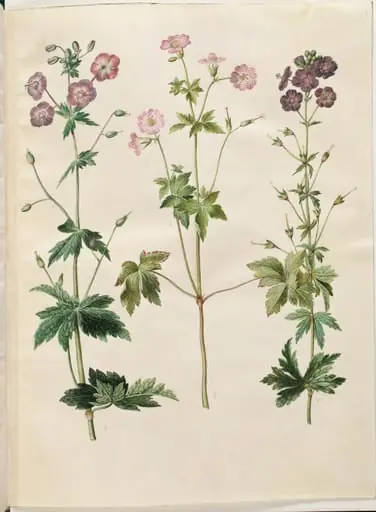 Geranium phaeum (bølgekronet storkenæb); Geranium versicolor (net-storkenæb)