Artwork
Convolvulus tricolor (jomfruskørt); Ipomoea purpurea (purpur-pragtsnerle)
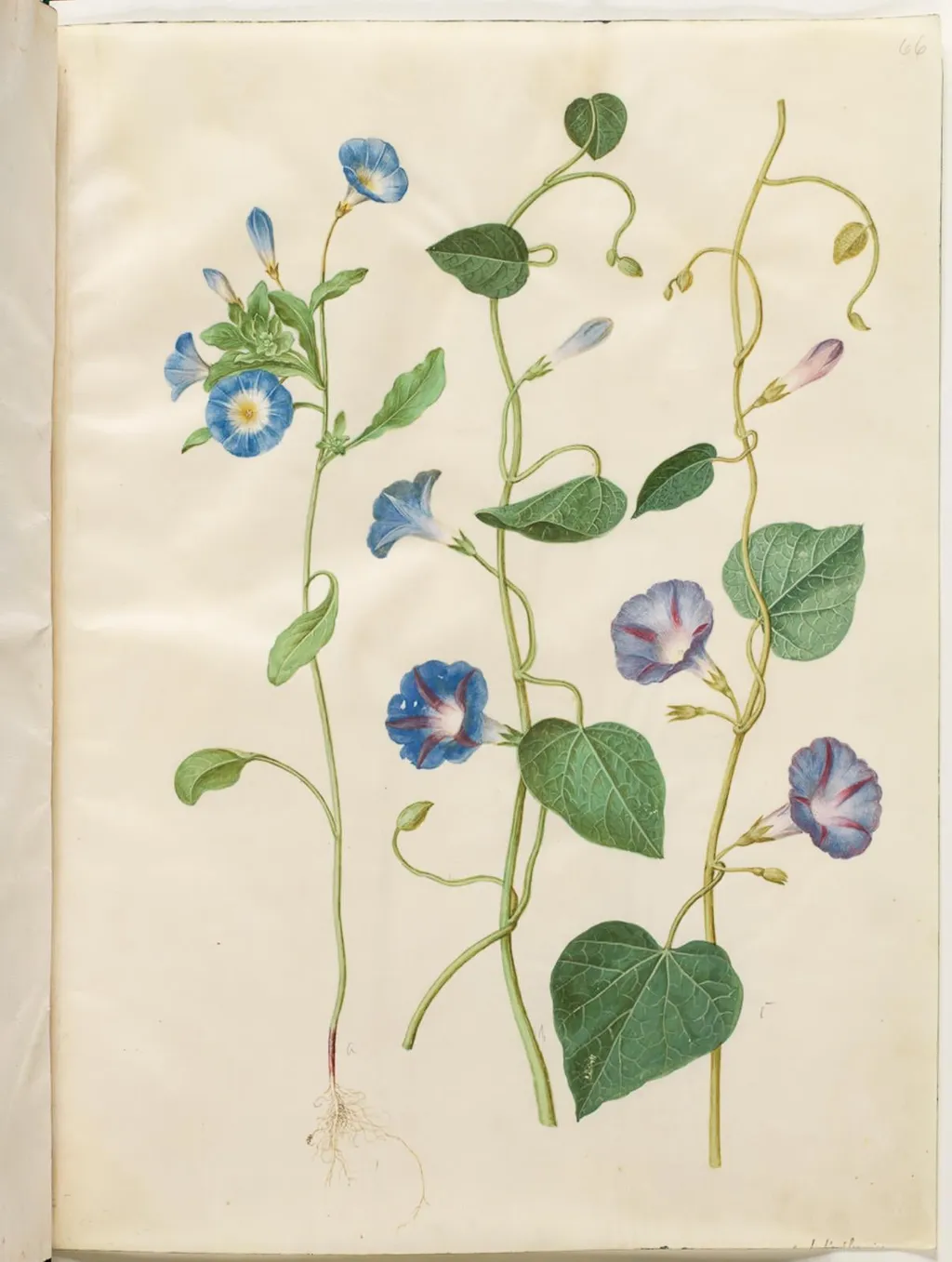
Convolvulus tricolor (jomfruskørt); Ipomoea purpurea (purpur-pragtsnerle) is an unspecified work on paper by Unknown. It dates from 1654 and is held in the collection of the Statens Museum for Kunst. This botanical illustration, dated around 1654, depicts two climbing plants: Convolvulus tricolor and Ipomoea purpurea.
About this work
Overview
This botanical illustration, dated around 1654, depicts two climbing plants: Convolvulus tricolor and Ipomoea purpurea.
This botanical illustration, dated around 1654, depicts two climbing plants: Convolvulus tricolor and Ipomoea purpurea. Rendered in watercolor, the work captures the plants with careful attention to natural form and color. It is part of a collection at the Museum of Ethnography, likely created for scientific or educational purposes during a period when detailed plant studies were gaining prominence in Europe.
Subject & Meaning
The painting presents two species of flowering vines native to temperate and tropical regions. Their vibrant blue and purple blooms, alongside heart-shaped leaves and twisting stems, reflect an interest in documenting botanical diversity. The inclusion of buds and exposed roots suggests a desire to show the full life cycle and structural anatomy, aligning with early modern efforts to classify and understand plant life systematically.
Technique & Style
Executed in layered watercolor, the illustration achieves subtle gradations of hue and delicate texture. Petals are rendered with soft edges and fine vein details, enhancing realism without ornamentation. The absence of background elements focuses attention entirely on the plants, a hallmark of scientific botanical art of the period. The technique emphasizes accuracy over artistic flourish, typical of illustrations used in herbaria and botanical texts.
History & Provenance
The work is attributed to an artist identified only by a numerical designation, suggesting it may have been produced as part of a larger, now-unattributed collection. Its presence in the Museum of Ethnography indicates it was likely acquired as part of a broader ethnographic or natural history archive, possibly linked to early colonial or scholarly expeditions that documented flora alongside cultural artifacts.
Context
Created in the mid-17th century, this piece reflects the growing European interest in natural history during the Scientific Revolution. Botanical illustrations like this one supported the classification of plants, often accompanying printed herbals or serving as reference for apothecaries and gardeners. The precision of detail aligns with contemporary practices in Denmark and neighboring regions, where systematic observation of nature was becoming institutionalized.
Legacy
Though unsigned and unattributed to a named artist, the work stands as an example of pre-modern botanical documentation that prioritized fidelity over aesthetics. It contributes to a visual archive that helped shape early plant science. Today, such images remain valuable for understanding historical perceptions of flora and the methods used to record biodiversity before the advent of photography.
Artist & collection

 Domestic Scene
 Giacomo and Cardinal Marco, investing Andrea, Abbot of San Zeno, with his Benefice
 The Nymph of Fontainebleau
 Portrait of a Woman
 Madonna and Child with Saints in the Enclosed Garden
 Venus and Minerva
 Family Group of Four on Sofa
 Wall painting from Room H of the Villa of P. Fannius Synistor at Boscoreale
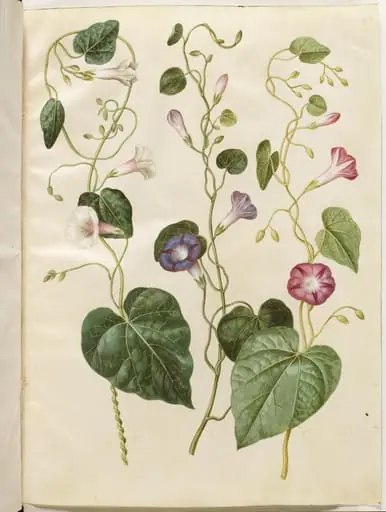 Ipomoea purpurea (purpur-pragtsnerle)
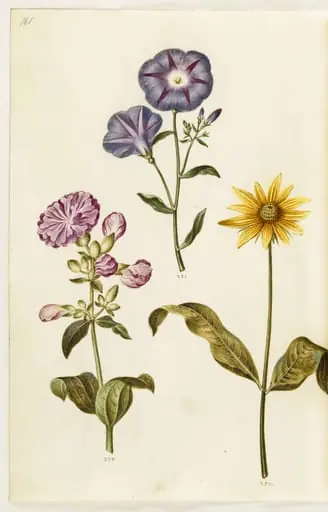 Saponaria officinalis (almindelig sæbeurt); Convolvulus tricolor (jomfruskørt); Helianthus (?) (solsikke-art)
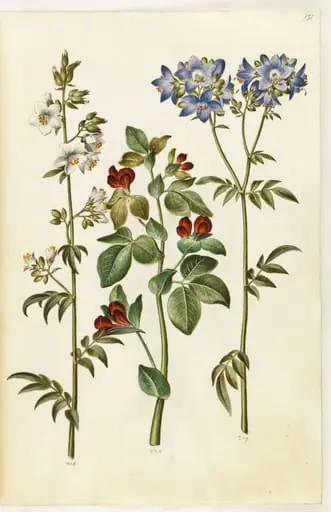 Polemonium caeruleum (almindelig jakobsstige); Lotus tetragonolobus (aspargesært)
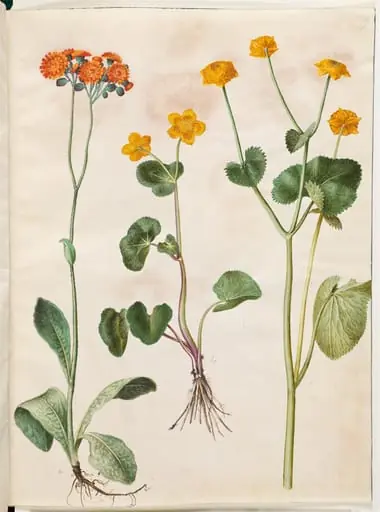 Pilosella aurantiaca (pomerans-høgeurt); Caltha palustris (eng-kabbeleje)
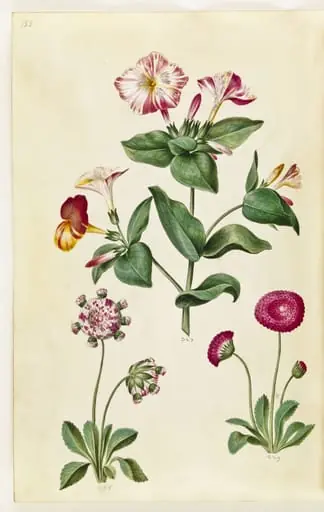 Mirabilis jalapa (vidunderblomst); Bellis perennis (almindelig tusindfryd)
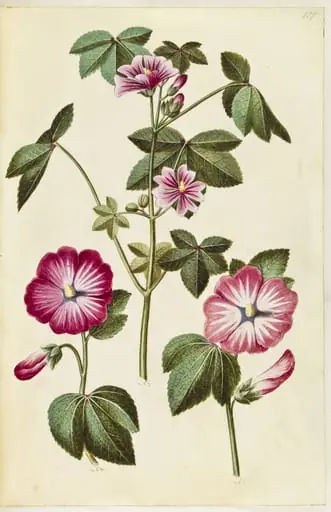 Malva sylvestris (almindelig katost); Lavatera trimestris (mamelukærme)
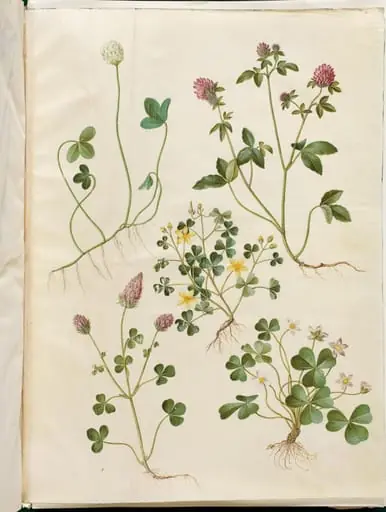 Trifolium repens (hvid-kløver); Trifolium pratense (rød-kløver); Oxalis corniculata (nedliggende surkløver); Trifolium incarnatum (blod-kløver); Oxalis acetosella (skovsyre)
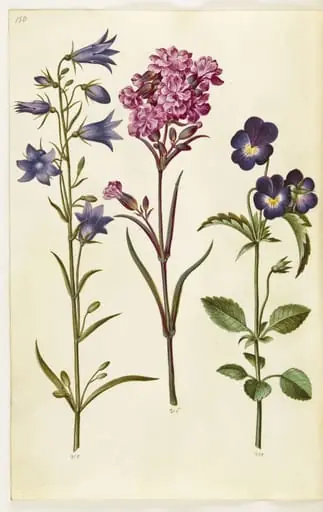 Campanula rotundifolia (liden klokke); Silene viscaria (almindelig tjærenellike); Viola tricolor (almindelig stedmoderblomst)
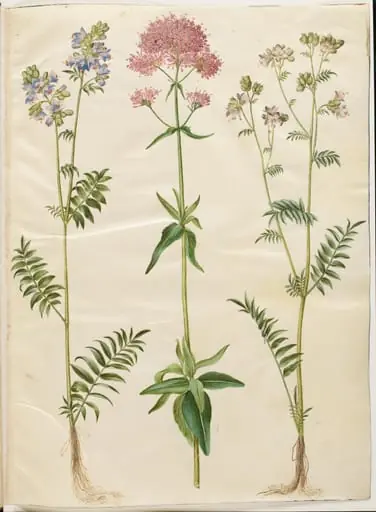 Polemonium caeruleum (almindelig jakobsstige); Centranthus ruber (rød sporebaldrian)
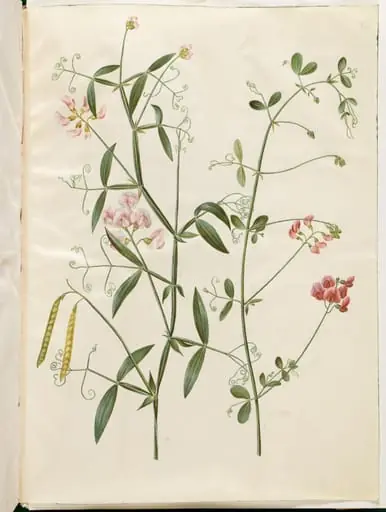 Lathyrus sylvestris (skov-fladbælg); Lathyrus tuberosus (knold-fladbælg)