Artwork
Ipomoea purpurea (purpur-pragtsnerle)
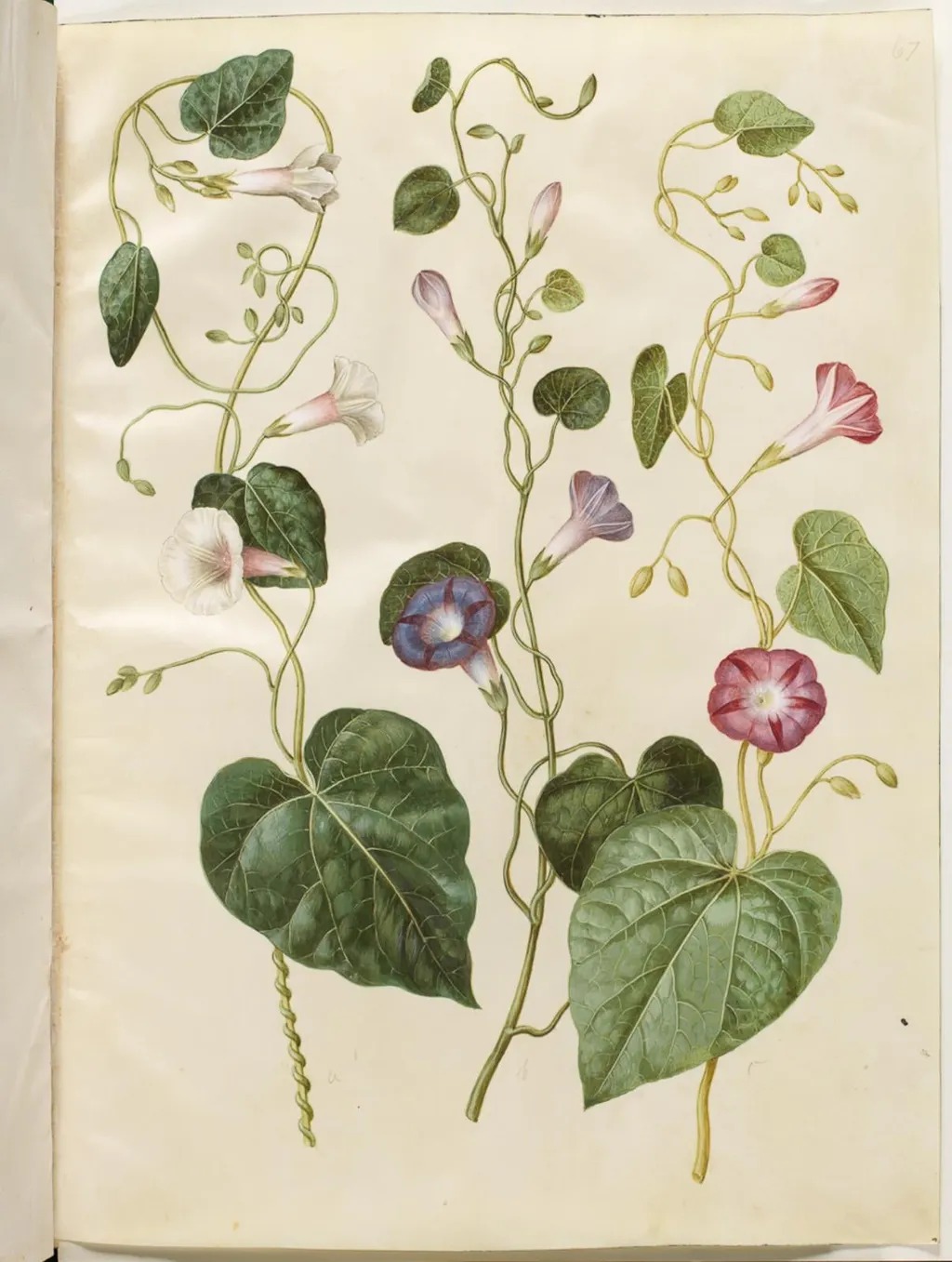
Ipomoea purpurea (purpur-pragtsnerle) is an unspecified work on paper by Unknown. It dates from 1654 and is held in the collection of the Statens Museum for Kunst. Created around 1654, this watercolor depicts Ipomoea purpurea, a climbing plant commonly known as the common morning glory.
About this work
Overview
Created around 1654, this watercolor depicts Ipomoea purpurea, a climbing plant commonly known as the common morning glory. The work is attributed to an artist identified as 35199_person and is part of the collection at the Museum of Ethnography. Rendered with precision, the painting captures the plant in a naturalistic style, emphasizing botanical accuracy over decorative flourish.
Subject & Meaning
The painting presents a single species in varying stages of growth—open blooms, half-unfurled buds, and trailing vines. This variation suggests an interest in the plant’s life cycle rather than mere ornamentation. The absence of context or human elements directs focus to the organism itself, reflecting a scientific or observational intent common in early naturalist studies.
Technique & Style
Each element is rendered with close attention to texture and form, revealing a methodical, almost systematic approach to botanical depiction.
The artist employed transparent watercolor washes to build subtle gradations of pink, purple, and red. Delicate brushwork defines the veins in the heart-shaped leaves and the delicate curl of petals. The plain background isolates the subject, enhancing clarity. Each element is rendered with close attention to texture and form, revealing a methodical, almost systematic approach to botanical depiction.
History & Provenance
The work entered the Museum of Ethnography’s collection as part of a broader archive of natural history illustrations. Its origin as a standalone piece or as part of a larger manuscript remains undocumented. The attribution to 35199_person is based on archival records, though little is known about the artist’s identity or training beyond this work.
Context
In mid-17th century Europe, detailed plant illustrations were increasingly valued for both scientific and horticultural purposes. This piece aligns with a growing trend of documenting flora through direct observation, often by artists working alongside botanists or collectors. The absence of symbolic or allegorical elements marks it as part of a shift toward empirical representation.
Legacy
Though not widely exhibited, the painting contributes to a corpus of early botanical art that informed later taxonomic studies. Its restrained aesthetic and technical precision reflect a transitional moment in visual science, where artistic skill served documentation rather than decoration. It remains a quiet example of how observation shaped understanding of the natural world.
Artist & collection

 Domestic Scene
 Giacomo and Cardinal Marco, investing Andrea, Abbot of San Zeno, with his Benefice
 The Nymph of Fontainebleau
 Portrait of a Woman
 Madonna and Child with Saints in the Enclosed Garden
 Venus and Minerva
 Family Group of Four on Sofa
 Wall painting from Room H of the Villa of P. Fannius Synistor at Boscoreale
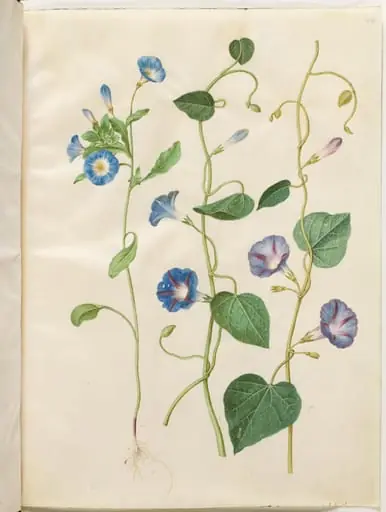 Convolvulus tricolor (jomfruskørt); Ipomoea purpurea (purpur-pragtsnerle)
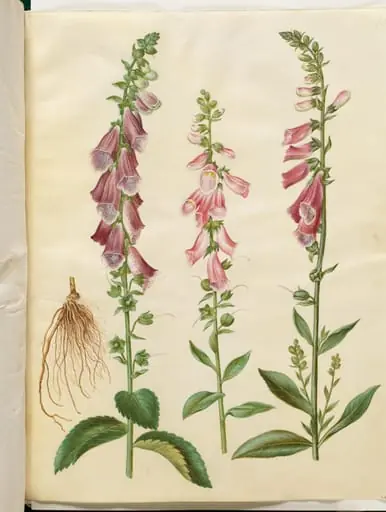 Digitalis purpurea (almindelig fingerbøl)
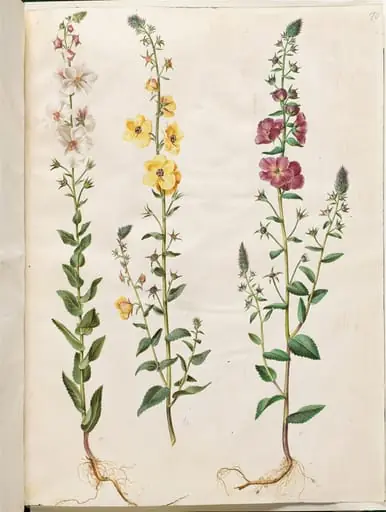 Verbascum blattaria (klase-kongelys); Verbascum phoeniceum (purpur-kongelys)
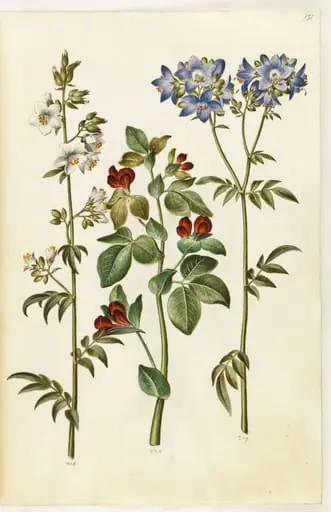 Polemonium caeruleum (almindelig jakobsstige); Lotus tetragonolobus (aspargesært)
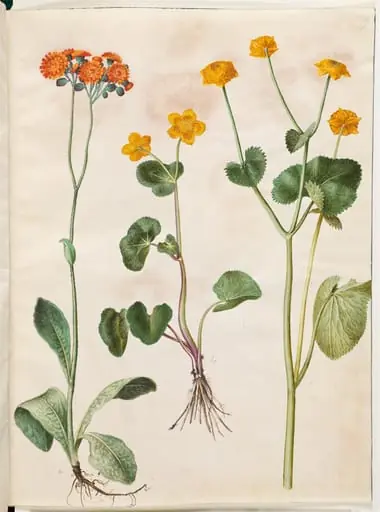 Pilosella aurantiaca (pomerans-høgeurt); Caltha palustris (eng-kabbeleje)
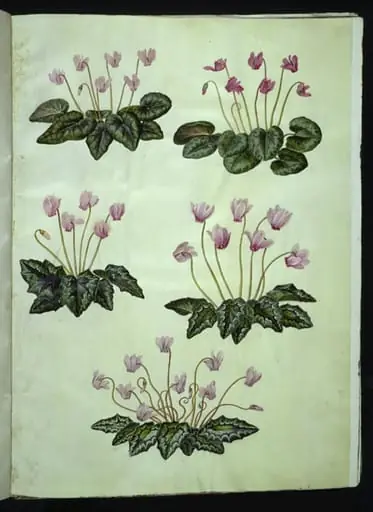 Cyclamen purpurascens (ægte alpeviol); Cyclamen hederifolium (vedbendbladet alpeviol)
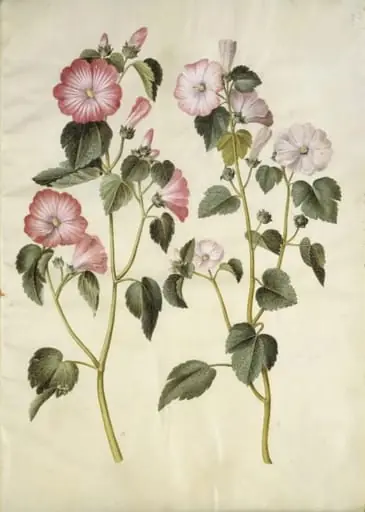 Lavatera trimestris (mamelukærme)
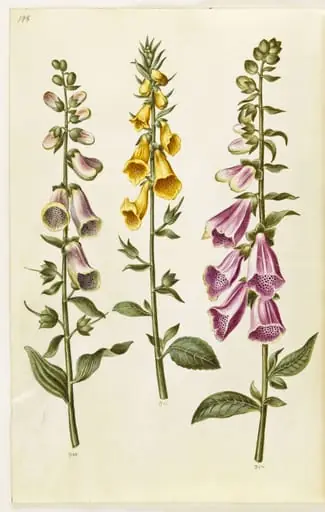 Digitalis purpurea (almindelig fingerbøl); Digitalis grandiflora (storblomstret fingerbøl)
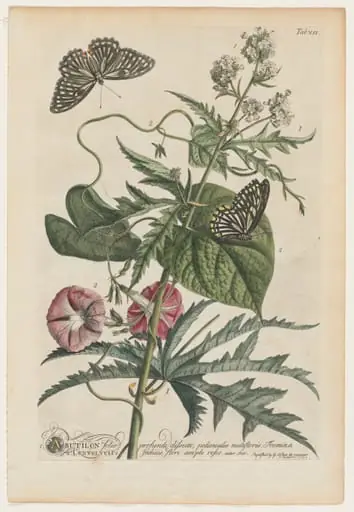 Plantae et papiliones rariores: No. 7