Artwork
Spiraea salicifolia (pilebladet spiræa); Catananche caerulea (blå rasleblomst)
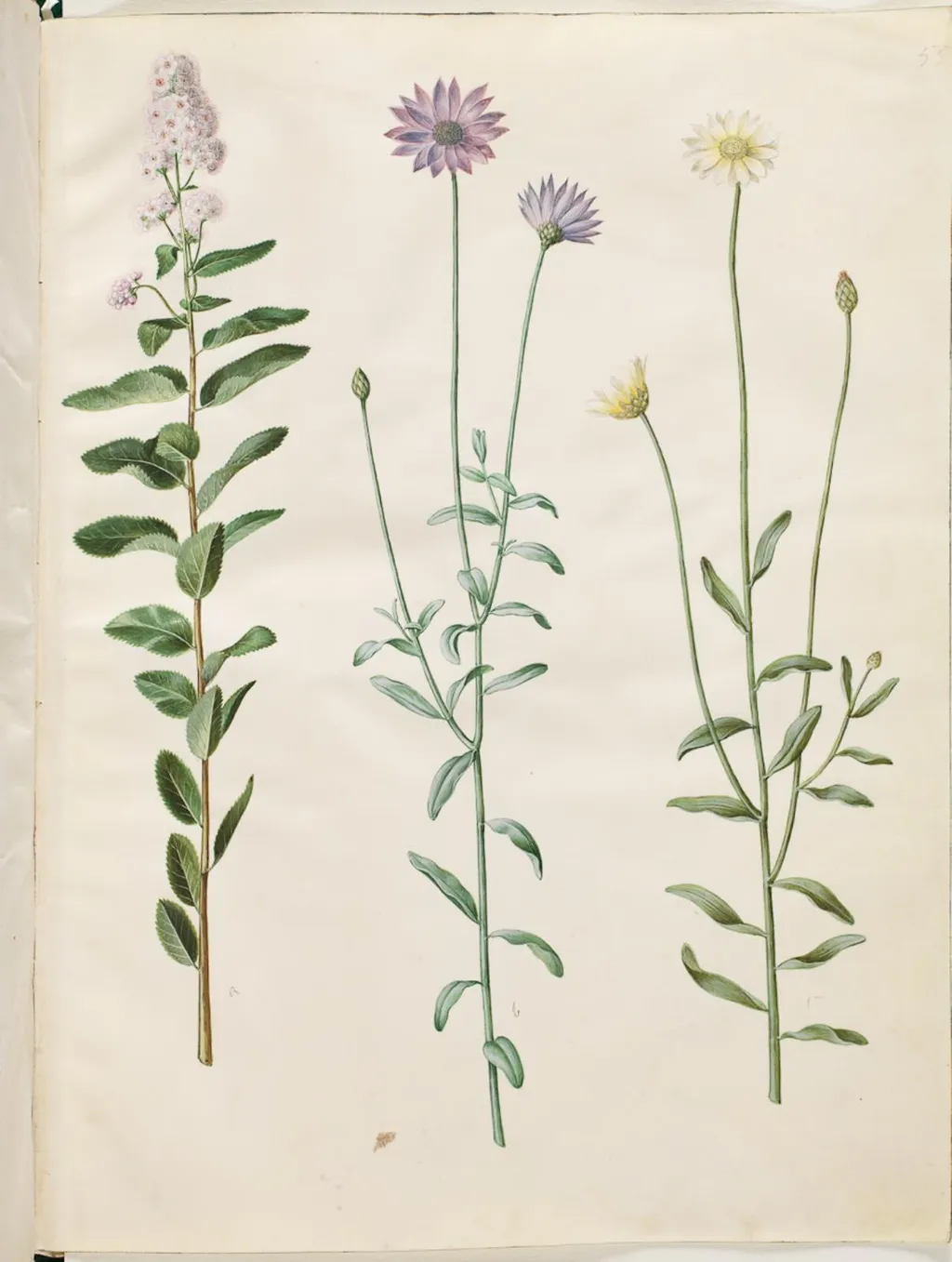
Spiraea salicifolia (pilebladet spiræa); Catananche caerulea (blå rasleblomst) is an unspecified work on paper by Unknown. It dates from 1654 and is held in the collection of the Statens Museum for Kunst. This watercolor painting, dated around 1654, depicts two specific plant species: Spiraea salicifolia and Catananche caerulea.
About this work
Overview
This watercolor painting, dated around 1654, depicts two specific plant species: Spiraea salicifolia and Catananche caerulea.
This watercolor painting, dated around 1654, depicts two specific plant species: Spiraea salicifolia and Catananche caerulea. It is part of a botanical collection held by the Museum of Ethnography. The work is attributed to an artist identified only by a numerical code, with no known name or biographical details. The composition presents the plants with scientific precision, suggesting an intent to document rather than decorate.
Subject & Meaning
The painting features three distinct plants: one with pink blooms and lance-shaped leaves, a tall specimen with deep purple flowers, and another with bright yellow blossoms. These are rendered as individual specimens, likely for identification or classification. The absence of background or contextual elements implies a focus on botanical accuracy, aligning with early modern efforts to catalog flora for scholarly or medicinal use.
Technique & Style
Executed in watercolor, the painting employs delicate washes and fine brushwork to capture the texture and form of each plant. Colors are muted and naturalistic, avoiding dramatic contrasts. The artist’s approach emphasizes clarity over ornamentation, with each leaf and petal carefully observed and rendered. The medium’s transparency allows underlying pencil sketches to subtly inform the final image, reinforcing its documentary purpose.
History & Provenance
The work originates from a larger collection of botanical illustrations compiled in the mid-17th century, possibly for academic or institutional use. It entered the Museum of Ethnography’s holdings through an unknown acquisition path, likely as part of a broader donation or transfer of scientific materials. The artist’s identity remains unverified, and no records link the piece to a specific patron or publication.
Context
Created during a period of growing interest in systematic botany, the painting reflects the era’s shift toward empirical observation. European collectors and scholars were increasingly documenting plant species from across the globe, often relying on illustrators to record specimens accurately. This work fits within that tradition, serving as a visual record rather than an artistic statement.
Legacy
Though unsigned and unattributed to a known artist, the painting contributes to a historical archive of botanical documentation. Its preservation in a museum setting underscores its value as a material artifact of early scientific practice. It continues to inform studies of plant identification and the visual culture of natural history, offering insight into how knowledge was visually constructed before photography.
Artist & collection

 Domestic Scene
 Giacomo and Cardinal Marco, investing Andrea, Abbot of San Zeno, with his Benefice
 The Nymph of Fontainebleau
 Portrait of a Woman
 Madonna and Child with Saints in the Enclosed Garden
 Venus and Minerva
 Family Group of Four on Sofa
 Wall painting from Room H of the Villa of P. Fannius Synistor at Boscoreale
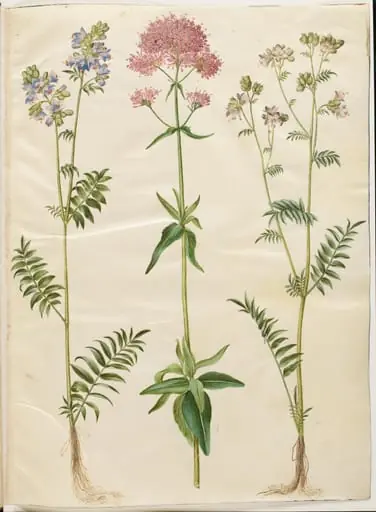 Polemonium caeruleum (almindelig jakobsstige); Centranthus ruber (rød sporebaldrian)
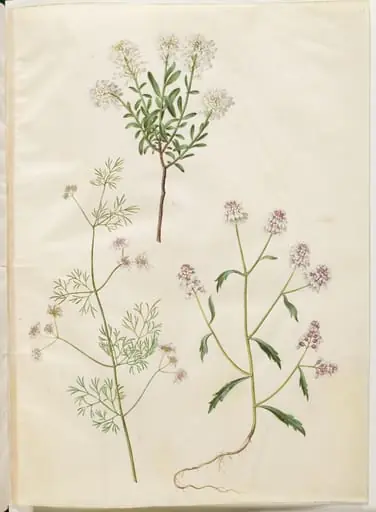 Iberis sempervirens (snepude); Coriandrum sativum (almindelig koriander); Iberis amara (bitter sløjfeblomst)
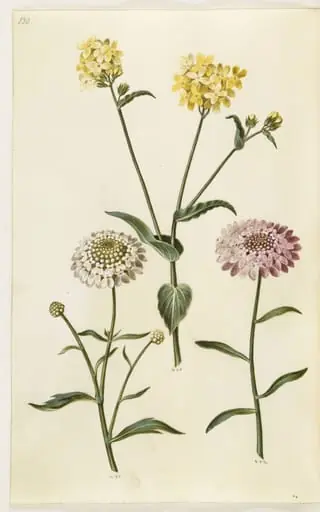 Brassica napus (raps); Iberis amara (bitter sløjfeblomst)
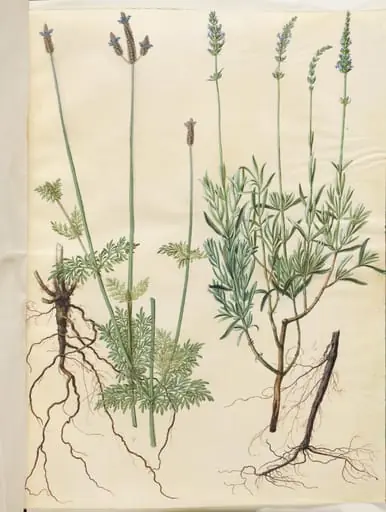 Lavandula multifida (aks-lavendel); Lavandula angustifolia (ægte lavendel)
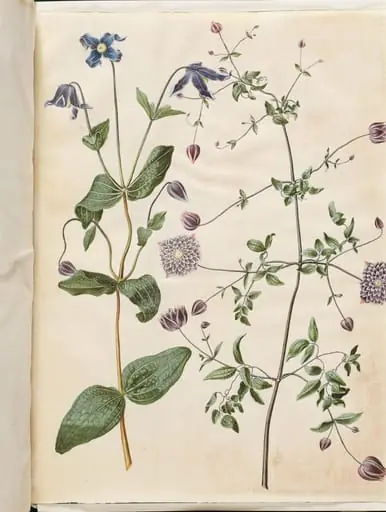 Clematis integrifolia (blå staudeklematis); Clematis viticella (italiensk skovranke)
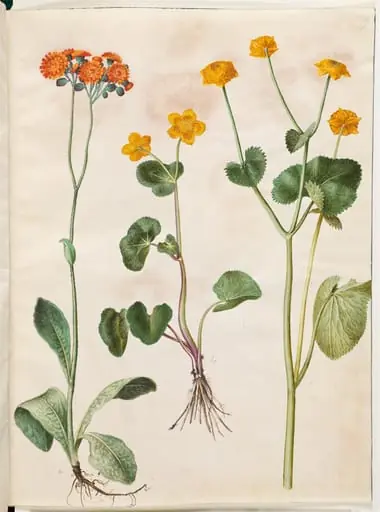 Pilosella aurantiaca (pomerans-høgeurt); Caltha palustris (eng-kabbeleje)
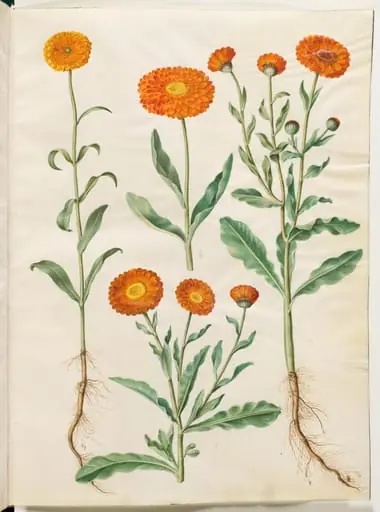 Calendula officinalis (have-morgenfrue)
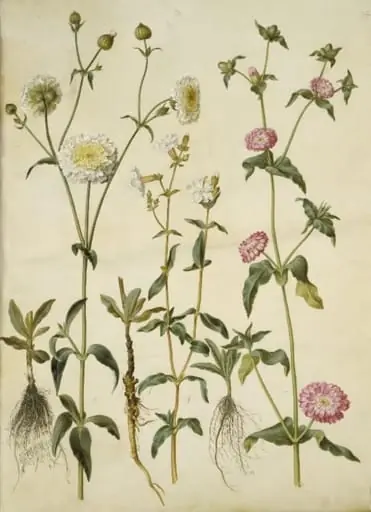 Silene latifolia (aften-pragtstjerne); Silene dioica (dag-pragtstjerne)
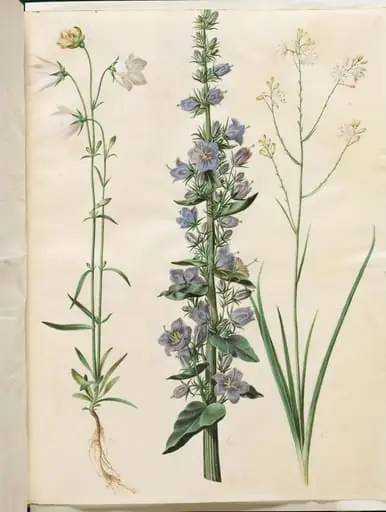 Campanula persicifolia (smalbladet klokke); Campanula pyramidalis (pyramide-klokke); Anthericum ramosum (grenet edderkopurt)
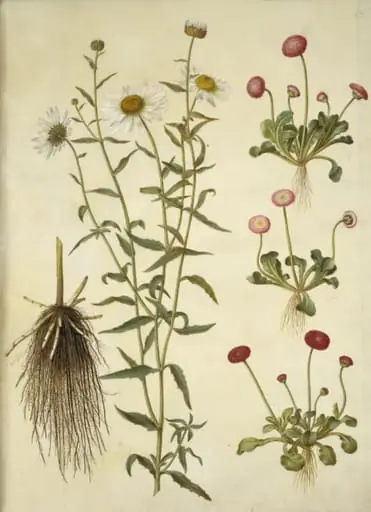 Leucanthemum vulgare (hvid okseøje); Bellis perennis (almindelig tusindfryd)