Artwork
Iberis umbellata (skærm-sløjfeblomst); Iberis amara (bitter sløjfeblomst)
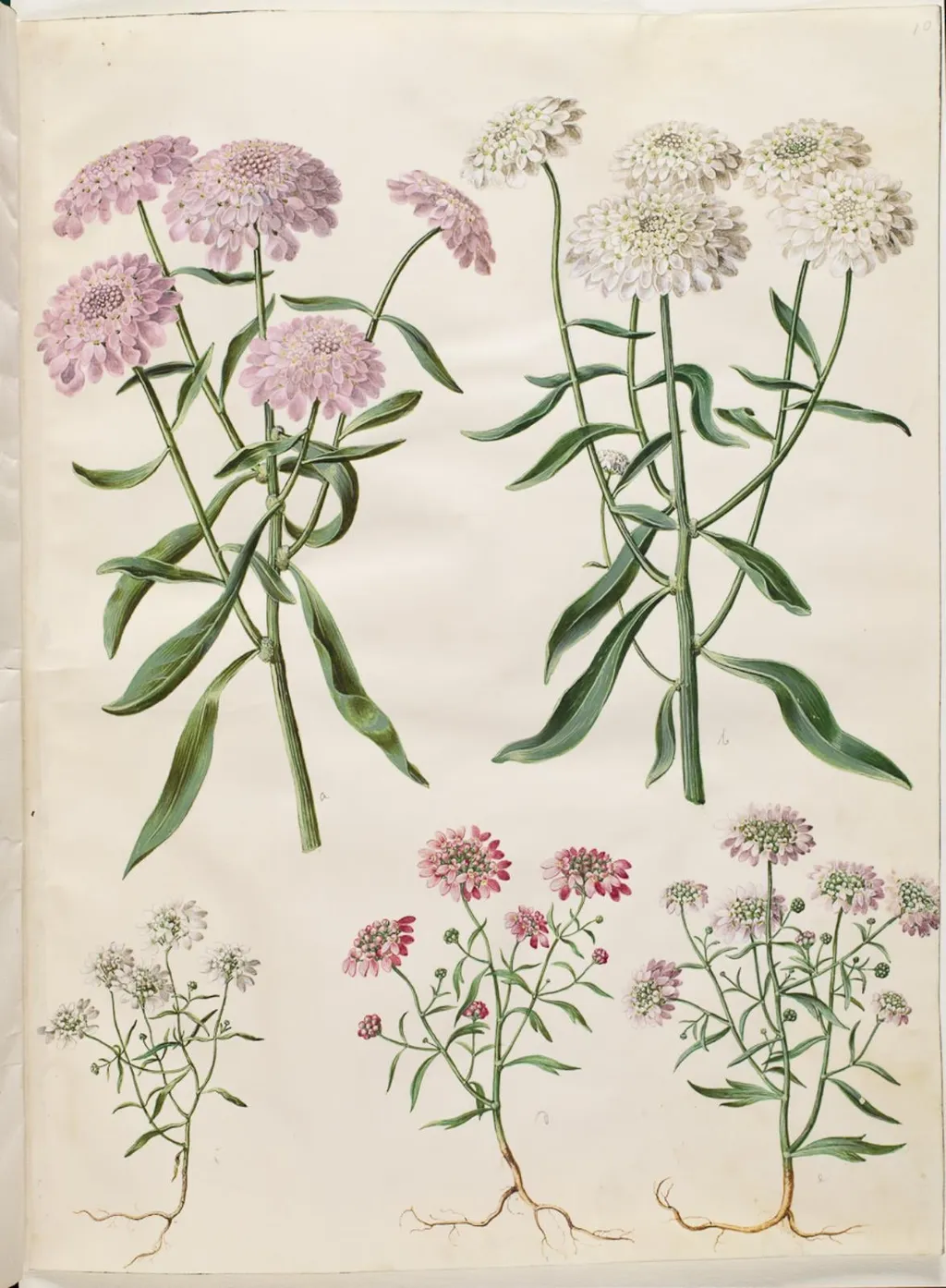
Iberis umbellata (skærm-sløjfeblomst); Iberis amara (bitter sløjfeblomst) is an unspecified work on paper by Unknown. It dates from 1654 and is held in the collection of the Statens Museum for Kunst. This botanical illustration, dated around 1654, depicts two species of the genus Iberis: Iberis umbellata and Iberis amara.
About this work
Overview
The painting includes detailed root systems, a rare feature in botanical art of the period, suggesting a scientific intent beyond mere aesthetic representation.
This botanical illustration, dated around 1654, depicts two species of the genus Iberis: Iberis umbellata and Iberis amara. Rendered in watercolor, the work presents five individual specimens with meticulous attention to their floral and foliar structures. The painting includes detailed root systems, a rare feature in botanical art of the period, suggesting a scientific intent beyond mere aesthetic representation.
Subject & Meaning
The painting focuses on two closely related flowering plants, both known for their compact clusters of small blossoms. By including the roots, the artist emphasizes the complete morphology of the specimens, likely for identification or educational purposes. The absence of decorative elements or symbolic context points to a utilitarian function, possibly tied to early botanical classification or medicinal study.
Technique & Style
Executed in watercolor, the work employs translucent layers to achieve subtle gradations of pale pink, white, and deep red hues. Lines are precise yet delicate, capturing the slender leaves and fine petal structures without bold outlines. The muted palette and lack of dramatic contrast reflect a commitment to observational accuracy, aligning with the empirical standards of 17th-century natural history illustration.
History & Provenance
The artwork is held in the collection of the Museum of Ethnography, though its origin as a scientific document suggests it may have been part of a larger herbarium or study collection. Its attribution to an individual artist remains unverified, and no documentation of its commission or early ownership has been publicly recorded, leaving its precise historical path uncertain.
Context
Created during a period of expanding botanical inquiry in Europe, the painting reflects the growing interest in cataloging plant species through visual means. Artists and naturalists collaborated to produce accurate depictions for use in medical, agricultural, and scholarly contexts. This work aligns with the tradition of Flemish and Dutch botanical illustration, where precision often outweighed ornamentation.
Legacy
Though not widely known outside institutional collections, the piece contributes to the broader archive of pre-modern botanical documentation. Its inclusion of root systems and restrained color palette exemplifies the shift toward empirical representation in natural science. It remains a quiet testament to the discipline of close observation that underpinned early botanical science.
Artist & collection

 Domestic Scene
 Giacomo and Cardinal Marco, investing Andrea, Abbot of San Zeno, with his Benefice
 The Nymph of Fontainebleau
 Portrait of a Woman
 Madonna and Child with Saints in the Enclosed Garden
 Venus and Minerva
 Family Group of Four on Sofa
 Wall painting from Room H of the Villa of P. Fannius Synistor at Boscoreale
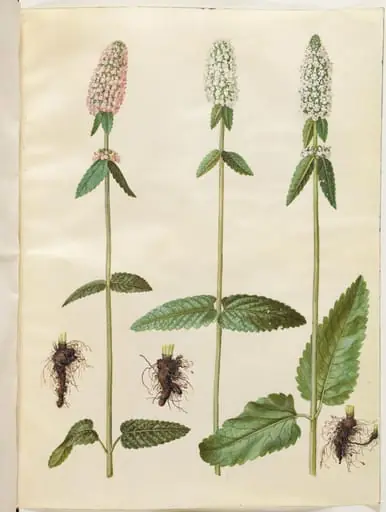 Stachys officinalis (læge-betonie)
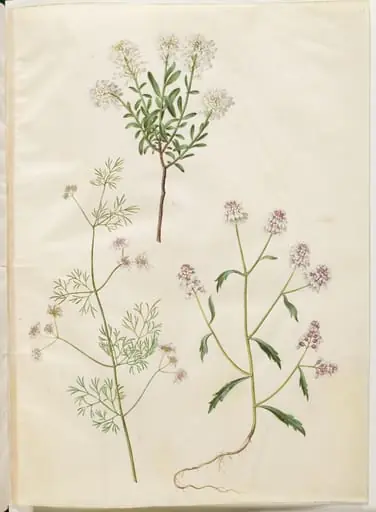 Iberis sempervirens (snepude); Coriandrum sativum (almindelig koriander); Iberis amara (bitter sløjfeblomst)
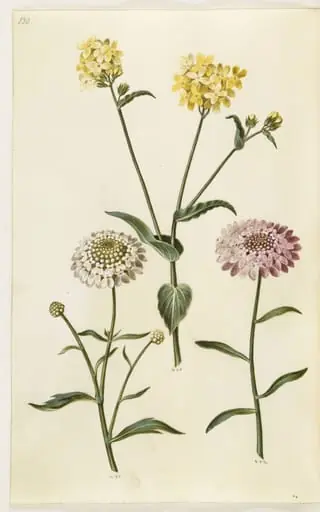 Brassica napus (raps); Iberis amara (bitter sløjfeblomst)
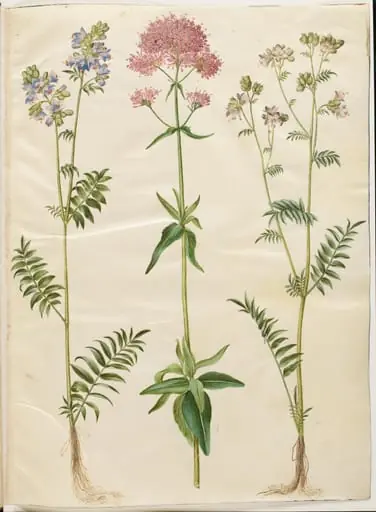 Polemonium caeruleum (almindelig jakobsstige); Centranthus ruber (rød sporebaldrian)
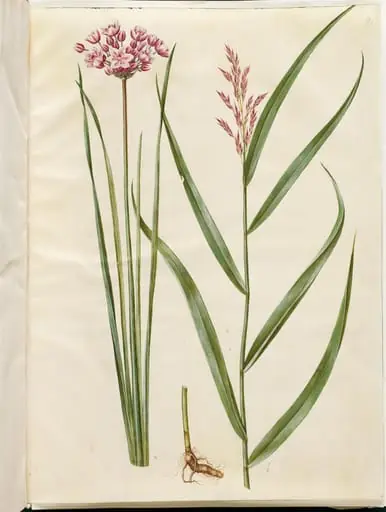 Butomus umbellatus (brudelys); Phragmites australis (almindelig tagrør)
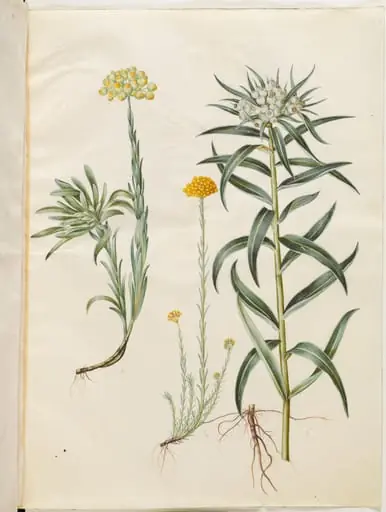 Helichrysum orientale (busk-evighedsblomst); Helichrysum Stoechas (stinkende evighedsblomst); Anaphalis margaritacea (almindelig perlekurv)
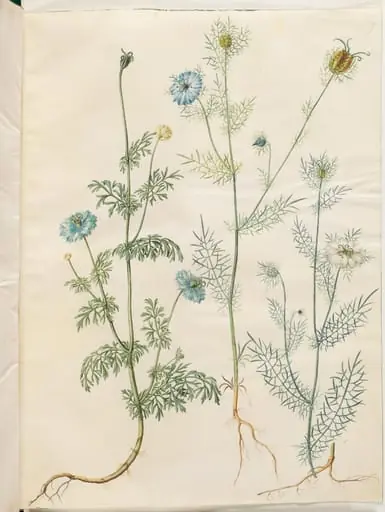 Nigella sativa (sortkommen); Nigella damascena (jomfru i det grønne)
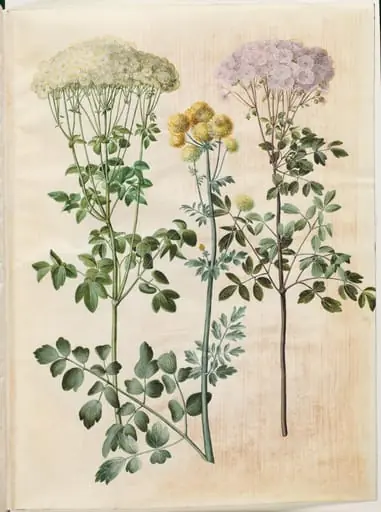 Thalictrum aquilegiifolium (akeleje-frøstjerne); Thalictrum flavum (gul frøstjerne)
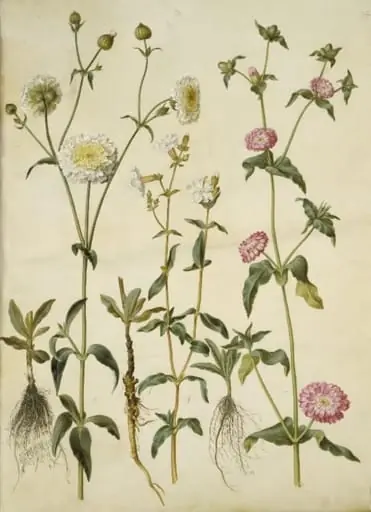 Silene latifolia (aften-pragtstjerne); Silene dioica (dag-pragtstjerne)