Artwork
Nigella sativa (sortkommen); Nigella damascena (jomfru i det grønne)
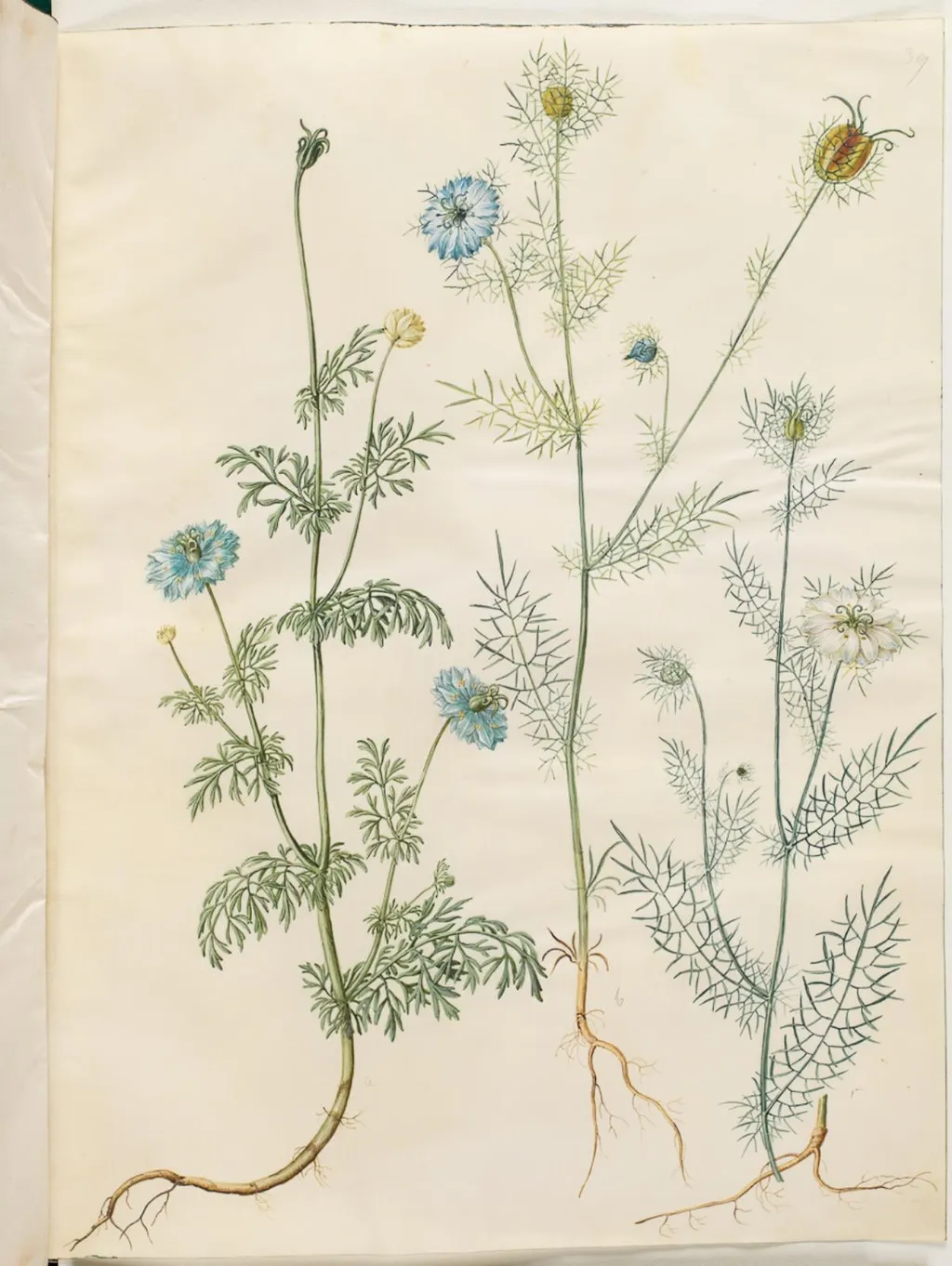
Nigella sativa (sortkommen); Nigella damascena (jomfru i det grønne) is an unspecified work on paper by Unknown. It dates from 1654 and is held in the collection of the Statens Museum for Kunst. This botanical illustration, dated around 1654, depicts two species of the Nigella genus: Nigella sativa and Nigella damascena.
About this work
Overview
Executed on a light beige background, the composition emphasizes scientific clarity over decorative flourish, typical of naturalist studies from the period.
This botanical illustration, dated around 1654, depicts two species of the Nigella genus: Nigella sativa and Nigella damascena. Rendered in precise detail, the painting captures the plants’ slender stems, delicate foliage, and small blue flowers with central yellow stamens. Executed on a light beige background, the composition emphasizes scientific clarity over decorative flourish, typical of naturalist studies from the period.
Subject & Meaning
The painting documents two flowering plants known in early modern Europe for both medicinal and folkloric uses. Nigella sativa, or black cumin, was valued in herbal remedies, while Nigella damascena, commonly called love-in-a-mist, carried symbolic associations with innocence and mystery. The illustration serves as a record of botanical knowledge, likely intended for scholarly or pharmaceutical reference rather than aesthetic display.
Technique & Style
The artist employed fine brushwork to render each leaf vein and petal structure with accuracy. The stems and roots are rendered in muted greens and earth tones, contrasting subtly with the pale background. There is no use of shading for dramatic effect; instead, the focus is on anatomical precision, aligning with the conventions of 17th-century scientific illustration where clarity and reproducibility were paramount.
History & Provenance
The work is held in the collection of the Museum of Ethnography, suggesting its original context may have been tied to ethnobotanical study or colonial-era documentation of plant species. Though the artist’s identity remains unverified under the designation 35199_person, the piece likely originated from a European academic or medical circle active in the mid-17th century, where plant taxonomy was rapidly evolving.
Context
During the 1650s, European naturalists were systematically cataloging flora from home and abroad, often in collaboration with apothecaries and explorers. This illustration fits within a broader movement to visually archive plant life for practical use, preceding the formalization of modern botany. Such works were frequently compiled into herbals or used as teaching aids in emerging scientific institutions.
Legacy
Though not widely exhibited or reproduced, the painting contributes to a historical archive of pre-modern botanical observation. Its survival in a museum of ethnography underscores its role as a cultural artifact linking plant knowledge with early scientific practice. It remains a quiet testament to the meticulous, often anonymous labor behind the documentation of nature before photography.
Artist & collection

 Domestic Scene
 Giacomo and Cardinal Marco, investing Andrea, Abbot of San Zeno, with his Benefice
 The Nymph of Fontainebleau
 Portrait of a Woman
 Madonna and Child with Saints in the Enclosed Garden
 Venus and Minerva
 Family Group of Four on Sofa
 Wall painting from Room H of the Villa of P. Fannius Synistor at Boscoreale
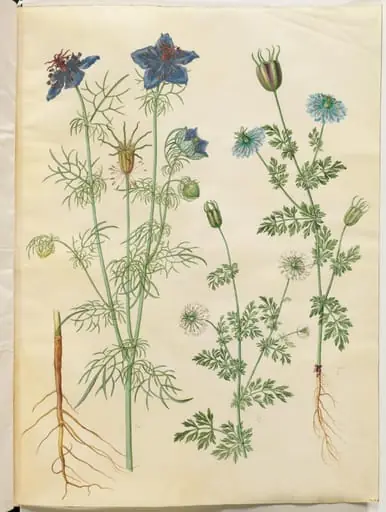 Nigella hispanica (djævlen i busken); Nigella sativa (sortkommen)
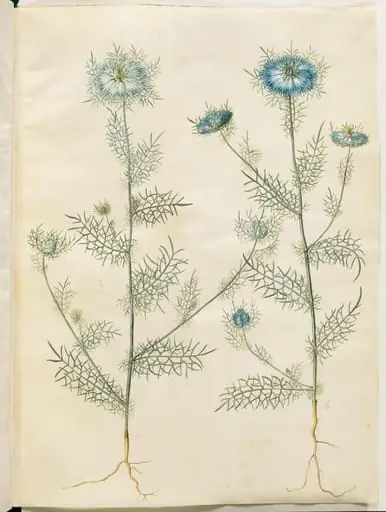 Nigella damascena (jomfru i det grønne)
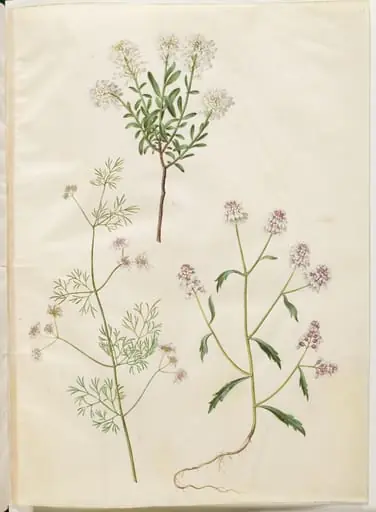 Iberis sempervirens (snepude); Coriandrum sativum (almindelig koriander); Iberis amara (bitter sløjfeblomst)
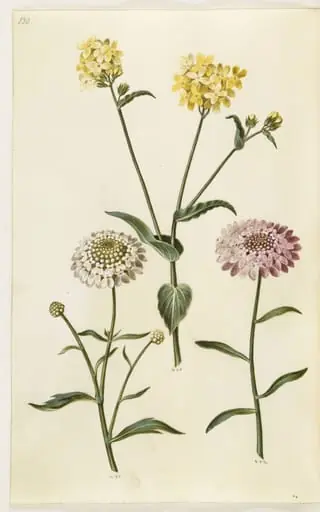 Brassica napus (raps); Iberis amara (bitter sløjfeblomst)
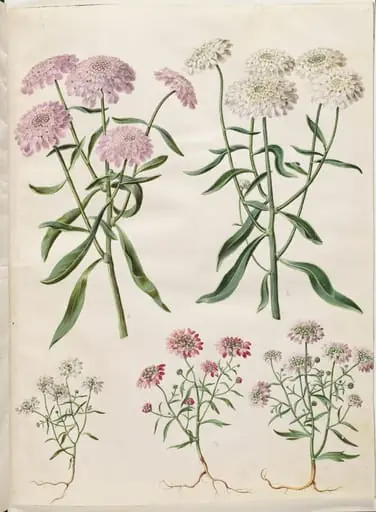 Iberis umbellata (skærm-sløjfeblomst); Iberis amara (bitter sløjfeblomst)
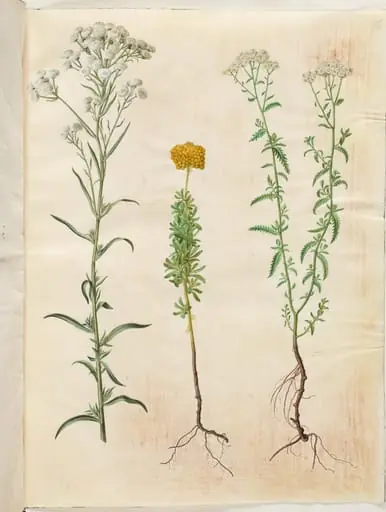 Achillea ptarmica (sølvknap-røllike); Achillea ageratum (balsam-røllike); Achillea millefolium (almindelig røllike)
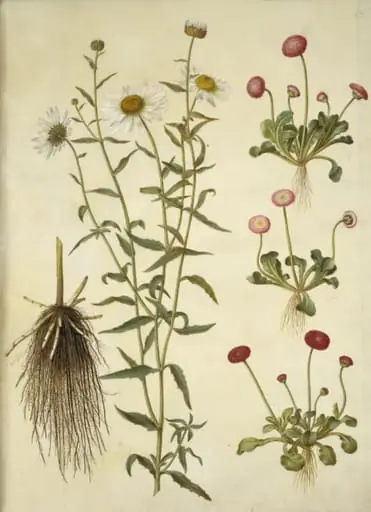 Leucanthemum vulgare (hvid okseøje); Bellis perennis (almindelig tusindfryd)