Artwork
Iberis sempervirens (snepude); Coriandrum sativum (almindelig koriander); Iberis amara (bitter sløjfeblomst)
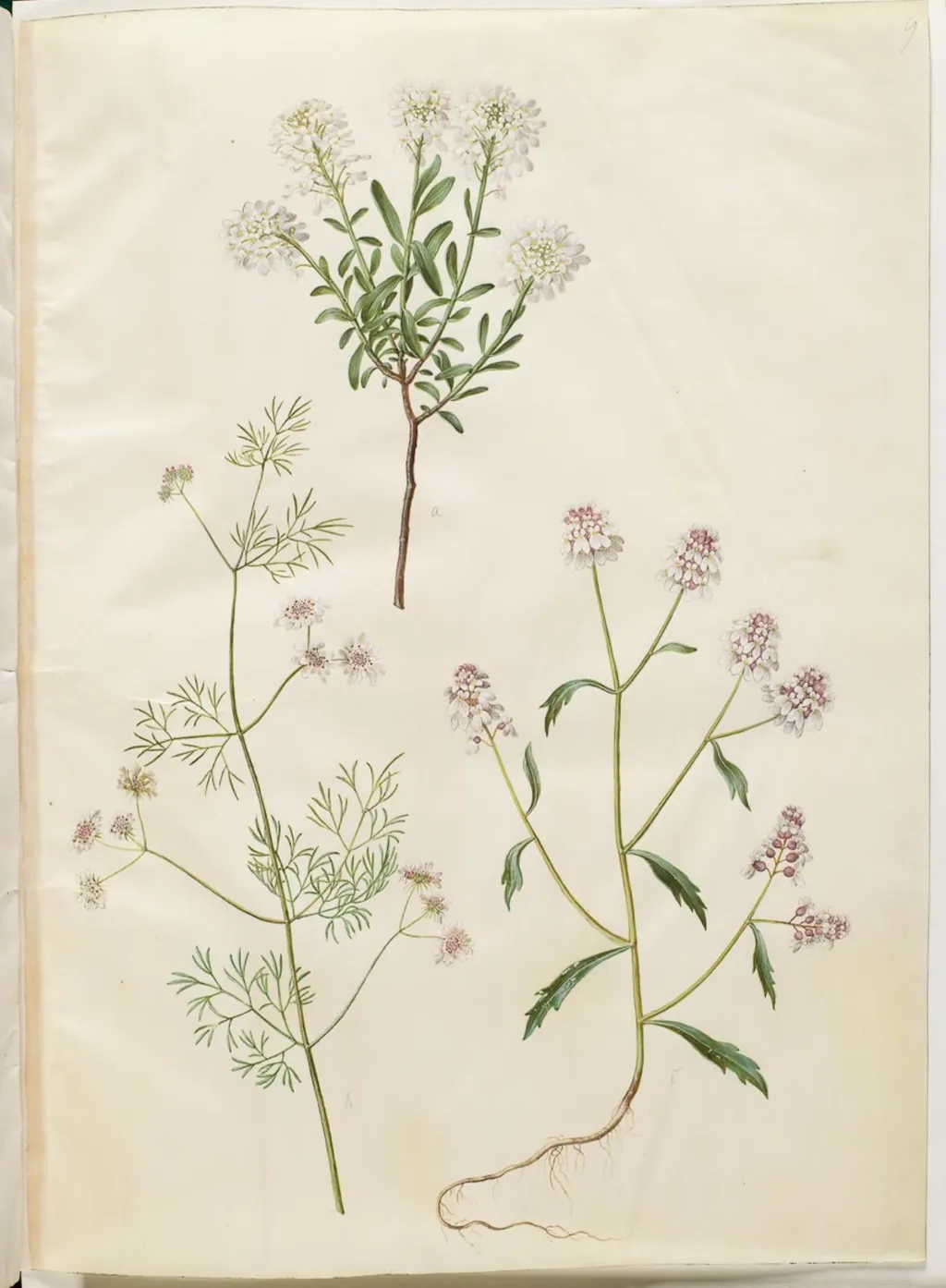
Iberis sempervirens (snepude); Coriandrum sativum (almindelig koriander); Iberis amara (bitter sløjfeblomst) is an unspecified work on paper by Unknown. It dates from 1654 and is held in the collection of the Statens Museum for Kunst.
About this work
Overview
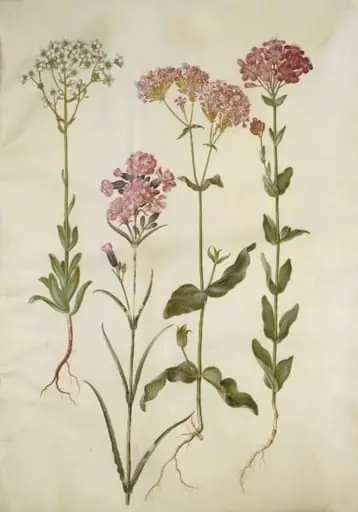
This watercolor painting, dated around 1654, depicts three specific plant species: Iberis sempervirens, Coriandrum sativum, and Iberis amara.
This watercolor painting, dated around 1654, depicts three specific plant species: Iberis sempervirens, Coriandrum sativum, and Iberis amara. Rendered with precision and restraint, the work serves as a botanical record rather than a decorative piece. The plants are arranged plainly against a pale background, emphasizing clarity over aesthetic flourish. Its current location is the Museum of Ethnography, where it functions as part of a historical collection of natural studies.
Subject & Meaning
Each plant is identified by its scientific name, suggesting an intent to document rather than to idealize. The selection includes both culinary and medicinal species, hinting at their practical use in early modern Europe. The inclusion of bitter candytuft alongside coriander and evergreen candytuft may reflect an interest in regional flora with known properties. The work implies a scholarly engagement with plant taxonomy, likely tied to herbalism or early botany.
Technique & Style
The artist employed watercolor in thin, translucent layers to capture subtle variations in leaf texture and flower hue. Fine details—such as minute hairs on stems and the delicate structure of root systems—are rendered with quiet accuracy. The composition avoids shading or depth, focusing instead on flat, clear outlines and naturalistic proportions. This restrained approach aligns with scientific illustration practices of the period, prioritizing identification over artistic expression.
History & Provenance
Created circa 1654, the work likely originated in a northern European context where botanical study was gaining institutional traction. It entered the collection of the Museum of Ethnography at some point after its creation, possibly as part of a broader assemblage of natural history materials. The absence of a signed attribution suggests it was produced as an anonymous record, perhaps by a student, apothecary, or amateur naturalist working within a network of scientific observation.
Context
In mid-17th century Europe, the systematic study of plants was expanding alongside global exploration and the rise of herbaria. This painting reflects a growing demand for accurate visual records to support classification and medicinal use. Similar works were often compiled into manuscripts or printed herbals. The absence of ornamental framing or dramatic lighting underscores its function as a reference tool, aligned with the empirical turn in natural philosophy.
Legacy
Though unsigned and unassuming, the painting contributes to a larger tradition of pre-modern botanical documentation. Its preservation in a museum setting signals its value as evidence of early scientific observation. It stands as a quiet testament to the meticulous labor behind the classification of flora, predating modern botanical illustration standards but embodying the same commitment to visual fidelity and taxonomic clarity.
Artist & collection

 Domestic Scene
 Giacomo and Cardinal Marco, investing Andrea, Abbot of San Zeno, with his Benefice
 The Nymph of Fontainebleau
 Portrait of a Woman
 Madonna and Child with Saints in the Enclosed Garden
 Venus and Minerva
 Family Group of Four on Sofa
 Wall painting from Room H of the Villa of P. Fannius Synistor at Boscoreale
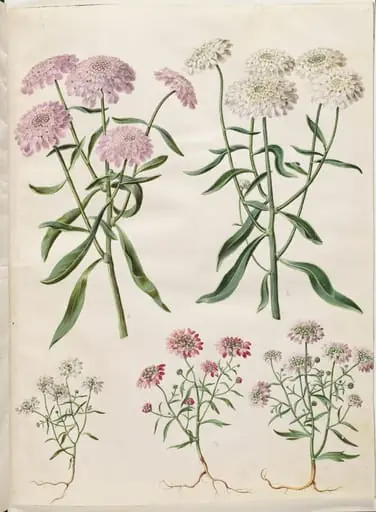 Iberis umbellata (skærm-sløjfeblomst); Iberis amara (bitter sløjfeblomst)
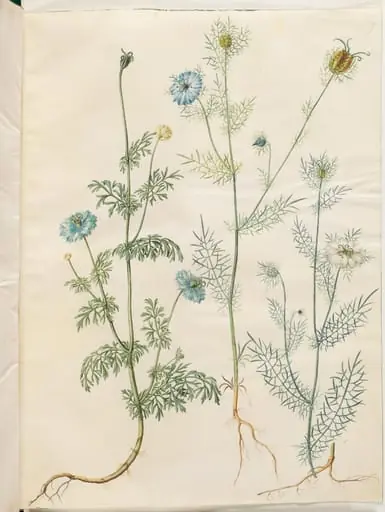 Nigella sativa (sortkommen); Nigella damascena (jomfru i det grønne)
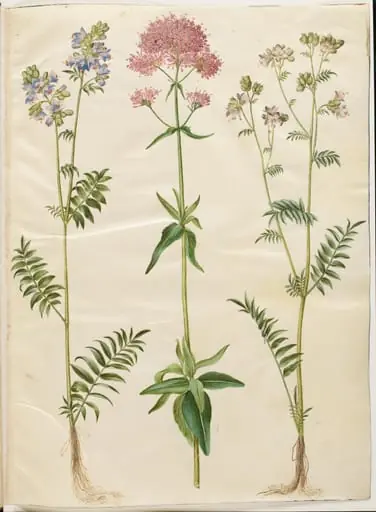 Polemonium caeruleum (almindelig jakobsstige); Centranthus ruber (rød sporebaldrian)
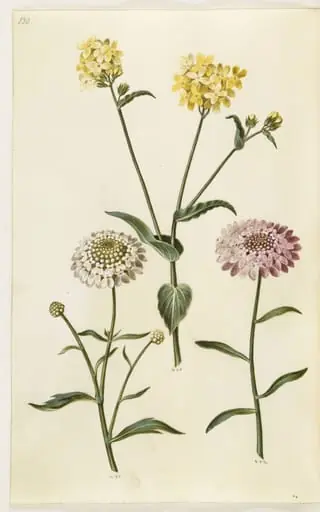 Brassica napus (raps); Iberis amara (bitter sløjfeblomst)
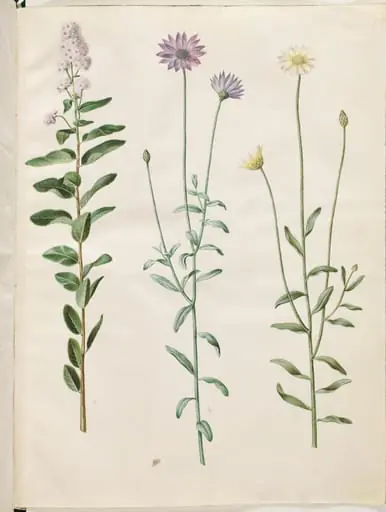 Spiraea salicifolia (pilebladet spiræa); Catananche caerulea (blå rasleblomst)
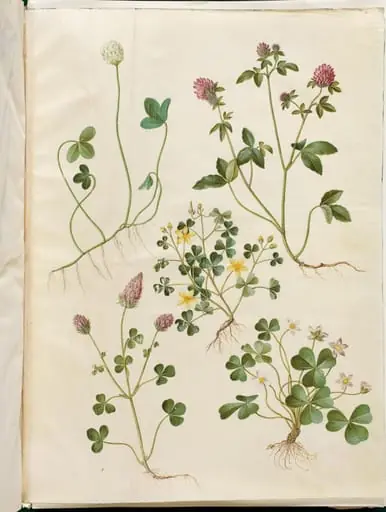 Trifolium repens (hvid-kløver); Trifolium pratense (rød-kløver); Oxalis corniculata (nedliggende surkløver); Trifolium incarnatum (blod-kløver); Oxalis acetosella (skovsyre)
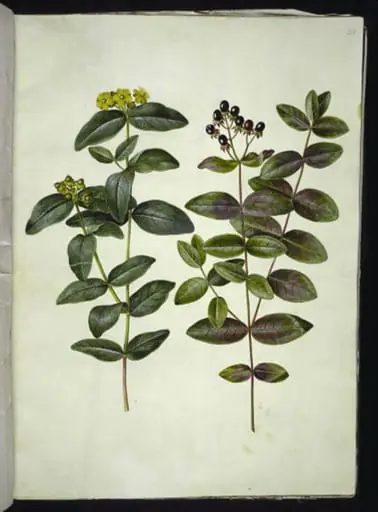 Hypericum androsaemum (bær-perikon)
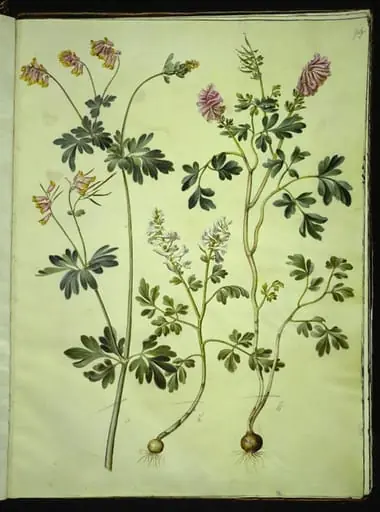 Capnoides sempervirens (harlekinurt); Corydalis solida (langstilket lærkespore)
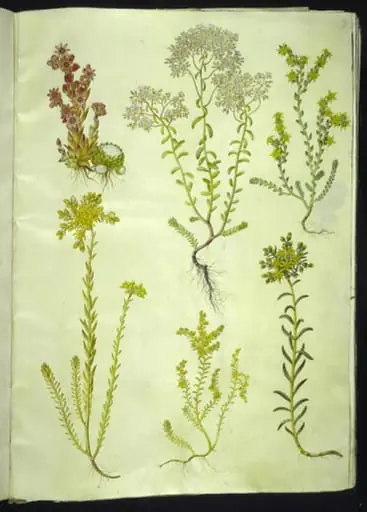 Sempervivum arachnoideum (spindelvæv-husløg); Sedum album (hvid stenurt); Sedum acre (bidende stenurt); Sedum rupestre (bjerg-stenurt); Sedum sexangulare (seksradet stenurt)
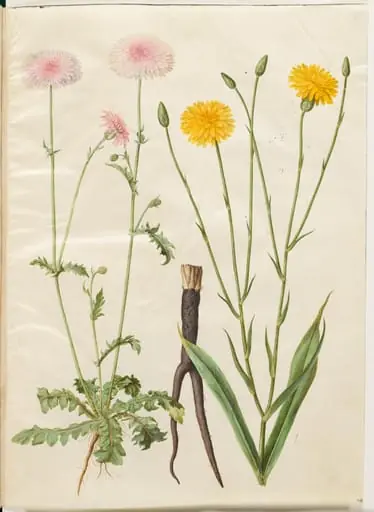 Crepis rubra (rød høgeskæg); Scorzonera hispanica (have-skorzoner)
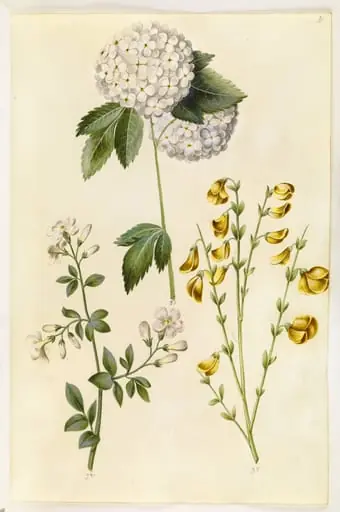 Viburnum opulus (almindelig snebolle); Jasminum officinale (læge-jasmin); Cytisus scoparius (almindelig gyvel)
 Saxifraga paniculata (klippe-stenbræk); Silene viscaria (almindelig tjærenellike); Silene armeria (knippe-limurt);