Artwork
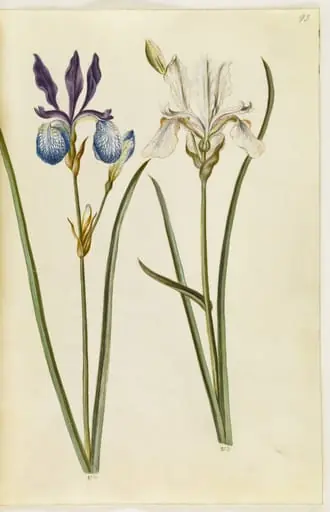
Iris ×germanica eller Iris ×sambucina (?) (have-iris eller hylde-iris); Iris ×germanica (have-iris)
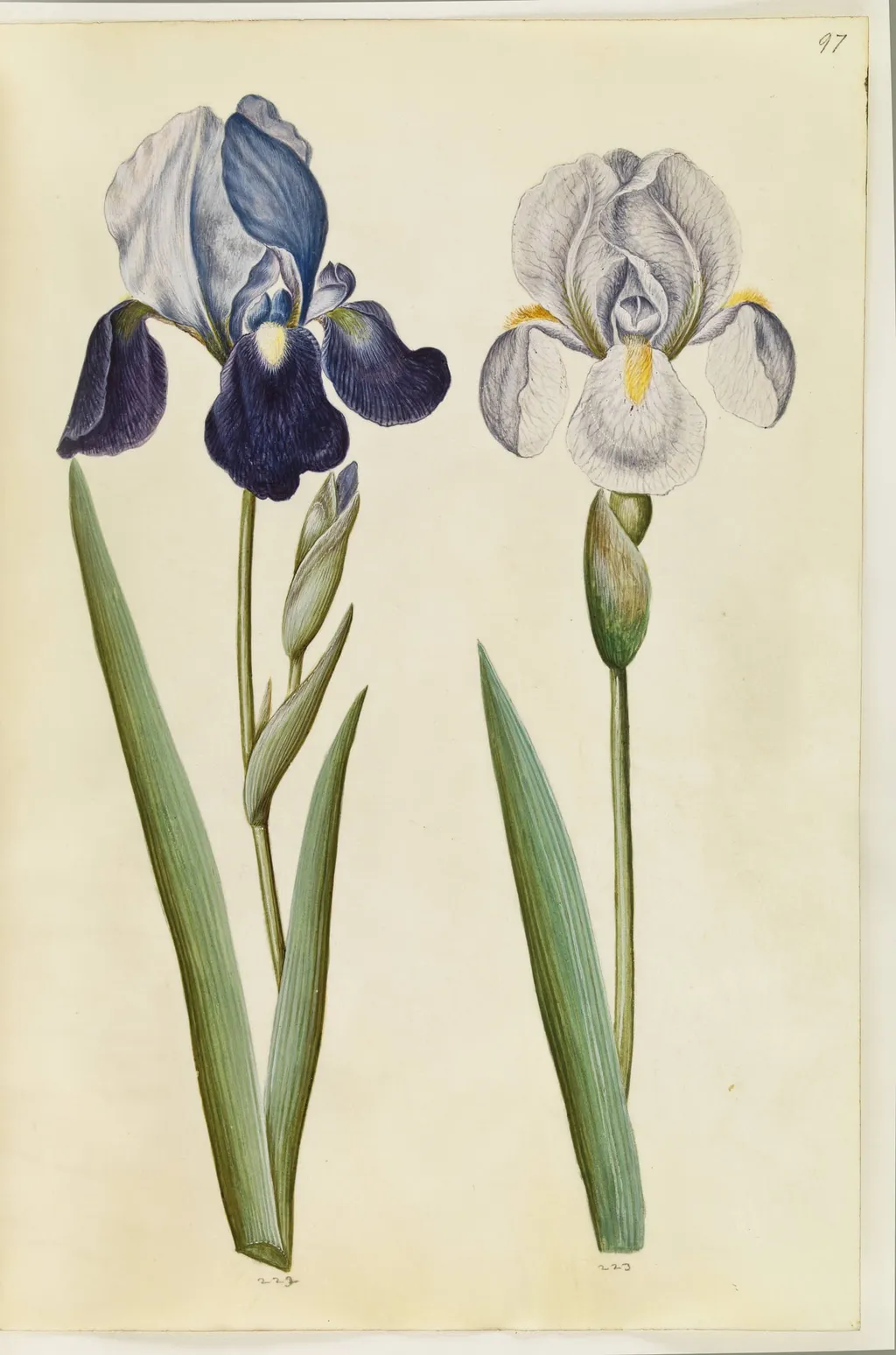
Iris ×germanica eller Iris ×sambucina (?) (have-iris eller hylde-iris); Iris ×germanica (have-iris) is an unspecified work on paper by Unknown. It dates from 1650 and is held in the collection of the Statens Museum for Kunst.
About this work
Overview
This botanical illustration, dated around 1650, depicts two iris specimens, one identified as Iris ×germanica and the other possibly Iris ×sambucina.
This botanical illustration, dated around 1650, depicts two iris specimens, one identified as Iris ×germanica and the other possibly Iris ×sambucina. Rendered in precise detail on a plain off-white ground, the work belongs to the collection of the Museum of Ethnography. The artist, identified only by a numerical catalog code, employed a naturalistic approach common in early scientific plant studies, emphasizing accuracy over ornamentation.
Subject & Meaning
The painting presents two iris varieties, distinguished by petal coloration—dark blue versus pale gray—highlighting botanical variation within closely related species. The focus on floral structure suggests an intent to document morphological differences, possibly for taxonomic or horticultural purposes. No symbolic or decorative elements are present, indicating the image served a scholarly rather than aesthetic function.
Technique & Style
The artist used fine brushwork and subtle gradations of color to model each petal and leaf, creating a sense of volume and surface texture. Delicate lines define vein patterns, while muted greens and yellows in the foliage contrast with the deeper purples and blues of the blooms. The absence of a background or contextual elements directs attention entirely to the plants, reflecting a method grounded in observational precision.
History & Provenance
The work is attributed to an anonymous illustrator cataloged as 35199_person, active in the mid-17th century. It entered the Museum of Ethnography’s collection without documented prior ownership, suggesting it may have been acquired as part of a broader collection of scientific illustrations. Its origin remains unverified, though its style aligns with Northern European botanical records of the period.
Context
Created during a time when European naturalists were systematically classifying flora, this image reflects the growing demand for accurate plant depictions in scientific manuscripts. Botanical illustration was often linked to medical and horticultural study, and such works were used as references in herbals or garden guides. The absence of a named artist underscores the collaborative, often anonymous nature of such scholarly work.
Legacy
Though unsigned and unattributed to a known artist, the illustration remains a valuable record of 17th-century botanical observation. It contributes to the historical understanding of how iris species were visually documented before modern taxonomy. Its preservation in an ethnographic museum highlights its role as both scientific artifact and cultural evidence of early natural history practices.
Artist & collection

 Domestic Scene
 Giacomo and Cardinal Marco, investing Andrea, Abbot of San Zeno, with his Benefice
 The Nymph of Fontainebleau
 Portrait of a Woman
 Madonna and Child with Saints in the Enclosed Garden
 Venus and Minerva
 Family Group of Four on Sofa
 Wall painting from Room H of the Villa of P. Fannius Synistor at Boscoreale
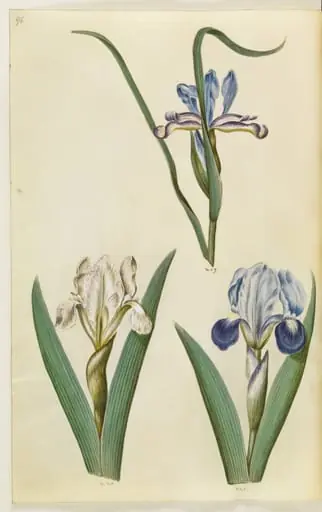 Iris graminea (græsbladet iris); Iris lutescens eller Iris pumila (?) (dværg-iris eller lav iris)
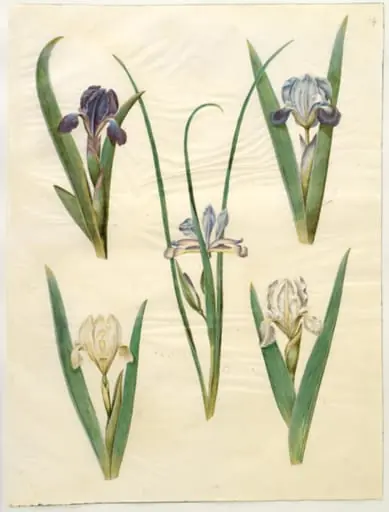 Iris pumila (lav iris) eller Iris lutescens (dværg-iris); Iris graminea (græsbladet iris)
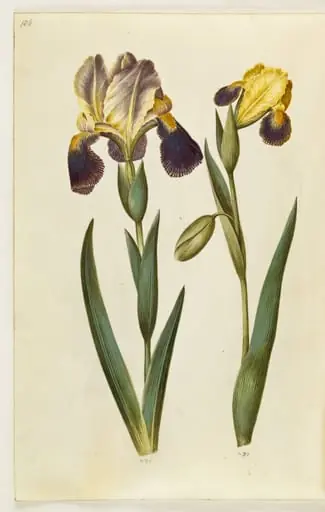 Iris ×germanica eller Iris ×sambucina (have-iris eller hylde-iris); Iris variegata (broget iris)
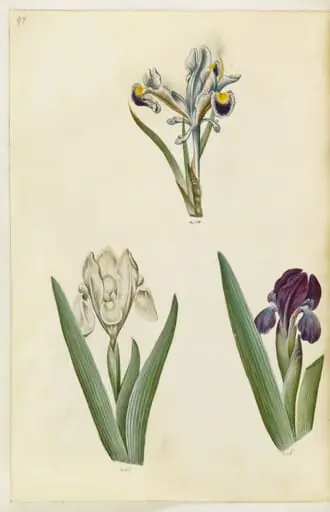 Iris persica (persisk iris); Iris lutescens eller Iris pumila (?) (dværg-iris eller lav iris)
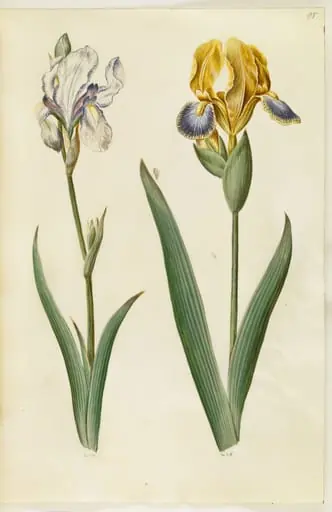 Iris pallida (bleg iris); Iris variegata (broget iris)
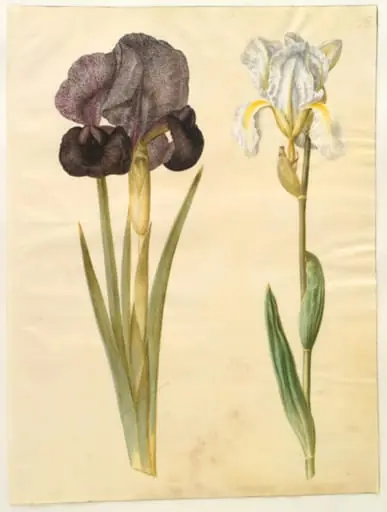 Iris susiana (sørge-iris); Iris ×florentina (violrod)
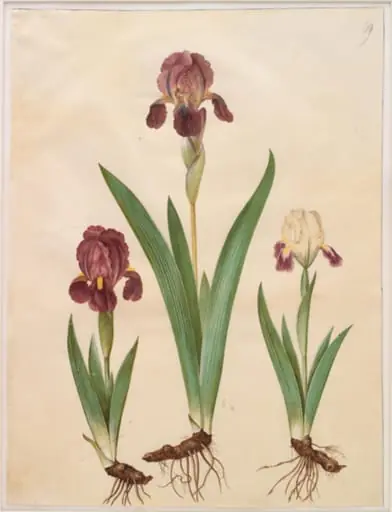 Iris ×lurida (iris-hybrid)
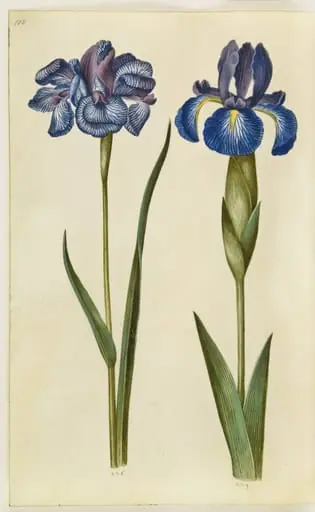 Iris sibirica (sibirisk iris); Iris latifolia (engelsk iris)
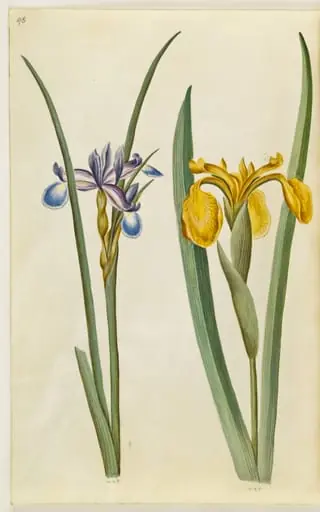 Iris graminea (græsbladet iris); Iris pseudacorus (gul iris)
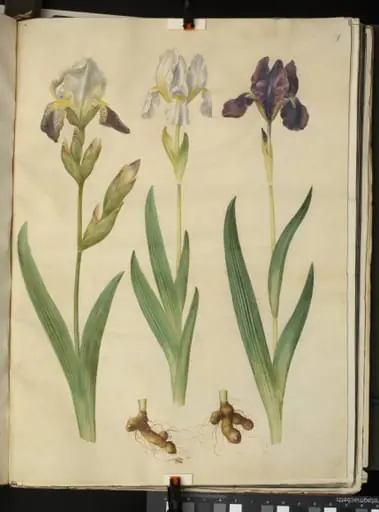 Iris ×squalens (iris-hybrid); Iris (iris)
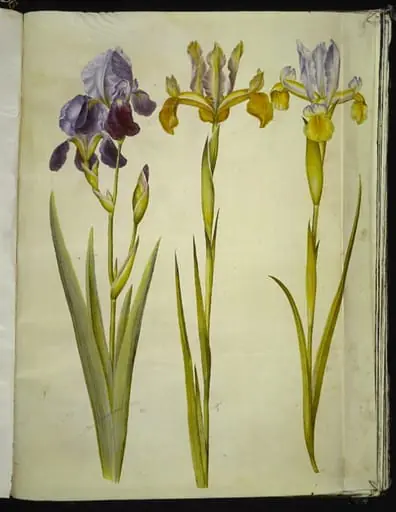 Iris ×sambucina (hylde-iris); Iris latifolia (engelsk iris)
 Iris sibirica (sibirisk iris)