Artwork
Iris graminea (græsbladet iris); Iris pseudacorus (gul iris)
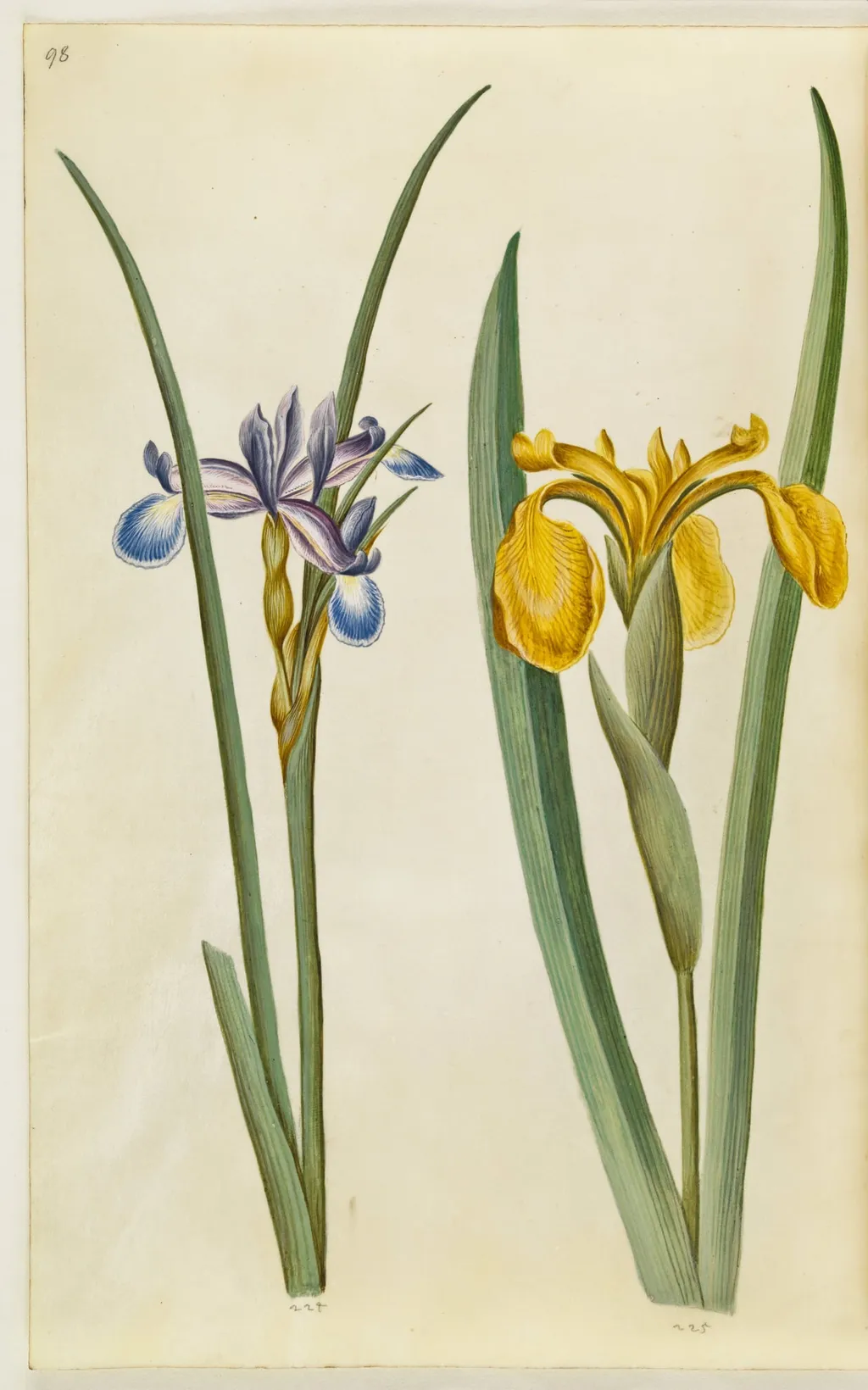
Iris graminea (græsbladet iris); Iris pseudacorus (gul iris) is an unspecified work on paper by Unknown. It dates from 1650 and is held in the collection of the Statens Museum for Kunst.
About this work
Overview
Created around 1650, this image presents a close study of two iris specimens—one a deep‑purple grass‑leaf iris and the other a vivid yellow yellow iris. The composition places the flowers side by side, each supported by slender, slightly undulating green leaves, allowing a direct visual comparison of colour and form.
Subject & Meaning
The work depicts Iris graminea, known for its narrow foliage and purple blossoms, alongside Iris pseudacorus, recognized for its bright yellow flowers and drooping habit. By juxtaposing the two species, the image highlights botanical diversity and invites observation of subtle morphological differences, reflecting an interest in natural classification.
Technique & Style
Executed with meticulous attention to minute details, the artist renders the fine hairs on the leaves and the curvature of each petal with precision. The rendering suggests a realistic, almost scientific approach, emphasizing texture and colour gradation to achieve a lifelike appearance within the limits of the medium.
History & Provenance
Attributed to the artist identified as 35199_person, the piece dates to the mid‑17th century. It entered the collection of the Museum of Ethnography, where it remains part of the institution’s holdings, providing insight into historical botanical illustration practices.
Context
During the 1650s, European interest in cataloguing plant species grew alongside advances in natural history. Works such as this served both aesthetic and educational purposes, supporting the era’s emerging taxonomic efforts and reflecting the period’s fascination with detailed observation of flora.
Artist & collection

 Domestic Scene
 Giacomo and Cardinal Marco, investing Andrea, Abbot of San Zeno, with his Benefice
 The Nymph of Fontainebleau
 Portrait of a Woman
 Madonna and Child with Saints in the Enclosed Garden
 Venus and Minerva
 Family Group of Four on Sofa
 Wall painting from Room H of the Villa of P. Fannius Synistor at Boscoreale
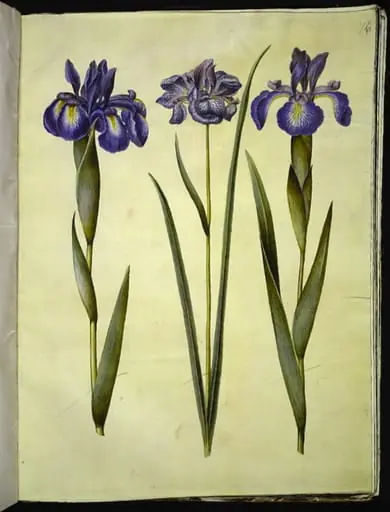 Iris latifolia (engelsk iris); Iris sibirica (sibirisk iris)
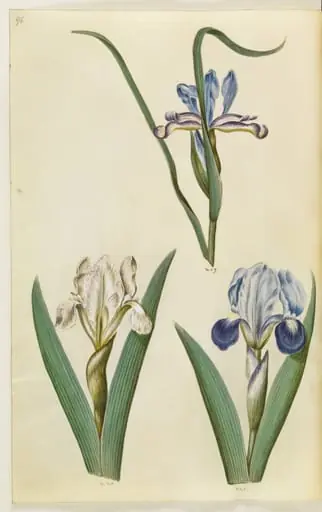 Iris graminea (græsbladet iris); Iris lutescens eller Iris pumila (?) (dværg-iris eller lav iris)
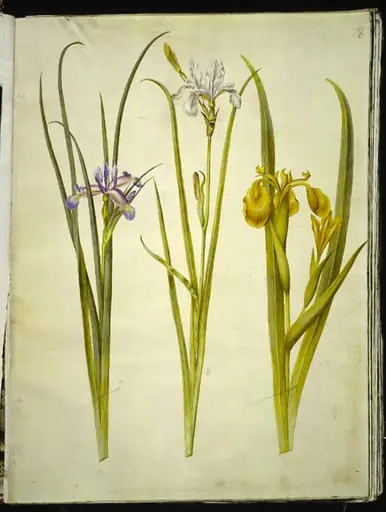 Iris graminea (græsbladet iris); Iris sibirica (sibirisk iris); Iris pseudacorus (gul iris)
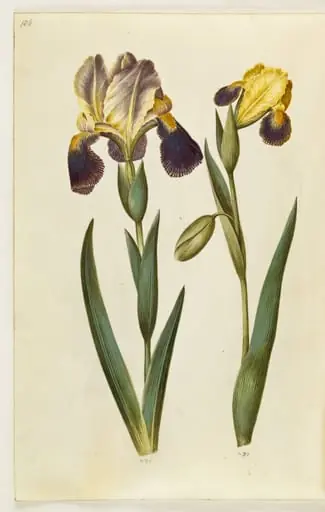 Iris ×germanica eller Iris ×sambucina (have-iris eller hylde-iris); Iris variegata (broget iris)
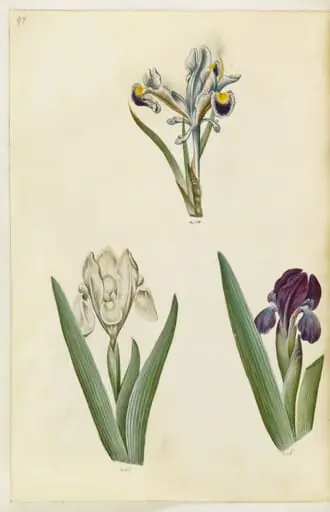 Iris persica (persisk iris); Iris lutescens eller Iris pumila (?) (dværg-iris eller lav iris)
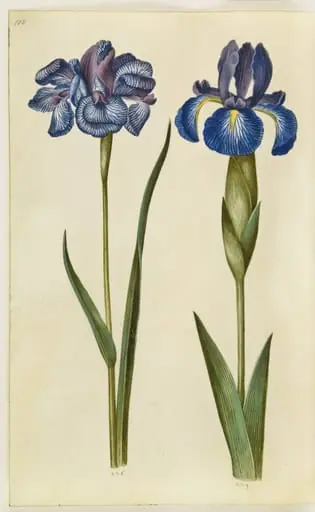 Iris sibirica (sibirisk iris); Iris latifolia (engelsk iris)
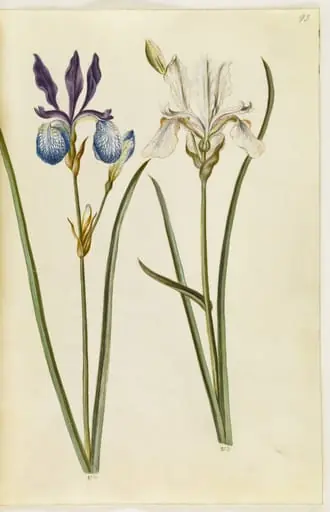 Iris sibirica (sibirisk iris)
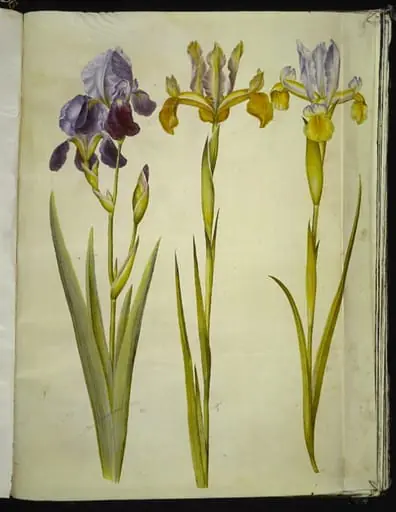 Iris ×sambucina (hylde-iris); Iris latifolia (engelsk iris)
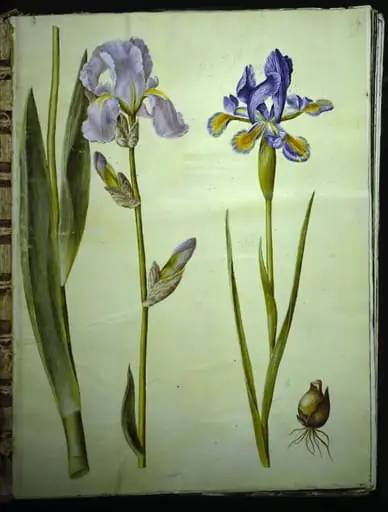 Iris ×germanica (have-iris); Iris xiphium (spansk iris)
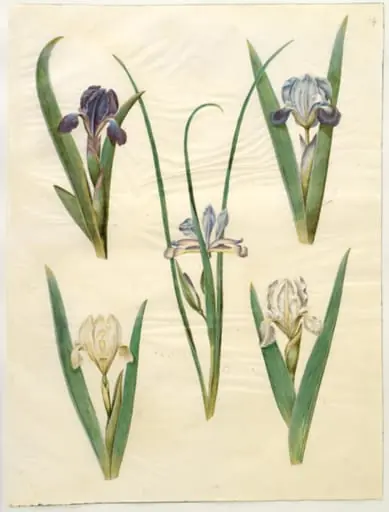 Iris pumila (lav iris) eller Iris lutescens (dværg-iris); Iris graminea (græsbladet iris)
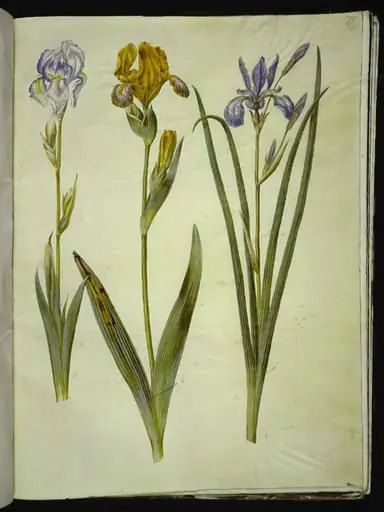 Iris pallida (bleg iris); Iris variegata (broget iris); Iris sibirica (sibirisk iris)