Artwork
Malva sylvestris (almindelig katost); Lavatera trimestris (mamelukærme)
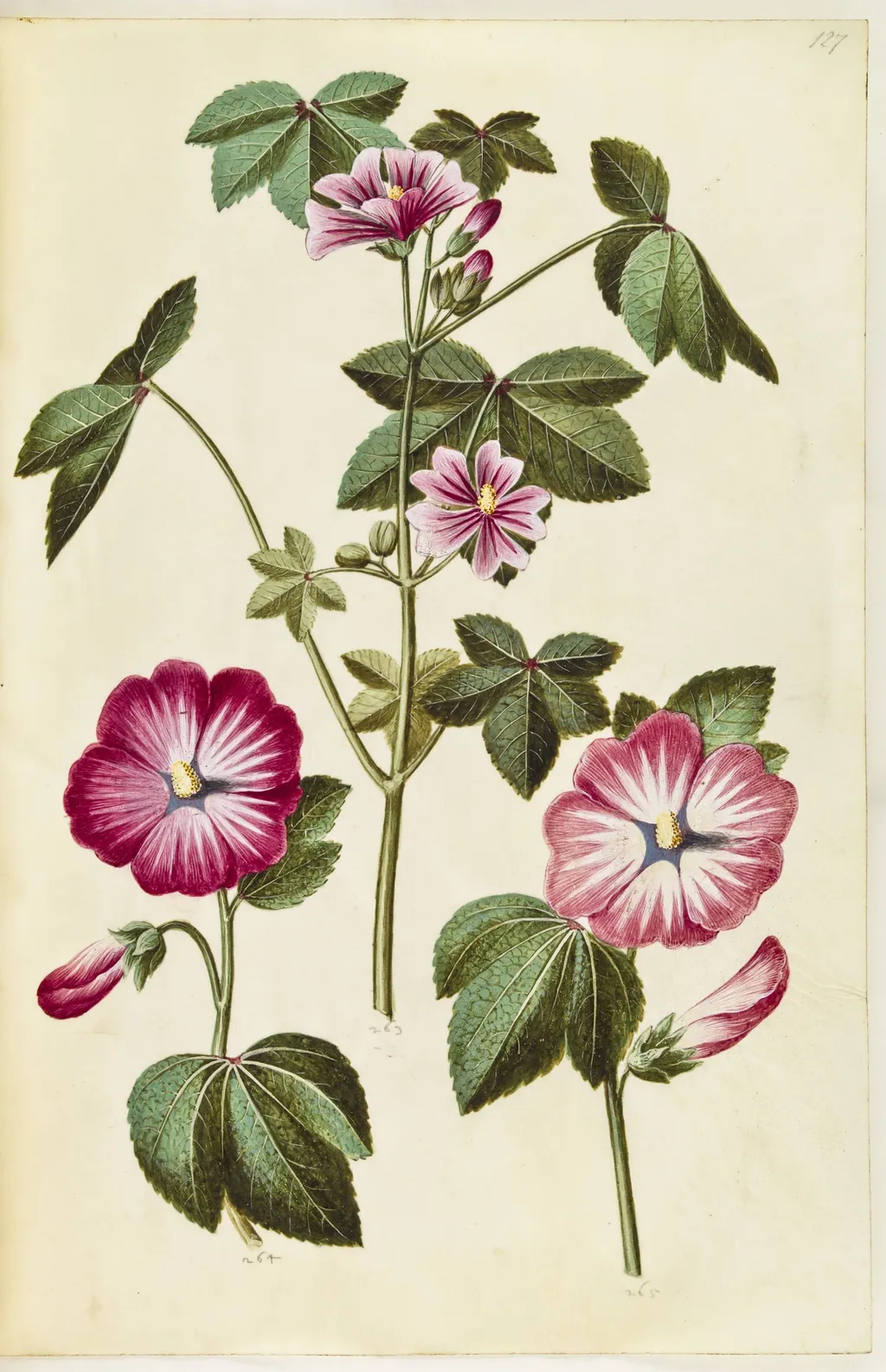
Malva sylvestris (almindelig katost); Lavatera trimestris (mamelukærme) is an unspecified work on paper by Unknown. It dates from 1650 and is held in the collection of the Statens Museum for Kunst. This watercolor painting, dated around 1650, depicts two flowering plants: Malva sylvestris and Lavatera trimestris.
About this work
Overview
The composition centers on a single stem bearing three prominent blooms, with smaller flowers and detailed foliage arranged above.
This watercolor painting, dated around 1650, depicts two flowering plants: Malva sylvestris and Lavatera trimestris. Rendered with precision, the work is part of the Museum of Ethnography’s collection. The composition centers on a single stem bearing three prominent blooms, with smaller flowers and detailed foliage arranged above. The background is left unadorned, emphasizing the botanical subjects.
Subject & Meaning
The painting presents two species of mallows, likely chosen for their vivid appearance and regional significance. Though not overtly symbolic, the careful depiction suggests an interest in botanical accuracy, possibly for scientific or educational use. The inclusion of both common names indicates an awareness of local vernacular, reflecting a period when natural history was increasingly documented through visual means.
Technique & Style
Executed in watercolor, the artist employed layered washes to capture subtle gradations in petal color and leaf texture. Deep red blooms with white striations and yellow centers are rendered with delicate precision, while the dark green leaves show clear venation and soft shadows. The edges of petals appear luminous, achieved through controlled wet-on-wet application, highlighting the medium’s capacity for both clarity and nuance.
History & Provenance
The work is attributed to an unidentified artist, known only by a catalog number. It entered the Museum of Ethnography’s holdings at an unspecified date, likely as part of a broader collection of natural history illustrations. Its survival suggests it was valued for its detail, though its original purpose—whether academic, personal, or decorative—remains undocumented.
Context
Created in the mid-17th century, this piece aligns with a European surge in botanical illustration, driven by expanding botanical studies and global plant exchange. While not part of a formal herbarium, its style echoes the observational rigor of contemporary scientific art. The focus on native and cultivated species reflects a growing public interest in the natural world beyond myth or utility.
Legacy
Though not widely published or exhibited, the painting contributes to a quiet tradition of pre-modern botanical documentation. Its survival offers insight into how non-professional artists engaged with natural science. The work’s quiet precision continues to serve as a reference for the aesthetic and technical standards of early watercolor botanical studies.
Artist & collection

 Domestic Scene
 Giacomo and Cardinal Marco, investing Andrea, Abbot of San Zeno, with his Benefice
 The Nymph of Fontainebleau
 Portrait of a Woman
 Madonna and Child with Saints in the Enclosed Garden
 Venus and Minerva
 Family Group of Four on Sofa
 Wall painting from Room H of the Villa of P. Fannius Synistor at Boscoreale
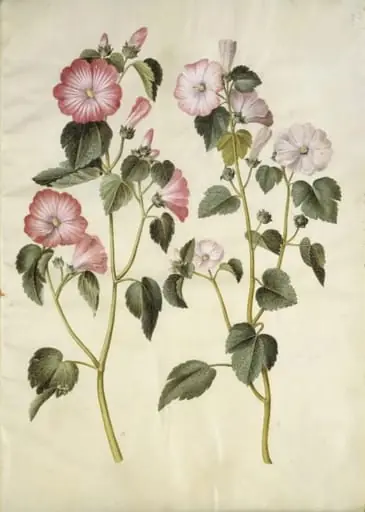 Lavatera trimestris (mamelukærme)
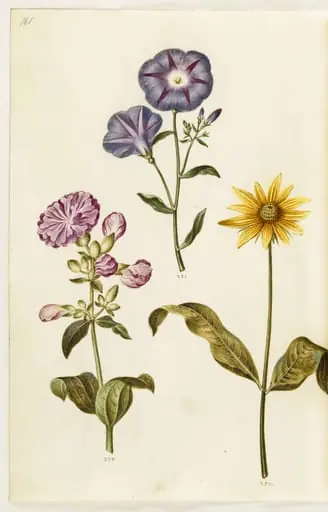 Saponaria officinalis (almindelig sæbeurt); Convolvulus tricolor (jomfruskørt); Helianthus (?) (solsikke-art)
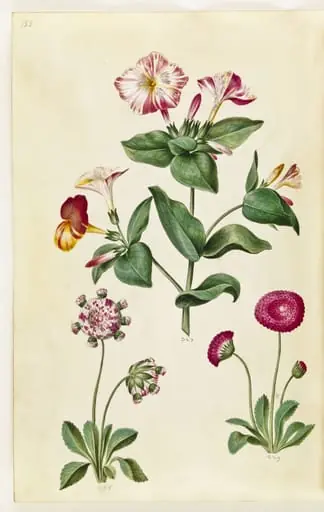 Mirabilis jalapa (vidunderblomst); Bellis perennis (almindelig tusindfryd)
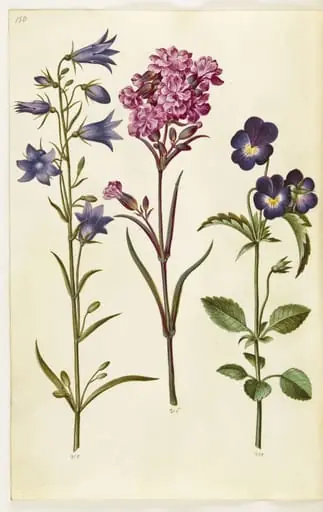 Campanula rotundifolia (liden klokke); Silene viscaria (almindelig tjærenellike); Viola tricolor (almindelig stedmoderblomst)
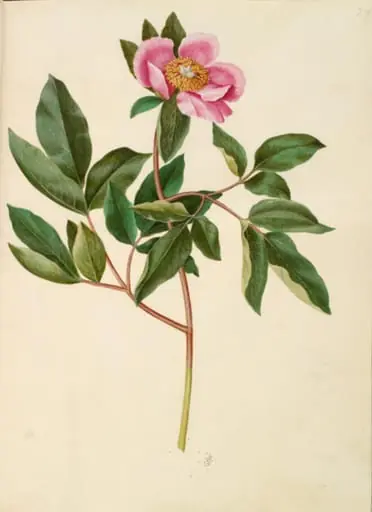 Paeonia mascula (storbladet pæon)
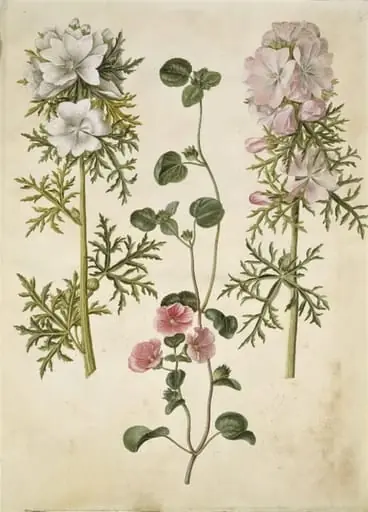 Malva moschata (moskus-katost); Malva eller Malope (art af katost eller malope)
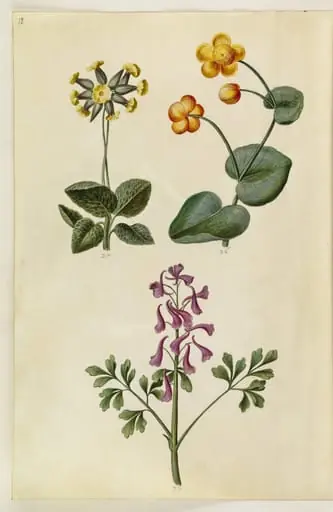 Primula veris (hulkravet kodriver); Caltha palustris (eng-kabbeleje); Corydalis cava (hulrodet lærkespore)
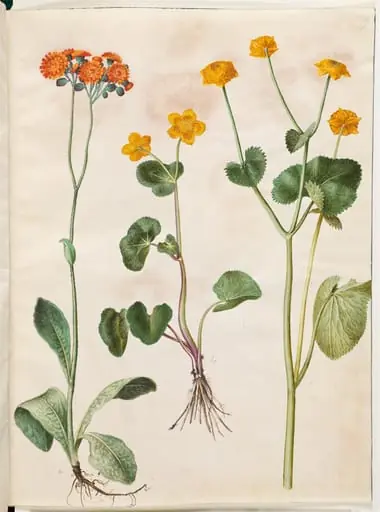 Pilosella aurantiaca (pomerans-høgeurt); Caltha palustris (eng-kabbeleje)
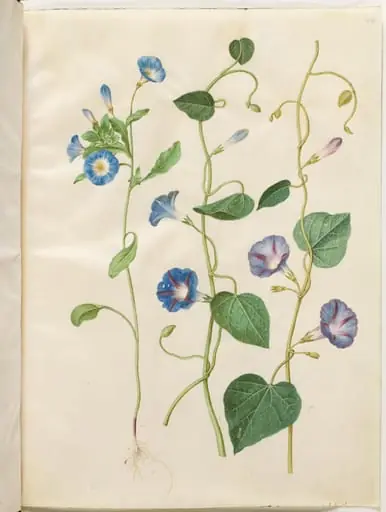 Convolvulus tricolor (jomfruskørt); Ipomoea purpurea (purpur-pragtsnerle)
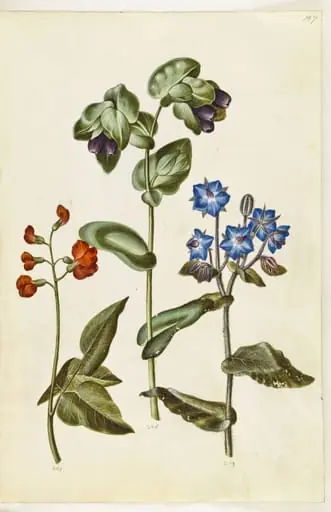 Phaseolus coccineus (pral-bønne); Cerinthe major (stor voksurt); Borago officinalis (almindelig hjulkrone)