Artwork
Campanula rotundifolia (liden klokke); Silene viscaria (almindelig tjærenellike); Viola tricolor (almindelig stedmoderblomst)
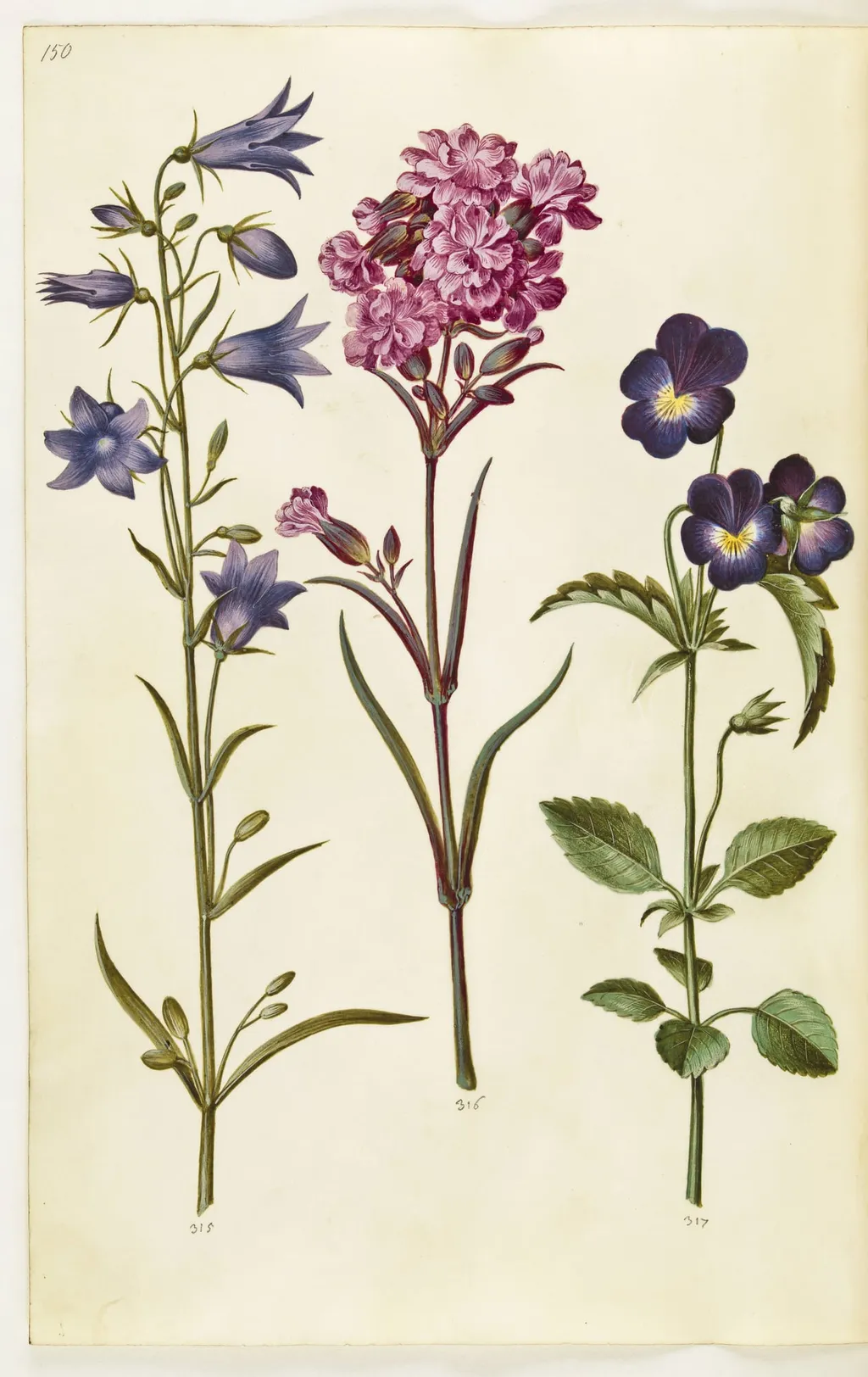
Campanula rotundifolia (liden klokke); Silene viscaria (almindelig tjærenellike); Viola tricolor (almindelig stedmoderblomst) is an unspecified work on paper by Unknown. It dates from 1650 and is held in the collection of the Statens Museum for Kunst. This sheet features three native European wildflowers rendered in delicate watercolor, dated to approximately 1650.
About this work
Overview
It is part of the collection at the Museum of Ethnography, where it is preserved as a botanical record rather than a decorative piece.
This sheet features three native European wildflowers rendered in delicate watercolor, dated to approximately 1650. The work is attributed to an anonymous artist identified only by a catalog number. It is part of the collection at the Museum of Ethnography, where it is preserved as a botanical record rather than a decorative piece. The composition is orderly, with each plant clearly separated and labeled numerically.
Subject & Meaning
The depicted species—Campanula rotundifolia, Silene viscaria, and Viola tricolor—are common wildflowers of northern Europe. Each is identified by its Danish common name, suggesting the work was produced for local scientific or educational use. The inclusion of vernacular labels indicates an intent to document flora accessible to everyday observers, possibly for medicinal or agricultural reference.
Technique & Style
The plants are rendered in soft, layered watercolors with precise, fine lines. The artist used subtle gradations to suggest form and texture, avoiding bold outlines in favor of gentle tonal transitions. The clean, uncluttered layout reflects a scientific aesthetic, prioritizing accuracy over ornamentation. Each specimen is isolated against a blank background to emphasize structural detail.
History & Provenance
The work likely originated in Denmark or southern Scandinavia during the mid-17th century, a period when systematic botanical documentation was expanding among scholars and naturalists. Its presence in the Museum of Ethnography suggests it was collected as part of a broader effort to record regional natural history, possibly linked to early ethnobotanical studies or university collections.
Context
In the 1600s, detailed plant illustrations were increasingly used to support emerging botanical sciences, especially as European collectors sought to classify native and exotic species. This sheet aligns with a tradition of observational drawing that preceded formal taxonomy, serving as a visual catalog for those studying local flora without access to printed herbals or specimens.
Legacy
Though unsigned and unremarkable in scale, the sheet exemplifies the quiet rigor of pre-modern botanical illustration. It survives as a tangible link to early scientific observation in northern Europe, preserving not only plant forms but also the linguistic and cultural context of their identification. Its endurance reflects the value placed on accurate visual records before photographic reproduction.
Artist & collection

 Domestic Scene
 Giacomo and Cardinal Marco, investing Andrea, Abbot of San Zeno, with his Benefice
 The Nymph of Fontainebleau
 Portrait of a Woman
 Madonna and Child with Saints in the Enclosed Garden
 Venus and Minerva
 Family Group of Four on Sofa
 Wall painting from Room H of the Villa of P. Fannius Synistor at Boscoreale
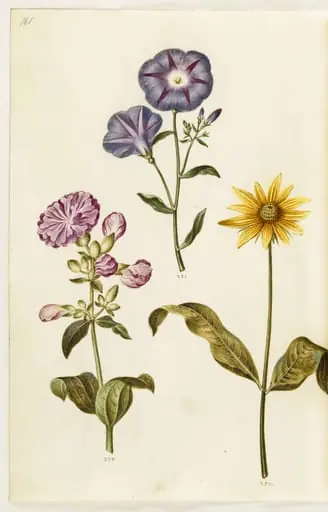 Saponaria officinalis (almindelig sæbeurt); Convolvulus tricolor (jomfruskørt); Helianthus (?) (solsikke-art)
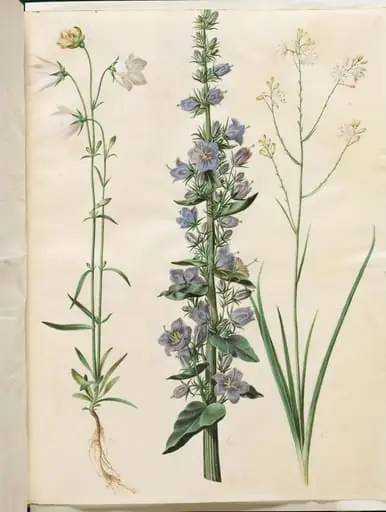 Campanula persicifolia (smalbladet klokke); Campanula pyramidalis (pyramide-klokke); Anthericum ramosum (grenet edderkopurt)
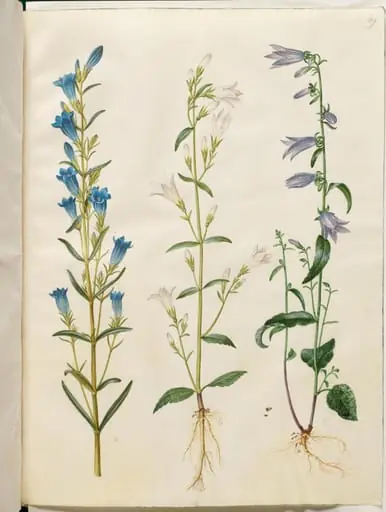 Gentiana pneumonanthe (klokke-ensian); Campanula patula (eng-klokke); Campanula rapunculoides (ensidig klokke)
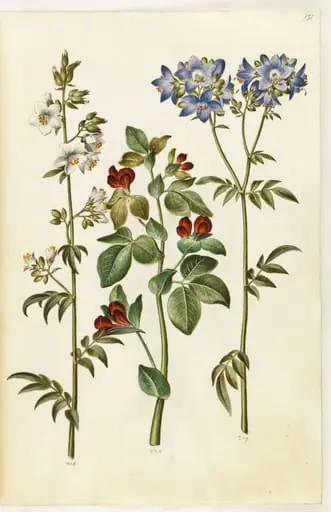 Polemonium caeruleum (almindelig jakobsstige); Lotus tetragonolobus (aspargesært)
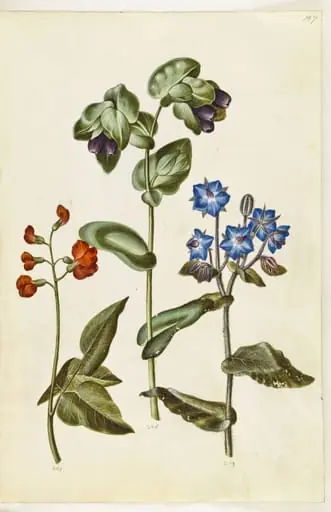 Phaseolus coccineus (pral-bønne); Cerinthe major (stor voksurt); Borago officinalis (almindelig hjulkrone)
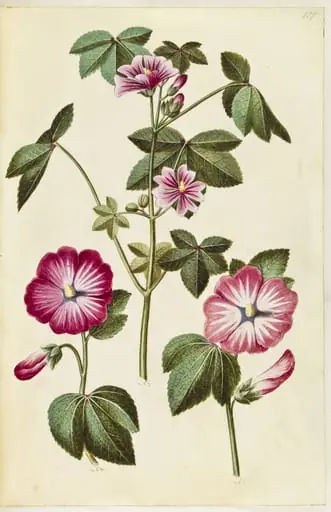 Malva sylvestris (almindelig katost); Lavatera trimestris (mamelukærme)
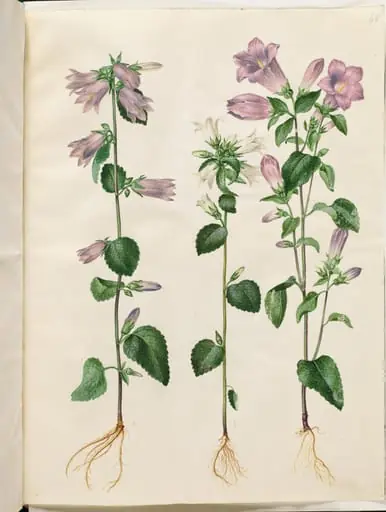 Campanula trachelium (nælde-klokke); Campanula medium (marie-klokke)
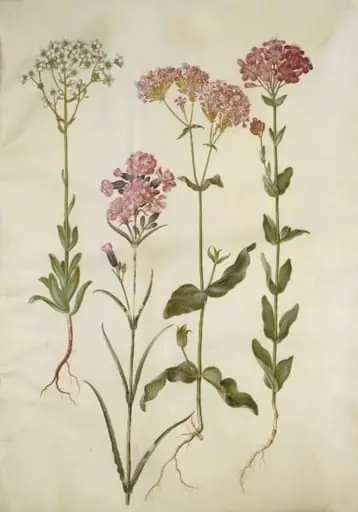 Saxifraga paniculata (klippe-stenbræk); Silene viscaria (almindelig tjærenellike); Silene armeria (knippe-limurt);
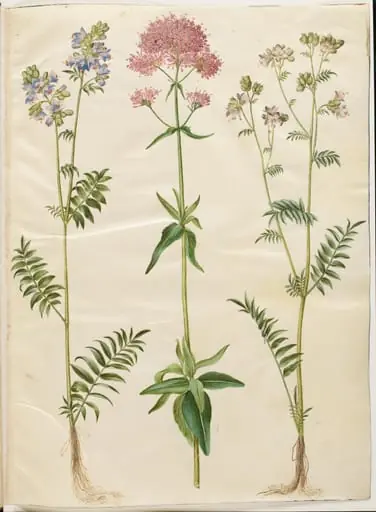 Polemonium caeruleum (almindelig jakobsstige); Centranthus ruber (rød sporebaldrian)
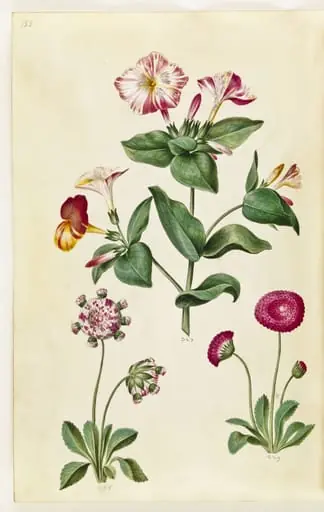 Mirabilis jalapa (vidunderblomst); Bellis perennis (almindelig tusindfryd)
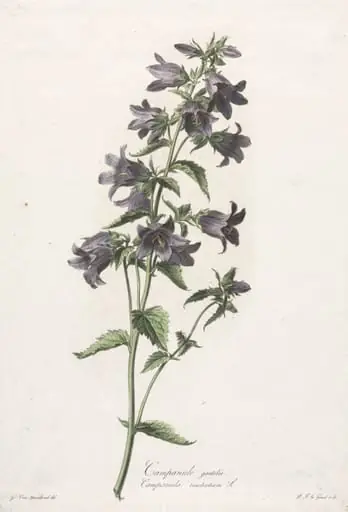 Fleurs dessinées d'après nature: Campanule gantelée
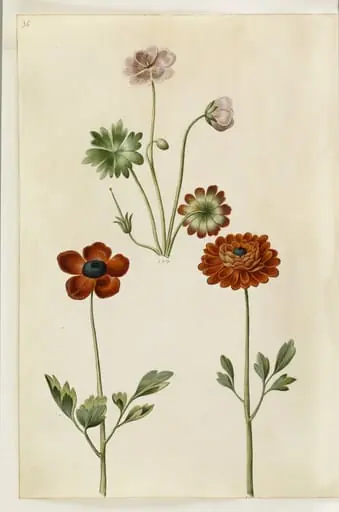 Geranium sanguineum striatum (stribet storkenæb); Ranunculus asiaticus (have-ranunkel)